Going for a Song

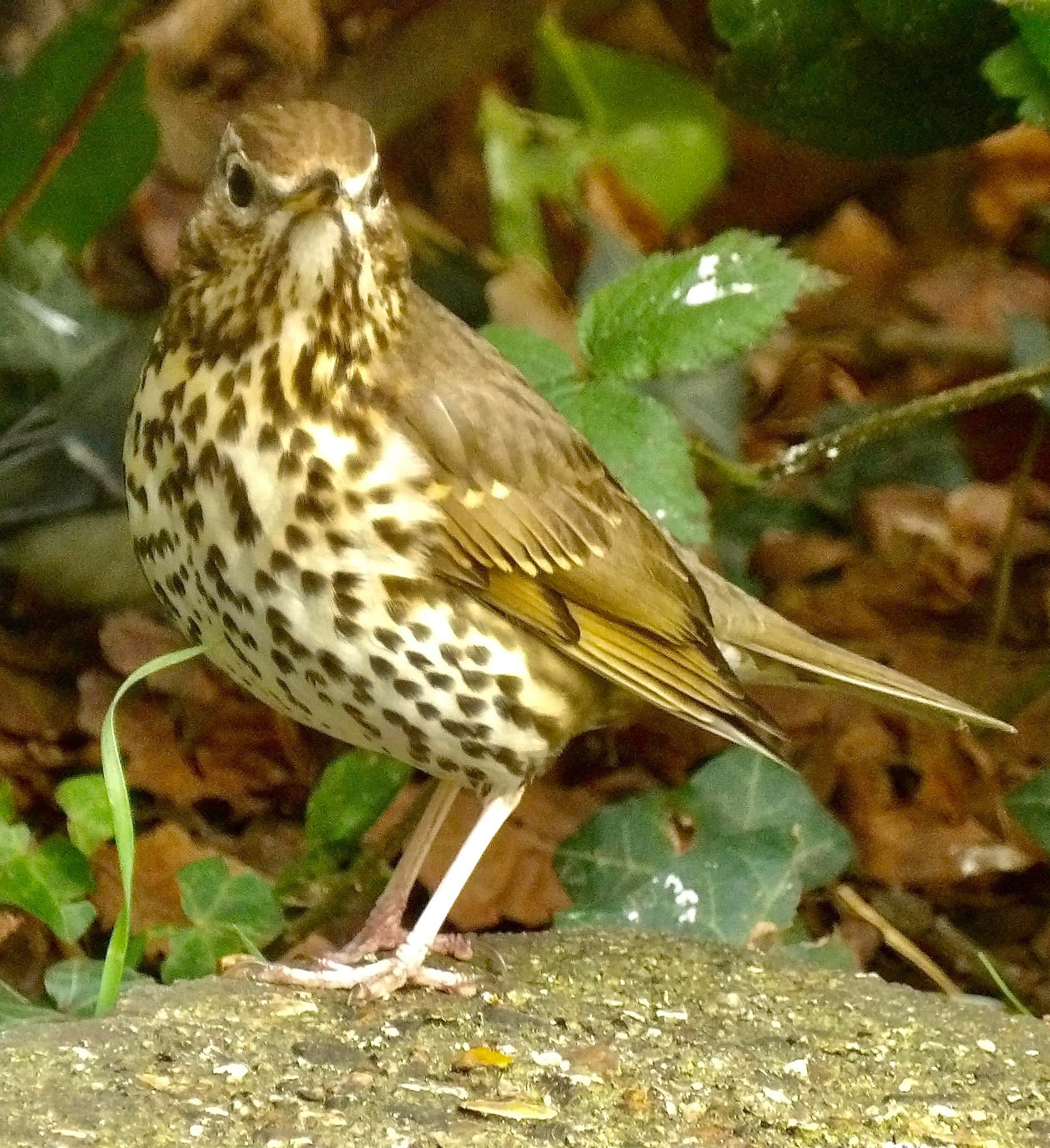
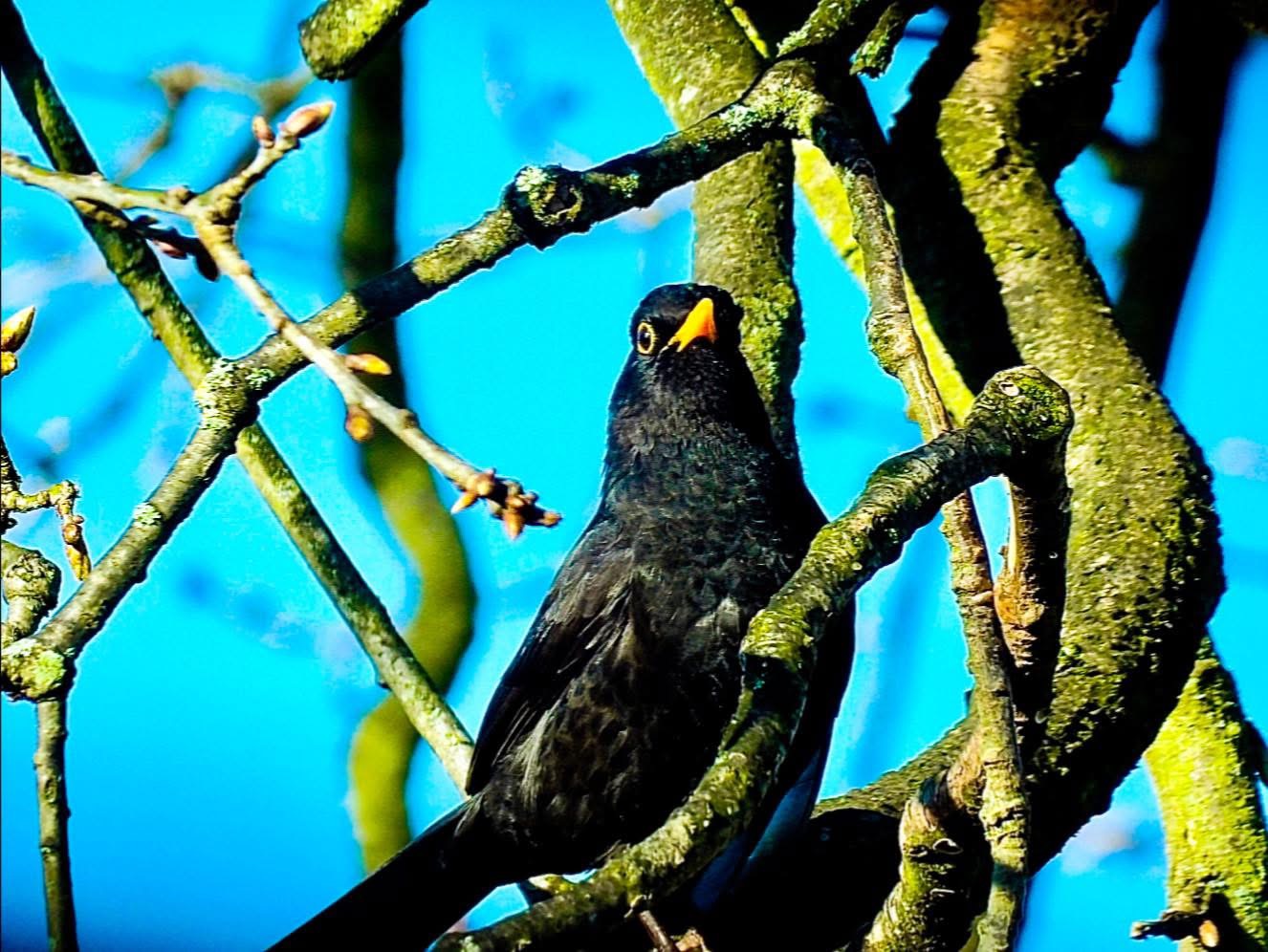
Birds like blackbirds, thrushes and magpies caught in local woods and fields were traded at Kirkham Bird Fair. Picture by Mick Gisbourne.

Reader Rex North has been in touch with some interesting contributions on recent topics. He says: “I was interested to hear about the ‘Bird Fair’ at Kirkham. It seemed to me that this must have happened during the 1840s, and prior to that if the band travelled by boat, as the York-Scarborough railway opened in 1845 and it would have then been possible to travel by train from Malton to Kirkham Abbey station more quickly.

“I have an 1840 directory of the East and North Ridings published by William White, and some reference is made to this fair, as follows: ‘A pleasure fair is held near the ruins (of Kirkham Priory) on Trinity Monday, when the principal traffic is in blackbirds, throstles (thrushes), magpies and other birds, taken in the neighbouring woods and plantations.’ This rather suggests a trade of wild birds caught and sold for their singing capabilities, with magpies being capable, I believe, of being taught tricks etc, so perhaps having a value in those days. I would suspect that the trade died out soon after the railway came, but it would be interesting to know more!”

It would, wouldn’t it, Rex, and the added details you have provided are fascinating indeed. I must admit I made the assumption that these avian trades would have involved birds like poultry, pigeons or birds of prey, that were used for food, competition or pest control. It never occurred to me that they would be kept for their singing! These days most of us wouldn’t dream of doing anything as cruel as snatching songbirds from the wild and placing them in a cage purely for our own entertainment. Their song may have sounded sweet, but I can’t imagine the birds were remotely content in their domestic prison.

I was also tickled by the use of the phrase ‘pleasure fair’. It conjures up images of a simpler time, where happiness was gained in less complicated ways than today.

Rex also has some information on Samuel Bean, known to reader Katherine Hill as ‘Grandpa Samuel’ whom she believed had been born at Peep o’Day farm near Husthwaite, Easingwold in the 1880s.

Rex writes: “I was also intrigued by the name ‘Peep o’Day Farm’, and, being interested in family history I found that Samuel Bean was in fact baptised at Acomb, near York, on 27th July 1879, the son and 4th child of Samuel and Sarah Bean. Samuel (senior) was born at Marton in the Forest, near Sheriff Hutton, being baptised at St Mary’s Church there on 19th November 1848, the son of James and Anne, who farmed at Marton Bridge. Sadly there seems to be no link to ‘Peep o’Day’ at Husthwaite as such, but by 1861 James and Anne had moved with their family to Rising Sun Farm at Easingwold, and had arrived at Acomb by 1871. Samuel and Sarah themselves were not only farming, but running the ‘Skip Bridge Inn’ on the York to Knaresborough Road by 1881, as well as managing the four young children. I wonder if your correspondent’s reference to ‘Peep o’Day’ might refer to ‘Rising Sun’, the meaning being virtually the same?”

I passed this information on to Katherine and she replied: “To get such a positive and interesting response is wonderful. The information is really helpful. My mum also told me that some of Grandpa Samuel’s family farmed at Rising Sun. This all links up with our information. Do you know where/which farm they went to in York? One source suggests they were at Rufforth Grange (enclosed by the airfield in WW2). We do know that Grandpa Samuel and siblings were brought up living at Grange Farm, Acomb.” 

I can’t answer her question, but perhaps Rex or another resourceful reader might be able to find out.

Katherine added: “My ‘Bean’ cousins and I are having a get together soon to talk about our family history. I am recording as best I can the information we’ve got and hope to put it together for a booklet for each branch of the family.”

I wish Katherine the best with her booklet and hope all the Beans have a wonderful family celebration! And if any of you reader sleuths can help further in her quest, do get in touch in the usual ways.


Do you have opinions, memories or ideas to share with me? Get in touch with me using the ‘Contact’ button on the top right.

This column appeared in the Darlington & Stockton Times on Friday 20th and the Ryedale Gazette and Herald on Wednesday 18th Feb 2026

Difficult fact to swallow

Swallows chatting on overhead lines above me, as if they were scoping out the property’s conservatory to set up home


A swallow feeds its young in a nest under the eaves. Photo by Alastair Smith


I was conducting a house viewing recently where the potential buyers had come for a second look before deciding whether they were going to make an offer or not. It was a lovely stone cottage in the Hambleton Hills with a gorgeous garden and wonderful views at the back.

Because the viewers had been before, I allowed them some privacy and selected a sunny spot outside to sit and wait until they had finished their visit. At the back of the house was a beautiful oak-framed conservatory, and I had opened up the bifold doors to make the most of the wonderful weather.

Not long after I sat down, I noticed a pair of swallows chattering on an overhead power line not far away. I had seen them on an earlier visit, and it had lifted my spirits knowing that the swallows had returned from the southern hemisphere, a portent of the summer soon to follow.

They seemed to be observing the conservatory, nodding to each other and chattering excitedly. It looked as if they were considering it as a suitable place to make a home. To a swallow, it would seem perfect, with sturdy timber y-frame struts and beams offering a selection of nesting sites under the vaulted ceiling, the slate roof providing safety, warmth and shelter.

Soon the birds left their spot on the overhead line, and performed a couple of ‘fly-bys’, sweeping round in wide circles, getting closer to the doors each time, then landing back on the power line to resume their excited chatter.

Moments later, they disappeared into a small shed in the neighbouring garden with a gap at the top of the door. Soon, they were back on the line, resuming their conversation.

Having studied the Swallowish language, I can tell you that the conversation went like this:

“Look at that spot Rita! What a fancy des res. So much light and and space, and with direct access to a bounty of food supplies.”

“Yes, it really is the dream home, isn’t it, Bertie. Imagine bringing up the children here, the garden is to die for. It is so much nicer than that pokey little shed you’ve made us move into. Dark and dingy, and only a wall for a view! The kids will be miserable there, whereas here…”

“I know dear, but then again it is so big, it could be a bit draughty…”

“Draughty? Nonsense! It’s south facing which is exactly what we need – all that sunlight! That grotty shed is north facing, and the roof has holes in it. The kids will be freezing, as will I! I didn’t fly 6000 miles from Johannesburg to spend my summer in a dingy old shed. I need warmth and a view while I bring up the kids, Bertie, and I deserve it after surviving that bloomin’ journey.”

“I suppose you are are right, Rita. I wonder if anyone else is interested in it? I wouldn’t want any dodgy neighbours.”

I kept my beady eye on them the whole time I was there, because anyone who has had swallows resident in their garden knows just how quickly they can dive into an open shed, garage or barn, and then get locked in. We once had to leave our own garage open for a day or so, keeping our eyes on it to see when both swallows had popped out so we could shut the door and prevent them from completing their nest. It felt a bit cruel, but they soon moved on to a more suitable nesting site.

Swallows fly south for the winter because the insects they rely upon for survival are no longer available. Before the 20th century, we didn’t even know they had left the country, and some scientists believed they hibernated, with one bizarre theory suggesting they survived at the bottom of ponds.

It was in 1912, after the introduction of bird ringing, that a swallow was found on a farm in South Africa bearing a ring that had been placed on its leg 18 months earlier by amateur naturalist John Masefield from Staffordshire.

However, more recently, with milder winters becoming commonplace, some swallows have been found to stay in the southern UK all year.

Is it just me, or does news unsettle some of you too?

Do you have opinions, memories or ideas to share with me? Get in touch with me using the ‘Contact’ button on the top right.

This column appeared in the Darlington & Stockton Times on Friday 30th and the Ryedale Gazette and Herald on Wednesday 28th May 2025