Going for a Song

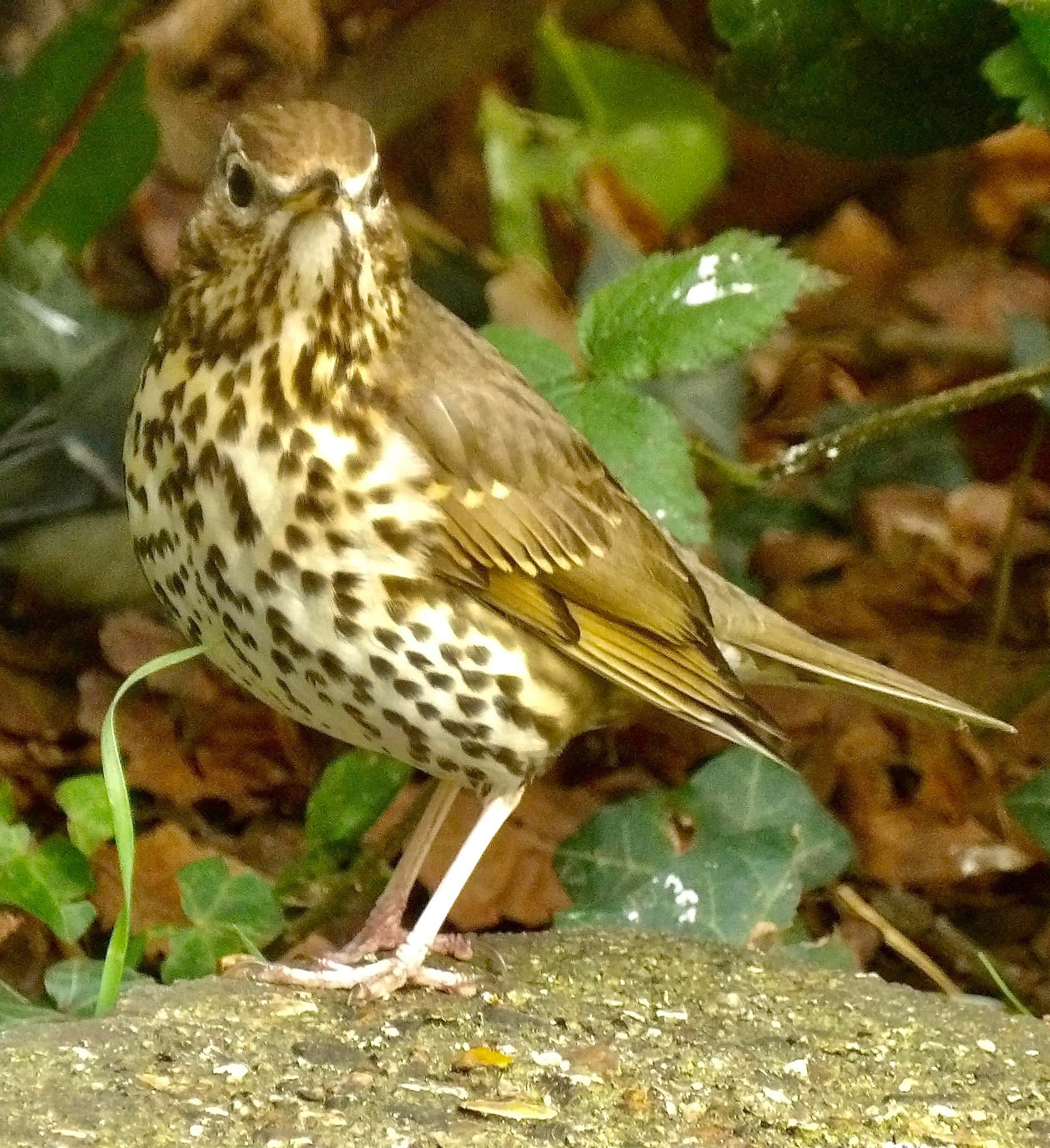
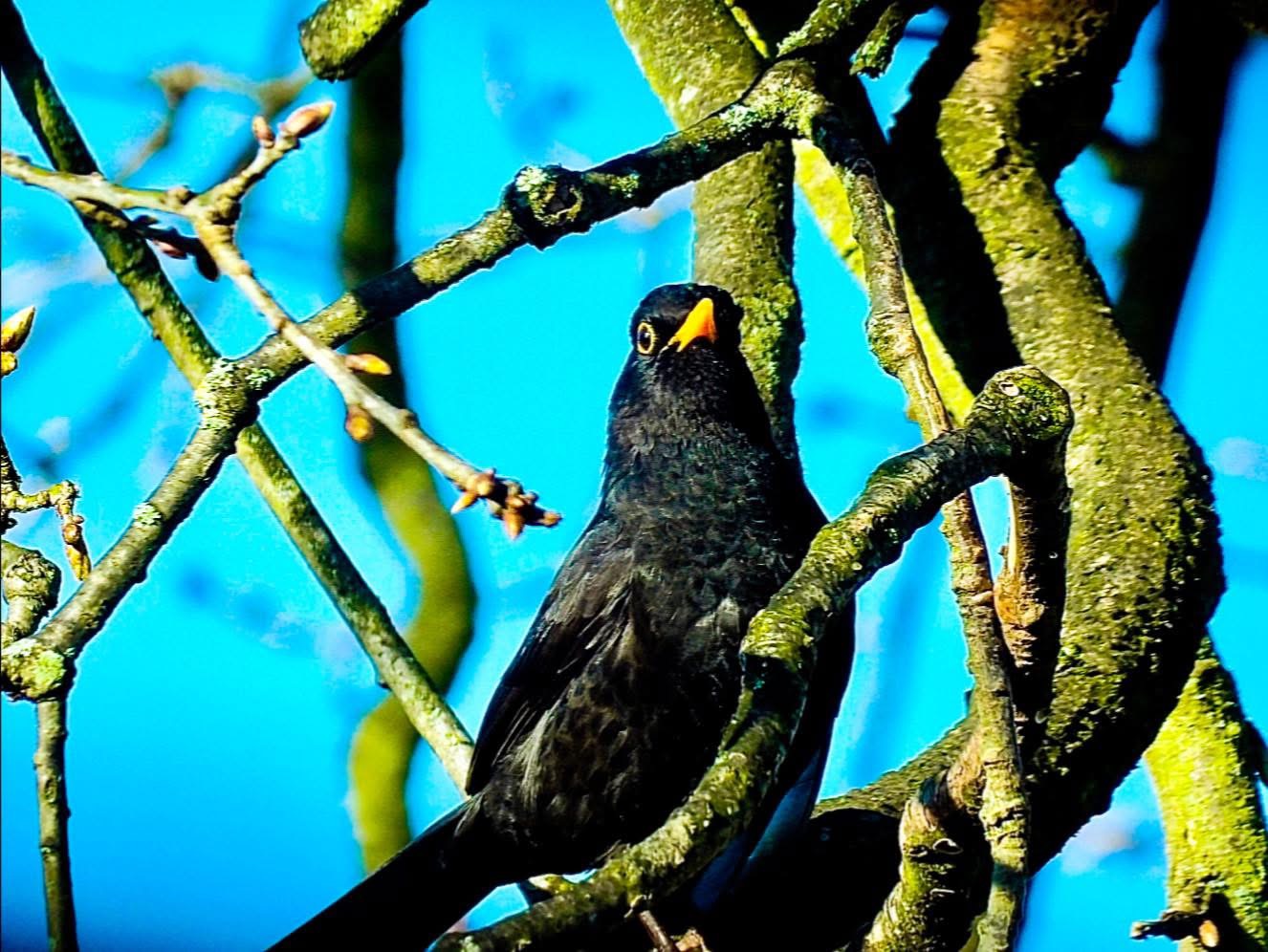
Birds like blackbirds, thrushes and magpies caught in local woods and fields were traded at Kirkham Bird Fair. Picture by Mick Gisbourne.

Reader Rex North has been in touch with some interesting contributions on recent topics. He says: “I was interested to hear about the ‘Bird Fair’ at Kirkham. It seemed to me that this must have happened during the 1840s, and prior to that if the band travelled by boat, as the York-Scarborough railway opened in 1845 and it would have then been possible to travel by train from Malton to Kirkham Abbey station more quickly.

“I have an 1840 directory of the East and North Ridings published by William White, and some reference is made to this fair, as follows: ‘A pleasure fair is held near the ruins (of Kirkham Priory) on Trinity Monday, when the principal traffic is in blackbirds, throstles (thrushes), magpies and other birds, taken in the neighbouring woods and plantations.’ This rather suggests a trade of wild birds caught and sold for their singing capabilities, with magpies being capable, I believe, of being taught tricks etc, so perhaps having a value in those days. I would suspect that the trade died out soon after the railway came, but it would be interesting to know more!”

It would, wouldn’t it, Rex, and the added details you have provided are fascinating indeed. I must admit I made the assumption that these avian trades would have involved birds like poultry, pigeons or birds of prey, that were used for food, competition or pest control. It never occurred to me that they would be kept for their singing! These days most of us wouldn’t dream of doing anything as cruel as snatching songbirds from the wild and placing them in a cage purely for our own entertainment. Their song may have sounded sweet, but I can’t imagine the birds were remotely content in their domestic prison.

I was also tickled by the use of the phrase ‘pleasure fair’. It conjures up images of a simpler time, where happiness was gained in less complicated ways than today.

Rex also has some information on Samuel Bean, known to reader Katherine Hill as ‘Grandpa Samuel’ whom she believed had been born at Peep o’Day farm near Husthwaite, Easingwold in the 1880s.

Rex writes: “I was also intrigued by the name ‘Peep o’Day Farm’, and, being interested in family history I found that Samuel Bean was in fact baptised at Acomb, near York, on 27th July 1879, the son and 4th child of Samuel and Sarah Bean. Samuel (senior) was born at Marton in the Forest, near Sheriff Hutton, being baptised at St Mary’s Church there on 19th November 1848, the son of James and Anne, who farmed at Marton Bridge. Sadly there seems to be no link to ‘Peep o’Day’ at Husthwaite as such, but by 1861 James and Anne had moved with their family to Rising Sun Farm at Easingwold, and had arrived at Acomb by 1871. Samuel and Sarah themselves were not only farming, but running the ‘Skip Bridge Inn’ on the York to Knaresborough Road by 1881, as well as managing the four young children. I wonder if your correspondent’s reference to ‘Peep o’Day’ might refer to ‘Rising Sun’, the meaning being virtually the same?”

I passed this information on to Katherine and she replied: “To get such a positive and interesting response is wonderful. The information is really helpful. My mum also told me that some of Grandpa Samuel’s family farmed at Rising Sun. This all links up with our information. Do you know where/which farm they went to in York? One source suggests they were at Rufforth Grange (enclosed by the airfield in WW2). We do know that Grandpa Samuel and siblings were brought up living at Grange Farm, Acomb.” 

I can’t answer her question, but perhaps Rex or another resourceful reader might be able to find out.

Katherine added: “My ‘Bean’ cousins and I are having a get together soon to talk about our family history. I am recording as best I can the information we’ve got and hope to put it together for a booklet for each branch of the family.”

I wish Katherine the best with her booklet and hope all the Beans have a wonderful family celebration! And if any of you reader sleuths can help further in her quest, do get in touch in the usual ways.


Do you have opinions, memories or ideas to share with me? Get in touch with me using the ‘Contact’ button on the top right.

This column appeared in the Darlington & Stockton Times on Friday 20th and the Ryedale Gazette and Herald on Wednesday 18th Feb 2026

A fledgling emergency

This slideshow requires JavaScript.

(This column appeared in the Darlington & Stockton Times  on 15th June, & the Gazette & Herald on 13th June 2018).

I was on a dog walk this morning when I came across a scruffy, chubby little chick perched by the side of the path. Every now and then, he’d give a few cheeps and look about himself in bewilderment, as if saying, “How on earth did I get here? And now what am I supposed to do?”

I had visions of him bravely leaping out of his nest into the unknown, and landing in unfamiliar territory without any notion of how to take off again. He didn’t look very happy, and I wondered if I ought to help him in any way. I couldn’t spot his parents anywhere.

In years gone by, I would have stood there agonising about what to do, fearing he’d be a tasty meal for the next passing cat. But one of the benefits of the modern age is that we have technology at our fingertips. So I took out my phone and Googled ‘What to do if I find a baby bird’. Those clever people at the RSPB came to my rescue, having dedicated a whole page on their website to just such a emergency.

For those you who don’t know, they say: “It’s common in spring and summer to find young birds sitting on the ground or hopping about without any sign of their parents…interfering with a young bird like this will do more harm than good.” It goes on to say they will not have been abandoned by their parents, who will either be watching unseen, or gathering food, and that you should leave them as they they are. “Removal of a fledgling from the wild has to be a very last resort – then only if it is injured or has definitely been abandoned or orphaned.”

So, thanks to my phone, I was very quickly reassured that I was doing the right thing by simply leaving it where it was, despite its anxious chirping and my worries about dastardly feline predators.

He was quite a chunky, round, fellow, with pleasantly dishevelled feathers, a tell-tale sign that he was just a youngster. He was mostly dark brown, yet speckled with dashes of light brown, and my gut instinct told me he was a baby blackbird, although I wasn’t sure. I took a few photos to look it up on my return, and, sure enough I was right. I think my dad would have been pleased. My countryside knowledge is growing by the week!

Dad just loved the nature that surrounded him, and he described June as a ‘beautiful time’ in his column from 17th June 1978. He goes on to talk about its reputation of being a ‘dry’ month, and the long-range forecast in that year predicted it would live up to that reputation. “However,” he adds, “We must not overlook the possibility of heavy downpours – indeed they’ve already come!”

Which is pretty much the same as now, with the first few days of June being as Dad described 40 years ago. I’ve checked the long-range forecast for this month too and it is strikingly similar, predicting mostly dry weather with the occasional heavy downpour.

He goes on to explain that is also known as the month of the ‘haysel’, an ancient word no longer in use, and not found in any of his trusty dialect glossaries. It refers to the period of gathering in the hay, when the ripe grass is cut, dried and carried into the barns for storage. When Dad was a boy, it was a time of great communal activity, and the whole village would turn out to help the farmers gather in their hay before the next heavy downpour. The farmer’s wife would provide a ready supply of drinks to the thirsty workers, including beer and cider, although according to Dad, the rather unappetising-sounding ‘cold tea’ was more commonly drunk.

Dad’s favourite part was once they were in the yard, when him and the other small children would launch themselves into the barn and, as it was in the days before bale machines, make dens and hiding places in the fresh, warm grass as it was unloaded off the carts. He notes that by 1978, almost all of the hay-gathering was done by machinery, and wistfully observes, “Haysel has gone from our language; I wonder how long it will be before haymaking as we knew it also disappears?”

Follow me on Twitter @countrymansdaug

Dawn – a chorus or a cacophony?


A62D98FE-448F-437A-9D82-11B337055D00
The blackbird often leads the chorus, like an avian Gareth Malone

4DE65D48-FA60-4EDD-8F5C-65585CE1528D
And early bird in full song

(This column appeared in the Darlington & Stockton Times  on 18th May, & the Gazette & Herald on 25th May 2018).

The insomniacs and early risers among you will have noticed that as the mornings are getting lighter, so the noise produced by our energetic bird population is getting louder.

I have a love-hate relationship with the dawn chorus, depending how much sleep I’ve had during the night. If I’m well rested, then it’s like uplifting music to gently come round to. After a wakeful night, however, it’s more like an unpracticed school orchestra warming up in my garden.

Like the call of the cuckoo I mentioned last week, the arrival of the dawn chorus is another sign that winter is behind us. The chorus is predominantly made up of male birds looking for love, and those with the loudest songs quickly attract partners. The bird produces his tune from an organ called the syrinx, and a lusty syrinx draws the females like bees to pollen. His spirited birdsong saps much of his energy, and so not only does he have to be fit, but he must be an excellent hunter to ensure he has enough food to keep his strength up. So if he can be heard above the other members of the chorus, discerning females will assume that he is likely to not only father healthy chicks, but also be a reliable source of sustenance for the growing family.

The dawn chorus season lasts from late April through to early June, and once a bird has secured his lady love, he is no longer required to sing so loudly. So as the season progresses, fewer birds take part. It’s likely that you will hear the odd bird singing a lonely tune at dawn late on in the season, but sadly he’s probably been saddled with an inadequately-performing syrinx and as such, is destined to remain single and loveless.

As my dad explains in his column from 20th May 1978, there’s an order in which the birds sing the daily chorus, and more often than not it’s the blackbird who starts them off. He is one of our finest songsters and, like the bird equivalent of Gareth Malone, he leads the feathered choir melodiously towards the new day. Soon his contemporaries, such as the song thrush, the wood pigeon, the robin, the turtle dove, the pheasant, the willow-warbler, and the wren all join in.

As the sun comes up, the chorus diminishes, usually lasting from half an hour before to half an hour after sunrise. This is because that once the day has fully dawned, then the insects, seeds and nuts that the birds feed upon become easier to spot. The sounds that you hear during the day are mostly bird calls which are a type of communication, such as alerts to danger, disputes between rivals, or messages to one another.

There’s quite a difference between birdsong and bird calls. Calls are short, simple sounds, whereas songs consist of a more complicated and longer sequence of notes. There is some debate about whether birds can sing just for the sake or enjoyment of it. But when I watch a blackbird in full throttle near the top of the poplars by my house, he certainly looks to be enjoying himself.

The dawn chorus is a phenomenon that happens all over the world, and the first Sunday in May is now International Dawn Chorus Day where we are invited to get up early and appreciate one of nature’s most entertaining performances. The day came about in the 1980s when broadcaster and environmentalist Chris Bailey hosted a birthday party at 4am specifically so that his guests would enjoy the dawn chorus, and it grew from there, with 80 countries now participating. Events are organised all over the UK by bodies such as the Wildlife Trust, the RSPB and the National Trust, so that we can all learn to appreciate the wonder of such a spectacle.

As I’m writing this a few days before Sunday 6th May, I’m yet to make up my mind whether to rise early or not, as in recent days, I have already heard the dawn chorus several times thanks to a doggie guest who seems to want to make sure I don’t miss it! So, as he will have gone home by Sunday, I might just take the opportunity to grab a much needed sleep in!