Hard as snails

IMG_3022
A cluster of garden snails found under a rock in my back yard
IMG_3035
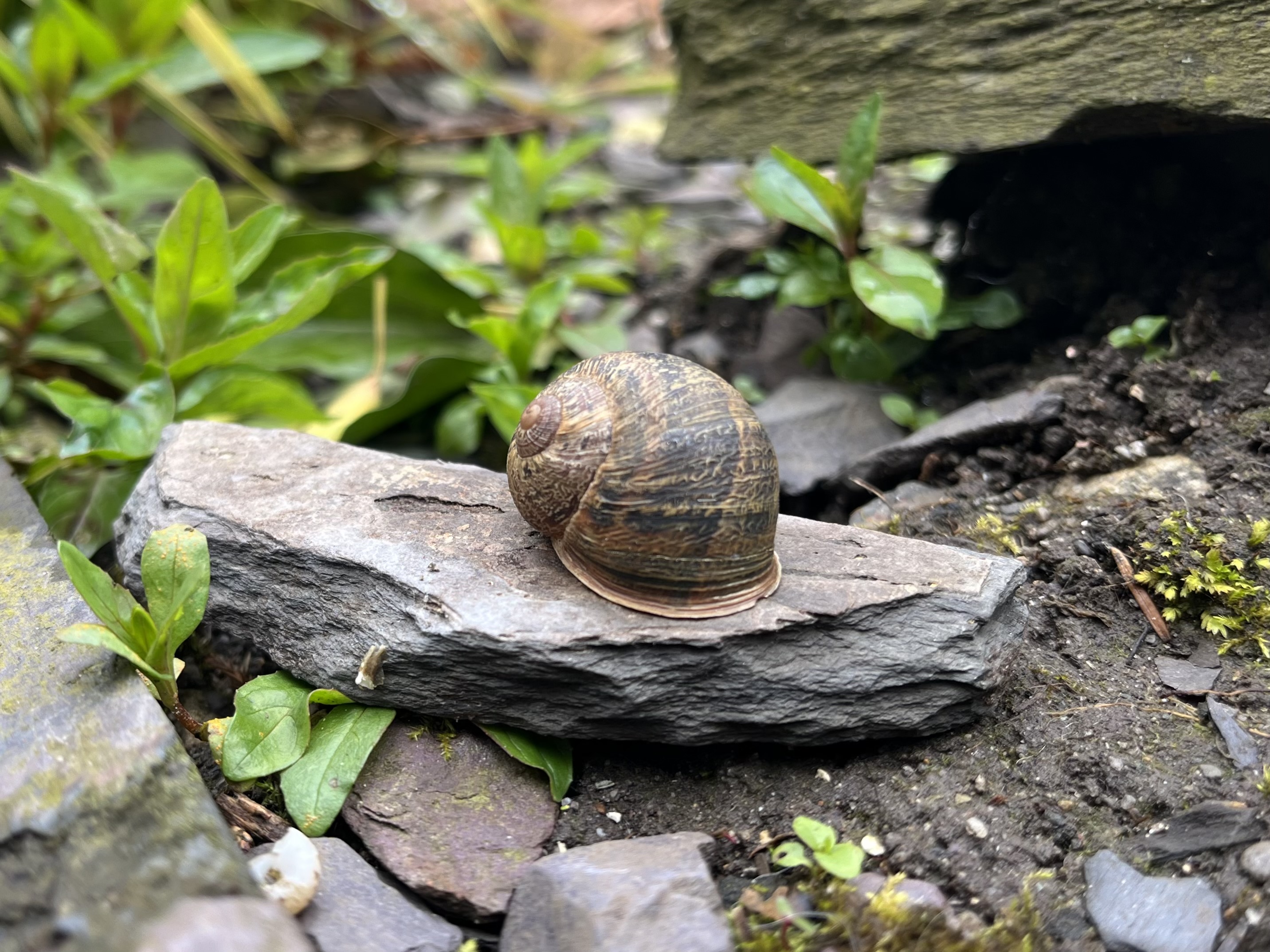
A snail needs to consume lots of calcium-rich food as contained in green vegetables like spinach and broccoli to keep its shell strong
I love it when an idea for a column comes from something that I see every day and yet have not paid much attention to before. It was on a dog walk that I spotted a snail on the path on front of me and thought what an amazing pattern and colour its shell was. It struck me that I had no idea how these shells were formed, nor how they gained their colours and patterns.

I do know that snails are the bane of most horticulturists’ lives who will go to many lengths to deter or prevent these stubborn gastropods from ruining their much toiled over gardens. But you see, I am to gardening what Rab C Nesbit is to personal hygiene (willingly neglectful) and therefore I do not see snails as the enemy but instead am rather fascinated by them.

There are upwards of 120 different varieties of snail in this country, and the average British garden is home to several thousand at any given time. You probably know that they are hermaphrodites (i.e. have both male and female reproductive organs), but they need to mate and exchange sperm to have babies, which they do around February and March. They lay their fertilised eggs in dark moist places, often underground, and it takes around 15 to 21 days for them to hatch, depending on the species.

Initially, the baby snailettes, which are born with a wafer-thin flimsy shell, eat the calcium-rich eggshell from which they hatched to see them through the first five days or so. But after that, they have to go in search of more fodder to continue to thrive. As they emerge into the open air they are extremely vulnerable to an array of hungry predators which is the reason their average lifespan is a mere nine to 12 months, even though they can live longer. Their first and urgent mission is to find sources of calcium to grow and nourish their hardening protective shell.

Their distinctive shells are formed thanks to an organ called the ‘mantle’ which secretes layer upon layer of calcium carbonate to build size and thickness. Green vegetables such as broccoli, spinach, cabbage, and lettuce are particular delicacies, as are flowers like hosta, marigold and rudbeckia. The swirly shape is thanks to the way in which the calcium carbonate is secreted, and in almost every case flows in a right-handed, or clockwise, direction, otherwise known as dextral. There is the odd species that has a left-hand swirl which is referred to as ‘sinistral’, but they are pretty rare.

You can use pesticides to control the snail population in your garden, but there is a trend towards more environmentally friendly methods. There are a surprising number of snail-repellent flowers, vegetables and herbs (a quick Google search will tell you what they are) and you can take steps to make your patch an attractive des res for natural predators like birds and hedgehogs. Again, Google is your friend if you want tips on how to draw them in.

Incidentally, if you spot a rock that is surrounded by cracked snail shells, this is likely to be a bird’s anvil stone. Garden birds like the songthrush love eating snails, and cleverly use the rock to bash it and crack open the shell. If a snail is ever separated from its shell, it cannot survive.

Snails love to hide in the daytime in warm, moist places, so another suggestion is to lay planks within your flower borders before nightfall, and then first thing the next day, lift them up and collect any snails you find hiding underneath. They will graze an area of no more than about 20 metes around the spot where they were born and get very disorientated if they are moved further away so if you take them out into the countryside and set them free in a woodland, for example, they won’t be able to find their way back.

Of course, with thousands at a time dwelling in your garden, you might need to make a lot of trips. But perhaps, if you embrace all of these deterrent methods, alongside a healthy dose of persistence, you might just end up with a full crop of lettuce this year.

I’d love to hear from you about your opinions, memories and ideas for columns. Use the ‘Contact’ button on the top right of this page to get in touch. This column appeared in the Darlington & Stockton Times on Friday 3rd and the Ryedale Gazette and Herald on Wednesday 1st May 2024.

A house with no name

IMG_1631
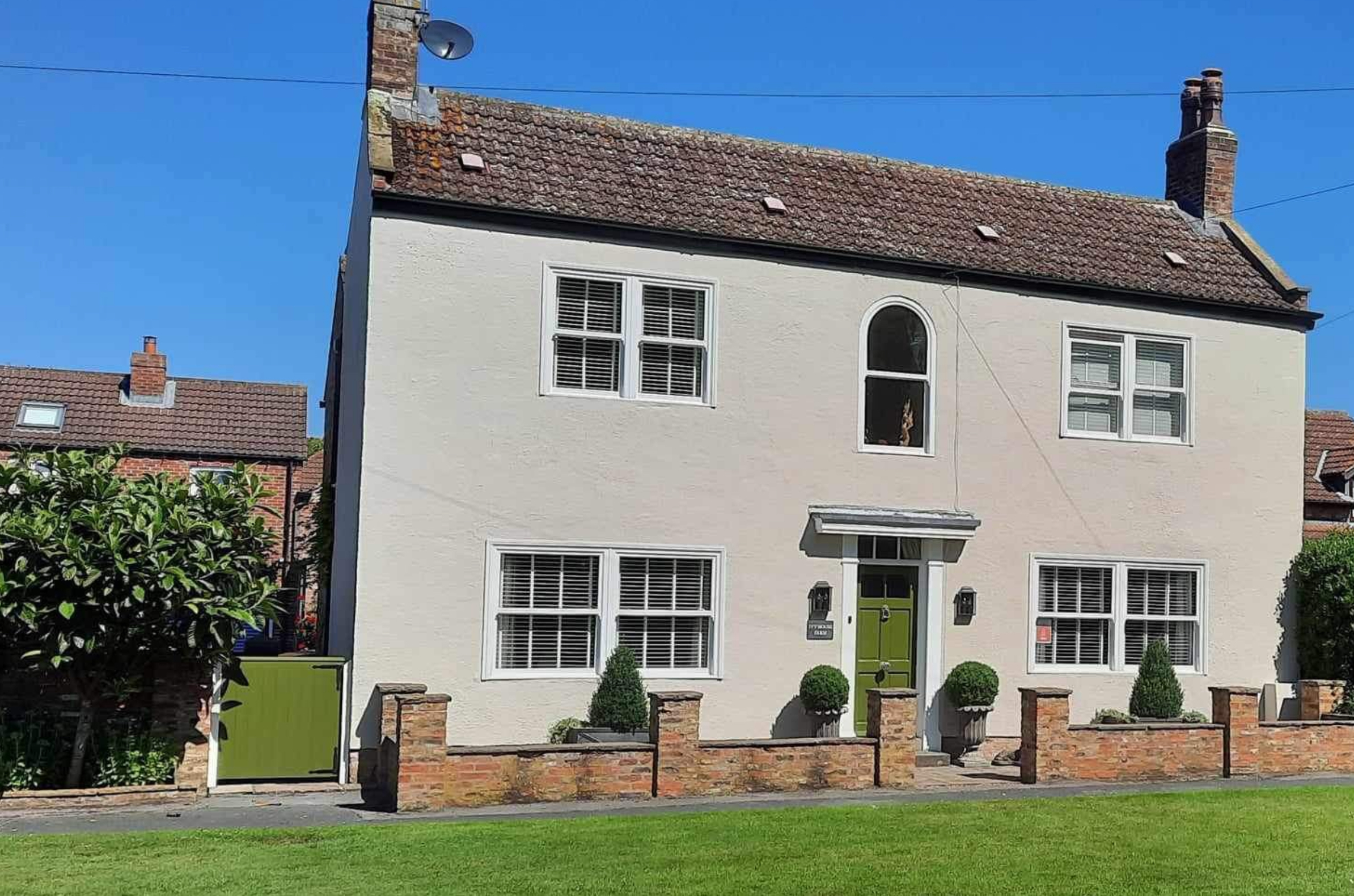
Clare’s house has been called Ivy House Farm for more than 200 years, even though the farm is long gone

IMG_1630
Ivy House Farm back in the 1940s when it was still in operation.

I had some interesting comments about house names following my column that mentioned the fact that Old Pond House in Newton-on-Rawcliffe had no name until reader Paul Ireson bought it in the mid-1980s. He’d wanted to call it Pond House (the village pond lay not far from their front window) but a neighbouring house had already used that name, hence they called it ‘Old Pond House’.

Reader Andy Long says that when he moved into his house in the late 1990s, although it had a number, there was also a name on the gate. “The gate was rotten so was removed and the name was never replaced or used. Maybe we thought a house name was too posh for us!” Andy isn’t completely sure he’s right but thinks the name was ‘Ingleside’. “The Gaelic origin or link to an open fire possibly went over our heads…or the pending birth of our first child seemed more important!”

And Lynn Catena says her sister’s first house was called Brae Side, but as it also had a number, they never used it. You often see houses on numbered streets that also have their own name, but it used to be seen as rather pretentious, the point being that you don’t need a name if your house already has a number. If such a house does have a name, would you use it when telling someone your address? And if you choose to name a house that already has a number, does it ever become recognised by Royal Mail? Can you ditch your house number altogether and change it to a name?

I grew up in a North Yorkshire village where most of the houses, including ours, had names rather than street numbers. When I was a teenager, we moved to a new house in the same village, and Mum and Dad were able to choose what to call it. They romantically named it after a wood where they would go for walks before they were married. Claire Dunstan-Elliott, who originates from Yorkshire, has spent many years living and working in Wales. She says: “I’ve named every house I’ve owned after the previous place I lived which has worked out quite well.” But she found visiting some small Welsh villages for work quite taxing: “There are no street names, no house numbers, and every house in the village is just named – it is really hard work, especially when they are in Welsh!” Imagine how hard it must be for a new postman or postwoman in these small country villages. Let’s hope they get paid per hour and not per round!

Most people who are going to name a house often, like my parents, have some meaningful reason for the one they choose. Judging by the most popular house names in the UK, though, you can tell that most go with far more practical and obvious choices. At the top of the list is Rose Cottage, and close behind are Orchard House, The Coach House, The Cottage, The Bungalow, The Lodge, The Barn, The Stables, The Gables and The Willows. Hillside and Hillcrest are also up there as are Sunnyside, Woodlands and Meadow View.

Clare Proctor says naming can be a weighty responsibility. “We were hoping to buy a lovely house called Corner Cottage (old house; newish name). I hated the name and was going to change it, but to what? For the few months we were in the running we debated new names. It was worse than trying to choose a baby’s name, or even worse, a pet’s name!” Clare and her husband eventually bought a house called Ivy House Farm, but the farm had long gone, so they pondered changing it, but again, couldn’t think of a suitable moniker. “We eventually decided that as it had held the name for nearly 200 years it was not for us to change it. I just tell people it’s a retired farmhouse!”

Paul Ireson, who lives in Rosedale and whose house-naming sparked this column, might be interested to know that Clare once ran a hotel there: “We used to own the White Horse Farm Hotel. It also was not a farm, but the previous owners bought some sheep and chickens and thought the name would give it a more rustic appeal!”

Have you ever named a house, and if so, what name did you choose and why?

I’d love to hear from you about your opinions, memories and ideas for columns. Use the ‘Contact’ button on the top right of this page to get in touch. This column appeared in the Darlington & Stockton Times on Friday 29th March and the Ryedale Gazette and Herald on Wednesday 22nd March 2024.