Baby naming keeps us on our toes

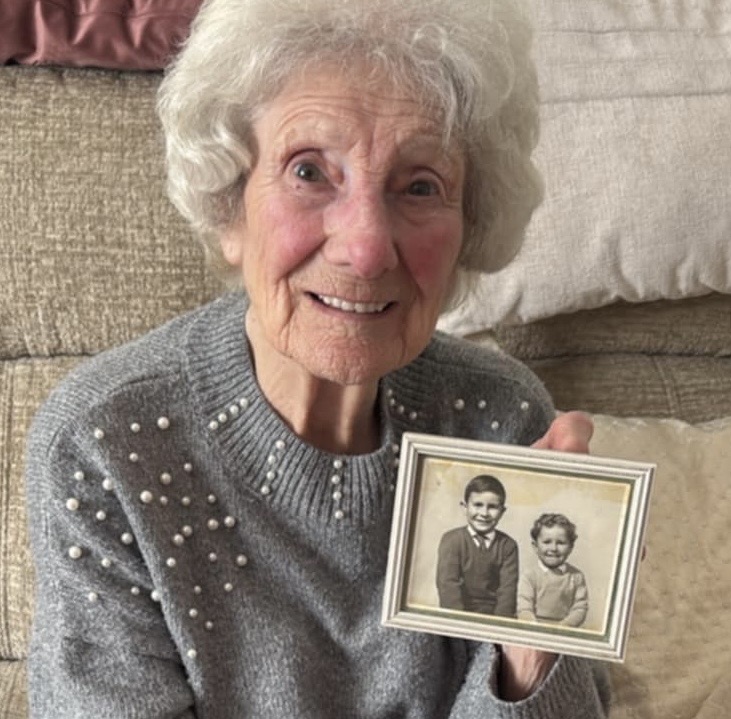
Rob Ainsley’s mum Barbara holding a 1961 photo of her sons John (left) and Rob. She was so convinced Rob was going to be a girl she didn’t have a boys’ name ready when he was born.
Rob Ainsley and his mum Barbara at a recent family wedding.

Not since I wrote about the highly controversial topic of Yorkshire puddings back in 2019 have I received as much reader feedback as I have about family names. It has been fascinating to hear all your stories.

Mary Harrison wrote: “My husband and I were reminded of the time we were teaching in Western Kenya. One of the workers on the compound rushed round to ask John to take his pregnant wife to the hospital…John says he had never driven so quickly as she was already in labour. A few hours later we had a visit from the proud father to tell us his new son had been called ‘Mr Harry’ (after Harrison) – in recognition of John’s help.”

When I was pregnant with my first child, I used to refer to my baby as ‘he’ for no other reason than ease. By then, the mid-1990s, you could find out the sex at your 20-week scan, but we had no desire to know in advance. During one examination, as my midwife felt around my large bump, we were discussing the imminent arrival. When I used the word ‘he’, she stopped, looked up and said: “You mean she.” I was shocked, and a little upset, because she knew I wanted to experience that ‘Ahhh, it’s a boy/girl’ moment when you meet your baby for the first time. But how could she tell? Was it the shape of my bump? Or was she using some midwifery magic to determine the sex?

From then on, I was convinced I was having a girl, although we made sure we had both female and male names ready. Of course, if you were paying attention in previous weeks, you will already know that my first baby was not a girl at all, and we called our little boy Oliver. It would have been Hannah had he been a girl.

Rob Ainsley contacted me to say: “My mum was so confident I was a girl, she’d decided on ‘Joan’. It was 1960, so way pre-scanning. When I popped out I clearly was a boy, so there was some hurried rethinking. Mum tried ‘Robin’, but Dad thought that wasn’t strong enough, so they compromised on ‘Robert’. I’ve never especially liked it, but I suppose ‘Joan’ could have been problematic for me in 1960s Britain. Not that it stopped the artist Joan Miró, of course.”

I’m intrigued as to why his mum was so certain he would be a girl when there was absolutely no proven way back then to know what sex your baby was going to be. Was it some old wives’ indicator, like a small neat bump meaning it was a going to be a boy, and a more spread-out bump was a girl, as I was told.

Clare Proctor says: “My mum was so convinced my eldest brother would be a boy that she refused to choose a girl’s name.” As Rob’s mother discovered, that kind of conviction is not always accurate, but in this case, Clare’s mum was spot on, and Peter was born in 1950. He made a rather exciting entrance into the world as Clare describes: “My dad had to deliver him in the back of a Land Rover with my mum (a trained midwife) telling him what to do, in between asking if it was a boy. He just said, “Let’s get it out first, then check!””

I asked Clare if he’d been nervous: “Apparently, he was surprisingly calm, but then he had been chased out of Burma (literally) by the Japanese army when he served in WW2, so I guess delivering a baby was a doddle!”

My first-born is now 29, and his partner Gigi messaged me on the subject of names: “Have you heard of nominative determinism? It’s a phenomenon where people with certain names end up in professional fields relating to the name, such as John Bones ends up a doctor, or Olivia Sweet becomes a pastry chef. It’s so interesting!”

My childhood ballet teacher was called Miss Toes and it always makes me giggle (it was probably spelled Toase but I didn’t know that when I was little!).

I bet some of you have some cracking examples of such names, and by now you should know the drill – get in touch using the methods below.

Do you have opinions, memories or ideas to share with me? Get in touch with me using the ‘Contact’ button on the top right.

This column appeared in the Darlington & Stockton Times on Friday 7th and the Ryedale Gazette and Herald on Wednesday 5th Nov 2025

A conventional name?

Reader Clare Proctor’s siblings in a photo taken in 1950s Tanzania, where they lived at the time. L-R: Janet (J.A.P), Michael (M.A.P) and Peter (P.A.P.).


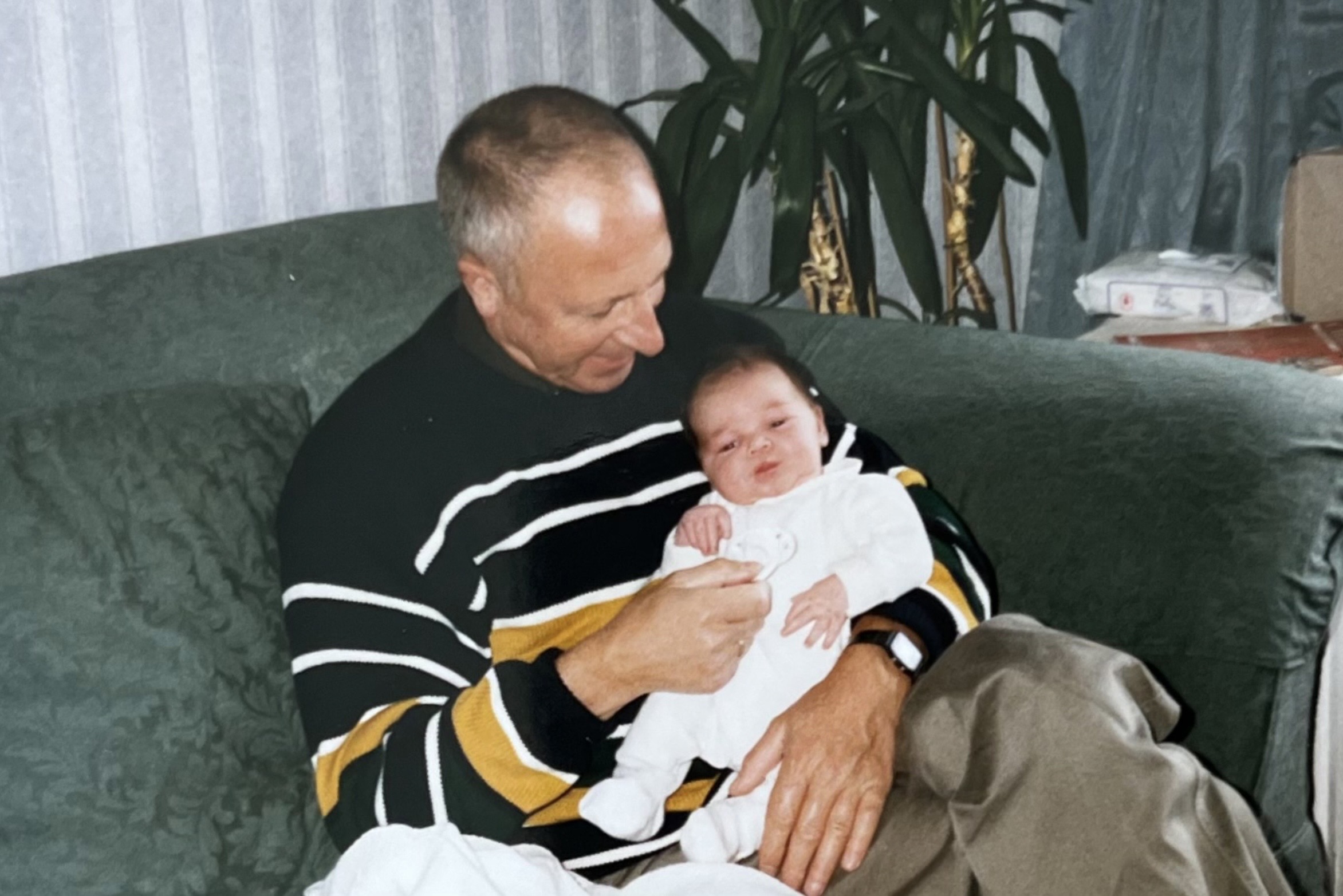
My dad holding my eldest son Oliver Sebastiaan on the day he was born in April 1996. We had chosen names that we liked rather than ones passed down the family.


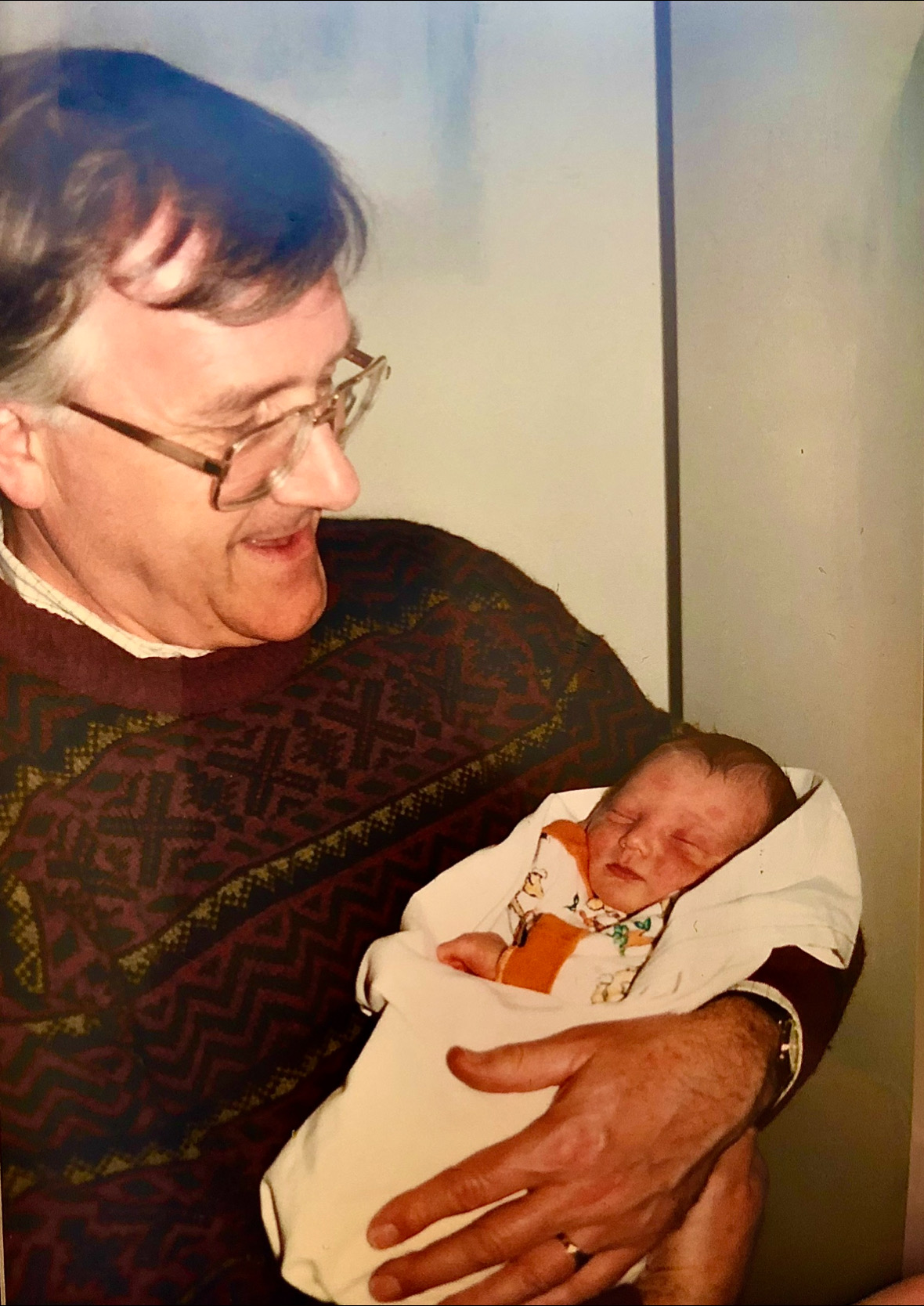
My middle son Jasper Marcus was named using the same initials as his Dutch father Johannes Marcus, and his grandfather, Jan Marie, seen here meeting him for the first time in 1998.


I’ve had some lovely messages on the subject of family names. A few weeks ago, we heard from Brian Reader who had ancestors called Rocious, Fera and Ellengor. Last week we also heard from David Severs, whose family passed down the biblical name ‘Lot’, and whose great grandfather James Foster was the boilerman at the local brewery in Thornton Le Moor. James’ employers had a daughter named Ethel Carlotta which is where David believes his great aunt Ada (the boilerman’s daughter) came across the fancy name ‘Carlotta’ which she chose for her own daughter and which handily incorporated the family preference of ‘Lot’. She called her son ‘Lancelot’, which she perhaps snaffled from the Arthurian legend for the same reason.

Vicky McDonald got in touch to say: “I have just read your article entitled “There’s a Lot in a name”. How fascinating and how strange that I should stare back at a photo of my Great Great Uncle Lance (or Lancelot as he is referred to in the article)! Lancelot married my maternal grandmother’s aunty (my Great Great Aunty Gladys). I have fond memories of them both. 

“I would be grateful if you would be able to pass my email address on to David Severs mentioned in the article as it seems we are related. It would be lovely to get in touch with him.”

How wonderful that my little column is bringing families together! I have passed on Vicky’s email address to David and will let you know what transpires.

I also heard from Wendy Sissons: “Leedham as a middle name was passed down to the eldest son in my dad’s family. My dad’s dad was Ernest Leedham, his eldest brother was Eric Leedham and Eric’s eldest son, my cousin, is Paul Leedham.

“Funnily enough although my grandfather was Ernest, he passed that name onto my dad who was the third son after Eric and then Dennis. Presumably they didn’t like it enough to give to the eldest!”

Wendy is not sure where the name Leedham came from, but guesses it was the surname of an ancestor and adopted by their descendants at some point as a middle name to commemorate them.

Clare Proctor has an interesting story on the theme: “We don’t have unusual names in our family, but my Dad’s initials were A.A.P. so his four children were all given ‘A’ middle names. We are M.A.P., J.A.P., P.A.P. and C.A.P. Funnily enough, as my sister and I both married Ps, we remain so! Our two daughters have family names, but we chose them because we liked them, then made the link afterwards.”

Clare’s eldest daughter is Molly Paget after her mother’s name and mother-in-law’s maiden name. Her younger daughter is called Lily Alice-Rose which is a combination of both her and her husband’s grandmothers’ names.

Clare adds: “My friend knew a family in the USA with five daughters all named Mary, so there was Mary Jane, Mary Sue, Mary Ann etc!” Unless both parts of the name were used, it must have been very confusing when the postman delivered letters!

Is it something peculiarly American that we regularly see numbers after their male names? For example, former president Bill Clinton’s name at birth was William Jefferson Blythe III (i.e. the Third – he took his stepfather’s surname Clinton later in life). At birth, actor Will Smith was named Willard Carroll Smith II (i.e. the Second). This use of patronymic suffixes is considered a bit pretentious by we Brits because here, the convention is reserved for the Royal family and nobility only. Imagine if your relative started to refer to himself as ‘John Smith the Second’? We’d laugh him out of the building for getting ideas above his station wouldn’t we?

When it came to finding names for my own children, we did use some family names, although not with my eldest whose first and middle names were chosen simply because we liked them. Our second son had the same initials as his father and paternal grandfather because that was a tradition on that side of the family. Our youngest was named after my godfather and my dad, who were two of my favourite men of all time.

Do you have a story of an unusual way of choosing children’s names? Do get in touch using the methods below.

Do you have opinions, memories or ideas to share with me? Get in touch with me using the ‘Contact’ button on the top right.

This column appeared in the Darlington & Stockton Times on Friday 17th and the Ryedale Gazette and Herald on Wednesday 15th Oct 2025

Mother of all battles

IMG_2027
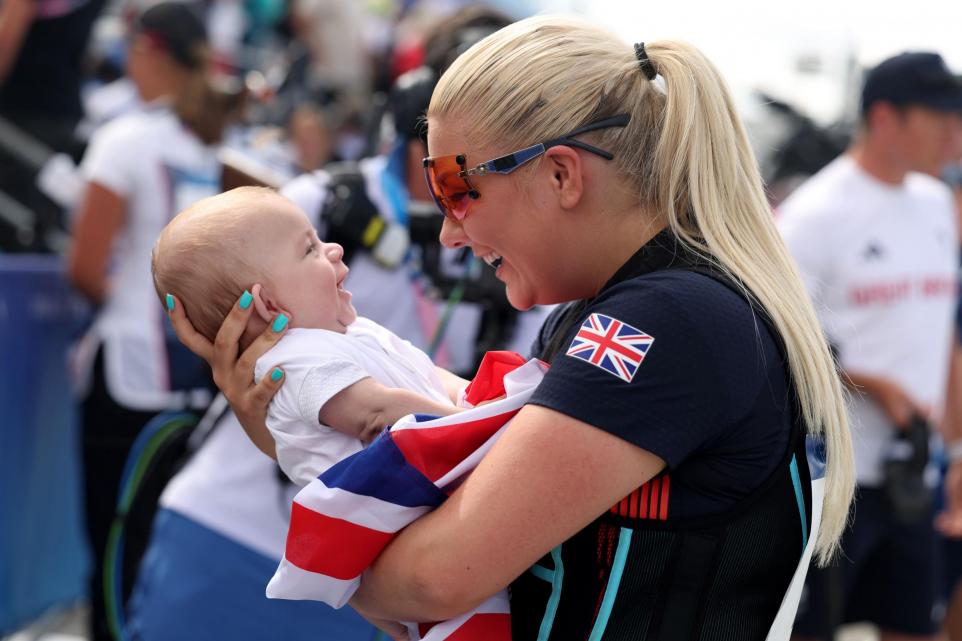
Olympic skeet shooting silver medalist Amber Rutter with her three-month-old baby Tommy in Paris (Picture Isabel Infantes/PA)


I love the Olympics and Paralympics, seeing so many countries come together to battle it out at a bewildering array of sports (some of which I did not know existed) is absolutely captivating.

One of my favourite images during the Olympics was seeing Team GB’s Amber Rutter cuddling her three-month-old son Tommy after winning silver in the skeet final (a form of competitive clay shooting). Amber had had her baby only three months before and, as every mother knows, having a baby takes an enormous toll on the body and mind. To get to the Olympics and win a medal is incredible.

The Paris Olympics and Paralympics have spotlighted the accomplishments of women throughout history, and in 2024 they are classed as the first ever ‘gender-equal’ games. That is, there are as many women as men among the 15,000 competitors.

Of course, it hasn’t always been the case. When the first modern Olympics took place in Athens in 1896, women were not permitted to take part. However, in Paris in 1900 they were allowed to compete in five sports – tennis, golf, croquet, sailing and equestrianism. In all there were 22 female athletes and 975 male.

The first female Olympic champion was Helene de Pourtales, a Swiss-American Countess who became the first female to win a gold medal in the sailing regatta. Other notable female winners were Briton Charlotte Cooper, who won in the tennis, and American Margaret Abbott who took the golfing gold. Interestingly, Abbott’s mother Mary also competed in the golf, finishing seventh. She might possibly be the first mother to take part in the games (I could not find out if any of the other female athletes had children).

It was not easy for elite athletes who also happened to be mothers to compete, and until relatively recently, women who had given birth were expected to give up their sporting careers.

Fanny Blankers-Koen was one of the most successful female athletes ever and at the 1948 Summer Games in London, she was the first competitor from the Netherlands – male or female – to win a gold medal in athletics. She won her first in the 100m dash, her second in 80m hurdles, her third in the 200m dash and her fourth in the 400m hurdles. She was the first woman to win four Olympic gold medals, and the first to do it at the same games. She would have won more had she been allowed to compete in more events, but they were limited to three individual plus one relay.

She achieved all of this in the face of intense criticism thanks to the fact she was married with a young son and daughter. She said later: “I got very many bad letters, people writing that I must stay home with my children.” She was also informed by the British athletics coach of the time, Jack Crump, that at 30, she was “too old to make the grade”. All this was just fuel to Fanny’s fire, and she was delighted to prove the doubters wrong in brilliant fashion, earning herself the rather patronising nickname ‘The Flying Housewife’. Even more remarkable was that she was only training twice a week in the run-up to the games thanks to the fact she was pregnant.

Fanny is said to have missed her children badly while she as away, and almost left halfway through due to homesickness.

Thankfully, that would be unlikely to happen today because after much campaigning by Olympian mothers, most notably 11-time U.S. medalist Allyson Felix, for the first time this year there is a creche in the Olympic Village. Allyson was motivated by her own difficult experience at the Tokyo 2020 games when her baby was just two: “It was challenging in ways I didn’t expect, like staying in hotels, washing bottles, all the things you have to bring, feeding your baby in stadiums, who’s going to watch your baby.” Now, as well as daycare, the on-site nursery provides things like nappies, bottles, milk and food so that away from the competition, parents can relax and can enjoy genuine family time with their little ones.

I was very impressed to learn were nine mothers who competed for Team GB at the Olympics, seven of whom brought home a medal. I think Fanny would have been impressed.

I’d love to hear from you about your stories, memories, opinions and ideas for columns. Use the ‘Contact’ button on the top right of this page to get in touch.

This column appeared in the Darlington & Stockton Times on Friday 30th and the Ryedale Gazette and Herald on Wednesday 28th August 2024.