Hamer Home a family story

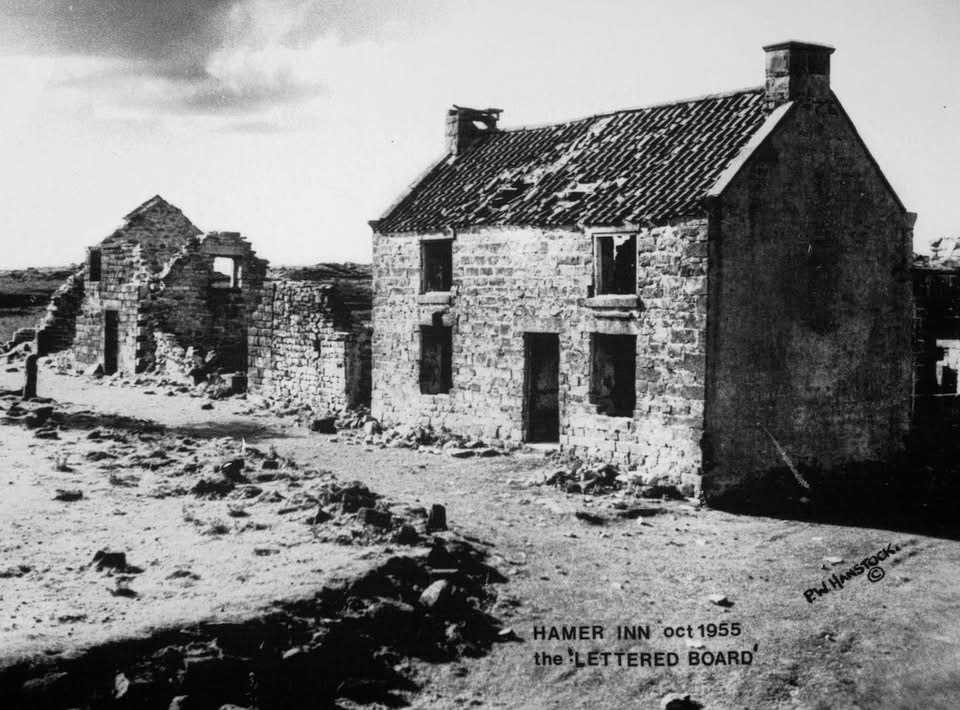
A 1955 photo of the ruins of Hamer Inn, previously known as the Lettered Board. David Ford’s ancestors lived there. Do you have a photo of the inn before it became derelict? Photo: P.W.Hanstock


I received an interesting message from reader David Ford: “I’ve just spotted a picture of the ruins of Hamer House on Facebook…My great grandfather Robert Ford was born there, along with several of his siblings. He emigrated to the USA as a young man seeking a better life, and tried gold mining. However he did not find it any easier over there and returned to Glaisdale. His brother Joseph wrote a book about life and times in Danby Dale…I would like a photo of Hamer when it was open as an inn.”

Although I’d heard of Hamer House, I didn’t know much about it. The first article that came up on Google was a piece written 15 years ago by none other than my dad. It jogged a memory of seeing it in one of his books and sure enough, on my very own bookshelf was a copy of Dad’s ‘Murders & Mysteries From The North York Moors’ with a whole section on Hamer.

Dad wrote: “It is believed the licence of this old inn continued until 1929, although it did survive as a private house into the 1930s. The last family living there was called Boddy, and I recall the old house still standing when I cycled past as a child.”

The building had a colourful past, and no doubt makes David’s family history research intriguing. The reason the inn was featured in the ‘Murders’ book is because there are three separate tales of deaths associated with it.

The inn stood at one of the highest parts of the moors, on the road between Glaisdale and Rosedale Abbey at the point where an old monk’s trod, or path, crossed it (where the Lyke Wake Walk traverses that road now). All that remains is a pile of stones, and yet the inn’s ghostly silhouette can be detected in the form of a wide expanse of smooth grass amongst the rough heather, hinting at what was once there – a busy, thriving coaching inn providing rest, warmth and succour for weary travellers. There were active coal mines nearby which drew men to the moors for work, and Eskdale farmers would send wagons of coal to supply places like Cropton, Hutton-le-Hole and Kirkbymoorside.

Although known by many as Hamer Inn, its previous name was the Lettered Board, and my dad believes it had been there for around three centuries. He talks about David’s ancestors in his book:

‘Hamer’s role as an inn declined after 1870, the year a local writer called Joseph Ford was born at the remote house. His father was landlord and I have a copy of a licensing application dated 1858 in which the liquor licence of the Lettered Board was transferred to Joseph Senior.

‘The younger Joseph Ford, who died in 1944, has left behind some stories of Hamer and they provide a vivid picture of the windswept and snowbound inn. He relates how elderly travelling salesmen would trek onto these moors, even in the height of winter, to sell trinkets.’

One sad story concerns a cork-seller who supplied local inn keepers and farmers, and Joseph Ford’s mother knew him well. He succumbed to the ferocious winter weather, and his skeleton was found much later not far from the Lettered Board Inn, his basket of corks lying nearby enabling his body to be identified.

The three cases of deaths at the inn include that of two apparently healthy guests retiring to bed, only to be found dead the next day with no apparent wounds or obvious cause. They may have been poisoned by noxious fumes resulting from recent replastering of the room, but no-one was ever sure.

The second case was a licensee who killed his wife, and quickly moved elsewhere in the dale. He was never prosecuted or imprisoned. The third story tells of a fight breaking out in the bar, and a man being bludgeoned to death with a poker.

Dad writes: “The only remnant of that tale was a heavy iron poker that was chained to the hearth to ensure this sort of thing never happened again. That poker was still there within the memory of my grandparents, but I never saw it.”

Can any of you reading this help David Ford track down a picture of Hamer Inn before it became derelict?

Do you have opinions, memories or ideas to share with me? Get in touch with me using the ‘Contact’ button on the top right.

This column appeared in the Darlington & Stockton Times on Friday 16th and the Ryedale Gazette and Herald on Wednesday 14th Jan 2026
From loss to love

image1
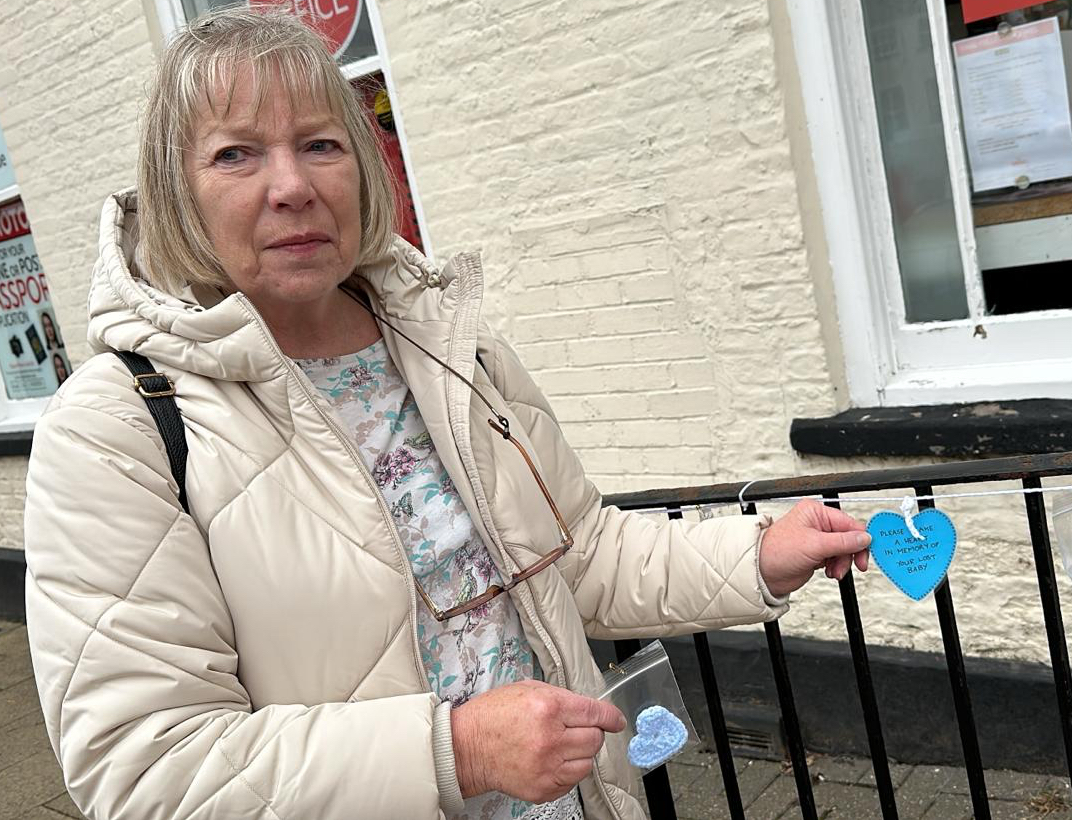
Carol Hepplestone with some hearts of remembrance outside Bedale Post Office during Baby Loss Awareness Week in October


image0
The work of yarnbombers in Bedale during Baby Loss Awareness Week in October
118178277
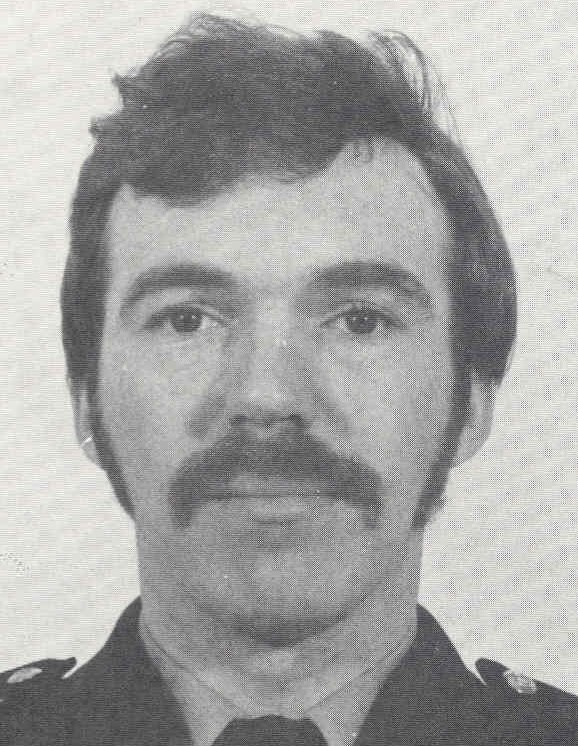
PC David Haigh, who showed such kindness to Carole Hepplestone after the loss of her baby, Leigh. PC Haigh was murdered by Barry Prudom in 1982.

Occasionally I give talks where I often discuss my dad’s role in the Barry Prudom case. Dad was Press Officer for North Yorkshire Police when Prudom murdered Constable David Haigh near Harrogate in 1982. While on the run, he also killed Sergeant David Winter in Malton and pensioner George Luckett in Nottinghamshire. George’s wife Sylvia was also shot but miraculously survived.

After one such talk, I was approached by Carol Hepplestone who told me a very moving story and, with her permission, I am sharing it with you today.

On 3rd November 1981, Carol gave birth to her second baby, Leigh, at Carlton Lodge Maternity Home in Harrogate. Unfortunately, Leigh passed away very suddenly at six days old on 9th November 1981. What prompted Carol to approach me was the fact that Constable David Haigh played a significant role in her life around that time. “Your talk brought it all back to me,” she said.

Carol explained that after losing Leigh, not only did she have to go through the trauma of a postmortem to find out why he had died, but there was an agonisingly long wait for the results. When they finally did come, the doctor delivering them did a terrible job. “He said they couldn’t find a reason why he had haemorrhaged so they were just going to put it down to a cot death…He said I could go away and have more children. It was quite dismissive and there was no offer of any follow up care.”

The whole experience left Carol bereft and on one particular night she decided she needed some time to herself and headed out without telling anyone where she was going. Her panicked husband phoned the police fearing she was vulnerable and may be in danger. “David Haigh was with my husband when I rang home and the phone was passed to him. In a calm way he asked where I was and told me he would come and collect me, which he did and took me home. He then sat us down and acted as a mediator/councillor/listener between us.”

Afterwards, Constable Haigh visited regularly to see how they were. “He was a father of three small boys at the time and could empathise… He went above and beyond his duties as a police officer.”

It was only a week after his last visit that she learned that he had been killed. It hit her hard, and her heart broke for his wife and boys. Sadly, Carol’s marriage did not survive but as time went on, she grew stronger and reached a stage where she felt she could help other women going though what she had. She joined her local baby bereavement support group, Sands.

“It’s a place where we could talk, listen and support couples,” she says. “We liaised with hospital staff on how to treat bereaved parents. We introduced the idea of memory boxes. We raised funds for a dedicated room for these parents. We also raised funds for a Sands memorial statue which stands in Stonefall Cemetery, Harrogate. I recently visited the cemetery and was astounded to see the volume of graves, plaques and memorials dedicated to our lost babies.”

Carol has two other sons, Jonathan, born in 1979, and Ben, her ‘rainbow’ baby, born in 1983 (a rainbow baby is one who is born following miscarriage, stillbirth or after a sibling has died). On what would have been Leigh’s 40th birthday, Jonathan completed a challenge to raise funds for Sands, running four miles every four hours for 48 hours.

Carol was walking through Bedale last month and was pleasantly surprised to see the town was decorated by yarnbombers to mark Baby Loss Awareness Week (9th -15th October), something that would never have happened back in the 1980s: “How encouraging to see how things have come on over the years, instead of very little being spoken about it like in the past,” she says.

At 71, Carol has now found happiness with a new partner and remains eternally grateful for the kindness shown by David Haigh at a time she most needed it. She hopes that today, with more awareness and organisations offering support after the loss of a baby, no-one will feel let down in the way she was when Leigh died.

“No matter how many years go by, you never forget.”

Do you have opinions, memories or ideas to share with me? Get in touch with me via the ‘Contact’ tab at the top right of this page.

This column appeared in the Darlington & Stockton Times on Friday 29th Nov and the Ryedale Gazette and Herald on Wednesday 27th Nov 2024