Friend thrown a life jacket

Stefan’s expensive work jacket was accidentally sold at the school fair

Last year I wrote several columns about things people had lost, things they had found, and about St Anthony to whom the faithful pray if they need help finding a misplaced item.

That subject cropped up again recently when I was on a ramble with my friend Jane and she told me a couple of remarkable stories that I felt I had to share.

Jane and her neighbour Aisling get on with each other very well, attend each other’s parties, exchange birthday gifts and such like. They also swap items of clothing, if they find they are not wearing something but think the other might like it. One such item was a jacket that Aisling gave to Jane several years ago. Although Jane liked the jacket and placed it in her wardrobe, it stayed there unworn for a long time. Finally, a few weeks ago while planning for a night out, Jane remembered the jacket and thought it would go very well with what she wanted to wear. She dug it out and tried it on to see if it suited. Instinctively she put her hands in the pockets and to her surprise, found there was something left inside one of them.

Pulling it out, she discovered it was a pair of beautiful diamond earrings. Astounded, she immediately took them round to show Aisling. Her neighbour was also astounded – and delighted. She revealed that they were the pair of very expensive earrings she had worn on her wedding day and which had been lost for at least 10 years.

Aisling and her family used to live in Singapore, and while there, they employed a cleaner. She explained to Jane that after a while, they began to suspect the cleaner of pilfering things. They had no evidence to prove it, but to be on the safe side Aisling began to hide her most precious pieces of jewellery in the pockets of the clothes hanging in her wardrobe. The problem was, over time she forgot what she had put where, and by the time they moved back to England a few years later, she had completely forgotten that she had hidden her wedding earrings in a jacket pocket. For more than 10 years, she had lived in the belief that her treasured earrings had been taken by the cleaner and that she would never see them again (to be fair, the cleaner had almost certainly stolen other items, so it was not an unreasonable assumption to make). To get them back after so long was an absolute and unexpected joy.

A similar story involved Jane’s husband Stefan. Jane’s and my own children went to the same primary school which held regular fairs and jumble sales. These occasions were good excuses to declutter our wardrobes and pass on any unwanted toys and bric-a-brac.

One year as one such fair was approaching, Jane had a good declutter and filled up the car with jumble, putting a pile of unwanted coats on the back seat before dropping them off at school.

A few days later, her husband was preparing to leave for a business meeting, and asked if she had seen his smart jacket.

“Where did you last have it?’ asked Jane

“I left it on the back seat of the car.”

You can imagine Stefan’s choice response when he discovered that his expensive tailored jacket had been sold for a song at the school fair. Jane had unknowingly scooped it up with the other coats on the back seat and handed it over with the rest of the jumble. They both assumed Stefan would never see his jacket again, and Jane was banished to the dog house.

But the story does not end there. Later that week, tempers having cooled, the couple were out for a walk when they noticed a stranger walking towards them. He was wearing a very familiar item of clothing.

Stefan, being a lot braver than I would have been, stopped the man and asked about the fine jacket he was wearing. The man confirmed he had picked it up from the local school fair for 50p.

With a bit of astute negotiating, and offers of giving the man back the 50p, Stefan and his jacket were happily reunited.

Do you have any stories of unexpected reunions?

This column appeared in the Darlington & Stockton Times on Friday 28th Feb and the Ryedale Gazette and Herald on Wednesday 26th Feb 2025

Seeing the bigger picture

Clare Powell has photo books printed at the end of each year as a legacy for future generations.

My column about family photos a couple of weeks ago sparked quite a discussion. I was concerned that most of us have stopped printing pictures stored on mobile devices like phones and tablets. Would these photos be lost to future generations who don’t have the passwords to access them?

Mary Raynar has a solution to that problem: “I get mine printed every month, otherwise they don’t get looked at. It’s my job in the winter months to put them into albums. It is much more pleasurable than scrolling on the phone.”

I’m impressed that Mary diligently does that every month. I had always planned to get back to sorting the photos on my iPad, but then so many years have passed now that the job has turned into a monster. If you don’t keep on top of it like Mary, that is the problem.

Liz Davidson confesses that she has lots of old family photos that have not been put into albums. “My sons will have no idea who all these people are. We keep saying we will sort them out one day.”

And that is at the heart of the issue. If the physical photos do not have names, places and dates written on the back, those who look at them in the future will have no idea who it is, what they were doing, or where they were taken. Recording these small details is so important for our descendants to piece together their family’s roots.

Clare Powell is one of those ‘old school’ people who still has her photos printed: “My first grandbaby is due in April and I will be printing pictures. I have framed photos all over the house.”

I stropped printing out my photos and putting them into albums in about 2012 and I do regret it. But Clare has a great solution: “My friend said she waited to the end of the year, then selected a few from each month to make a photo book for the year. I made my first one in 2012 and have made one every year since. Waiting to the end of the year focuses your mind and you get good at editing…During Covid I re-did all my old photo albums and as I had over 40 it was quite a task. As I did it I was conscious that this was a legacy and a lot of the pictures would mean nothing to my children…I always label them so they will know who’s who.”

Photo books come with your pictures already printed in the book, which is a lot less effort than physically putting individual snaps into albums. Clare’s have evolved into diaries in which she writes a review of the year, with captions and dates.

Lynn Catena admits: “I haven’t printed any photos off my phone for ages, although I really think I should print some of my grandsons.”

She adds: “During the Covid lockdown I wrote a ‘to do’ list and going through photos was somewhere on it. I did cull many photos and negatives when I downsized my house 7+ years ago although lately I’m just trying to label those I have on my phone…there’s a picture of someone’s baby… now I’m wondering who it is!”

Lynn Catena thinks she should at least have some of the photos of her grandsons she keeps on her phone printed out, including this one of Cal, born just a few weeks ago.

Lucien Smith has another suggestion: “I do at least print out my Facebook posts using Pastbook, which pops up at the end of each year. Other than that, I don’t print them out.”

Caroline Newnham no longer prints them either: “I’ve stopped getting them printed as there are so many. My husband would print them all but where would they go? We already have boxes of photos in the loft…I’ve made a start on a regular yearbook…It concentrates the mind on the big moments of the year. The first was in 2023 and is great to look back over. It wasn’t cheap and took quite a bit of time and effort but is the way forward I think.”

Neil McBride says: “We often discuss the idea. That’s as far as it gets. Great idea printing an annual.”

Whichever way we want to preserve our memories, whether in print or digitally, these comments show that it is clear still that we need plenty of time to do it.

And how many of us have enough of that?

Do you have opinions, memories or ideas to share with me? Get in touch with me via the ‘Contact’ tab at the top right of this page.

This column appeared in the Darlington & Stockton Times on Friday 21st Feb and the Ryedale Gazette and Herald on Wednesday 19th Feb 2025

A doze of the flew


Lemsip is helping me keep on top of my symptoms of the flue flew FLU!


When I took over writing this weekly column from my dad in 2017, I was aware that it came with a number of burdens. Firstly, to step into my dad’s shoes, which are substantial, secondly, to do that every single week for 52 weeks a year, and thirdly, to keep coming up with interesting stuff to write about.


Fulfilling those requirements becomes even more difficult when you are feeling below par. As I write this, I am laid low with my third fluey bug in as many months. The first was definitely the worst, with me confined to bed for three full days, unable to do much more than make a cup of tea without feeling like I’d just run a marathon. The second was similar, but I was confined to bed for just the one day. This time, I don’t think it is as bad, but I have been full of cold and sneezing for several days now, yet still able to carry on as normal. I went to bed last night thinking that by today (day 4) I would be beginning to get better, only to find I woke up feeling like a limp dishrag. Motivation and inspiration are staying well away, clearly afraid of the germs lingering in the air.

It is at times like these when I am more grateful than usual for readers getting in touch with their own stories and comments because it means I can shamelessly use what they send me to fill column inches.

This week it is Albert Elliot from Castleton who, in my time of need, has come galloping to my rescue. He writes: “I was amused to read (last year!) the comments in your article in December on spelling mistakes. I wondered if you had ever seen this piece of doggerel that I picked up somewhere many years ago (see below)?

“In the early days of computers, before predictive text, spellcheckers were used, or so I understand (I am not particularly computer literate). I think it quite amusing. I still struggle with correct spelling myself and often make blunders, although I don’t like predictive text systems as they ‘jump the gun’ and get in the way! As far as I know the piece is by that famous author called ‘Anon’.”

This is the poem that Albert sent me, and it did make me chuckle because it is very clever and takes me back to the early days of PCs and Microsoft Word. Ahh things were so much simpler then (were they?).

Spell-cheque

I halve a spelling chequer

It came with my pea sea

It plainly marques four my revue

Miss steaks I do knot sea


Eye strike a quay and type a word

And weight four it too say

Weather eye I am write or wrong

It shows me strait a weigh


As soon as a missed ache is maid

It nose bee fore two long

And eye can putt the error rite

It’s rare lea ever wrong


Eye have run this poem threw it

I am shore your pleased two no

The spelling’s perfect awl the weigh

My chequer tolled me sew!

As this poem demonstrates, and as those who have been caught out more recently by Autocorrect understand, it is never a good idea to rely on technology to do work you really ought to do yourself – that is to check your copy and messages before you send them to anyone else. Otherwise it could be very embarrassing indeed.

Albert also recalled a time when he met my dad: “Your father, Peter Walker, kindly came along to my writers’ group (the Egton Bridge Writers Group – still in full vigour and of which I remain a member) and gave us an interesting talk on himself and his writing career…Although this was a long time ago, I remember the talk was fascinating and thoroughly enjoyed by the whole group. He has left a lasting legacy with his Heartbeat stories and other Yorkshire writings.”

I never tire of hearing about tales involving my dad, many of which I would never know if people didn’t get in touch.

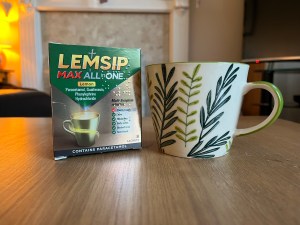
So very many thanks to Albert, and on that note, I’m off back to bed with a Lemsip. Normal service will, I hope, resume next week.

Do you have opinions, memories or ideas to share with me? Get in touch with me via the ‘Contact’ tab at the top right of this page.

This column appeared in the Darlington & Stockton Times on Friday 24th Jan and the Ryedale Gazette and Herald on Wednesday 22nd Jan 2025

Time to make decisions

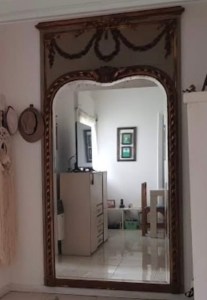
Horacio Romeo’s beloved antique mirror has to stay in Buenos Aires, Argentina, because it is too big to bring to his current home in Brazil.

Following my column about the Hugh Pannell clock owned by Arkansas-resident Sandra Parkerson, David Severs has been in touch. David is a descendant of the 18th century Northallerton clockmaker and was able to provide some useful historical context about it. If you recall, the grandfather clock has been in Sandra’s family for more than 200 years, but she is looking to find it a home because it will be too big to take to a new apartment.

David is compiling a record of Pannell’s work and explains that it is unusual to find ‘CLOCK & WATCH-MAKER’ engraved on the name boss. “This is very rare indeed and to find yet another Pannell example is exciting,” he says.

He explains that Sandra’s walnut case is not original: “I have found well over a hundred Hugh Pannell clocks and not one is in a walnut case.” Most of Pannell’s clocks were in cases of mahogany, oak or pine. David has found only one pine example due to the wood not being durable, and mahogany is also quite rare because he would have had to transport it by cart from west coast ports such as Liverpool, which was far more costly than a readily available oak case. Mahogany cases were the preserve of the wealthy, and housed Pannell’s finest pieces. They became more common once the rail network reached Northallerton in 1841, well after Hugh Pannell’s time. Oak cases with mahogany veneer were known as ‘typical Yorkshire cases’ in 1774 when Pannell was working.

David says about Sandra’s clock: “The decoration on the pediment is not something I have seen over here and the split trunk door is also new to me. It is possible that the clock mechanism alone was sent to the USA and then placed into Sandra’s mahogany case upon arrival.”

David adds: “I have found that some 30% of Hugh’s surviving clocks are now marriages which is perhaps not surprising given that it is 236 years and more since he was making clocks…I am aware of his clocks in California, Florida, New Orleans and San Francisco as well as this one in Arkansas. Clocks by his son Joshua…have found their way to Iowa and California and one of his watches to Florida.”

This brings me on to the subject of what to do with meaningful objects you have collected in your lifetime.

Regular reader Clare Powell says: “I inherited my dad’s grandfather clock…and decided to sell it later on. You get nothing for them at auction, nobody wants or has the room for them, even old ones. But I discovered it was handmade by a company in Somerset and he had paid £3,500 for it. I couldn’t bring myself to sell it for £150, so I am still stuck with it!”

In a previous column I mentioned a small wooden box my grandad gave me which I hope one of my sons will keep. Clare explains that the thought of what to do with all her family heirlooms keeps her awake at night: “I am not sure we should burden the next generation with all our ‘stuff’. If you tell them why everything means so much to you, will they feel ridden with guilt if they are not able to keep it all? Then again, if you don’t tell them, then they may wish they did know the story of certain items, like you and your box.”

Horacio Romeo from Brazil, who contacted me through my web page (countrymansdaughter.com), has a similar problem to Sandra in that he has a beautiful mirror that is too big for his current abode: “I love it and enjoy looking at it when I go to Buenos Aires (Argentina) but bringing it here is out of the question.”

Leni Ella says: “My nana used to say, ‘If you want it, put your Monica on it’, the only way you could bagsy something in her house.” (I am assuming Nana meant ‘moniker’ and ‘Monica’ is a family joke!).

My aunt, Liz Davidson, revealed that she has a family heirloom: “I have a crocheted white bedspread that came from my dad and one of his aunties I think. It’s very heavy when you put it on the bed.”

There is only so much the following generation will want to keep so what, I wonder, will happen to grandad’s bedspread?

Do you have opinions, memories or ideas to share with me? Get in touch with me via the ‘Contact’ tab at the top right of this page.

This column appeared in the Darlington & Stockton Times on Friday 17th Jan and the Ryedale Gazette and Herald on Wednesday 15th Jan 2025

Permission to be curmudgeonly

IMG_1996
Reader Deborah Steed went to school with my late sister Tricia, whose anniversary it is this week (8th January)


I have received some interesting feedback following my pre-Christmas columns about the annoying misuse of certain words, as well as ‘autocorrect’ changing words into something you don’t mean at all.

A reader I only know as ‘vibrant50770a0070’, who contacted me through my countrymansdaughter.com webpage, stated: “One of my annoyances is the use by weather forecasters (and others) of ‘A month’s worth of rain fell.’ What is a month’s worth of rain? Surely the correct use of the English language would be to say ‘The equivalent of a month’s rain fell’. The spelling and use of words in the English language is now appalling, as can be found in such places as Facebook, etc. I am a retired police officer, now in my nineties, so I think I can be permitted to be a curmudgeonly old codger, but I think that the decline of the English language over the years is very sad.”

Having achieved that significant age milestone ‘vibrant50770a0070’ has the right to be as curmudgeonly as he wants. Having said that, what some see as a ‘decline’ in the English language, others see as ‘evolution’. I’m still not sure upon which side of the fence I fall.

Monica Gantz, a writer and blogger who lives in the USA, also contacted me through my webpage saying: “Autocorrect has gotten out of control. It used to be spot on with its correction. I admit to typing and almost hitting ‘send’ when I decide to re-read my post and in horror, similar to your examples, find that autocorrect substituted a terrible word in my sentence. It’s a great reminder to RE-READ before pressing ‘send’. 

I read my copy countless times before sending it, only to discover that when it is printed, a silly typo has slipped through. It drives me nuts but happens because my brain tricks me into seeing what I want, rather than what is actually on the page. A regular one is ‘their’ when I mean ‘there’. I know which is right of course, but sometimes in the speed of typing, I pop the wrong one in. I will have read over it  lots of times without spotting the error, only to see it once the final version is out in public. It makes me so cross with myself!

You might recall that in my Christmas column I brought up the fact that a common festive ‘autocorrect’ error is spelling ‘Santa’ as ‘Satan’ and it jogged a couple of regular readers’ memories about taking children to see the big man in the red suit.

Clare Proctor, who works at various properties owned by the National Trust, said: “Having observed my colleagues grapple with children (and, even worse, parents) whilst corralling them to visit the Santa’s grotto we used to do at work, Satan might not have always been a mistake!”

And on a similar theme Janet Pearce added that she had a bad experience sitting on an elderly priest’s lap as a child. “I did not want my children sitting on old strangers’ laps! Satan seems quite appropriate.” I can relate to that because as a very young child similar was done to me on a number of occasions by an elderly neighbour. It was only as an adult that I realised that what he had done was wrong. It is such a shame that something that should be a magical experience for our children has been tainted by a few disgusting men taking advantage of innocence.

Before Christmas I also wrote about the fact that on the first anniversary of my friend Ian’s mum’s death, we thought it hilarious when he’d received a message from a close friend. She had been crushed with embarrassment when she realised she’d written ‘Thinking about your dead mum’ instead of ‘dear mum’.

Deborah Steed said the story made her giggle because it reminded her of an occasion where she had met up with some old classmates. Her friend was grieving the recent loss of her pet dog and said to Deborah: “Now I understand why you didn’t feel like coming to the last school reunion after your dog had just died.”

She was mortified when Deborah said: “No, that was my dad. The dog is still alive and kicking.”  

Coincidentally, Deborah went to school with my sister Tricia, who died seven years ago this week, which is a great excuse to use the picture accompanying this column. I’ll leave the closing words to Deborah:

“Thinking of Tricia as I read this. She was a lovely girl.”

Do you have opinions, memories or ideas to share with me? Get in touch with me via the ‘Contact’ tab at the top right of this page.

This column appeared in the Darlington & Stockton Times on Friday 10th Jan and the Ryedale Gazette and Herald on Wednesday 8th Jan 2025

Will Satan come down the chimney?


IMG_0901
Will Satan or Santa come down your chimney this Christmas?


I had a message from a reader that made me titter. Jean McKendree said: “Regarding your column on spelling errors that get people’s backs up; mine (though I also have to laugh when I see it) is when people write, “Please bare with me,” to which I reply, “I would really rather not.”

This brings to mind those awkward occasions when you fail to properly proofread an email or text message and send something that has an embarrassing mistake in it. With more and more people switching to messaging rather than speaking on the phone, I’m sure it happens a lot, especially since the dawn of ‘autocorrect’, a function which decides what it thinks you want to say, but which is often some way away from your intentions.

A famous one came from a father who texted his son to say, “Your mum and I are going to Divorce next month”. The shocked son was relieved when he quickly received a follow-up text to say “DISNEY! I meant DISNEY!”

One that I experienced myself came on the first anniversary of the death of my friend Ian’s mum. We were on a walk in beautiful Givendale in the Yorkshire Wolds, her favourite place, when a text came through from a close friend. “Thinking of your dead mum,” it read.

“That’s a bit blunt,” said Ian, puzzled, because this friend was normally so gracious and polite. Before he could react any further, the phone rang, and I could hear her apologising desperately down the phone: “DEAR MUM!” she cried, “I meant your DEAR MUM!” We both found it completely hilarious, and were very grateful to her, because for the rest of what would have been a rather sad day, we kept collapsing into fits of giggles.

Other corkers blamed on autocorrect include: “You have my full condoms” (condolences), “Your dog Dexter is dead” (ready), “Sent with love and fried shrimp” (friendship), “Okay donkey” (okey-dokey).

Thankfully, most messaging services now offer you the opportunity to edit your messages after you have sent them, so you do have a chance to correct them if something erroneous sneaks through (although you have to be really quick to catch them before the receiver reads them).

At the moment, there is a fair amount of debate around the topic of AI (Artificial Intelligence) and whether we should be worried about its power or embrace it. Clearly it is being used in both negative and positive ways, but I did love the story about Daisy, the ‘AI Granny’, who has been tripping up ruthless phone scammers who target the old and vulnerable to steal their money. She is driving them crazy with her daft questions, meandering monologues and delaying tactics. She is a joint enterprise between O2 and YouTube ‘scambaiter’ Jim Browning and is on duty 24/7 intercepting fraudulent calls and taking revenge on people who thoroughly deserve it (give her a Google if you want to see her in action).

On the AI theme, I did see one message that read: “Just tried to type ‘probably’ and autocorrect turned it into ‘peanut uterus’. Don’t think AI is taking over anytime soon.”

It has just dawned on me that this is my last column before Christmas. I love seeing all the lights, decorations, and trees going up to mark the festive season, and when the days are short and the weather is as miserable, it lifts the spirits no end. But it is a time of mixed feelings for many. In 2017 we were bracing ourselves for our first Christmas without my dad, when my sister was unexpectedly diagnosed with cancer. Christmas took second place to hospital visits, and she died in the first week of January 2018. Seven years on, I have found happiness in Christmas once more, but that experience means I am mindful of those who are in hospital, those missing lost loved ones, or those spending Christmas with no-one at all.

So with that in mind, I am sending my thoughts and good wishes to you all at this very special time of year, and will leave you with a festive autocorrect classic:

“Taking the kids to see Satan now.”

“Well, I know they’re not perfect but that’s a bit harsh.”

“SANTA!! I MEAN SANTA!”

Do you have opinions, memories or ideas to share with me? Get in touch with me via the ‘Contact’ tab at the top right of this page.

This column appeared in the Darlington & Stockton Times on Friday 20th Dec and the Ryedale Gazette and Herald on Wednesday 24th Dec 2024

Mic drop for a windbag

IMG_6162
Have you heard people drop their ‘N’s’, for example when they ask for ‘a apple’? Do you do it?

I do enjoy hearing from you in response to my columns as it proves to me that for one, you read them and for two, the topics spark thought and comment. I do not mind if you get in touch to praise, correct or criticise, I welcome everything!

I received a lovely email from reader Rosemary Scott who said: “I wanted you to know how much I enjoy your columns, and I look forward to them every week. I was particularly taken by your ‘Perverse Experience’ of October 23rd  25th  because I have been waging a silent war against all those people who misspell the word ‘faze’. This word I have always taken to mean to ‘daunt’ or to ‘challenge’ someone. I keep seeing it spelled as ‘phase’, and this annoys me very much. I finally checked my 1972 Chambers dictionary, which is possibly past its ‘use by’ date, and was shocked to find that they spell ‘faze’ as ‘feeze’ and it means to ‘worry, perturb or discompose’, which more or less agrees with my thinking. However, to my dismay, I saw that the American spelling can be ‘phase’, which means I can no longer silently shout at those I believed to be sinners. I can’t tell you how chagrined and disappointed I was.”

I empathise because I felt just the same when I discovered that ‘perverse’ can mean the same as ‘perverted’, despite thinking that they were two very different things. For no justifiable reason, I had wasted years’-worth of hot air maligning people who mixed them up.

It heartens me to know I am not alone in my little irritations over the usage of certain words. I looked up faze/phase in my 2004 Oxford English Dictionary (OED) and in that edition there are two distinct definitions. ‘Phase’ (both verb and noun) refers to a set period of time, and ‘faze’ (which only appears as a verb) means ‘disconcert’, although it does say it is of US origin from the 19th century. My 2004 OED does not show ‘phase’ to mean ‘disconcert’ at all and it is only defined in the way Rosemary describes, so she is in fact right (even though she wasn’t back in 1972, according to her own Collins dictionary). I also consulted a few online dictionaries which are as up-to-date as you can get and I could not find ‘phase’ used to mean ‘disconcert’ anywhere. Hurrah for Rosemary after all!

Rosemary has a second irritation: “Another pet annoyance is that ‘an’ no longer seems to exist in spoken vocabulary. The efforts people go to to say ‘ay apple’, for example, instead of the much easier to pronounce ‘an apple’.”

That is not something that I have noticed in my everyday interactions, so I’d be interested to know if any of you have spotted this gradual erosion of ‘an’. If you try to say nouns and adjectives beginning with a vowel without using ‘an’ it does feel cumbersome: ‘Ay aeroplane’, ‘a elephant’, ‘ay orange, ‘a exceptionally gifted columnist’. No, it just doesn’t sit right, does it.

But, as we know, language evolves over time, and things that we think are wrong now might very well become right once they worm their way into everyday speech. If they are then repeated many times they evolve into an acceptable part of written English too, eventually ending up on the hallowed pages of the Oxford English Dictionary (OED), the definitive record of the English language.

I was surprised to learn that the OED is revised four times a year in March, June, September and December, which demonstrates just how quickly our language evolves. The latest (at the time of writing) was September 2024 and new words and phrases that were added this time include ‘boop’ (to tap someone on the nose in a friendly way), ‘to cheap out’ (buy something of inferior quality), ‘cyberstalk’ (harass a person online), ‘mic drop’ (to drop, or mimic dropping, a microphone after a success), ‘prags’ (financial or material aid given to a person in need) and ‘sheisty’ (shifty behaviour). These are just a few of no less than 600 words and phrases added in the latest quarter.

I hope you don’t accuse me of my favourite though, which is ‘windbagging’ (talking or writing at length without saying anything of interest).

Do you have opinions, memories or ideas to share with me? Get in touch with me via the ‘Contact’ tab at the top right of this page.

This column appeared in the Darlington & Stockton Times on Friday 13th Dec and the Ryedale Gazette and Herald on Wednesday 11th Dec 2024

The word is not enough

IMG_2128
I have been listening to Bill Bryson’s audiobook on my travels, which was has been very entertaining

I have been contacted by a reader named Ron who, commenting on my recent ranty column about people getting their words wrong, said: “It reminded me of a local writer who was critical of another local writer (who was, by then, dead so could not respond). The comment was about the first writer having (and I quote) ‘no less than eight grammatical errors on one page’. Oh dear (I won’t insult your intelligence by telling you where he went wrong).”

If you are a writer who dares to show your work publicly, you open yourself up to an extra level of scrutiny. We have to be careful when criticising other writers because eagle-eyed critics will be waiting with pens poised in readiness to tear us down as soon as we slip up (although eight grammatical mistakes on one page IS a lot).

I happily admit (as my column revealed) that I am not perfect. In case you haven’t read it, I had a rant about people confusing the words ‘perverted’ and ‘perverse’. I had always believed that ‘perverse’ was when something happened that was the opposite to expectations, while ‘perverted’ was something that was sexually depraved. Therefore, when people used ‘perverse’ when they meant ‘perverted’ it really wound me up. Turns out, ‘perverse’ CAN also mean sexually depraved, so I was wrong and had to force feed myself humble pie.

I am also not perfect when it comes to grammar and am guilty of beginning sentences with ‘So’, ‘As’, ‘But’ and ‘And’. The grammar I was taught at school is just a hazy memory and I rely on my gut to tell me if I’m wrong, which it does now and then. Despite having a successful career as a prolific writer, my dad was not perfect either and having failed his English O’level, his understanding of the English language was largely self-taught.

My rant was inspired by an audiobook about serial killers by a so-called ‘TV psychology expert’. I barely got past Chapter One, not because of the ‘perverse’ v. ‘perverted’ hoo-ha, but because it was just rubbish. I switched to listening to Bill Bryson’s ‘The Road to Little Dribbling’, his sequel to the hugely successful ‘Notes from a Small Island’. He is American born but has lived in England since 1974 and has dual citizenship. His observations about the cultural quirks of our nation are hilarious, and this one I do recommend you try.

There were a few times that he had his own rant about English language usage and was scathing about people who muddled up ‘me’ and ‘I’. I shrank down a bit in my seat knowing that his list of offenders could include me (not I) too.

But (there I go again…) there were certain things in the reading of this book that were incorrect. In Mr Bryson’s defence, he was not narrating it himself, and on the whole the reader did a very good job. However, he did drop the odd clanger, the most notable being his pronunciation of ‘Minoan’ when referring to Knossos Palace. The narrator said ‘MinoNan’. The first time he said it, I let him off, because when you’ve read a whole chapter almost flawlessly, it must be an absolute pain to start again for the sake of one small mistake.

However, it turned out to not be one small mistake, and he said ‘MinoNan’ every single time it appeared. How could he get something as famous as the Minoan Civilisation wrong? Or was it his script that had it wrong? And (yep, another…) who had given the OK for it to be published with such a glaring error? It was not the only spoken error, but the one that most irked me.

While I’m on the subject of audiobooks, it would be remiss of me not to take the opportunity to drop in a shameless plug: if you haven’t listened to the Constable series by a certain Nicholas Rhea narrated delightfully by Philip Franks who starred in Heartbeat, then what are you waiting for?

And (there I go yet again) having listened to them all, there is the odd error here and there, particularly on some Yorkshire place name pronunciations, but I’m not going to be too critical.

After all, there but for the grace of God go I.

This column appeared in the Darlington & Stockton Times on Friday 15th Nov and the Ryedale Gazette and Herald on Wednesday 13th Nov 2024

Finding a silver lining

IMG_3690
I now have a Silveroid teapot stand thanks to a clear out at my mum’s house
IMG_3582
The stamp on the bottom reads ‘National Products England’ and ‘National Silveroid’


A couple of challenges for you this week which will hopefully prove that real people can still be more useful for factual information than the seemingly omniscient internet.

Just over a year ago I was invited to give a talk at Rosedale Reading Room and while there Linda Chambers from the Rosedale History Archive asked me if I could find out anything about King Henry’s Night. “I was told about this some years back by an elderly gentleman (now dead) who lived at Thorgill, just along the dale side,” she wrote. “It apparently centred around young people going out on a particular night and meeting up with likely suitors. Not sure what their parents thought but no doubt it was eagerly anticipated!”

I had a look in my dad’s collection of cuttings and files but could not find anything labelled King Henry’s Night. I also looked in a few of his books, Folk Tales from the North York Moors, Folk Stories from the Yorkshire Dales and Yorkshire Days, but again nothing. He did write about occasions where young men and women would go out and perform certain charms and spells in the hope of attracting suitors, but I don’t recall him ever mentioning King Henry’s Night.

I then resorted to that most useful source of miscellaneous information, the British Newspaper Archive, but again, came up empty handed. So, I’m turning to you, dear readers, in the hope that one of you can explain exactly what it is. Perhaps you went out yourself on King Henry’s Night and found your one and only?

The second mystery might be more straightforward to solve. We were having a clear out at my mum’s house when I came across what looked like an old pewter teapot stand that had been abandoned on a windowsill for years. I asked Mum if I could have it. As regular readers know, I drink tea using a proper pot, and a recurring conundrum is how to avoid it scalding whatever surface I place it upon. Now I need worry no more!

Mum couldn’t remember how she came by it, but it was either used at home when she was young or picked up at a jumble sale. There is a stamp on the reverse labelled ‘National Products England’ and ‘National Silveroid’. It brought to mind the war effort and the ‘National Loaf’, but it turns out Silveroid appeared much earlier than that. 

The stand looks a bit like pewter, which is an alloy consisting mostly of tin mixed with small amounts of other metals such as copper, lead or antimony. It has been used for making household items since Roman times and in the 17th and 18th centuries it would have been found in every household in the form of plates, cutlery, cups, jugs, buttons and the like.

Pewter was rather soft and prone to dents, and in the late 19th century, Silveroid started to appear. It was far more durable and yet mimicked the stylish look of pewter along with the shine of silver. It was patented in the USA where it was often used for watch cases. I did find a few references to it in the newspaper archive, the earliest of which appeared in the Daily Gazette in September 1878 and read: ‘Silveroid is the name of a new metal which has just been introduced in America in the manufacture of tableware. It has a fine texture, is susceptible of a high finish, and can be supplied at much less cost than anything heretofore used as a substitute for real silver.’

I also found the exact same paragraph in a number of other newspapers in subsequent years, so I did wonder how long it had to be around for it to be no longer considered ‘new’.

Six years later in 1884, there were adverts extolling the benefits of the product, but they now tell us that Silveroid is ‘the cheapest substitute for silver yet introduced, which being of a uniform white colour throughout, renders Nickel or Silver Plating quite unnecessary. This Metal is specially adapted for Steamship Fittings, Railway Carriage Furniture, and Art Metal Work. Specimens and price on application.’

So what do you know about Silveroid, what happened to it, and what are ‘National Products England’? Do get in touch via the usual channels!

I’d love to hear from you about your opinions, memories and ideas for columns. Use the ‘Contact’ button on the top right of this page to get in touch. This column appeared in the Darlington & Stockton Times on Friday 7th and the Ryedale Gazette and Herald on Wednesday 5th June 2024.

Drawing a curtain over the issue

IMG_2828
Walking my niece’s husky dogs I noticed that not many houses have net curtains any more
IMG_2822
A couple of houses that I saw with net curtains on my walk

Following my slightly ranty column referring to dog owners hanging poo bags on trees, I have discovered that there are solutions, thanks to my dog-owning readers who have drawn my attention to a couple of clever inventions.

One is a poop bag carrier that clips on to your dog lead, and you attach your full bags to it until you pass a bin or get back home. This means that you still have both hands free as you continue your walk. The reader said: “It’s not difficult or messy, so why doesn’t everyone do it?”

Another reader uses a compact neoprene pouch which you can clip on to your back pack or belt loop. You put the tied-up poo bag inside and zip it up to avoid unpleasant odours stalking you on the rest of your ramble. It also eliminates the yucky sensation of a full bag swinging from side to side as you walk. Although it is relatively expensive, it is fully washable and so can be used again and again.

With these kinds of solutions, is there any excuse for not cleaning up after your dog? I would genuinely like to hear the argument for hanging poo bags on trees because it is my duty, as a responsible writer, to understand every side of a story. Especially when you have no leg to stand on.

On the subject of dogs (which has been a fruitful topic of late!) I have been house-sitting for my niece, looking after her two gorgeous husky dogs while she is on her honeymoon. On one of our walks I couldn’t help but notice how few houses have net curtains.

The trusty net curtain used to be present in most houses because we wanted to nosey at what our neighbours were getting up to outside, without those neighbours noseying at what we were getting up to inside. We also wanted to prevent the ne’er-do-wells from seeing our immensely valuable possessions in case they were tempted to nick them.

Nets began to be seen in the 17th century after sheet glass replaced small pieces of glass set within lead frames. Initially, these large pieces were expensive to produce so were available only to the rich who kept them for their best rooms. To preserve privacy while at the same time allowing the light in, net curtains were initially made of fine cotton and silk and great skill was needed to produce delicate and intricate patterns. The modern glass industry took off after a reduction in tax in the mid-19th century and the cost of glass plummeted. Soon, sheet glass became available to the less wealthy and was being seen in smaller houses. Still, it was only after man-made fabrics like nylon and polyester emerged after World War II that we began to see mass-produced net curtains. Of course, once we commoners got involved, nets stopped being posh and instead became associated with nosey parkers covertly watching what other people were doing, and the age of the ‘curtain-twitcher’ was born.

The net curtain is considered a decidedly English eccentricity by our continental friends. Having been married to a Dutchman, I know that in the Netherlands, any form of curtain across your window is seen as dodgy, as if you are trying to hide something shameful. Houses have huge living room windows with just a few plants to screen the internal goings-on from the outside world.

I do still love a curtain, though, and will not leave them open at night for anyone to peer in. But I have moved on from net curtains, as it seems have most people these days. I did see a few on my walk, but thanks to my acute detective instincts I deduced that they were in homes belonging to our more mature residents.

So why is that? Are we less worried now about people seeing in through our windows? In a world where we share the smallest details of our personal lives online, maybe we don’t feel the need for such privacy in our own homes anymore? Or is it that more CCTV cameras and sophisticated security systems mean we are less afraid of our personal possessions being on display?

What do you think dear reader?

I’d love to hear from you about your opinions, memories and ideas for columns. Use the ‘Contact’ button on the top right of this page to get in touch. This column appeared in the Darlington & Stockton Times on Friday 26th April and the Ryedale Gazette and Herald on Wednesday 24th April 2024.