We are getting stoned again

The photograph sent to me by Peter Sotheran of a horse with cart on Lythe Bank out of Sandsend. It was taken between 1905 and 1907 and a copy of it is held at the Teesside Archive, accessed via the Dorman Museum in Middlesbrough

A couple of weeks back, along the continuing theme of troughs and boundary stones, I asked what the holes in the bottom of a carved stone that I found on one of my local walks might be. Once again, a kind reader has jumped to the rescue.

John Buckworth explains: “Hi Sarah. The holes in your stone are probably lifting holes, or dimples, on each side to which they attached a lewis.”

I had no idea what a lewis was and had to look it up, which is no effort for me because I love learning new stuff! For those of you as ignorant as me, a lewis is a device used by stonemasons to lift heavy blocks of masonry and is fitted into pre-drilled holes to evenly distribute the weight of the block, allowing safe and accurate movement from one place to another. John explains: “It has a scissor action, and the curved points stick into the holes and the block and tackle tightens them whilst being lifted. Some of these holes can be on buildings and railway bridges. However, most are concealed because they are covered by the adjacent block. I am still enjoying your articles thank you. Tek care lass.”

Incidentally, I was furnished with even more knowledge that I did not previously possess, namely that the term ‘Lewis’ is also used in the mysterious world of freemasonry. This essential tool symbolises strength and the ability to lift weighty burdens. A freemason’s son is known as a ’Lewis’ because he is meant to support his father and the brotherhood in whatever ways are deemed necessary.

Another reader, Peter Sotheran, also contacted me with a very interesting stone-related story.

“Your paragraphs on moving large blocks of sandstone brought to mind Canon Atkinson, author of ‘Forty Years in a Moorland Parish’.

“After serving as Curate at St. Mary’s Church in Scarborough, Atkinson was appointed Vicar of Danby where he served for 50 years. In his ‘Forty Years’ book Atkinson describes the two-day journey on horseback from Scarborough to Danby. After breaking his journey with an overnight stay in Whitby, Atkinson describes the second leg to Danby.

‘I was told I should find but few on the road I was to pursue, and I might not see a passenger or traveller for miles and miles together. Nor did I.

‘Then the solitude of my way was broken. I was no longer the sole traveller on this rugged lonely roadway; for here I encountered a cavalcade such as I had never before imagined…I met a stone-wagon with a team of no less than twenty horses and oxen, half of either kind. They were drawing a huge block of freestone up the terribly steep bank.’ “

Peter adds: “From other clues in his ‘Forty Years’ book, this would appear to be Lythe Bank, leading up from Sandsend. Atkinson continues:

‘At the foot of the bank were standing four other wagons similarly loaded. The full complement of animals dragging each ponderous load – five tons’ weight on average – in succession to the top; and then, when all were up, the cavalcade re-assembled and proceeded on its slow march again.’ ”

If any of you have ever walked up that notoriously steep bank out of Sandsend, as I have VERY slowly with very little in the way of a heavy load, you will be able to understand just how difficult it must have been to get the horses and oxen and their huge boulders up. I can’t help but feel sorry for the poor animals! Peter sent me a copy of a lovely old postcard of a horse and cart labouring up the hill, which I have included with this article. Peter says: “The picture of the cart and single horse is not from Atkinson’s book. It was a postcard that I picked up in Whitby some years ago. Unfortunately, Atkinson does not mention where the stones are from or where they are destined for.”

Peter told me that over the years he amassed a collection of more than 2500 old local pictures and postcards which he donated to the Teesside Archive, accessed via the Dorman Museum in Middlesbrough, from where this picture comes. It was taken between 1905 and 1909 by a chap called Tom Watson.

I wonder here the stones will lead us next?

Do you have opinions, memories or ideas to share with me? Get in touch with me using the ‘Contact’ button on the top right.

This column appeared in the Darlington & Stockton Times on Friday 11th and the Ryedale Gazette and Herald on Wednesday 9th July  2025

Out of the fire

Betty McDonald on holiday in Southern Spain last year. She has kept diaries since she was young

I’ve had some more feedback from readers on the subject of photographs. Betty MacDonald, who will turn 90 this year (I hope you don’t mind me mentioning that, Betty!) writes: “I have many photographs from years gone by, and memories of sending them off to be developed and printed, and especially onto slides…we used to have many an evening watching a slide show.”

She adds: “I’ve kept diaries for decades, which I enjoy writing, and call my ‘reference library’. I can look up what I did 50 years ago on any given date. These are for me only. I have mentioned to my daughter when the time comes to find a spot in the garden and burn them all, although this might not be possible as I fear the fire brigade might have to be in attendance!

“Queen Elizabeth kept a diary and at 6 o’clock every day she sat down to write in it. So I feel as though I have been in good company…I’ve enjoyed my time with all of my collections of stuff over the years, but nothing is forever.”

Betty’s daughter send me a sweet note about her mother too: “She’s a fantastic mam and nana, always has an interesting story to tell and has such a happy outlook on life.” And at the end she added: “P.S. I won’t burn the diaries!”

Do many people still keep daily diaries? My gut tells me not, because everything is so ‘visual’ today that it is rare to find someone who takes the time to sit down and write about their day. I did it when I was a teenager, and when I was away on a gap year in the mid-1980s. I also wrote diaries when I went travelling in South-East Asia because my dad said I would regret it if I didn’t. They came in useful on my return when the newspaper I worked for asked me to do a series of travelogues about each country I visited. It would have been impossible without the diaries, and so I was very grateful for my dad’s advice.

I occasionally look back upon them now with an understanding of why it was so important to keep a contemporaneous record. There is so much detail that I would never have remembered, and they take me back to a time when I was young and carefree. The 1980s don’t seem that long ago, and yet so much has changed since then that they make a fascinating read. They may not mean much to anyone else, but perhaps my children will one day find them interesting.

Alan Graham also got in touch to say: “I always read your piece and was interested in the recent topic of printing photos. Like others I rarely if ever print photos nowadays but I do print and enlarge those that are good, clear and of lasting interest…and mount them in a traditional photo album, the sort with blank pages and a sheet of tracing paper between…Double-sided sellotape is all that’s needed on the back and they never come adrift, even decades later. A short typed label under each photo (who, where, when) adds a permanent memory.

“I’ve got precious pictures of my daughter growing up, my wife, even my cars and motorbikes going back 40 years and these albums are the things I’d save – as they say – in a fire.”

And that prompts me to ask, what would you save from a fire? Would it be something practical like your passport, or something valuable, like your jewellery? Or like Alan, would it be pictures of your loved ones?

For me, the material stuff means nothing, but there are certain things that cannot ever be replaced, such as signed copies of my dad’s books, handwritten letters from loved ones from years ago. I also have a large collection of birthday and Mother’s Day cards that my children have sent me every year since they were able to write and in which they have written very special messages that I never want to lose.

But, as Betty says, we cannot take everything with us, can we. So if you had to choose just one item to save, what would it be and why? Do get in touch via my contact page to let me know.

This column appeared in the Darlington & Stockton Times on Friday 14th March and the Ryedale Gazette and Herald on Wednesday 5th March 2025

Swim the Channel? Fat chance of that!

Bill Burgess slathered in lard before his successful attempt at swimming the English Channel in 1911. (This work is from the George Grantham Bain collection at the Library of Congress. According to the library, there are no known copyright restrictions on the use of this image).

My recent mention of goose fat as a home remedy for a bad chest prompted reader Mike Brown from Stokesley to get in touch. It reminded him of TV personality David Walliams: “He smeared it all over his body before swimming across the English Channel to raise money for the BBC charity Sports Relief. The late Queen mentioned this when she presented him with the OBE for his services to charity and the arts. He replied that the application wasn’t as much fun as it looked. Probably smelt awful too. So as well as a remedy for a persistent cough goose grease is a good insulator as well.”

Walliams completed the 21-mile swim in a very impressive 10 hours and 34 minutes in July 2006, despite confessing that he had never done anything remotely sporty in his life before. Later, in 2008, he swam the Strait of Gibraltar, and then in 2011 completed the ridiculous challenge of swimming the length of the River Thames. He covered 140 miles, starting in Lechlade, which is about 45 miles west of Oxford, and finishing eight days later at Westminster Bridge in London.

For the latter two events, Walliams was wearing a wetsuit, but for his Channel swim, he was only permitted to wear a ‘standard swim costume’ as defined by the Channel Swimming Association for it to be classed as an official swim. The rules state that the costume should not aid buoyancy nor offer thermal protection, and it cannot cover the arms or legs. The same rules apply to the swim hat too, and you are not allowed to use anything that will help you stay afloat or swim faster, so no flippers armbands, rubber rings or lifejackets.

Basically, it’s just you and your Speedos against the elements. Oh – and of course, the goose gunk. Some people smear it all over their body to prevent heat loss, while other more hardy individuals cover just the areas that are likely to chafe, such as armpits, necks, shoulders and thighs. That thought makes me squirm (and if you have ever spent too long in the sea, you will understand the fidgety discomfort of saltwater chafing).

Some people choose not to use fat from a dead animal and instead make their own mixture of roughly 50/50 lanolin and petroleum jelly. Lanolin is what makes a sheep’s fleece waterproof, and is extracted from freshly-shorn wool in a centrifugal process involving hot water. It has dozens of uses, but it does harden when cold, so for the cross-Channel fraternity, it is mixed with petroleum jelly to keep it spreadable.

The first person to ever swim the Channel unaided was 28-year-old Captain Matthew Webb in 1875. He smeared himself with porpoise fat to preserve body heat and avoid the chafing. He earned fame and a small fortune from the achievement, and tried to replicate the financial rewards through other water-related endurance challenges, but none matched that first major accomplishment. He died just eight years later while attempting to swim the Niagara Falls Whirlpool Rapids.

It was another 36 years before anyone else managed to cross the Channel and he happened to be a Yorkshireman. Bill Burgess tried and failed 17 times before succeeding on his 18th attempt in September 1911. Although born in Rotherham, he spent most of his adult life in France, and competed for the country at the 1900 Olympics where he won a bronze medal in water polo. He also coached the first woman to swim the Channel, American Olympian Gertrude Ederle, who was only 20 when she completed the feat in August 1926.

Undertaking a Channel swim sounds, quite frankly, awful. Not only do you have to go to the faff of smearing yourself in gunge before plunging into freezing sea water, you also have to contend with wind, currents, tides, sewage and floating rubbish, never mind the constant traffic surging through the busiest shipping lane in the world. Then there’s the seasickness caused by the incessant motion of the waves, the sore and chapped lips, and the raging thirst thanks to the gallons of polluted salt water you’ll inevitably swallow. Why the heck would you?

Of course, I am facing my own swimming challenge later this year when I compete in my first triathlon. Let’s hope goose fat won’t be needed.

This column appeared in the Darlington & Stockton Times on Friday 7th March and the Ryedale Gazette and Herald on Wednesday 12th March 2025

Time to make decisions

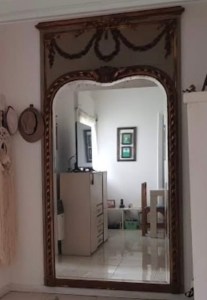
Horacio Romeo’s beloved antique mirror has to stay in Buenos Aires, Argentina, because it is too big to bring to his current home in Brazil.

Following my column about the Hugh Pannell clock owned by Arkansas-resident Sandra Parkerson, David Severs has been in touch. David is a descendant of the 18th century Northallerton clockmaker and was able to provide some useful historical context about it. If you recall, the grandfather clock has been in Sandra’s family for more than 200 years, but she is looking to find it a home because it will be too big to take to a new apartment.

David is compiling a record of Pannell’s work and explains that it is unusual to find ‘CLOCK & WATCH-MAKER’ engraved on the name boss. “This is very rare indeed and to find yet another Pannell example is exciting,” he says.

He explains that Sandra’s walnut case is not original: “I have found well over a hundred Hugh Pannell clocks and not one is in a walnut case.” Most of Pannell’s clocks were in cases of mahogany, oak or pine. David has found only one pine example due to the wood not being durable, and mahogany is also quite rare because he would have had to transport it by cart from west coast ports such as Liverpool, which was far more costly than a readily available oak case. Mahogany cases were the preserve of the wealthy, and housed Pannell’s finest pieces. They became more common once the rail network reached Northallerton in 1841, well after Hugh Pannell’s time. Oak cases with mahogany veneer were known as ‘typical Yorkshire cases’ in 1774 when Pannell was working.

David says about Sandra’s clock: “The decoration on the pediment is not something I have seen over here and the split trunk door is also new to me. It is possible that the clock mechanism alone was sent to the USA and then placed into Sandra’s mahogany case upon arrival.”

David adds: “I have found that some 30% of Hugh’s surviving clocks are now marriages which is perhaps not surprising given that it is 236 years and more since he was making clocks…I am aware of his clocks in California, Florida, New Orleans and San Francisco as well as this one in Arkansas. Clocks by his son Joshua…have found their way to Iowa and California and one of his watches to Florida.”

This brings me on to the subject of what to do with meaningful objects you have collected in your lifetime.

Regular reader Clare Powell says: “I inherited my dad’s grandfather clock…and decided to sell it later on. You get nothing for them at auction, nobody wants or has the room for them, even old ones. But I discovered it was handmade by a company in Somerset and he had paid £3,500 for it. I couldn’t bring myself to sell it for £150, so I am still stuck with it!”

In a previous column I mentioned a small wooden box my grandad gave me which I hope one of my sons will keep. Clare explains that the thought of what to do with all her family heirlooms keeps her awake at night: “I am not sure we should burden the next generation with all our ‘stuff’. If you tell them why everything means so much to you, will they feel ridden with guilt if they are not able to keep it all? Then again, if you don’t tell them, then they may wish they did know the story of certain items, like you and your box.”

Horacio Romeo from Brazil, who contacted me through my web page (countrymansdaughter.com), has a similar problem to Sandra in that he has a beautiful mirror that is too big for his current abode: “I love it and enjoy looking at it when I go to Buenos Aires (Argentina) but bringing it here is out of the question.”

Leni Ella says: “My nana used to say, ‘If you want it, put your Monica on it’, the only way you could bagsy something in her house.” (I am assuming Nana meant ‘moniker’ and ‘Monica’ is a family joke!).

My aunt, Liz Davidson, revealed that she has a family heirloom: “I have a crocheted white bedspread that came from my dad and one of his aunties I think. It’s very heavy when you put it on the bed.”

There is only so much the following generation will want to keep so what, I wonder, will happen to grandad’s bedspread?

Do you have opinions, memories or ideas to share with me? Get in touch with me via the ‘Contact’ tab at the top right of this page.

This column appeared in the Darlington & Stockton Times on Friday 17th Jan and the Ryedale Gazette and Herald on Wednesday 15th Jan 2025

Permission to be curmudgeonly

IMG_1996
Reader Deborah Steed went to school with my late sister Tricia, whose anniversary it is this week (8th January)


I have received some interesting feedback following my pre-Christmas columns about the annoying misuse of certain words, as well as ‘autocorrect’ changing words into something you don’t mean at all.

A reader I only know as ‘vibrant50770a0070’, who contacted me through my countrymansdaughter.com webpage, stated: “One of my annoyances is the use by weather forecasters (and others) of ‘A month’s worth of rain fell.’ What is a month’s worth of rain? Surely the correct use of the English language would be to say ‘The equivalent of a month’s rain fell’. The spelling and use of words in the English language is now appalling, as can be found in such places as Facebook, etc. I am a retired police officer, now in my nineties, so I think I can be permitted to be a curmudgeonly old codger, but I think that the decline of the English language over the years is very sad.”

Having achieved that significant age milestone ‘vibrant50770a0070’ has the right to be as curmudgeonly as he wants. Having said that, what some see as a ‘decline’ in the English language, others see as ‘evolution’. I’m still not sure upon which side of the fence I fall.

Monica Gantz, a writer and blogger who lives in the USA, also contacted me through my webpage saying: “Autocorrect has gotten out of control. It used to be spot on with its correction. I admit to typing and almost hitting ‘send’ when I decide to re-read my post and in horror, similar to your examples, find that autocorrect substituted a terrible word in my sentence. It’s a great reminder to RE-READ before pressing ‘send’. 

I read my copy countless times before sending it, only to discover that when it is printed, a silly typo has slipped through. It drives me nuts but happens because my brain tricks me into seeing what I want, rather than what is actually on the page. A regular one is ‘their’ when I mean ‘there’. I know which is right of course, but sometimes in the speed of typing, I pop the wrong one in. I will have read over it  lots of times without spotting the error, only to see it once the final version is out in public. It makes me so cross with myself!

You might recall that in my Christmas column I brought up the fact that a common festive ‘autocorrect’ error is spelling ‘Santa’ as ‘Satan’ and it jogged a couple of regular readers’ memories about taking children to see the big man in the red suit.

Clare Proctor, who works at various properties owned by the National Trust, said: “Having observed my colleagues grapple with children (and, even worse, parents) whilst corralling them to visit the Santa’s grotto we used to do at work, Satan might not have always been a mistake!”

And on a similar theme Janet Pearce added that she had a bad experience sitting on an elderly priest’s lap as a child. “I did not want my children sitting on old strangers’ laps! Satan seems quite appropriate.” I can relate to that because as a very young child similar was done to me on a number of occasions by an elderly neighbour. It was only as an adult that I realised that what he had done was wrong. It is such a shame that something that should be a magical experience for our children has been tainted by a few disgusting men taking advantage of innocence.

Before Christmas I also wrote about the fact that on the first anniversary of my friend Ian’s mum’s death, we thought it hilarious when he’d received a message from a close friend. She had been crushed with embarrassment when she realised she’d written ‘Thinking about your dead mum’ instead of ‘dear mum’.

Deborah Steed said the story made her giggle because it reminded her of an occasion where she had met up with some old classmates. Her friend was grieving the recent loss of her pet dog and said to Deborah: “Now I understand why you didn’t feel like coming to the last school reunion after your dog had just died.”

She was mortified when Deborah said: “No, that was my dad. The dog is still alive and kicking.”  

Coincidentally, Deborah went to school with my sister Tricia, who died seven years ago this week, which is a great excuse to use the picture accompanying this column. I’ll leave the closing words to Deborah:

“Thinking of Tricia as I read this. She was a lovely girl.”

Do you have opinions, memories or ideas to share with me? Get in touch with me via the ‘Contact’ tab at the top right of this page.

This column appeared in the Darlington & Stockton Times on Friday 10th Jan and the Ryedale Gazette and Herald on Wednesday 8th Jan 2025

Lend me your ear

IMG_6104
Listening to audiobooks in the car allows me to indulge in those I do not have the time to read. Audio versions are also useful for people living with impaired vision

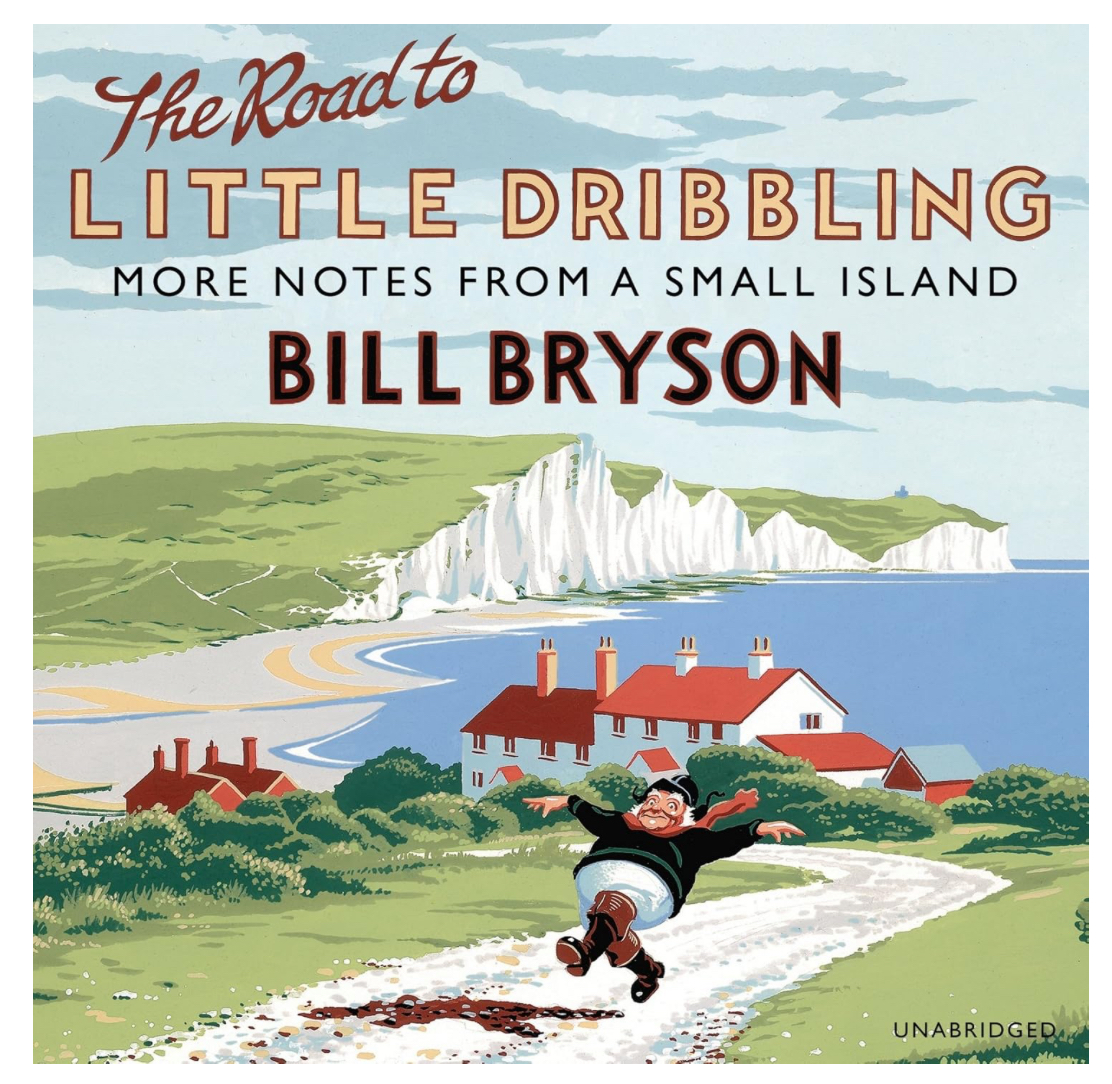
I’ve had some interesting comments from readers following my recent mentions of listening to audiobooks. I spend a lot of time driving and use that time to catch up on books that I otherwise would not get to read. One book led me to anger (about serial killers that was so awful that I stopped after the first chapter) but I have thoroughly enjoyed most of the others, including Bill Bryson’s Road to Little Dribbling. However, I did notice a few errors here and there, most notably Bryson’s narrator’s mispronunciation of the word ‘Minoan’ when referring to that famous ancient Greek civilisation. The reader kept saying ‘MinoNan’.

Leni Ella writes: “I listen to books in the car as so much driving is involved with the job. Some people read audiobooks like it’s the first thing they’ve ever read. Having said that I’ve listened to some absolute beauties too.”

She adds: “The Dutch House read by Tom Hanks was like being read to by a friend because his voice is so singular and familiar. Both the Obama books were excellent and inspiring listens and I also enjoy Sara Cox reading her own stuff.”

I do find that when writers narrate their own work, it is much more meaningful because it adds an extra dimension that you do not get through written words on a page. Through their voice, you hear their emotions and feelings as they read the sentences they have composed. It particularly comes across in autobiographies, where the writers are revisiting experiences and memories they have actually lived through. I first realised this when listening to Dave Grohl’s autobiography, The Storyteller (Grohl is the lead singer of the Foo Fighters, a band on my bucket list to see which I achieved earlier this year). Hearing him recall certain events in his life in his own voice where his tone, speed and volume would change depending on what he was reading, made the whole book burst with life. You could hear his emotion at the birth of his children, the shock and grief when Kurt Kobain died, the unbridled thrill of doing his first stadium concert,

Clare Powell, a self-confessed ‘ranter’, says: “I am new to audiobooks. I’m enjoying David Mitchell (the comedian) ranting in ‘Thinking About It Only Makes It Worse’ (having listened to his ‘Unruly’ first). He is a magnificent ranter but also an amusing historian. I highly recommend it.”

In the same column I referred to Bill Bryson’s condemnation of grammatical errors made by people who should know better.

Clare went on: “My guilty failure when writing is the excessive use of the exclamation mark!! However, my English teacher told us that creative writing allowed for certain grammatical ‘hiccups’. The rule is not to start a sentence with ‘and’, ‘but’ etc., but sometimes it is acceptable. He then quoted from a very famous piece of literature which, over 40 years later, I have no hope of remembering! I do remember his words of wisdom though.”

Lynne Wheatley confesses: “I am one of those people who just can’t enjoy audiobooks.” But my column did bring to mind her 1940s school days: “Our English teacher in 1947 was a demon. You did it her way, no deviation, spelling mistakes written out 100 times. I was an avid reader so soon got the hang of correct English. My first job was proof reading, and I loved it. My ‘driving nuts’ is spelling mistakes, especially on social media. I remember way back, with my small grandchildren, when they would write in schoolbooks with spelling mistakes. I used to point out the odd error, but was told, “Oh it doesn’t matter as it’s not an English lesson.” WHAT? I could see my English teacher turning in her grave. I must say, you’ve whetted my appetite, I might yet try the audio.”

It has occurred to me that audiobooks are a clever way for people who have problems with their eyesight to enjoy books they can’t see. Not everyone who has impaired vision knows how to read Braille, and I’m sure many of you who used to see perfectly well but no longer can, will miss being able to indulge in a good book.

My last paragraph then obviously begs the question, how are you reading this column? Maybe it’s time that I did an audio version.

Do you have opinions, memories or ideas to share with me? Get in touch with me via the ‘Contact’ tab at the top right of this page.

This column appeared in the Darlington & Stockton Times on Friday 6th Dec and the Ryedale Gazette and Herald on Wednesday 4th Dec 2024

The word is not enough

IMG_2128
I have been listening to Bill Bryson’s audiobook on my travels, which was has been very entertaining

I have been contacted by a reader named Ron who, commenting on my recent ranty column about people getting their words wrong, said: “It reminded me of a local writer who was critical of another local writer (who was, by then, dead so could not respond). The comment was about the first writer having (and I quote) ‘no less than eight grammatical errors on one page’. Oh dear (I won’t insult your intelligence by telling you where he went wrong).”

If you are a writer who dares to show your work publicly, you open yourself up to an extra level of scrutiny. We have to be careful when criticising other writers because eagle-eyed critics will be waiting with pens poised in readiness to tear us down as soon as we slip up (although eight grammatical mistakes on one page IS a lot).

I happily admit (as my column revealed) that I am not perfect. In case you haven’t read it, I had a rant about people confusing the words ‘perverted’ and ‘perverse’. I had always believed that ‘perverse’ was when something happened that was the opposite to expectations, while ‘perverted’ was something that was sexually depraved. Therefore, when people used ‘perverse’ when they meant ‘perverted’ it really wound me up. Turns out, ‘perverse’ CAN also mean sexually depraved, so I was wrong and had to force feed myself humble pie.

I am also not perfect when it comes to grammar and am guilty of beginning sentences with ‘So’, ‘As’, ‘But’ and ‘And’. The grammar I was taught at school is just a hazy memory and I rely on my gut to tell me if I’m wrong, which it does now and then. Despite having a successful career as a prolific writer, my dad was not perfect either and having failed his English O’level, his understanding of the English language was largely self-taught.

My rant was inspired by an audiobook about serial killers by a so-called ‘TV psychology expert’. I barely got past Chapter One, not because of the ‘perverse’ v. ‘perverted’ hoo-ha, but because it was just rubbish. I switched to listening to Bill Bryson’s ‘The Road to Little Dribbling’, his sequel to the hugely successful ‘Notes from a Small Island’. He is American born but has lived in England since 1974 and has dual citizenship. His observations about the cultural quirks of our nation are hilarious, and this one I do recommend you try.

There were a few times that he had his own rant about English language usage and was scathing about people who muddled up ‘me’ and ‘I’. I shrank down a bit in my seat knowing that his list of offenders could include me (not I) too.

But (there I go again…) there were certain things in the reading of this book that were incorrect. In Mr Bryson’s defence, he was not narrating it himself, and on the whole the reader did a very good job. However, he did drop the odd clanger, the most notable being his pronunciation of ‘Minoan’ when referring to Knossos Palace. The narrator said ‘MinoNan’. The first time he said it, I let him off, because when you’ve read a whole chapter almost flawlessly, it must be an absolute pain to start again for the sake of one small mistake.

However, it turned out to not be one small mistake, and he said ‘MinoNan’ every single time it appeared. How could he get something as famous as the Minoan Civilisation wrong? Or was it his script that had it wrong? And (yep, another…) who had given the OK for it to be published with such a glaring error? It was not the only spoken error, but the one that most irked me.

While I’m on the subject of audiobooks, it would be remiss of me not to take the opportunity to drop in a shameless plug: if you haven’t listened to the Constable series by a certain Nicholas Rhea narrated delightfully by Philip Franks who starred in Heartbeat, then what are you waiting for?

And (there I go yet again) having listened to them all, there is the odd error here and there, particularly on some Yorkshire place name pronunciations, but I’m not going to be too critical.

After all, there but for the grace of God go I.

This column appeared in the Darlington & Stockton Times on Friday 15th Nov and the Ryedale Gazette and Herald on Wednesday 13th Nov 2024