Watch what you wish for


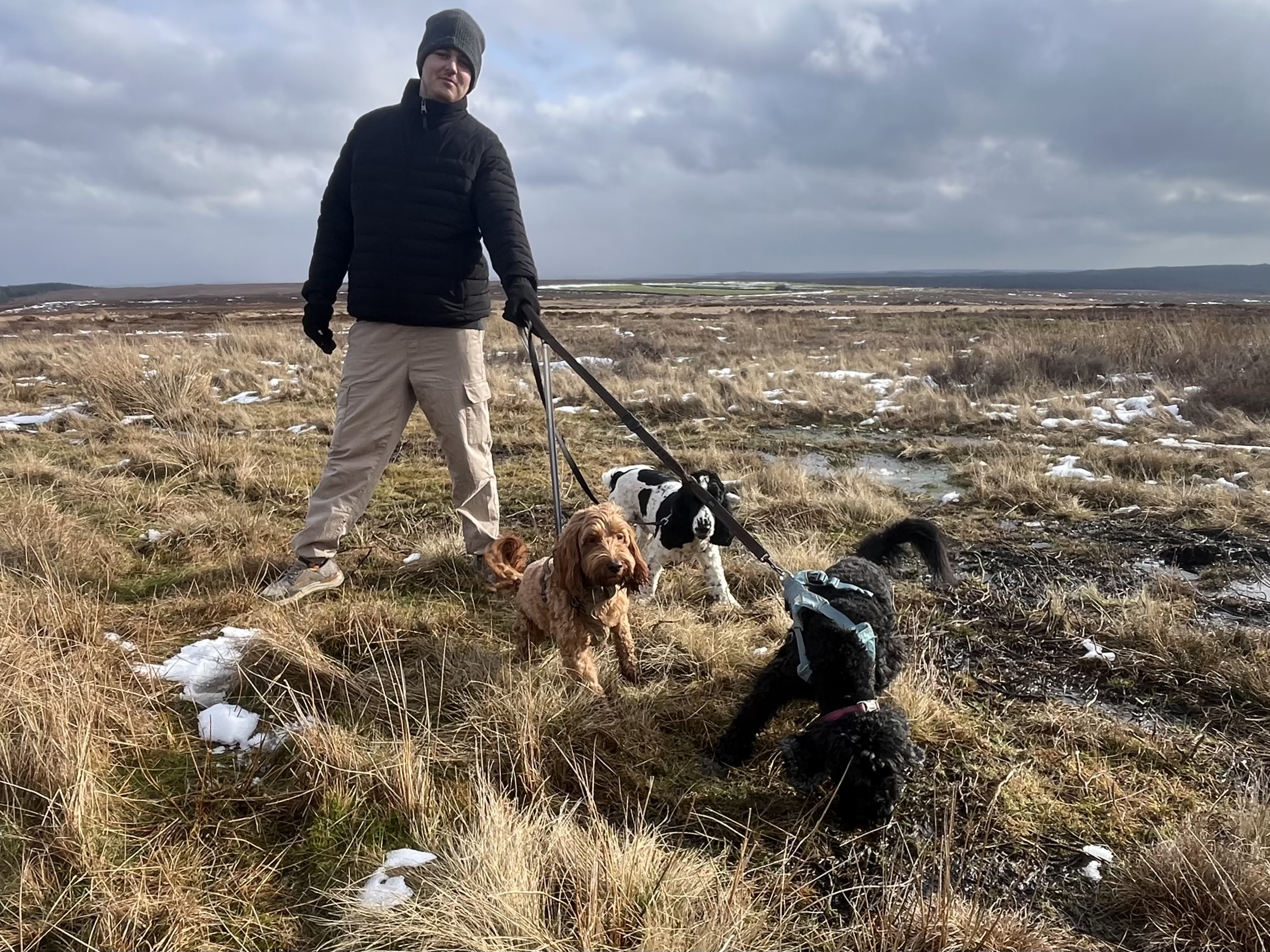
My son Joey and I went to the North York Moors near the site of Hamer Inn to look for the Corkseller’s Grave but were unsuccessful

I’ve had some interesting information about the Corkseller’s Grave that I mentioned a couple of weeks back. If you recall, I quoted a 1990s article written by Paul Grantham in which he explained that our corkseller would have been trekking the moors in the 18th century. Sadly, his threadbare clothes were not enough to protect him one savage winter, and he perished. Hard-up locals would not have been willing to bear the cost of a funeral and so they would have buried him where he was found, which was legal at the time.

My son Joey and I tried to find his grave, but were unsuccessful. I’m thrilled that the writer himself, Paul Grantham, got in touch after reading the column: “I was told, and shown, the Corkseller’s Grave by Dick Bell, the first head ranger of the Moors. He kept the grave marked, and tidied up the stones whenever he passed the site. He told me because he was sure that I would continue to keep it tidy. Sadly, it now appears to be neglected and is in desperate need of some TLC.

“I have records of many unconsecrated graves across the country, some in danger of being lost forever. There is (at least) one other grave on the Moors which beggars belief and will make a wonderful story if written up by someone more skilful than me. There is another story of a missing body which revolves around the little known group of cunning folk called St Mark’s Maidens who operate on the eve of St Mark’s Day. This is April 24th…so it will be here soon.”

I’m looking forward to hearing more from Paul about these mysterious tales, and will of course pass them on to you once I read them for myself.

His comment about St Mark’s Maidens made me want to find out about them, but there was not much that I was able to discover specifically with that name, although there is plenty about St Mark’s Eve.

St Mark the Evangelist was one of Christ’s 12 apostles and is best known for having one of the Bible’s four Gospel books of the New Testament attributed to him. He is the patron saint of many things, including lions, lawyers, opticians, pharmacists, painters, secretaries, interpreters, prisoners and people with insect bites!

I can’t find anything suggesting he is connected with predicting the future or romantic love, which is why it’s a bit odd that the day before his saint’s day is all about ‘divination’, specifically people trying to either find their life partner or determine who is going to die in the coming year.

All sorts of curious practices took place in the hope that at the end, the supplicant would discover the identity of their intended one. Both men and women performed these customs, so would it be that the women were known as St Mark’s Maidens? Would the men then be ‘Masters’?

Rituals included women walking backwards towards a well before circling it three times, also backwards, while wishing to see their future husband. After the second circle, she would peer into the water where the face of her intended would reveal itself. Presumably if she didn’t like the look of him, she’d not complete a third turn!

Another custom was to set the dinner table and leave the front door open. The next person through the door would be your true love. If you didn’t like cooking you could instead visit a church yard at midnight, pluck some grass from a grave and leave it under your pillow. When you awoke, the next person you saw would be THE one.

As for predicting who would pass away, ‘watchers’ would sit in the church porch and at midnight the apparitions of those to die in the coming year would file past. If the watcher at any time fell asleep, then they would be the one to perish. A similar custom was ‘chaff riddling’ where the watcher had to sit by a barn door riddling chaff all night. At midnight the spectres of those who would pass away would parade past. In his book ‘Yorkshire Days’, my dad tells the a story of a female watcher from Malton seeing a coffin being carried by two men.

She was dead within the year.

Do you have opinions, memories or ideas to share with me? Get in touch with me using the ‘Contact’ button on the top right.

This column appeared in the Darlington & Stockton Times on Friday 3rd  and the Ryedale Gazette and Herald on Wednesday 1st April 2026
Boddy of evidence for inn’s past history

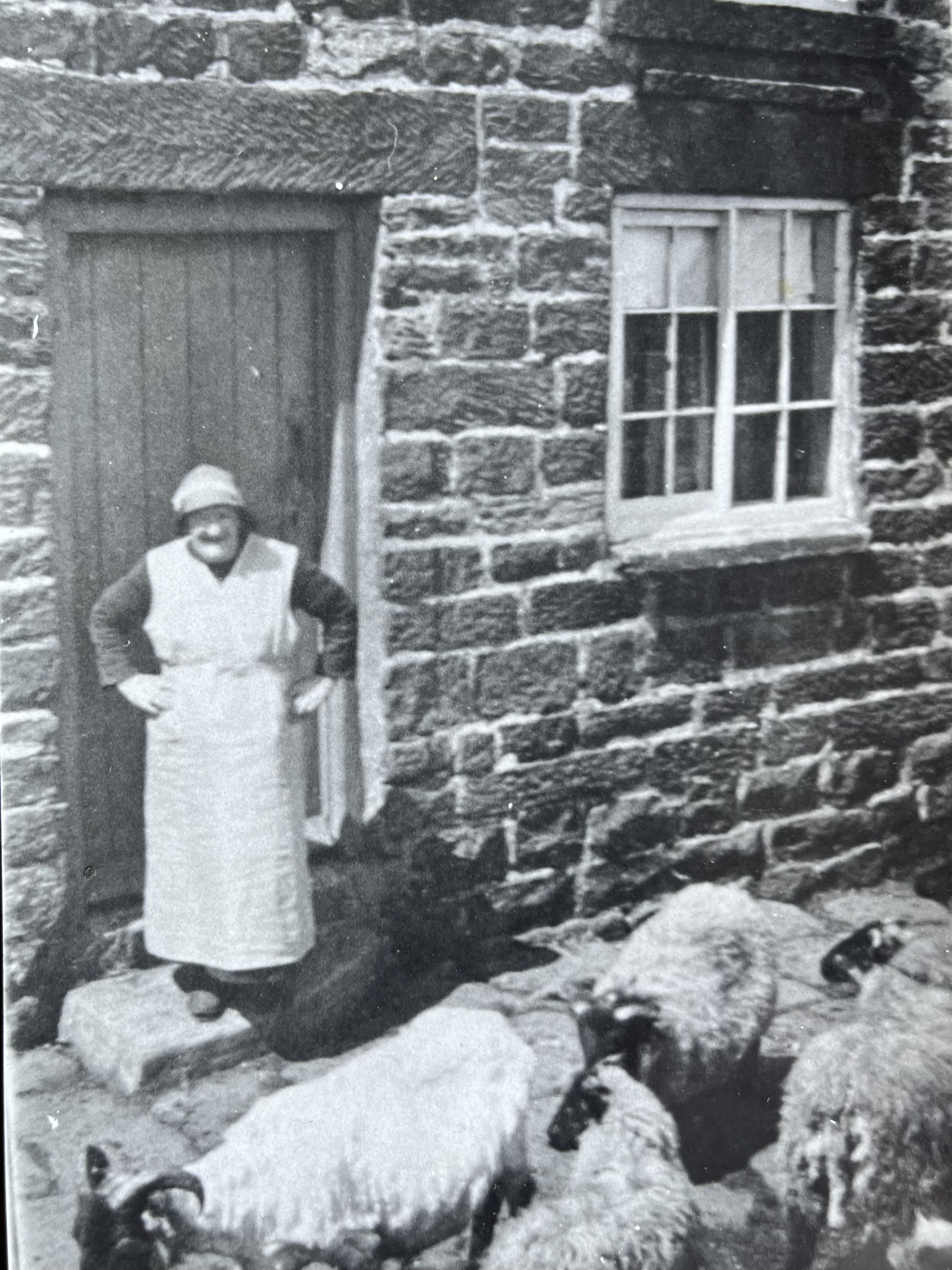
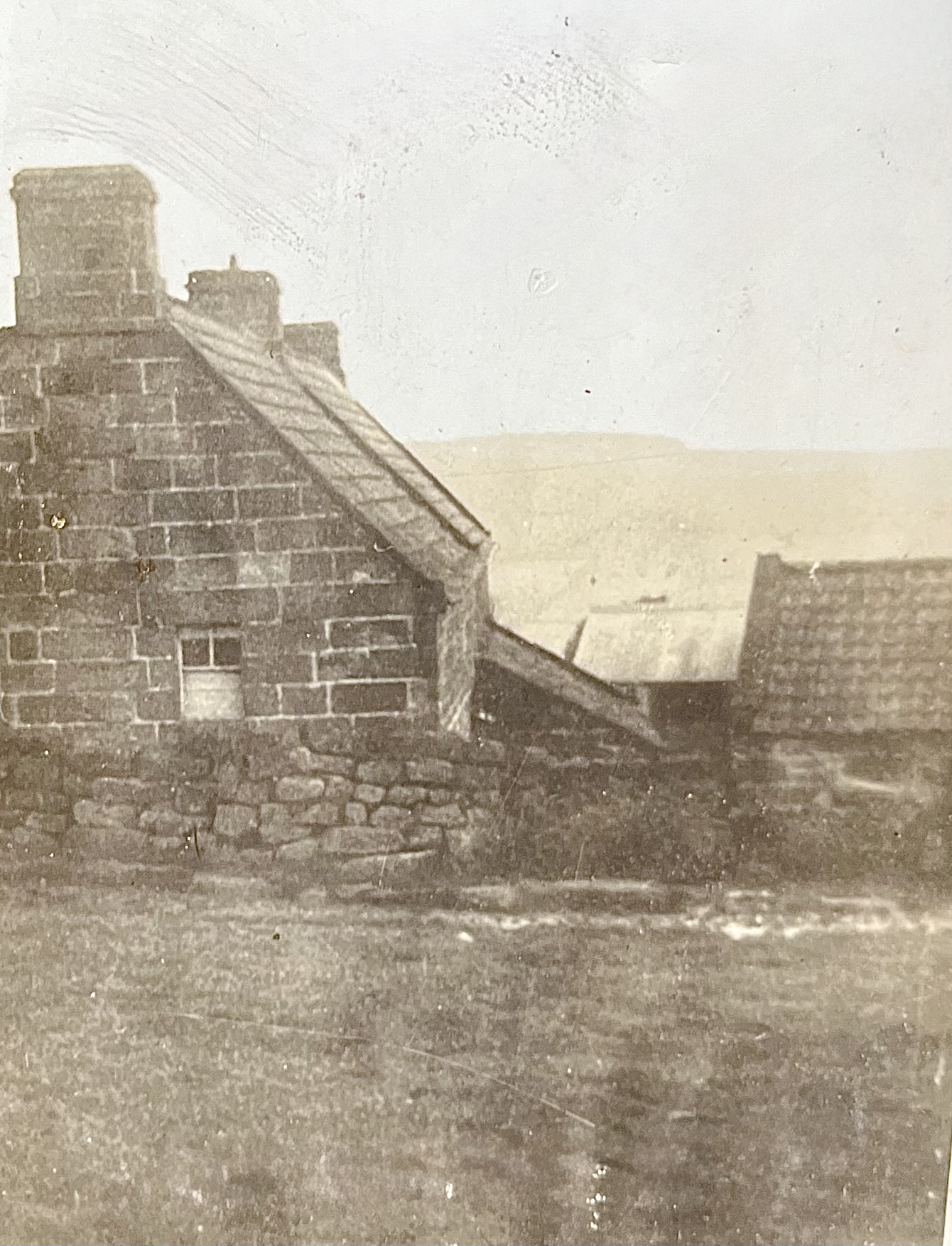
Hamer House on the North York Moors in the 1930s when Lily Boddy, the last licensee, lived there.
Granny Boddy outside Hamer House in the 1930s. Photo supplied by Peter Hanstock, York.
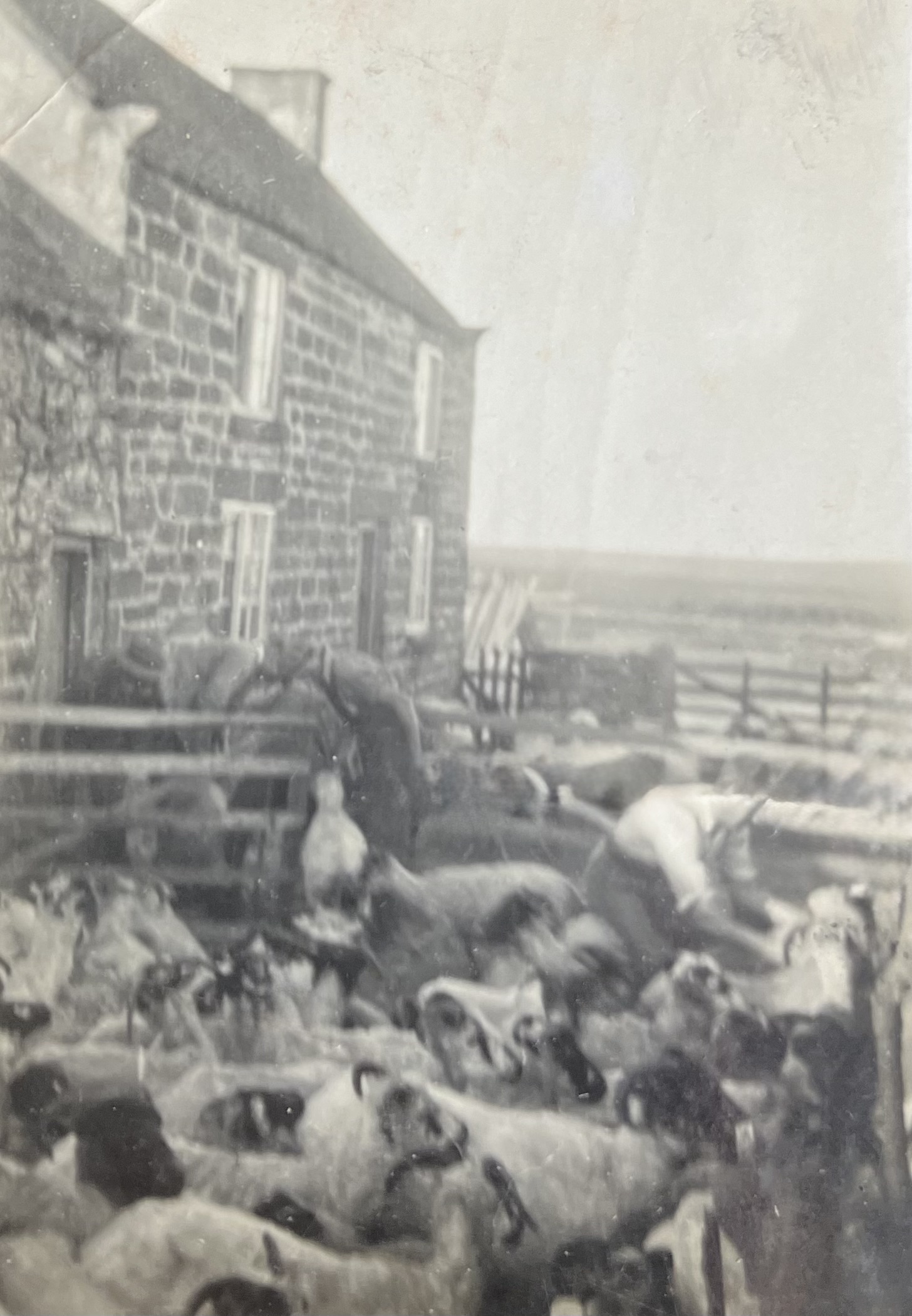
Sheep shearing at Hamer Inn
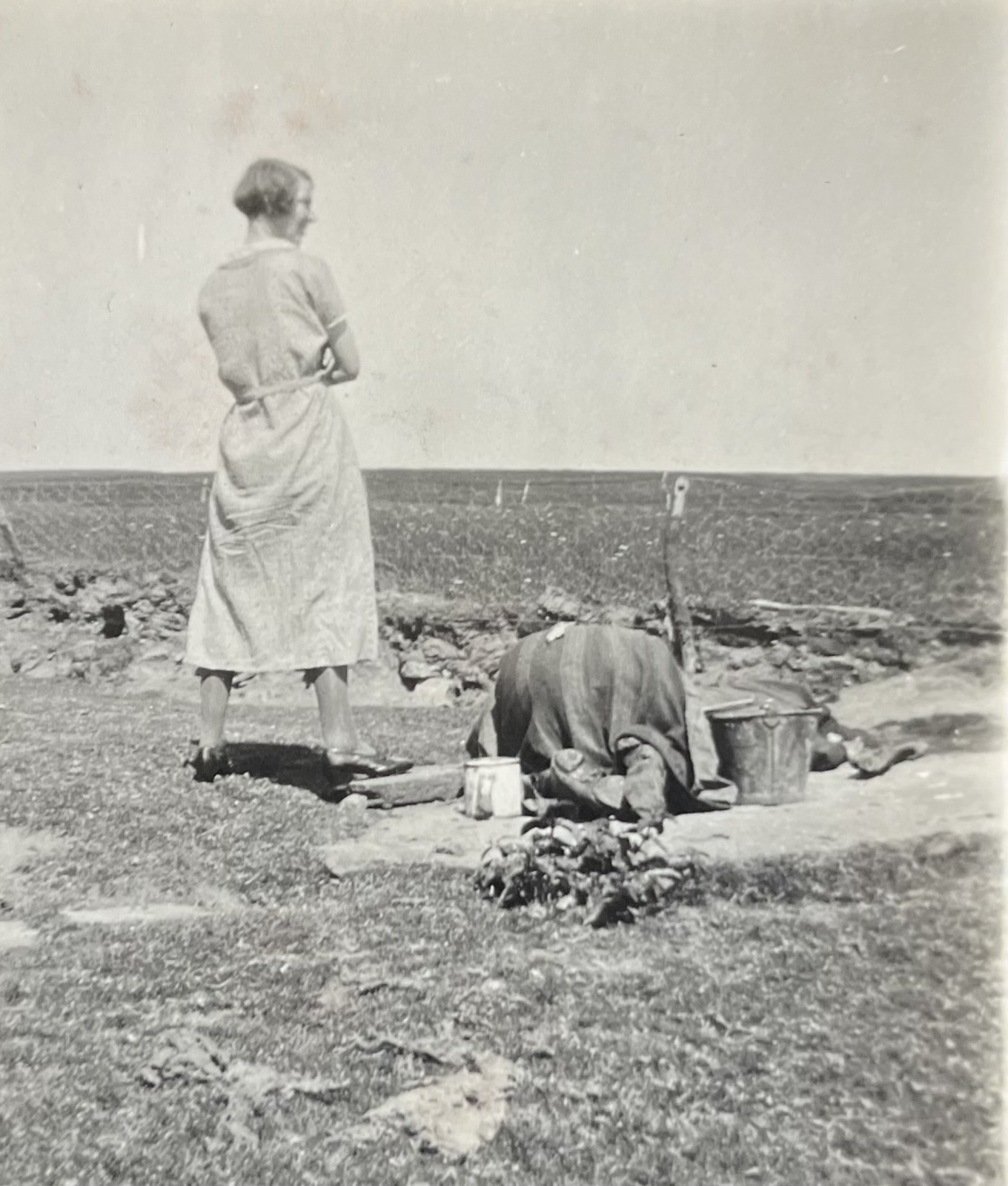
Lily Boddy looks on as Grandma Boddy crouches by the well behind the Hamer Inn
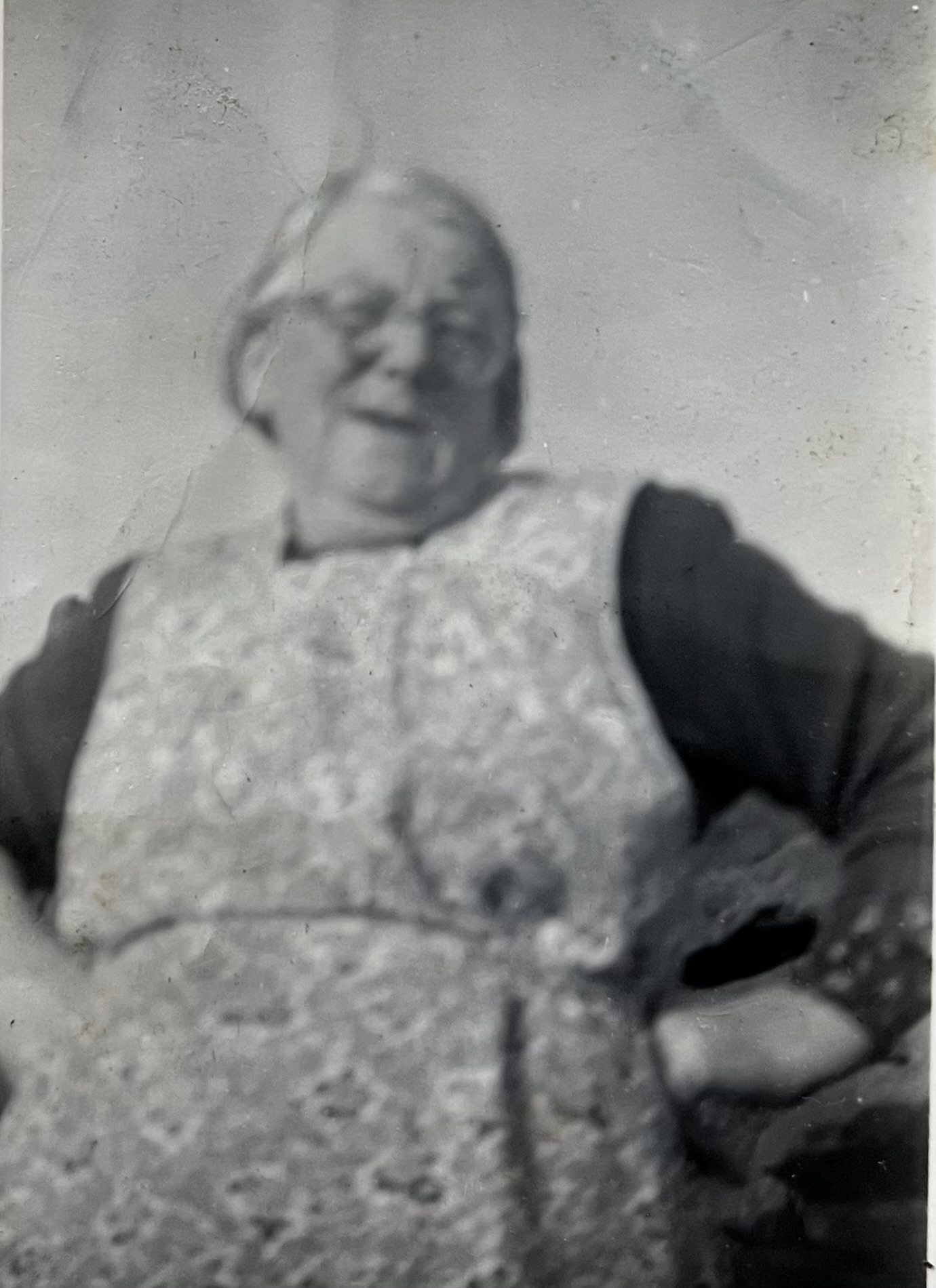
Lily Boddy, the last licensee of Hamer Inn (date unknown)

If you’re a regular reader you will know that David Ford has been seeking a picture of Hamer Inn before it became derelict. The inn used to stand on the road between Rosedale Abbey and Glaisdale.

He wrote: “My great grandfather Robert Ford was born there, along with several of his siblings…His brother Joseph wrote a book about life and times in Danby Dale…I would like a photo of Hamer when it was open as an inn.”

I may have some good news for David further down this column…

That writer, often referred to as Joseph Ford Junior, died in 1944, and his father, Joseph Senior, was the licensee of the inn in the mid-1800s during the iron ore boom. The last licensee was Lily Boddy, who took over the inn from her father in 1914 but, according to my dad, she gave up running it as a commercial premises in 1929, likely because the trade from the local iron mines had vanished as the iron boom ended, the last one closing at Rosedale East in 1926. From then on it was known as Hamer House, and the Boddys kept it as their home. As to exactly when and why it became derelict I still don’t know.

Now to the exciting bit – a descendant of Lily Boddy got in touch to say they had some photos of Hamer before it became derelict.

I was thrilled because, first of all, I was not sure any pictures existed, and secondly, the only pictures I’d seen were of it as a wreck. It is quite startling to think that it is almost a century since it was fully in tact, so discovering that some pictures exist is a real treat.

I have five photos in total, three of which show the building as it was, a typical construction of traditional moorland stone. Another shows a young Lily Boddy and (I think) her mother bent over the well that sat at the rear of the building (mentioned in a previous column), and another one is of Lily herself in her later years. I hope David will be pleased to see them, despite the fact they do not demonstrate it running as an inn. Nevertheless, I feel encouraged that having now found these, someone else may have more lurking somewhere yet to be discovered. Every little clue will help to build a fuller picture of the working life of Hamer Inn.

My son Joey and I drove over the moors to collect the photos, and as were were passing the site of Hamer decided to stop and see if we could find the corkseller’s grave that I mentioned a couple of weeks ago.

The corkseller was a regular visitor to Hamer, which had also been known as the Wayside Inn and the Lettered Board, and David Ford’s ancestors knew him well. One ferocious winter, he sadly succumbed to the elements and his body was found much later not far from the inn, his basket of corks lying nearby enabling him to be identified. Reader John Severs sent me a remarkable photo of the corkseller’s grave that he’d taken around 30 years ago, alongside directions to the spot.

There’d been a fair amount of snow the week before we decided to go, with quite a bit still lying in unmelted drifts across the ground. We had a thorough look around, following the directions John had given us, but sadly came up empty handed. Does anyone know if the grave is still visible?

One person who might is Janet Cochrane, editor of the North York Moors Association’s quarterly magazine, Voice of the Moors. After I’d mentioned the magazine in my column, Janet got in touch to offer me a copy. The association, which celebrated its 40th anniversary last year, safeguards the landscape and culture of the moors and works hard to protect this very precious corner of North Yorkshire.

Interestingly, the association was founded in 1985 by four people – Derek Statham, Gerald McGuire, Don Tilley and, would you believe it, Peter Walker!

I’m guessing it’s a different Peter Walker than my very own dad, otherwise he must have kept it very quiet!

Do you have opinions, memories or ideas to share with me? Get in touch with me using the ‘Contact’ button on the top right.

This column appeared in the Darlington & Stockton Times on Friday 13th  and the Ryedale Gazette and Herald on Wednesday 11th March 2026

Haven’t heard a Peep

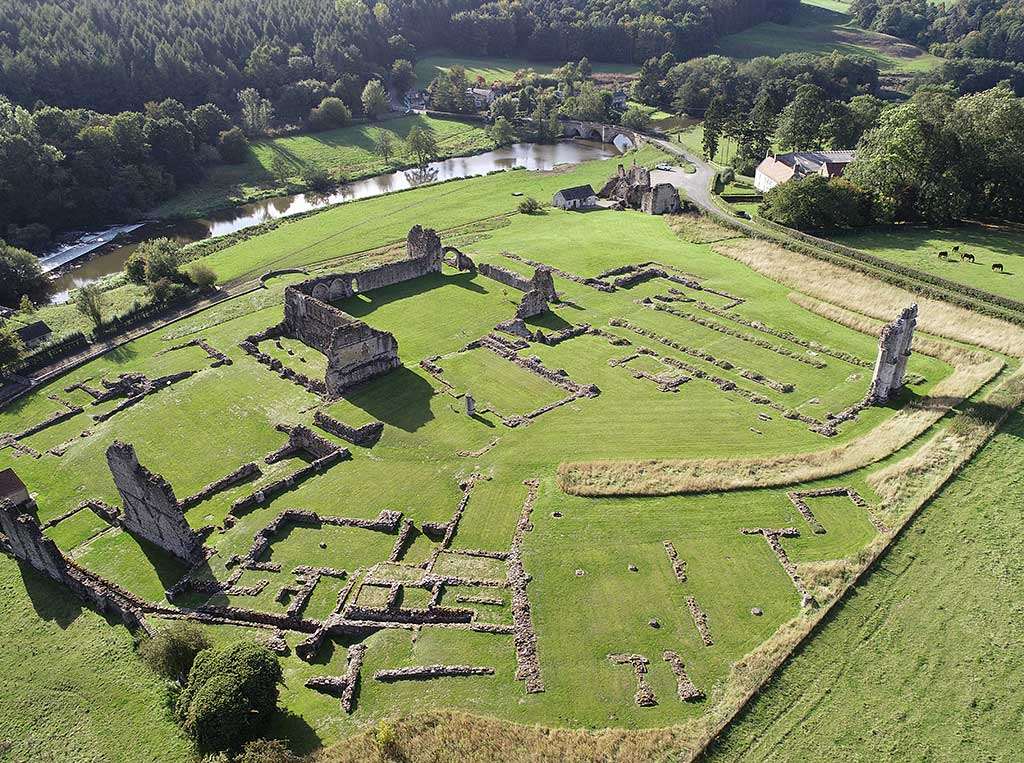
Kirkham Priory with Kirkham Bridge visible, top centre, where a nocturnal bird fair used to take place on Trinity Sunday followed by a festival in the abbey grounds. Do you know anything more about this fair? Picture: English Heritage


Following my piece a couple of weeks ago on Hamer Inn, also known as the Lettered Board and Hamer House, reader Howard Campion has been in touch.

He writes: “Thank you for the article on Hamer House…I have followed this area with interest since purchasing Bill Cowley’s book ‘Snilesworth’, and have recently located an article that appeared in 1989 as well as a paragraph in your dad’s book ‘Portrait of the North York Moors’ – you will no doubt be familiar with the last – but the newspaper article does not have an author’s name. Do you have an e-mail address to which I can send it?”

I replied to Howard with my email address, so I am hoping to receive a copy of the article soon and will report back as to whether it offers more information on the mysterious inn. Howard also asked me: “Any luck with the bird festival thing at Kirkham?”

Howard was referring to a message he sent me several years ago asking if I could find out more about this festival because he was struggling to track down much information. I looked into it briefly, but after getting waylaid by other stuff failed to pursue it. His new message prompted me to have another go and I found the following reference in a 2005 newspaper article:

Kirkham Priory “…is best viewed from the nearby bridge over the River Derwent. This bridge is associated with an interesting festival, the Kirkham Bird Fair. At two o’clock in the morning on Trinity Sunday, men and boys met on the bridge to exchange or purchase pet birds. At sunrise, the bartering stopped and a village feast with drinking and merrymaking commenced.”

A later article in 2006 mentioned that the merrymaking was held in the grounds of the nearby abbey, and that a band would arrive on a boat from Malton.

Trinity Sunday is the first Sunday after Whit Sunday (which is the seventh Sunday after Easter) and this year it will fall on 31st May. I wonder if any of you know more about the Kirkham Bird Festival, for how long it ran, and when it was last held?

If you can’t help with that mystery, you might be able to help with another. Reader Katherine Hill has been in touch after coming across a column I wrote in 2022:

“I have just read your beautiful poem about Peep o’Day Farm near Husthwaite, Easingwold. I am writing a family history booklet and I understood from my grandma that my grandpa was born at Peep o’Day Farm. His name was Samuel Bean and would have been born most probably in the 1880s. He was the fifth child in a family of eight. At some point the family moved to live at Grange Farm, Acomb, York. I would be delighted if you knew, or could confirm, that the Bean family lived at Peep o’Day.”

The poem went like this: ‘Rising Sun and Peep o’Day, Throstle Nest and Flower o’May,

Acaster Hill and Baxby Mill, Well Pots Green and Providence Hill.’

I couldn’t answer Katherine’s question, but looking in my files, I found a letter sent by Margaret Kilner at the time, who’d done substantial research about the farm.

The information Margaret gave me included that a ‘Peep o’Day, Easingwold’ was farmed by a Mr W Coates in the 1850s. In 1865, a ‘Mr John Coates of Peep o’Day Easingwold’, took part in a stag hunt. Bulmer’s Husthwaite Directory of 1890 lists William and John Coates at Peep o’Day. By the 1911 census, Peep o’Day was run by widow Hannah Winspear until her death in 1930 at the age of 80. She bequeathed it to her two surviving children and her nephew.

Unfortunately, there is no mention of anyone named Bean. Of course, back then, Margaret was not looking for him, so it’s possible she missed it. Perhaps Samuel Bean was the son of someone who worked at the farm, rather than the owner of it? Or is there another ‘Peep o’Day’ farm in the area?

I tried to contact Margaret but the email bounced back, so you are reading this Margaret, please get in touch! And if anyone else can help Katherine confirm her ancestor Samuel Bean’s link to Peep o’Day, do get in touch using the methods below.

Do you have opinions, memories or ideas to share with me? Get in touch with me using the ‘Contact’ button on the top right.

This column appeared in the Darlington & Stockton Times on Friday 6th and the Ryedale Gazette and Herald on Wednesday 4th Feb 2026