Is it Written in the Stars?

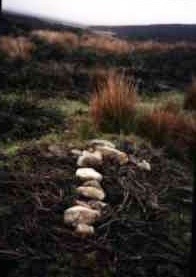
A rather blurry old photo of the Corkseller’s Grave. But the shape of the hills in the background might help us identify the location. Can you recognise it? (Picture: Paul Grantham)

I am constantly surprised by how far and wide my columns are read.

Chris Starfire contacted me with the following: “Hello, I’m far away in Oregon in the USA but fascinated by your story of the Corkseller’s Grave.” Chris, I am fascinated how you found me – and by your surname too! Where does an exotic name like Starfire come from?

Chris read the piece a few weeks ago in which I described trying to find the grave with the help of my son Joey. We were unsuccessful, and Chris got in touch with a couple of helpful ideas: “Poking around online, I noticed that there are two sets of instructions to find the grave and they differ in 30 yards.”

He spotted that in my piece I said ‘…you will find the grave on the road between Glaisdale and Rosedale Abbey. Stop by the small bridge over Bluewath Beck and walk for 50 yards heading east along the south bank of the stream.’

But he found an further piece written by Paul Grantham, other than the 1990s article of his which I had used for my column. He noticed that it said: ‘The isolated grave lies just south of the road junction one mile north of Hamer House, at a point where the road crosses the beck. Park on the bridge and follow the stream east for about 20 yards.’

There was a small photo accompanying the article, and Chris pointed out: “The photo is quite small on the Grantham website, but could be useful for a sight line on the surrounding hills… Best of luck finding the grave if you go looking again!”

I have tried my best to improve the image, which I’ve included with this piece, and it’s not the best quality, but indeed the shape of the background hills can clearly be seen in the distance. Could this be useful for identification? Someone who knows the area better than me might be able to recognise it. If so, please do get in touch!

I have also been contacted by yet another arm of the Eddon family, who you may remember were at one time the licensees of Hamer Inn. James and Elizabeth Eddon took over from the Ford family at the end of the 18th century, and had 11 children. Lily, took over the running of Hamer Inn in 1914 when her parents moved on.

“Following on from your articles about Hamer House, I am David Turnbull grandson of Elizabeth and James Eddon. My mother was Annie Eddon, daughter of Elizabeth and James, and she married Wilfred Turnbull. She was sister to Lily Boddy. Annie was one of 11 children and was born at Hamer Inn. The family moved at some point to run the Black Bull pub on the Pickering/Malton Road where James was unfortunately kicked by a horse and killed. We presume Lily was left behind to run Hamer. My sisters think Lily died quite young but we have no dates. I hope this information is of interest to you.”

It certainly is of interest, David, and I am very grateful to you for getting in touch. I was very sorry to learn about the way James died, which Paul Grantham had mentioned in his 1990s article that I featured. It must have been in 1923 because my research shows that Annie, who was born in 1906, was 17 at the time.

As for David’s question about how long Lily lived, I think she reached a fair age judging by the photos that I published a few weeks back, but I’m not sure how long, or the year that she passed away. Perhaps one of her many relatives out there will be able to tell us?

In the meantime, I have another mystery that has landed in my lap. I was invited on a trip into the Yorkshire Dales last weekend, and on a lovely walk, I spotted a cave in the side of a hill.

I was informed that the legendary Grassington murderer Tom Lee used the cave to hide from his pursuers.

Grassington murderer? Of course that set me off on another quest to find out who the heck Tom Lee was, and what had happened. If you are reading this and know that story, I’d love to hear from you!

Do you have opinions, memories or ideas to share with me? Get in touch with me using the ‘Contact’ button on the top right.

This column appeared in the Darlington & Stockton Times on Friday 24th and the Ryedale Gazette and Herald on Wednesday 22nd April 2026
Slave to history


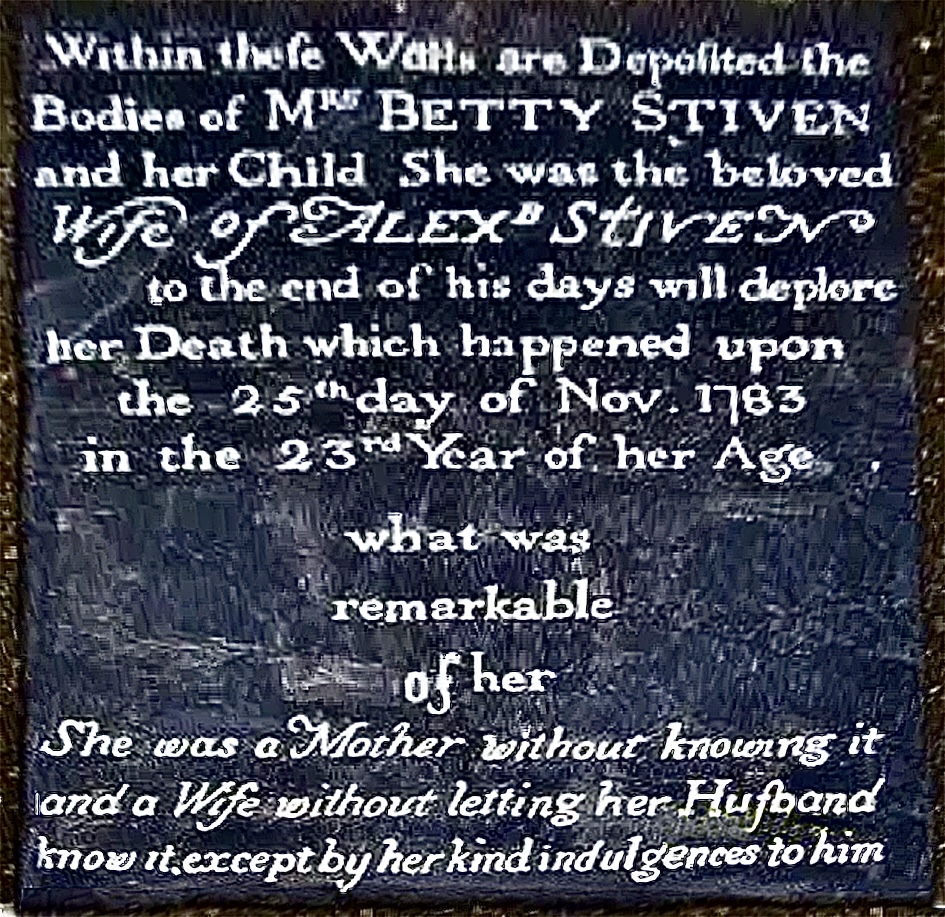
The baffling inscription on Betty Stiven’s grave on the island of Tobago in the Caribbean, spotted by reader Peter Sotheran. Do you know what the last sentence means?

Another family connected to Hamer Inn has been in touch with me following previous columns about Joseph Ford and his descendants, who include readers and cousins, David and Ian Ford.

In one of my columns I mentioned the Eddon family. James and Elizabeth Eddon took over running the inn from the Ford family, and Annie Eddon, later Turnbull, was born at Hamer in 1906. Annie was the second youngest of 11 children.

I previously mentioned a column written in the 1990s in which Annie remembered: “On the Glaisdale side of the house is a beck (Bluewath) and I can remember going down to the beck with my mother to wash clothes. We took a big cauldron and lit a fire under it to boil the water and clothes.

“We had a pump in the pub yard but in summer it ran dry and we had to carry water from the beck…One of the outbuildings was used by my father for making besoms from heather, and on Mondays, Mother would ride a pony to Pickering market to try to sell them.”

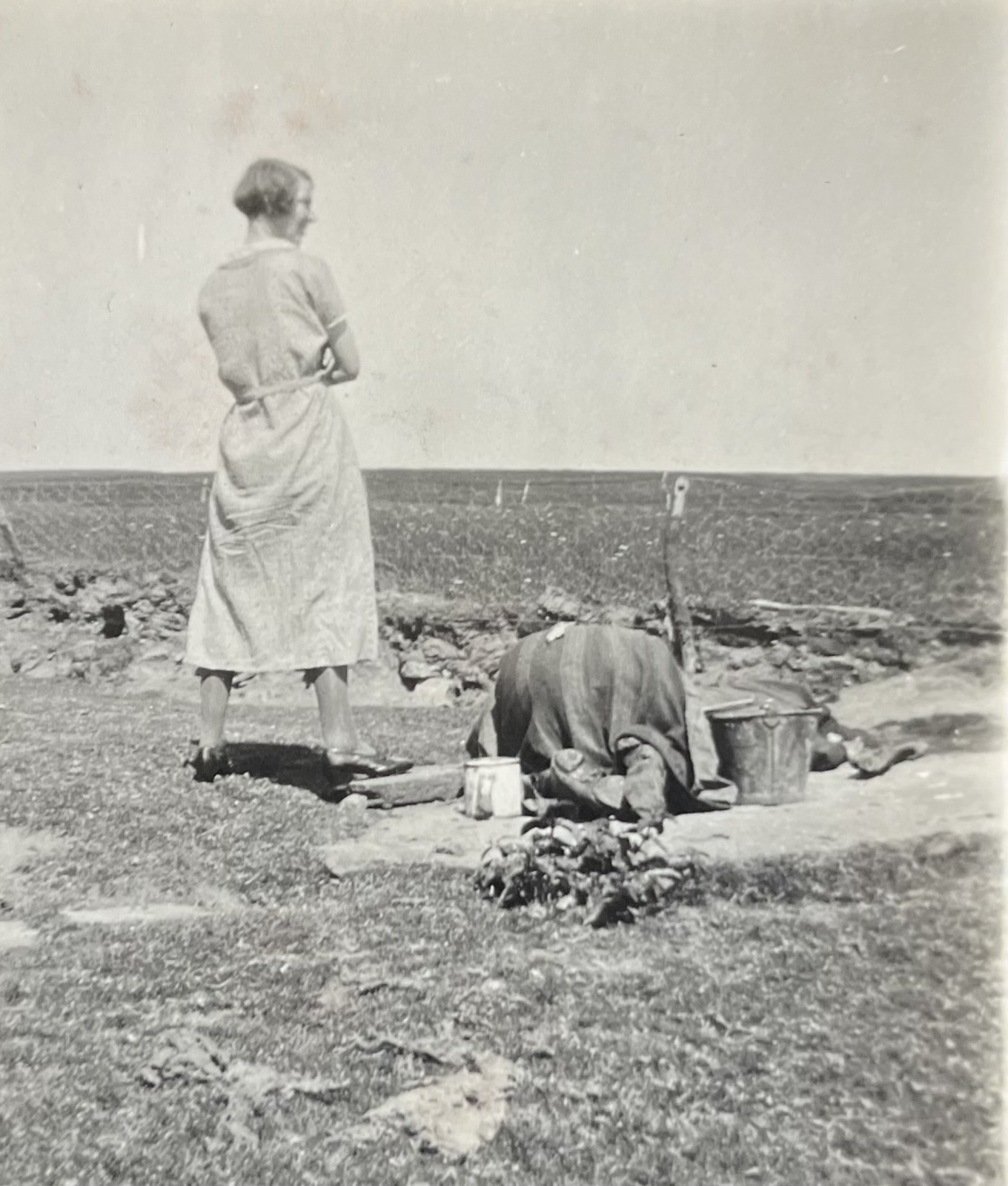
It was Annie’s sister, Lily Boddy, who took over from her father in 1914, and you might recall a fabulous photo I shared a few weeks ago showing Lily next to the well with (I presume) her mum Elizabeth Eddon bending over it, bottom in the air!

Following that, I have been contacted by Susan Ellis who wrote: “Further to your piece…my mum has asked me to contact you. My mum is Pauline Elizabeth Ellis (nee Turnbull) one of 6 children, all still alive, and who originate from Wrelton.

“My mum’s grandma and grandad are James and Elizabeth Eddon. One of their daughters, Annie, is my mum’s mum and Annie had some time growing up at Hamer House.

“We would be very interested in any photos you might let us look at, along with any more information.”

I replied to Susan, and sent her some articles and links to the columns about Hamer where I featured photos of the property before it became derelict (which you can find on www.countrymansdaughter.com). Type ‘Hamer’ in the search box and they should come up.

A few days later, Susan wrote to me again: “Thank you Sarah. I’ve just been reading everything out to Mam. It is all fascinating isn’t it? What hardy folk they all were! Mam and I will have a chat and see if any stories surface that can be shared.”

Now to a different, yet equally interesting, query which another reader has brought to my attention, and upon which I am hoping you might be able to shed some light.

Peter Sotheran got in touch because in the past I have written columns discussing the historical resting places of various people. I’ll let Peter explain:

“Many thanks for your columns – always unearthing something fascinating! A while ago, I think you wrote about various gravestones and that stirred in me a memory of a mysterious gravestone that I discovered whilst on holiday on the Caribbean island of Tobago.

“Plymouth on the north-west coast of Tobago is a small coastal community with a population approaching 10,000 residents. English settlers arrived there 400 years ago, hence the prevalence of British place names; Scarborough, Roxborough and Speyside are principal towns on the island.

“One of the island’s greatest curiosities is the inscription on the grave of a local lady, Betty Stiven. After recording the date of her death, the gravestone carries the following message:

‘She was a mother without knowing it and a wife without letting her husband know it, except by her kind indulgences to him.‘

“I wondered if your ever-erudite readers can suggest an explanation?”

I read the inscription (which you can see above) and came up with the conclusion that because her child is interred with her, she died in childbirth, in which case, she would not have experienced motherhood at the age of 23.

I find the last part of the sentence is quite baffling. Perhaps she died soon after getting married? Or was she the unmarried mistress to a plantation slave master? The inscription is quite loving, though, so perhaps it was a genuine marriage? Peter thinks the size and style of her gravestone suggests she was more likely part of the white elite rather than the poorer indigenous community, but is not certain.

I’d love to hear what you think!

This column appeared in the Ryedale Gazette and Herald on 15th and the Darlington and Stockton Times on 17th April 2026

Boddy of evidence for inn’s past history

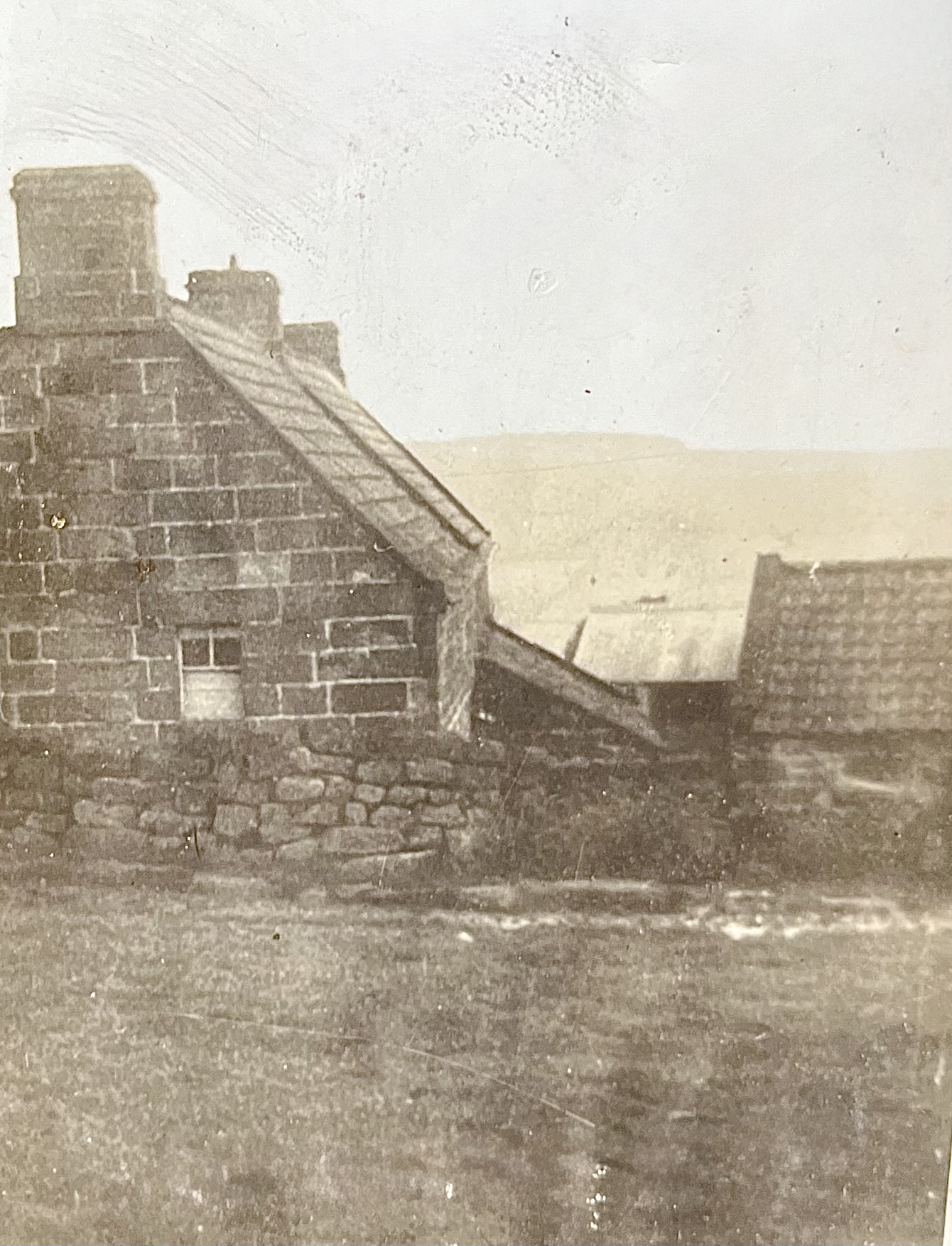
Hamer House on the North York Moors in the 1930s when Lily Boddy, the last licensee, lived there.
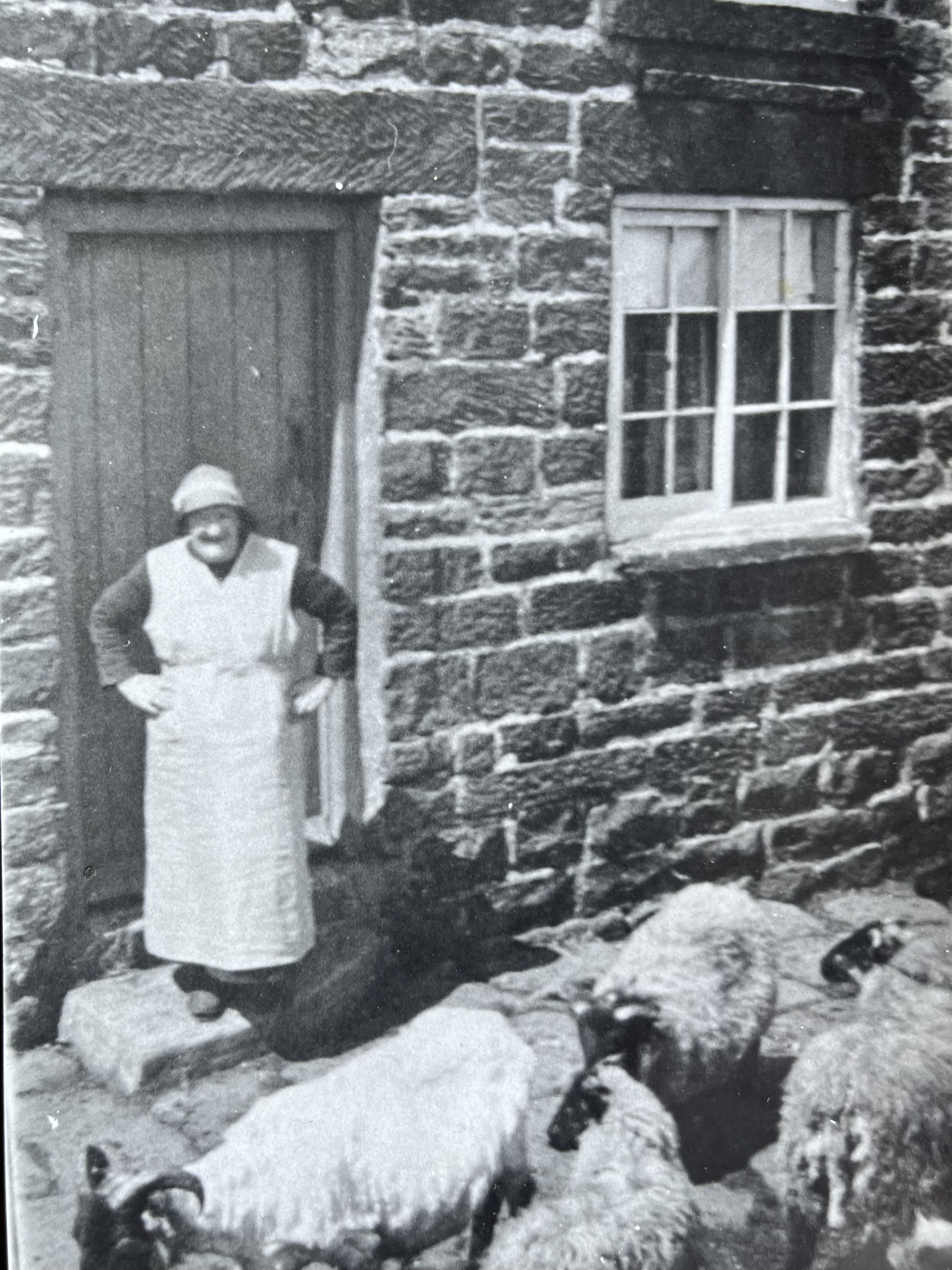
Granny Boddy outside Hamer House in the 1930s. Photo supplied by Peter Hanstock, York.
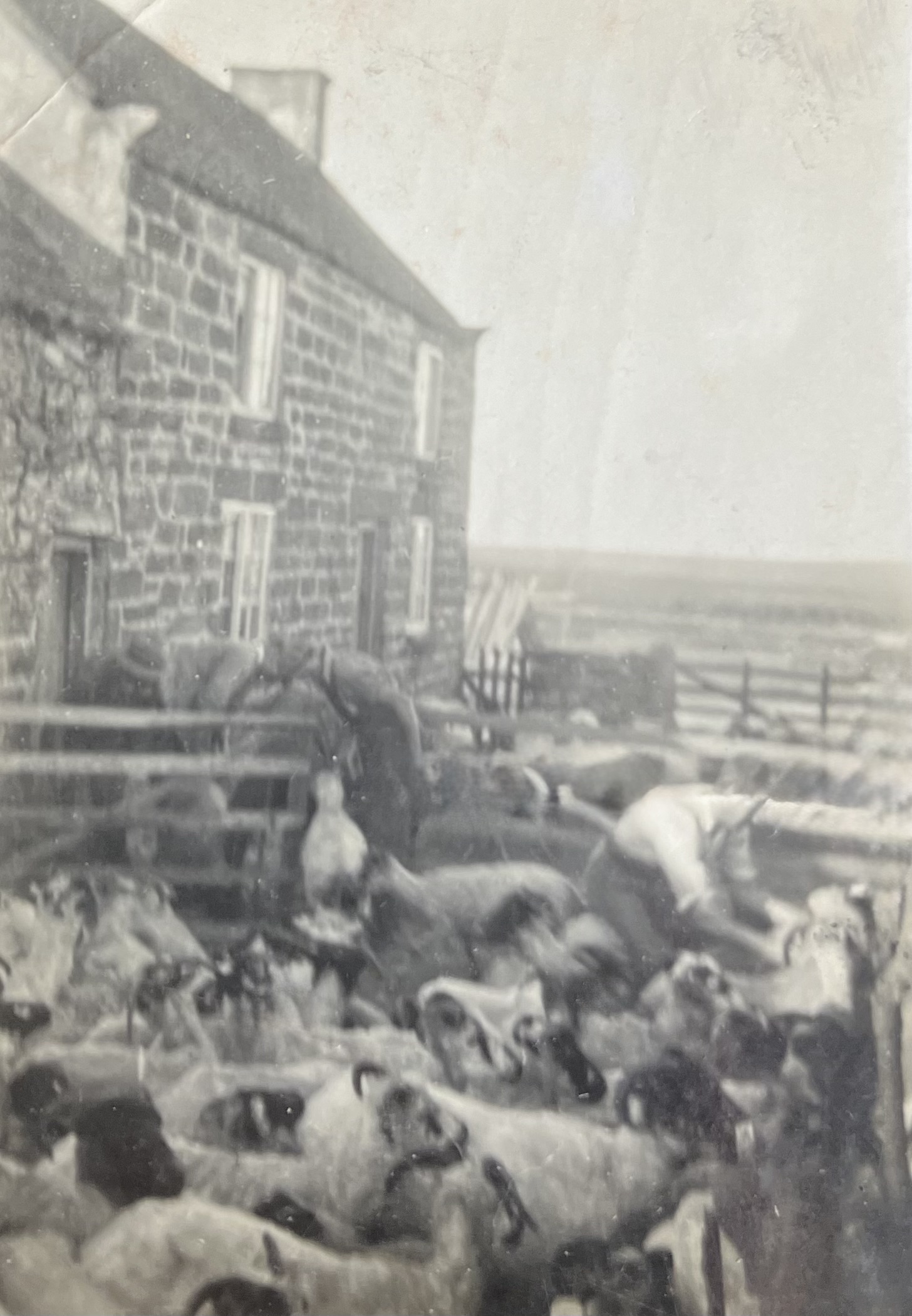
Sheep shearing at Hamer Inn
Lily Boddy looks on as Grandma Boddy crouches by the well behind the Hamer Inn
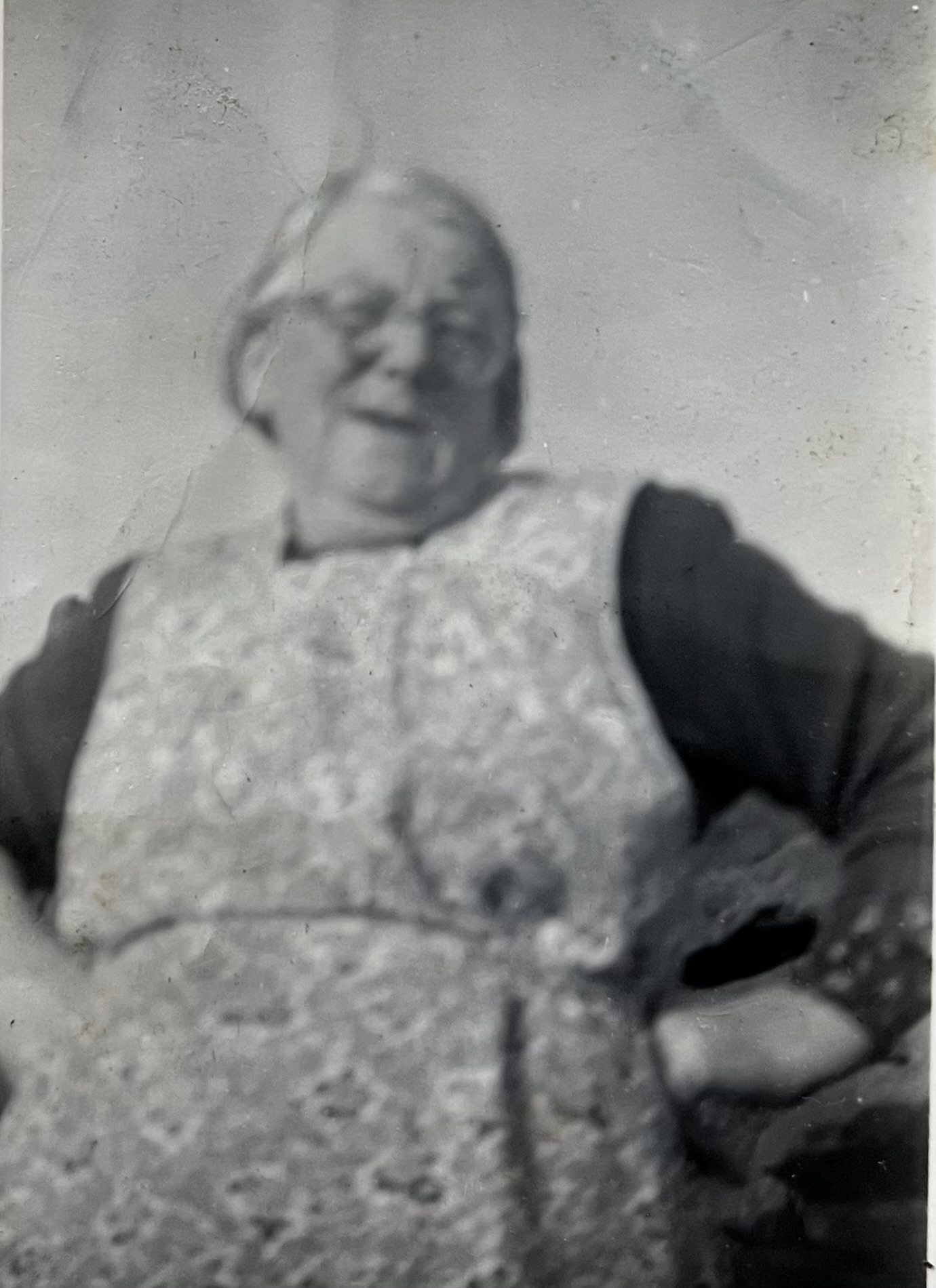
Lily Boddy, the last licensee of Hamer Inn (date unknown)

If you’re a regular reader you will know that David Ford has been seeking a picture of Hamer Inn before it became derelict. The inn used to stand on the road between Rosedale Abbey and Glaisdale.

He wrote: “My great grandfather Robert Ford was born there, along with several of his siblings…His brother Joseph wrote a book about life and times in Danby Dale…I would like a photo of Hamer when it was open as an inn.”

I may have some good news for David further down this column…

That writer, often referred to as Joseph Ford Junior, died in 1944, and his father, Joseph Senior, was the licensee of the inn in the mid-1800s during the iron ore boom. The last licensee was Lily Boddy, who took over the inn from her father in 1914 but, according to my dad, she gave up running it as a commercial premises in 1929, likely because the trade from the local iron mines had vanished as the iron boom ended, the last one closing at Rosedale East in 1926. From then on it was known as Hamer House, and the Boddys kept it as their home. As to exactly when and why it became derelict I still don’t know.

Now to the exciting bit – a descendant of Lily Boddy got in touch to say they had some photos of Hamer before it became derelict.

I was thrilled because, first of all, I was not sure any pictures existed, and secondly, the only pictures I’d seen were of it as a wreck. It is quite startling to think that it is almost a century since it was fully in tact, so discovering that some pictures exist is a real treat.

I have five photos in total, three of which show the building as it was, a typical construction of traditional moorland stone. Another shows a young Lily Boddy and (I think) her mother bent over the well that sat at the rear of the building (mentioned in a previous column), and another one is of Lily herself in her later years. I hope David will be pleased to see them, despite the fact they do not demonstrate it running as an inn. Nevertheless, I feel encouraged that having now found these, someone else may have more lurking somewhere yet to be discovered. Every little clue will help to build a fuller picture of the working life of Hamer Inn.

My son Joey and I drove over the moors to collect the photos, and as were were passing the site of Hamer decided to stop and see if we could find the corkseller’s grave that I mentioned a couple of weeks ago.

The corkseller was a regular visitor to Hamer, which had also been known as the Wayside Inn and the Lettered Board, and David Ford’s ancestors knew him well. One ferocious winter, he sadly succumbed to the elements and his body was found much later not far from the inn, his basket of corks lying nearby enabling him to be identified. Reader John Severs sent me a remarkable photo of the corkseller’s grave that he’d taken around 30 years ago, alongside directions to the spot.

There’d been a fair amount of snow the week before we decided to go, with quite a bit still lying in unmelted drifts across the ground. We had a thorough look around, following the directions John had given us, but sadly came up empty handed. Does anyone know if the grave is still visible?

One person who might is Janet Cochrane, editor of the North York Moors Association’s quarterly magazine, Voice of the Moors. After I’d mentioned the magazine in my column, Janet got in touch to offer me a copy. The association, which celebrated its 40th anniversary last year, safeguards the landscape and culture of the moors and works hard to protect this very precious corner of North Yorkshire.

Interestingly, the association was founded in 1985 by four people – Derek Statham, Gerald McGuire, Don Tilley and, would you believe it, Peter Walker!

I’m guessing it’s a different Peter Walker than my very own dad, otherwise he must have kept it very quiet!

Do you have opinions, memories or ideas to share with me? Get in touch with me using the ‘Contact’ button on the top right.

This column appeared in the Darlington & Stockton Times on Friday 13th  and the Ryedale Gazette and Herald on Wednesday 11th March 2026