A little means a lot

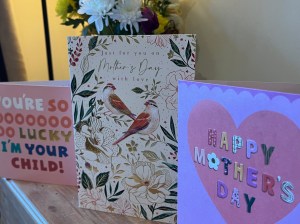
My boys always write beautiful and meaningful words  in the cards they give me on special occasions

Spring has sprung in earnest now, and as I write this, the sky is cloudless blue and the sun is beating down. Trees and flowers have burst into life, and the chattering birds are furiously building nests in preparation for the arrival of their young. Life is good!

It has been like this all week and is set to continue well into next. In the UK, because our weather is so unpredictable, we are extra grateful when we get a sustained patch of good weather and never take such things for granted.

A few weeks ago I mentioned that my favourite day of the year is the Spring Equinox because it represents a beacon of hope for good weather after a long, miserable winter. It also heralds the arrival of shorter nights and longer days, which cheers me up no end. I also tried to explain the difference between the well-known Spring Equinox and the lesser-known Spring Equilux which resulted in me declaring afterwards that I needed a lie down.

These two annual milestones are determined by scientists who use the rising and the setting of the sun to calculate the length of daytime versus night. They are each measured slightly differently, which is why we have the two.

Alastair Smith, whose wonderful photograph of a sunrise over Runswick Bay accompanied the column, contacted me to say: “Thank you for the credit Sarah. Your explanation of the difference is deserving of a lie down, however make sure it is in the Spring sunshine. Wishing you a great year!”

And Caroline Newnham said: “It’s all a bit mind boggling for me…I need to lie down after reading it. I understand the Latin but that’s as far as it goes!”

I asked if any of you also had a favourite day and for Karl Lynch it is December 25th: “To me Christmas Day is about sharing and creating memories with loved ones. I believe there’s a child in every one of us, and it brings back memories of feeling safe triggered by the smell of Christmas dinner. Merry Christmas, Sarah,” he says.

Although I do love Christmas Day, the fact that it is such hard work for hosts and ridiculously expensive means it lies further down the ‘favourite day’ rankings for me.

Mother’s Day has not long gone, and that too rates highly on my list because it gives me an excuse to lounge about while my boys pamper and spoil me. They also send me cards in which they write really lovely things, expressing their feelings in a way that they are unable to do face to face. In general, girls and women find it easier to talk openly about their deep emotions than men and boys.

That is a sweeping generalisation, but nevertheless it is a fact that suicide is the biggest killer of males under 50, and three quarters of all suicide victims are men. Not unburdening themselves of their innermost struggles is given as a major contributor.

Undoubtedly women can struggle too, but we are far more likely to share our difficulties with close friends and family, who can then offer crucial emotional support.

One thing I taught my boys when they were very little was to say how they felt when they wrote a greetings card. It was a way to get them to express themselves without the embarrassment of doing it out loud or face to face. For example, instead of the simple ‘To Granny, love from Ollie’ I’d ask them to think of something they really liked about their granny to write down, and so the contents of the card would be more meaningful to her.

They continued to do that into their teens and adulthood, and now, with all of them in their 20s, they write truly heartfelt comments in the cards they send to me and their closest loved ones.

I cannot say if it has helped them in terms of expressing their feelings in other areas of life, and they certainly have not escaped their mental health ups and downs, but I do think it has given them a little leg up in the ability to talk openly about their states of mind.

And sometimes, it is the little things that matter.

Do you have opinions, memories or ideas to share with me? Get in touch with me using the ‘Contact’ button on the top right.

This column appeared in the Darlington & Stockton Times on Friday 18th and the Ryedale Gazette and Herald on Wednesday 16th April 2025

Will Satan come down the chimney?


IMG_0901
Will Satan or Santa come down your chimney this Christmas?


I had a message from a reader that made me titter. Jean McKendree said: “Regarding your column on spelling errors that get people’s backs up; mine (though I also have to laugh when I see it) is when people write, “Please bare with me,” to which I reply, “I would really rather not.”

This brings to mind those awkward occasions when you fail to properly proofread an email or text message and send something that has an embarrassing mistake in it. With more and more people switching to messaging rather than speaking on the phone, I’m sure it happens a lot, especially since the dawn of ‘autocorrect’, a function which decides what it thinks you want to say, but which is often some way away from your intentions.

A famous one came from a father who texted his son to say, “Your mum and I are going to Divorce next month”. The shocked son was relieved when he quickly received a follow-up text to say “DISNEY! I meant DISNEY!”

One that I experienced myself came on the first anniversary of the death of my friend Ian’s mum. We were on a walk in beautiful Givendale in the Yorkshire Wolds, her favourite place, when a text came through from a close friend. “Thinking of your dead mum,” it read.

“That’s a bit blunt,” said Ian, puzzled, because this friend was normally so gracious and polite. Before he could react any further, the phone rang, and I could hear her apologising desperately down the phone: “DEAR MUM!” she cried, “I meant your DEAR MUM!” We both found it completely hilarious, and were very grateful to her, because for the rest of what would have been a rather sad day, we kept collapsing into fits of giggles.

Other corkers blamed on autocorrect include: “You have my full condoms” (condolences), “Your dog Dexter is dead” (ready), “Sent with love and fried shrimp” (friendship), “Okay donkey” (okey-dokey).

Thankfully, most messaging services now offer you the opportunity to edit your messages after you have sent them, so you do have a chance to correct them if something erroneous sneaks through (although you have to be really quick to catch them before the receiver reads them).

At the moment, there is a fair amount of debate around the topic of AI (Artificial Intelligence) and whether we should be worried about its power or embrace it. Clearly it is being used in both negative and positive ways, but I did love the story about Daisy, the ‘AI Granny’, who has been tripping up ruthless phone scammers who target the old and vulnerable to steal their money. She is driving them crazy with her daft questions, meandering monologues and delaying tactics. She is a joint enterprise between O2 and YouTube ‘scambaiter’ Jim Browning and is on duty 24/7 intercepting fraudulent calls and taking revenge on people who thoroughly deserve it (give her a Google if you want to see her in action).

On the AI theme, I did see one message that read: “Just tried to type ‘probably’ and autocorrect turned it into ‘peanut uterus’. Don’t think AI is taking over anytime soon.”

It has just dawned on me that this is my last column before Christmas. I love seeing all the lights, decorations, and trees going up to mark the festive season, and when the days are short and the weather is as miserable, it lifts the spirits no end. But it is a time of mixed feelings for many. In 2017 we were bracing ourselves for our first Christmas without my dad, when my sister was unexpectedly diagnosed with cancer. Christmas took second place to hospital visits, and she died in the first week of January 2018. Seven years on, I have found happiness in Christmas once more, but that experience means I am mindful of those who are in hospital, those missing lost loved ones, or those spending Christmas with no-one at all.

So with that in mind, I am sending my thoughts and good wishes to you all at this very special time of year, and will leave you with a festive autocorrect classic:

“Taking the kids to see Satan now.”

“Well, I know they’re not perfect but that’s a bit harsh.”

“SANTA!! I MEAN SANTA!”

Do you have opinions, memories or ideas to share with me? Get in touch with me via the ‘Contact’ tab at the top right of this page.

This column appeared in the Darlington & Stockton Times on Friday 20th Dec and the Ryedale Gazette and Herald on Wednesday 24th Dec 2024

Does anyone love a festive birthday?

IMG_1540
Photographer Bella Bradford  and her daughter Heidi, who both have New Year birthdays

My column about festive birthdays sparked some interesting feedback, with most declaring that they don’t like it and would prefer to have a birthday at a different time of year away from Christmas.

Claire Dunston-Elliot was born on 20th December and says: “I hate joint Christmas/birthday cards or presents. Sometimes people forget my birthday because of Christmas, or I get birthday gifts wrapped in Christmas paper.” She also points out that it’s often tricky to find places to eat that do a normal menu not just Christmas food. “I would love a summer birthday,” she says.

Sarah Robinson’s birthday is on 20th December too and she tries to be as organised as possible, making sure that all the Christmas presents are bought and wrapped before the 20th and that ‘Christmas stops for just a day’ so she can enjoy her birthday to the full. She adds: “I did a joint 50th in the summer with my husband and it was much better! I find I am mellowing with this the older I become, and I’m just glad family and friends are around to call by.”

That’s a valid sentiment which is shared by Rob Fawcett, whose birthday falls on 16th December: “I guess it would be nice to have it in July, but I’m getting to that age when I don’t give a monkey’s when it is…just as long as they keep coming!”

Jenny Jagger, who celebrates on 29th December, declares: “It’s rubbish. I made sure I had my babies in the spring!” She also tried celebrating in the summer, but people tended to forget her birthday altogether.

Katie Westmorland says: “I’m a December birthday and I don’t like it. Christmas cards come before birthday cards in the post!”

Clare Proctor adds: “We happily have all our birthdays in the summer, so we can have shared celebrations, but when the girls (both August) were small we made sure to celebrate their individual birthdays so they both got equal attention. I remember a friend’s daughter’s birthday being 2nd January and it often got forgotten because everyone was exhausted from the festive season!”

Michael Kilmartin’s daughter Rose was born on Boxing Day 2014: “For me this is a pain because Christmas has to be finished or put on the back burner. When at home, I used to look forward to a second roast dinner or a visit to a working men’s club for a pint and a bag of crisps. Rose now chooses what she would like to eat and would agree that some of her celebration gets mixed up with Christmas. Presents seem to be smaller too. My wife believes Rose should have a half birthday but this creates issues with her brother and her friends who don’t know what to buy her etc. I will never, however, forget dinner on Boxing Day 2014.” I bet he won’t!

Elise Dawson says: “Our Jack’s is on 16th December. We always put decorations up on the first weekend of December and he doesn’t seem bothered. I’m sure he will as he gets older though.”

I think Elise has a point in thinking that young children don’t mind having a festive birthday, but as they get older they begin to notice things they might be missing out on.

Photographer Bella Bradford has a double whammy, with herself and her five-year-old daughter Heidi both having New Year birthdays. “Having a birthday on the 30th December has always been a weird one. I’ve never truly been able to celebrate with a big group of people on the day itself because people want a quieter day before the New Year’s party after a busy festive period. Luckily Heidi’s birthday is on New Year’s Eve and there is always a party so she will always be around people to celebrate.”

John Walker seems to be the lone adult voice who doesn’t mind having a festive birthday. His falls on New Year’s Eve and he says: “I used to get invited round to the next-door neighbours’ to celebrate. It’s a great time to have a birthday, just about everyone worldwide celebrates it!”

And the obliging neighbour who would always throw a party on New Year’s Eve? Well, that was me!

Are there any of you out there who enjoy having a festive birthday? If so, do get in touch!

Contact me via my webpage at countrymansdaughter.com.

This column appeared in the Darlington & Stockton Times on Friday 16th and the Ryedale Gazette and Herald on Wednesday 14th Feb 2024.

The giving spirit of Christmas

IMG_0888
Even if  Christmas has become too commercial I still want to get a luxurious  present!


I can’t quite believe that this is my last column before Christmas, and as I write, I am wondering what to wear for my annual works night out tonight. We usually end up having a great time, thanks to the free-flowing wine and cocktails, and end the night embarrassing ourselves with some energetic mum/dad dancing in a local bar. It was American stand-up comedian and actress Phyllis Diller who said: “What I hate about office Christmas parties is looking for a job the next day.” I’m hoping I will still have mine in the morning!

I’m sure these sentiments are familiar to many of you, and I’d be interested to hear your cringe-worthy party stories. If you do have any, don’t keep them to yourself but share them with us by getting in touch via the contact details at the bottom of this column (of course, anonymity is guaranteed!).

Good old Les Dawson bemoaned the fact that his family didn’t have much money with which to celebrate: “We were so poor that we couldn’t afford a turkey. We gave the budgie chest expanders. It was five a side to a cracker.”

This time of year can be stressful, especially with having to buy presents for a lot of people, all with different personalities and tastes. There is a stereotype that suggests men are not very good at buying gifts for their other halves. Now I know it is a sweeping generalisation, but stereotypes are stereotypes because they are, on the whole, true. One year, my mum was less than enamoured by the fact that my dad had bought her some pans, and my ex-husband would buy me practical things for the house, like towels, or crockery. It’s not exactly romantic and is an indication of how they see us – as their domestic home helps rather than the love of their lives.

If, until you began to read this, you were considering buying your dearest love pans or crockery, I suggest you take this advice from English comedian Jeff Green: “Women do not consider the following to be gifts: diet books, cooking utensils, cleaning products, petrol for the car, anything from the Pound Shop”. I would add to that that if you want to make sure that you and your partner are still talking to each other once the presents have been unwrapped, then you can’t go far wrong with jewellery (made from precious metals and stones and not from the supermarket), expensive perfume or after shave (not the sort you get from the garage shop), or fancy toiletries (again, not from the supermarket). If you’re struggling, go to your local Boots or department store, follow the waft of perfume to the luxury scent counter and ask the assistant for advice. Believe you me, most of us would prefer one thing of high quality than a whole drawerful of cheap tat. And by high quality, I don’t mean a Dyson vacuum cleaner. Your gift has to leave the recipient with the feeling that they are being spoiled and, more importantly, that you have thought about what they might actually like to receive rather than what you think will make the job of cleaning the house easier.

I’m not the sort of person who will let on how disappointed I am when I get a rubbish present but I think I was justified on what I now call My Worst Christmas Ever. A receipt for a pair of expensive earrings had been carelessly left on the desk in our study weeks before Christmas, and I’d pretended I hadn’t seen it, awaiting the big day with eager anticipation. For once, I thought, I was not getting something useful, but something luxurious and just for me.

Unfortunately, the earrings ended up under another woman’s tree.

Of course, there are those who complain that the true meaning of Christmas has been lost, a victim to commercialism, overindulgence and greed. And I do think it does us good to remember how it all began, and who we should be thinking about at this time of year. With that in mind, I’m going to wish you happiness and joy over the coming festive period, and will give my last words to someone with a great deal more wisdom than me, Bart Simpson:

“Aren’t we forgetting the true meaning of Christmas – the birth of Santa?”

Contact me via my webpage at countrymansdaughter.com, or email gazette@gazetteherald.co.uk.

This column appeared in the Darlington & Stockton Times on Friday 22nd and the Ryedale Gazette and Herald on Wednesday 20th December 2023.

Little bird in the red

A4CB0A3A-0DBC-48CF-BCA3-1116298BE7BE
The robin redbreast is a common feature on Christmas cards

One of the things I do around this time of year is dig out cards that were sent to me last Christmas and cut them up into labels for this year’s presents. So many cards are too beautiful to simply chuck into the recycling box, so I recycle them in my own way, and they look lovely adorning a gift with a bit of pretty ribbon.

What I noticed this time when I took the cards out is how many times a robin redbreast is a featured, whether it be front and centre or sitting discreetly in the background. The robin appeared on at least a third of the cards, so I began to wonder why and when this little bird became associated with Christmas.

One suggestion is that in Victorian Britain, postmen would wear red uniforms and were nicknamed ‘robins’ so the appearance of the bird was to represent these hard working individuals.

However, there is evidence to suggest the association with Christ goes back further than that. There is an ancient tale that has a robin approaching Jesus on the cross to pull a thorn from the crown to ease his pain and as it did so, a drop of blood fell on to his chest, turning it red. Another tale has baby Jesus lying in the manger while Mary is distracted chatting to the inn-keeper’s wife. Mary didn’t notice that the fire keeping her baby warm had begun to burn out of control, and so the robin bravely put himself between the manger and the flames, fluffing out his feathers to protect the child. In doing so, his breast was burned, turning it red for ever more.

In his column from 19th December 1981, Dad mentions that he found it odd that this bird became to be associated with Christmas when for centuries its appearance was believed to foretell a death. If a bird was spotted tapping at a window, it suggested that someone inside was going to die. If that bird was a robin, then the potency of the portent was even stronger. Similar beliefs had it that if one flew inside a church, it heralded the demise of one of the parishioners, or if a robin flew in to your house, then bad stuff was bound to happen. If it happened more than once, then the Grim Reaper was destined to pay a visit.

In fact, superstitions like these persisted well into the 20th century. Some people refused to buy Christmas cards with the bird on them and if they were in receipt of one from a well meaning friend, it would cause genuine consternation. Hull writer Alec Gill reported as late as 1993 that a woman he knew, when buying a box of assorted Christmas cards, would throw all those featuring robins into the bin. Does anyone today have that kind of fear?

At one time, it was thought that the robin was all brown (possibly being confused with a wren), and so tales like the ones I mentioned earlier developed to explain how the red breast was created. Another tells of it being scorched while trying to protect a wren from the wrath of the gods, and yet another that it was scorched while trying to extinguish the fires of hell by carrying drops of water in its beak.

From these beliefs grew the superstition that it was very unlucky to kill a robin, and if you deliberately caused one to die then you would be beset with very bad luck for the rest of your days.

It’s hard to reconcile these bleak superstitions with the cute little bird we see hopping about the garden all year round. They can be very tame, and Dad wrote about how one seemed to be following him as he cleared out a garden shed. They can be quite fearless and have a reputation for being fiercely territorial, actively challenging any rivals that dare to come near.

Interestingly, the robin’s breast is actually orange in colour, rather than red, but there was no word for ‘orange’ before the 16th century. Although the colour orange had existed since the 13th century, it was simply called ‘yellow-red’. It was only after the Portuguese brought the fruit into Britain in the late 15th century that the word ‘orange’ became to be associated with the colour.

Read more at countrymansdaughter.com. Follow me on Twitter @countrymansdaug

This column appeared in the Darlington & Stockton Times on 17th and the Gazette & Herald on 15th December 2021

The Mystery of the Disappearing Chestnuts

F9A9518C-92CE-4D9B-9E1C-45A8A175B392
Marmalade the cat


555EB19F-21C0-46F1-B7E0-2A2067E9A7CD
Sweet chestnuts

This column appeared in the Darlington & Stockton Times on 19th January 2018, & the Gazette & Herald on 17th January 2018. 

You may remember that in my column from the Gazette & Herald on 6th September 2017 (‘Dad’s swift actions stop a catastrophe’) and the D&S Times from 8th September 2017 (‘Saved from catastrophe by Dad’s swift action’) that I talked about the various family cats, both tame and feral, that lived in and around my childhood home.

Dad recounts a lovely story about our longest-surviving cat, Marmalade, in his January 21st 1978 column. She had wandered into our garden as a very young stray and never left, becoming a much-loved part of the family. She had come from a nearby farm, but the farmer had no interest in the cats that frequented his hay barn and was more than happy when they took up residence elsewhere.

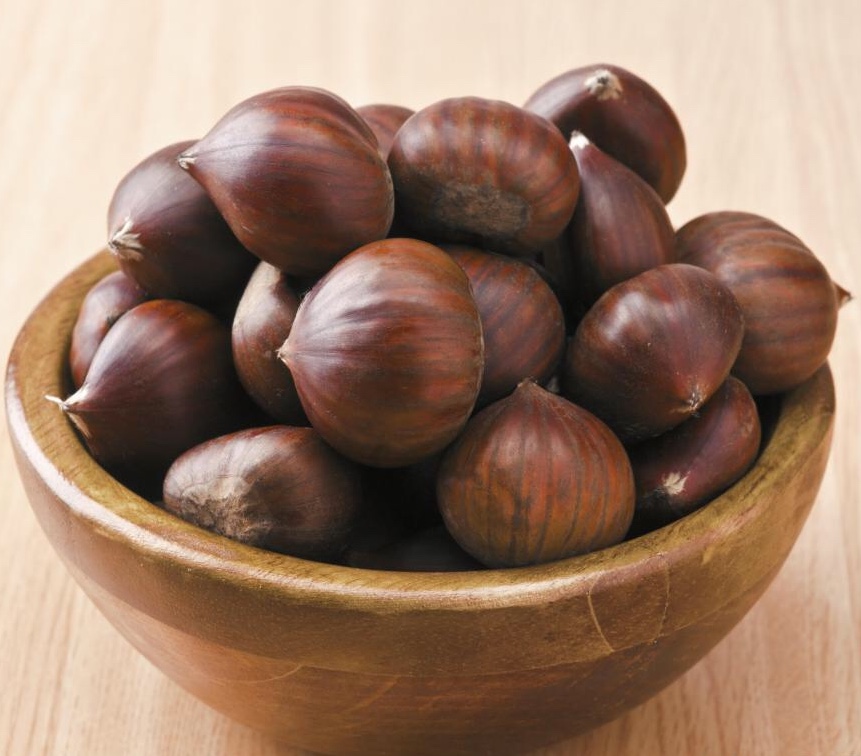
Mum and Dad had been stumped by the mystery of the disappearing chestnuts from the windowsill. What was a full bowl a few days earlier, was now no more than half full, and no-one confessed to having eaten any.

Then one day, Dad saw the cat jump on to the ledge and scoop out a chestnut with her paw, which then fell to the ground. She leapt after it in an uncharacteristically energetic way, and chased it across the floor, flicking it up into the air and batting it from paw to paw, as she would had she caught a mouse. Once the chestnut had disappeared under the furniture, she went back again for another one. What was it about the chestnut that ignited this new obsession? Dad had no idea, and my own searches have shed no light on it.

It brings to mind the effect of catnip, often used to scent pet toys. Catnip is a plant from the nepeta, or catmint, genus in the Lamiaceae family, and there are many varieties. In an article by the appropriately-named Kat Arney on the Royal Society of Chemistry website (www.chemistryworld.com), she explains that catnip contains a chemical called nepetalactone, which in cats induces behaviour similar to a person having taken drugs. They act with languid abandon, brushing their bodies against the leaves or rolling around among the stems. If they chew or eat it, they soon become what one might call ‘out of it’. For us humans, the plant can be infused to make herbal tea, and in times gone by small doses were used as a mild sedative. It is not recommended to be taken in large quantities, even though hopeful hippies gave it a go in search of a cheap high. All they ended up with was a painful headache and an upset stomach.

Catmint is a lovely garden plant, but to avoid delirious kitties flattening your borders, it is recommended that you place a small crop of nepeta cataria, the most potent catnip, in a place where you don’t mind them being mauled by frolicking felines, and then they will ignore the other milder varieties you have planted in pride of place. I have no idea if this distraction tactic works, and would be delighted if any readers can tell me!

After Marmalade arrived, she was soon followed by her sister Eric (my brother chose this name. He was outnumbered by females of both the human and feline variety, which might explain why!).

Eric remained feral, and we could never get close enough to tame her. After she had been with us for about a year, she produced a litter of kittens. We’d known she was pregnant and, due to her sudden change in appearance, that she had given birth, but we couldn’t find her litter anywhere. Then, on Christmas Eve 1977, she produced her own feline nativity scene in a very prominent position near our back door. Of course when we found the kittens, we instantly fell in love, and they were named (again courtesy of my brother) Alfred, Rodney (both girls) and Jackson (a boy).

But Eric would never be able to live indoors, and so Dad found the little family a cosy place in our disused henhouse, ensuring they had plenty of straw to keep them warm. We carried the kittens up to the henhouse ourselves, and lured Eric with some cat food on a spoon. She stayed there for about a week, before bringing her kittens back down to the back door on New Year’s Eve. So we repeated the process again, and this time she stayed. The young kittens thrived, and although they never became household pets, they became very much a part of our family history.

A mass farewell to 2017

293F25DD-002F-4E85-B2BB-530C3A7B5545
Dad’s column from this week in 1976 was dated Christmas Day itself

BFE96645-1C7D-4535-8185-435018B786EB

8B5B267F-9D3B-418B-B69B-4F80B47C7F0F
My Dad pulling a cracker with his grandson Joseph in 2006


This column appeared in the Darlington & Stockton Times on 29th December 2017, & the Gazette & Herald on 27th December 2017.

I can’t quite believe that here we are already at my last column of 2017. Writing it every week has been an absolute pleasure, giving me an excuse to spend some time alone with my thoughts, and some time alone with my Dad’s thoughts from long ago.

I was surprised to find that the column I planned to work from this week is actually dated Christmas Day itself, and as that day was a Saturday in 1976, I wondered when the day of issue for the Darlington and Stockton Times changed to a Friday. I’m sure someone somewhere knows and will tell me! In it, Dad talks about our family tradition of attending Midnight Mass at the local catholic church. At first, I was too little to go, and would get frustrated at being the only child left behind in bed while my three siblings would totter off with my dad at the excitingly late hour of 11.30. There is an oft-repeated family story that one year, one of us fell asleep on the kitchen table while waiting to go, but to this day we debate which one of us it was. My mum says it was me!

Eventually, I was old enough for my parents to have confidence that I wouldn’t nod off half way through, or fidget and whine noisily. Poor misguided fools! I lost count of the amount of times I was ‘shushed’ due to my habit of sighing very loudly. And as long as I maintained contact between bottom and pew, then I classed that as sitting still. Arm folding and unfolding, feet tapping and swinging, or bum shuffling and shifting were all perfectly acceptable to me. Otherwise, how does a five-year-old get through an hour-long Catholic mass led by an elderly priest? It’s a lifetime, especially when all you really care about is the moment when you emerge excitedly from church, knowing it is finally officially Christmas Day, look up into the night sky and try and spot Santa on the way to your house with all the presents. You also hoped that by some miracle, while you were in there, the snow fairy would have paid a visit and sprinkled a little bit of her Christmas magic around for your walk home (sometimes she even did!).

Our family tradition continued for many years, and there were countless moments of light relief, including the time when our friend’s little boy, dressed as a shepherd near the altar, proudly held up his hand and shouted, “My tooth’s come out!” And another time, when a little boy was sitting next to his friend and both of them had taken their hands out of their jumper sleeves. One bumped the other and they both toppled over like weebles (they wobbled and they did fall down).

When we were young adults, Midnight Mass was where we ended up after the evening in the pub. Some of us were guilty of being slightly north of sober, which we thought we hid very well, until one of us (not me) became very unwell in a pew. It must have been so annoying for everyone else (sorry!) and drunkenness was cited as one of the reasons why the service ended up being moved to 8.30pm in recent years (which must have come as a relief for many parents of young children!).

But enough of Christmas, that’s all over – it is nearly the New Year now! Dad’s last column of 1976 was published on New Year’s Eve, and in it he pays tribute to his predecessor, Major Jack Fairfax-Blakeborough, who died almost exactly one year before. As those who’ve been reading my columns since I began in June will know, Major JFB wrote the Countryman’s Diary for 54 years, and my dad took it over in 1976 until his own death in April this year.

JFB was a very special influence in Dad’s life, and I hope that it would fill him with pride to know that 41 years later, the words of his tribute to the Major could very easily be applied to him.

‘His individual contribution to the understanding of country life and lore will never be forgotten. He was a man of immense knowledge, industry and faith.

‘The Grand Old Man now lies buried at Lealholm but his work will live on forever in the libraries of the world.’

I want to thank you all for being so understanding and supportive in reading my columns thus far, for all the wonderful letters and feedback, and for putting me right when I go wrong!

I wish you all the very best for 2018.

All Spruced Up For Christmas

65C13E61-244F-4BEF-9925-0CCBBB4664CB
Christmas selfie with my dad and mum last year, 2016. We didn’t know then that it would be Dad’s last one.

This column appeared in the Darlington & Stockton Times on 22nd December 2017, & the Gazette & Herald on 20th December 2017.

As a child, I used to nag my parents to get our Christmas tree early, but they steadfastly refused to buy one until the very last minute. I’d see trees going up in windows all around the village and looked on with envious frustration. Some people even had those trendy new artificial silver ones, whose shimmer and sparkle were mesmerising to those of us eagerly awaiting December 25th, which always approached at the pace of a sloth on a slow day.

Finally, around 23rd December, when I was about fit to burst, Dad would go to buy a real tree and out would come all our decorations that had seen many, many years of use. Back then, the round baubles were nearly all made of wafer-thin glass, so we’d usually lose one or two mid-decorating. We also had more ornate metal baubles which varied in shape from the conventional, like yellow bells and red santas, to the more bizarre, like pink bunches of grapes (why?), green minarets, and those with the front scooped out to reveal the shiny innards (well that’s what they looked like to me).

The good, bushy tinsel would have pride of place, front and centre, while its sad, threadbare relatives, now barely more than straggly string, would be relegated to a lowly position round the back (We all know the unwritten rule of Christmas is still ‘Thou Shalt Not Dispose of Old and Tatty Decorations but Keep Them Forever Even if They Will Never Again See the Light of Day’).

Our plastic Christmas fairy, in a faded net tutu, would go on top last of all. She wasn’t the smartest or prettiest fairy, but we never thought to get rid of her until one Christmas, when we were all grown up, we came home to find she had been replaced with a rather fancy star.

The mood of 1970s glam rock was reflected in the baubles and tinsel, a glittery assortment of styles and colours which now would be considered the polar opposite of taste and sophistication. But we loved it all, and were prepared to suffer the pain of a thousand Norway Spruce needles in our fingers to make sure we covered the tree in just about every decoration we owned. There was no such thing as too much tinsel back then. Today’s kids, with their poncy soft-needled, non-dropping, fire-retardant Nordman Firs will never understand the kind of dogged determination needed to decorate a Norway Spruce.

In his column from 18th December 1976, Dad explains that the Norway Spruce was by far the most popular real tree of the day, and the reason he and Mum were so reluctant to put one up early was its propensity for shedding. We did keep it up, as tradition dictated, until the Epiphany on January 6th though, which was when we regretted our decorating zeal, as removing them was like rolling your arms along a hedgehog over and over again. Then Dad would carry this bone-dry fire hazard outside, followed by a thick trail of browning needles.

Many people think Queen Victoria’s husband Albert brought the Christmas tree custom over from Germany. But according to Her Majesty the Queen’s own website, http://www.royal.uk (possibly the finest web address on the planet), it was Queen Charlotte, consort of George III, who first introduced a Christmas tree into the royal household in the late 1700s. But the popularity of Victoria and Albert was the reason it became a national institution.

The association of royalty with Christmas trees still persists, and every year, the Queen gives trees to Westminster Abbey and St Paul’s Cathedral in London, as well as to St Giles’ Cathedral and Canongate Kirk in Edinburgh. She also donates trees to schools near the Sandringham estate where the Royal family spend Christmas.

As we decorated our tree this year (a Nordman Fir put up nice and early!), it was with more than a little sadness that for the first time, Dad wouldn’t be here to share the festivities with us. But we have enjoyed many lovely Christmases with him, and were very lucky that last year, we had a wonderful family celebration with no idea it would be his last. So I want to pass on my good wishes and thoughts for the season to all of you who are missing loved ones at this special time, and ask you to spare a thought too for those who are spending Christmas with no-one at all.


One less Christmas stress

187BAD10-0245-40D1-A2CE-016FC50E81D5
My dad Peter Walker heading towards my house to celebrate Christmas on a snowy December 25th in 2010.

This column appeared in the Darlington & Stockton Times on 15th December 2017, & the Gazette & Herald on 13th December 2017.

As a mother of three children and host to family at Christmas, I often had so much to do that one year I decided to put sending cards at the bottom of the priority list. Each year leading up to this decision, I would envision an evening where I’d be sitting cozily by the fire, a glass of mulled wine on the side and Christmas music gently wafting in the background as I lingered over meaningful festive sentiments to express to friends near and far.

But that imagined evening would never materialise. Instead I’d end up at the last minute furiously scribbling the same short bland message in each one, race to our post office to queue for ages under its horrible fluorescent lights, before gasping incredulously at the ever-increasing cost of the stamps.

So I relegated the chore to the bottom of the pile, and of course, it never got done. Amazingly, my friends didn’t disown me, so the following year, I did the same, until eventually I stopped thinking about it altogether. Now, I don’t post any at all except to hand-deliver a few to people I see regularly. Some might see it as a sad diminishing of a well-loved tradition, but I’m just glad to have one less thing to stress about on my festive ‘to-do’ list.

That’s not to say I don’t enjoy receiving them, and am very happy for people who want to carry on the tradition to do so, just as long as they don’t expect one from me. Nowadays, it is so easy to share your good wishes through social media that sending cards is less necessary.

When I was a child, only posh or rich people sent fancy cards worth keeping to turn into gift cards for the following year (Yes, I actually do that!). The rest of us were content with sending those you bought in a box of 50 for a couple of quid, and extravagances such as glitter, embossing and cards thick enough to stay upright were few and far between.

In his column from 11 December 1976, Dad mentions a splendid example from one such posh friend which featured a coach and horses galloping through the snow.

He says: ‘It all looks so cosy and romantic, but in truth it was far from the case. After one coach trip, Queen Elizabeth I confided to the French ambassador that she was unable to sit down for several days.’

That was when coaches had no suspension to speak of, and it must have been incredibly uncomfortable on our appallingly uneven, muddy and pot-holed roads. Springs were introduced in 1754, and by 1775 there were 400 commercial coaches operating, with one running from Leeds to London in 39 hours. As they travelled at an average speed of eight miles an hour, they would have stopped at the various coaching inns along the route to rest, change horses and take on refreshments (and no doubt to rub ointment into sore bottoms!).

The late 1700s became known as the ‘golden era of coaching’ until they were superseded by the ascension of the railways early the following century. One of the most famous coaches was the Wellington, which travelled a route between Newcastle and London. One of its drivers was a Northallerton man called Thomas Layfield, who was reputed to be one of the finest, and a favourite of the Duke of Northumberland. But he realised the days of coaches had come and gone when he set off one day from Newcastle, stopping at Darlington, Northallerton and Thirsk, without collecting a single passenger. By 1830, the railways had become firmly established in our region, reaching speeds of thirty miles an hour.

I’d like to say thank you to readers Frank Boocock and John Woolway who spotted an error in an earlier column (One potato, two potatoes, three potatoes…splat! November 17th). They pointed out that the Lion Inn, Blakey Ridge, is not the highest point in the North York Moors National Park, but that that honour goes to Urra Moor which stands at 1489 feet above sea level (454 metres). The pub lies at a mere 1325 feet (404 metres). Perhaps someone can tell me if instead it’s the highest point accessible by road?

It’s one of those questions that had Dad still been here, he’d have known the answer to immediately. Clearly, I still have a way to go!