Difficult fact to swallow

Swallows chatting on overhead lines above me, as if they were scoping out the property’s conservatory to set up home


A swallow feeds its young in a nest under the eaves. Photo by Alastair Smith


I was conducting a house viewing recently where the potential buyers had come for a second look before deciding whether they were going to make an offer or not. It was a lovely stone cottage in the Hambleton Hills with a gorgeous garden and wonderful views at the back.

Because the viewers had been before, I allowed them some privacy and selected a sunny spot outside to sit and wait until they had finished their visit. At the back of the house was a beautiful oak-framed conservatory, and I had opened up the bifold doors to make the most of the wonderful weather.

Not long after I sat down, I noticed a pair of swallows chattering on an overhead power line not far away. I had seen them on an earlier visit, and it had lifted my spirits knowing that the swallows had returned from the southern hemisphere, a portent of the summer soon to follow.

They seemed to be observing the conservatory, nodding to each other and chattering excitedly. It looked as if they were considering it as a suitable place to make a home. To a swallow, it would seem perfect, with sturdy timber y-frame struts and beams offering a selection of nesting sites under the vaulted ceiling, the slate roof providing safety, warmth and shelter.

Soon the birds left their spot on the overhead line, and performed a couple of ‘fly-bys’, sweeping round in wide circles, getting closer to the doors each time, then landing back on the power line to resume their excited chatter.

Moments later, they disappeared into a small shed in the neighbouring garden with a gap at the top of the door. Soon, they were back on the line, resuming their conversation.

Having studied the Swallowish language, I can tell you that the conversation went like this:

“Look at that spot Rita! What a fancy des res. So much light and and space, and with direct access to a bounty of food supplies.”

“Yes, it really is the dream home, isn’t it, Bertie. Imagine bringing up the children here, the garden is to die for. It is so much nicer than that pokey little shed you’ve made us move into. Dark and dingy, and only a wall for a view! The kids will be miserable there, whereas here…”

“I know dear, but then again it is so big, it could be a bit draughty…”

“Draughty? Nonsense! It’s south facing which is exactly what we need – all that sunlight! That grotty shed is north facing, and the roof has holes in it. The kids will be freezing, as will I! I didn’t fly 6000 miles from Johannesburg to spend my summer in a dingy old shed. I need warmth and a view while I bring up the kids, Bertie, and I deserve it after surviving that bloomin’ journey.”

“I suppose you are are right, Rita. I wonder if anyone else is interested in it? I wouldn’t want any dodgy neighbours.”

I kept my beady eye on them the whole time I was there, because anyone who has had swallows resident in their garden knows just how quickly they can dive into an open shed, garage or barn, and then get locked in. We once had to leave our own garage open for a day or so, keeping our eyes on it to see when both swallows had popped out so we could shut the door and prevent them from completing their nest. It felt a bit cruel, but they soon moved on to a more suitable nesting site.

Swallows fly south for the winter because the insects they rely upon for survival are no longer available. Before the 20th century, we didn’t even know they had left the country, and some scientists believed they hibernated, with one bizarre theory suggesting they survived at the bottom of ponds.

It was in 1912, after the introduction of bird ringing, that a swallow was found on a farm in South Africa bearing a ring that had been placed on its leg 18 months earlier by amateur naturalist John Masefield from Staffordshire.

However, more recently, with milder winters becoming commonplace, some swallows have been found to stay in the southern UK all year.

Is it just me, or does news unsettle some of you too?

Do you have opinions, memories or ideas to share with me? Get in touch with me using the ‘Contact’ button on the top right.

This column appeared in the Darlington & Stockton Times on Friday 30th and the Ryedale Gazette and Herald on Wednesday 28th May 2025

All set for spring

Sunrise over Runswick Bay, North Yorkshire. Picture by Alastair Smith

This week might just my favourite week of the whole year. The reason is because it contains my favourite day of the whole year.

“And which day is that?” I hear you ask. It is not my birthday, although that is also a pretty good one, if only for the excuse to eat and drink whatever I want as I contemplate the widening chasm between my age and my date of birth.

No, my favourite day is the Spring Equinox which falls on Thursday this week. After what seems like an interminably long winter, for the next six months the days are going to get longer and the nights are going to get shorter. That thought makes me very, very happy.

‘Equinox’ comes from the Latin ‘equi’ (equal) and ‘nox’ (night). It refers to the fact that we will have as many daytime hours as nighttime thanks to the sun’s position directly above the Equator as it trundles on its journey northwards towards our summertime. This year the actual moment of ‘equinox’ in the UK is at 9.01am on 20th March. Of course in the Southern Hemisphere, the opposite is happening, and they are welcoming Autumn as their daylight hours reduce in length.

The astronomical boffins among you will know that the date upon which we have true equal day and night does not actually fall upon the equinox, but rather on the lesser-known equilux (‘lux’ is the Latin for ‘light’). Interestingly, my spellchecker proves it is lesser-known because it refuses to recognise ‘equilux’ as a bona-fide word, underlining it with that bossy red squiggle. It wants me to change it to ‘equinox’. Sorry spellchecker, but this time I know better than you!.

The explanation is a bit complicated, but I will give it a go. There are two ways of measuring the times when daylight and nighttime officially start and finish. There’s the way for regular humans who don’t care about the scientific facts but just like to take pictures of pretty sunrises and sunsets, and then there’s the clever people who know what is actually happening from an astronomical perspective. So depending on which one you prefer, the equal 12 hours of daylight and 12 hours of nighttime fall on different dates.

This might help you understand what is happening (or it might not): imagine the sun as a flat circle with a point at its centre. The period of equilux is measured from when the very top of the circle first peeps above the horizon until the last moment just before it dips below it. The Spring and Autumn equinoxes are measured from when the circle’s centrepoint first appears above the horizon and ends when it dips below it at sunset. Therefore, there’s a bit of a discrepancy in timing, and so by the time the equinox occurs on 20th March, the equilux will have already occurred about three days before. For the same reason, the Autumn Equilux is about three days after September’s equinox.

I’m also a bit mind-blown to discover that we don’t ever achieve real night/day equality. The nearest we get is about 12 hours and 10 minutes of daylight, and 11 hours and 50 minutes of nighttime. So the equinox isn’t actually ‘equi’ at all!

But that’s not quite the full picture, because of course the earth is not flat but a sphere encased in its own atmosphere. This means the sun’s rays are refracted from below the horizon before it actually rises, so it tricks our mortal eyes into thinking that it has started its rise before it physically has. The same applies to sunset. In other words, it brings the time of sunrise forwards and puts back the time of the sunset (or what appears to us to be sunrise and sunset). It’s all a bit mind boggling.

Then we have the summer and winter solstices, which occur when the sun is at its furthermost points north and south of the equator. For us in the Northern Hemisphere, the Summer Solstice occurs in mid June, and the winter one in mid December (of course, the opposite is true in the Southern Hemisphere). I think that’s all I need to say about those for now.

Right, after all that, I need a lie down while I watch the sun set.

Do you have opinions, memories or ideas to share with me? Get in touch with me using the ‘Contact’ button on the top right. 

This column appeared in the Darlington & Stockton Times on Friday 21st March and the Ryedale Gazette and Herald on Wednesday 19th March 2025

Swim the Channel? Fat chance of that!

Bill Burgess slathered in lard before his successful attempt at swimming the English Channel in 1911. (This work is from the George Grantham Bain collection at the Library of Congress. According to the library, there are no known copyright restrictions on the use of this image).

My recent mention of goose fat as a home remedy for a bad chest prompted reader Mike Brown from Stokesley to get in touch. It reminded him of TV personality David Walliams: “He smeared it all over his body before swimming across the English Channel to raise money for the BBC charity Sports Relief. The late Queen mentioned this when she presented him with the OBE for his services to charity and the arts. He replied that the application wasn’t as much fun as it looked. Probably smelt awful too. So as well as a remedy for a persistent cough goose grease is a good insulator as well.”

Walliams completed the 21-mile swim in a very impressive 10 hours and 34 minutes in July 2006, despite confessing that he had never done anything remotely sporty in his life before. Later, in 2008, he swam the Strait of Gibraltar, and then in 2011 completed the ridiculous challenge of swimming the length of the River Thames. He covered 140 miles, starting in Lechlade, which is about 45 miles west of Oxford, and finishing eight days later at Westminster Bridge in London.

For the latter two events, Walliams was wearing a wetsuit, but for his Channel swim, he was only permitted to wear a ‘standard swim costume’ as defined by the Channel Swimming Association for it to be classed as an official swim. The rules state that the costume should not aid buoyancy nor offer thermal protection, and it cannot cover the arms or legs. The same rules apply to the swim hat too, and you are not allowed to use anything that will help you stay afloat or swim faster, so no flippers armbands, rubber rings or lifejackets.

Basically, it’s just you and your Speedos against the elements. Oh – and of course, the goose gunk. Some people smear it all over their body to prevent heat loss, while other more hardy individuals cover just the areas that are likely to chafe, such as armpits, necks, shoulders and thighs. That thought makes me squirm (and if you have ever spent too long in the sea, you will understand the fidgety discomfort of saltwater chafing).

Some people choose not to use fat from a dead animal and instead make their own mixture of roughly 50/50 lanolin and petroleum jelly. Lanolin is what makes a sheep’s fleece waterproof, and is extracted from freshly-shorn wool in a centrifugal process involving hot water. It has dozens of uses, but it does harden when cold, so for the cross-Channel fraternity, it is mixed with petroleum jelly to keep it spreadable.

The first person to ever swim the Channel unaided was 28-year-old Captain Matthew Webb in 1875. He smeared himself with porpoise fat to preserve body heat and avoid the chafing. He earned fame and a small fortune from the achievement, and tried to replicate the financial rewards through other water-related endurance challenges, but none matched that first major accomplishment. He died just eight years later while attempting to swim the Niagara Falls Whirlpool Rapids.

It was another 36 years before anyone else managed to cross the Channel and he happened to be a Yorkshireman. Bill Burgess tried and failed 17 times before succeeding on his 18th attempt in September 1911. Although born in Rotherham, he spent most of his adult life in France, and competed for the country at the 1900 Olympics where he won a bronze medal in water polo. He also coached the first woman to swim the Channel, American Olympian Gertrude Ederle, who was only 20 when she completed the feat in August 1926.

Undertaking a Channel swim sounds, quite frankly, awful. Not only do you have to go to the faff of smearing yourself in gunge before plunging into freezing sea water, you also have to contend with wind, currents, tides, sewage and floating rubbish, never mind the constant traffic surging through the busiest shipping lane in the world. Then there’s the seasickness caused by the incessant motion of the waves, the sore and chapped lips, and the raging thirst thanks to the gallons of polluted salt water you’ll inevitably swallow. Why the heck would you?

Of course, I am facing my own swimming challenge later this year when I compete in my first triathlon. Let’s hope goose fat won’t be needed.

This column appeared in the Darlington & Stockton Times on Friday 7th March and the Ryedale Gazette and Herald on Wednesday 12th March 2025

Seeing the bigger picture

Clare Powell has photo books printed at the end of each year as a legacy for future generations.

My column about family photos a couple of weeks ago sparked quite a discussion. I was concerned that most of us have stopped printing pictures stored on mobile devices like phones and tablets. Would these photos be lost to future generations who don’t have the passwords to access them?

Mary Raynar has a solution to that problem: “I get mine printed every month, otherwise they don’t get looked at. It’s my job in the winter months to put them into albums. It is much more pleasurable than scrolling on the phone.”

I’m impressed that Mary diligently does that every month. I had always planned to get back to sorting the photos on my iPad, but then so many years have passed now that the job has turned into a monster. If you don’t keep on top of it like Mary, that is the problem.

Liz Davidson confesses that she has lots of old family photos that have not been put into albums. “My sons will have no idea who all these people are. We keep saying we will sort them out one day.”

And that is at the heart of the issue. If the physical photos do not have names, places and dates written on the back, those who look at them in the future will have no idea who it is, what they were doing, or where they were taken. Recording these small details is so important for our descendants to piece together their family’s roots.

Clare Powell is one of those ‘old school’ people who still has her photos printed: “My first grandbaby is due in April and I will be printing pictures. I have framed photos all over the house.”

I stropped printing out my photos and putting them into albums in about 2012 and I do regret it. But Clare has a great solution: “My friend said she waited to the end of the year, then selected a few from each month to make a photo book for the year. I made my first one in 2012 and have made one every year since. Waiting to the end of the year focuses your mind and you get good at editing…During Covid I re-did all my old photo albums and as I had over 40 it was quite a task. As I did it I was conscious that this was a legacy and a lot of the pictures would mean nothing to my children…I always label them so they will know who’s who.”

Photo books come with your pictures already printed in the book, which is a lot less effort than physically putting individual snaps into albums. Clare’s have evolved into diaries in which she writes a review of the year, with captions and dates.

Lynn Catena admits: “I haven’t printed any photos off my phone for ages, although I really think I should print some of my grandsons.”

She adds: “During the Covid lockdown I wrote a ‘to do’ list and going through photos was somewhere on it. I did cull many photos and negatives when I downsized my house 7+ years ago although lately I’m just trying to label those I have on my phone…there’s a picture of someone’s baby… now I’m wondering who it is!”

Lynn Catena thinks she should at least have some of the photos of her grandsons she keeps on her phone printed out, including this one of Cal, born just a few weeks ago.

Lucien Smith has another suggestion: “I do at least print out my Facebook posts using Pastbook, which pops up at the end of each year. Other than that, I don’t print them out.”

Caroline Newnham no longer prints them either: “I’ve stopped getting them printed as there are so many. My husband would print them all but where would they go? We already have boxes of photos in the loft…I’ve made a start on a regular yearbook…It concentrates the mind on the big moments of the year. The first was in 2023 and is great to look back over. It wasn’t cheap and took quite a bit of time and effort but is the way forward I think.”

Neil McBride says: “We often discuss the idea. That’s as far as it gets. Great idea printing an annual.”

Whichever way we want to preserve our memories, whether in print or digitally, these comments show that it is clear still that we need plenty of time to do it.

And how many of us have enough of that?

Do you have opinions, memories or ideas to share with me? Get in touch with me via the ‘Contact’ tab at the top right of this page.

This column appeared in the Darlington & Stockton Times on Friday 21st Feb and the Ryedale Gazette and Herald on Wednesday 19th Feb 2025

Picturing the past

I stopped printing photos and putting them in albums in about 2012. Will my great-great grandchildren know what I looked like if they don’t have access to photos of me?

I’ve had a few more comments about the conundrums we face when making decisions about what to do with all the stuff we accumulate over our lifetimes. Should we leave it for our loved ones to deal with after we’ve gone, or should we get rid of it ourselves before we shuffle off this mortal coil? Are those we leave behind interested in the stories behind the things we treasure, or could they not care less?

Lynn Catena, a Brit who now lives in Canada, says: “I doubt my boys are interested in anything I deem sentimental, but I plan on labelling some items. What they decide to do with them after I’m gone is their decision.”

She does have one item of particular significance though, a silver charm bracelet. “My sister gifted it to me when I was her bridesmaid. I have added to the charms (mix of English & Canadian). I have two sons, and three grandsons, so I’ll be gifting it to my nieces, and their daughters.”

Reader Clare Proctor is a self-confessed maximalist, and her house is packed with furniture, antiques and collectibles. She has two daughters with very different attitudes: “Molly said she would get rid of everything, but Lily said she’ll keep it all!”

For Michael Kilmartin, it’s printed photos that he hopes to pass on and points out that few of us print them out anymore. There are devices, like digital photo frames, where you can upload your pictures, and every so often the display rotates so you get to see a variety of your favourite images. But I wonder, 100 years down the line when your great-great-grandchild asks about you, what will their parents show them? Will your future descendants know what you looked like if printed photos no longer exist? Thanks to the photographs that I have inherited, I can see for myself the family likeness in my great-grandparents’ faces and can visualise their lives and contribution to our unique family history.

I stopped putting my photos into albums in about 2012, not intentionally, I just never got round to it as time and technology moved on. I now look through my recent photos via my phone and tablet and have backed them up in ‘cloud’ storage so they never get lost should my devices conk out. But when I’m gone, will my children be able to access them if I forget to give them all my passwords?

Today we don’t have to remember to take a camera to a special event because, thanks to our mobile phones, we have one with us all the time. And we don’t just take one photo, do we, we take lots, and just keep going until we get one we like. I keep promising myself that I will go through and delete all those ‘extras’ and as I write this, I only have 24,893 pictures to go through on my phone (good grief!).

It was not that long ago that we had to be so much more considered about snapping pictures. Firstly, the camera film was expensive to buy, secondly, you only had a limited number of shots you could take before the film ran out, and lastly, they were costly to get developed. As every parent does, once I started a family, I took lots of pictures of the children and religiously had them printed and put into albums. You had to either physically go to a shop or send the films away in an envelope and wait two weeks to get them back.

Do you remember that feeling of eager anticipation as the bulky envelope dropped through the letter box? And that other feeling of abject disappointment when you opened it to find your fingertip in the corner every picture? How would today’s young people cope with having to wait all that time without even knowing if they had taken a decent picture? Too bad if it was taken just as we blinked or sneezed!

Scrolling through photos on a screen is not quite the same as sitting down with a cuppa and turning the pages of the family albums while reading the captions and dates someone has taken the time to write down.

How will the future generations look back on their families’ past, I wonder?

Do you have opinions, memories or ideas to share with me? Get in touch with me via the ‘Contact’ tab at the top right of this page.


This column appeared in the Darlington & Stockton Times on Friday 7th Feb and the Ryedale Gazette and Herald on Wednesday 5th Feb 2025

From darkness come lights

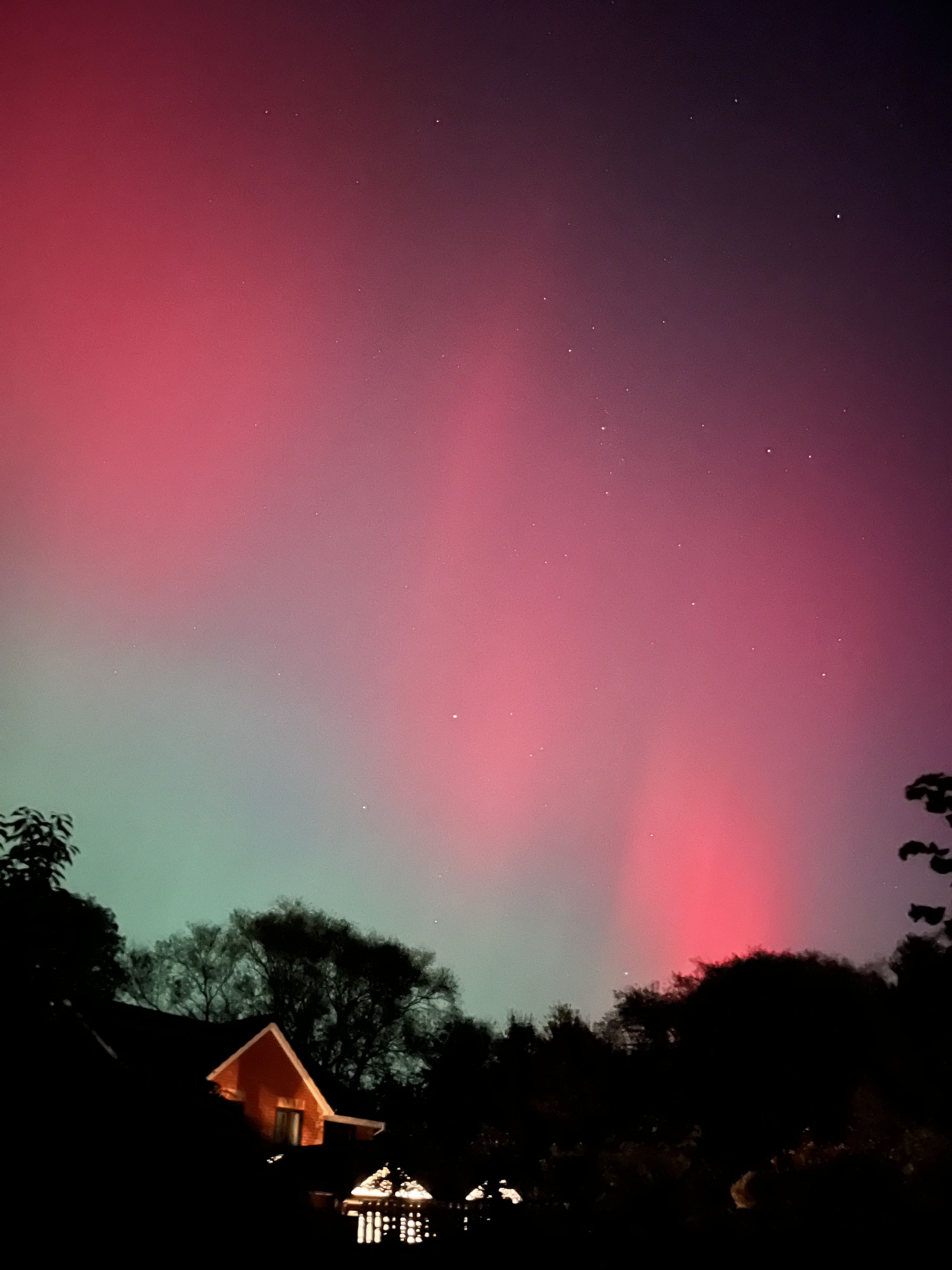
IMG_5590
I finally managed to tick off this bucket list item – seeing the Northern Lights. I didn’t have to travel any further than my own back garden

Do you have a bucket list? Things you’d like to do before you pop your clogs? Bucket-list items I’ve ticked include seeing the Wimbledon Men’s Final, hang gliding, high diving, flying in a small aircraft, eating at the swanky Black Swan in Oldstead, seeing a starling murmuration, visiting New York, Asia and Australia, and seeing David Bowie, Queen, U2 and the Foo Fighters live in concert.

Those above span a 30-year period, so 2024 has been a bit of a bumper one in comparison. I first saw a murmuration in February 2023 and it was hands down one of the most breathtaking natural phenomenons I have ever witnessed. That’s why I double-bucketed and went again this year.

Another of my ‘bucket-listers’ was going back to Greece. It is one of my favourite ever places, and yet I have only been a couple of times. I was a nanny there in 1985-6, then went back for an island holiday in the early 1990s. I finally got to return this September for a week in Crete (and I wrote about my trip to Knossos a couple of weeks ago).

My most recent ‘bucket-lister’ was seeing the Northern Lights. For most of my lifetime you had to book an expensive holiday to the Arctic Circle, or at least decamp to the very north of Scotland, to see this natural marvel. But recently they’ve been seen all over North Yorkshire and a friend of mine had even taken a picture of them from her bedroom window in York. The problem was, I always missed them. One night after a promising forecast, I sat in my garden until 2am only to be disappointed again.

Finally on October 10th at around 8pm, my sister messaged me to say the lights were putting on a display that was clearly visible from her street. I rushed out, but there was nothing even though I was just a few miles away.

A couple of hours later, I decided to have one more look before going to bed. I peered towards the north (because that’s where I thought you were meant to look for the Northern Lights) and saw nothing remarkable. Then, I scanned the rest of the clear night sky and, turning towards the south, I noticed that there was a faint pinky glow. At first, I thought my desperation had led my eyes to play tricks, but the glow seemed to get a little brighter. I had read that if you took photos with your smart phone, the colours became more visible, and sure enough, the picture I took revealed an amazing blanket of green and pink cloaking the sky. I lowered my phone, and the colours grew brighter and were soon clearly visible to my naked eye, appearing in every direction. I called my son, told him to turn off all the house lights, and we both stood in the garden staring up, silenced by the wonder of what we were seeing.

But why has it been possible to see the lights so far south of the Arctic Circle, and so often this year? The BBC has helpfully supplied an article to explain, and I have included an edited version below:

The sun is currently at the ‘maximum’ of its 11-year solar cycle. According to NASA: “At its quietest, the sun is at solar minimum; during solar maximum, the sun blazes with bright flares and solar eruptions.” What I saw from my garden on 10th October was caused by a huge sunspot that had erupted on the sun’s surface 93 million miles away which blasted a stream of electrically charged particles (or ions) towards Earth (known as a Coronial Mass Ejection). As they collided with gases in our atmosphere, light was emitted at various wavelengths, creating colourful blinking and swirling displays – the Aurora Borealis. In the northern hemisphere, most of this activity takes place near the Arctic Circle, but when solar activity is strong, this can expand to cover a greater area. There is a high chance we’ll get more of these Coronal Mass Ejections directed towards us in the coming months – a glimmer of hope for those of you who have not yet managed to catch them.

To bring this column to a close, I have one question: what is on your bucket list?

Do you have opinions, memories or ideas to share with me? Get in touch with me via the ‘Contact’ tab at the top right of this page.

This column appeared in the Darlington & Stockton Times on Friday 8th Nov and the Ryedale Gazette and Herald on Wednesday 6th Nov 2024

Romans go underground

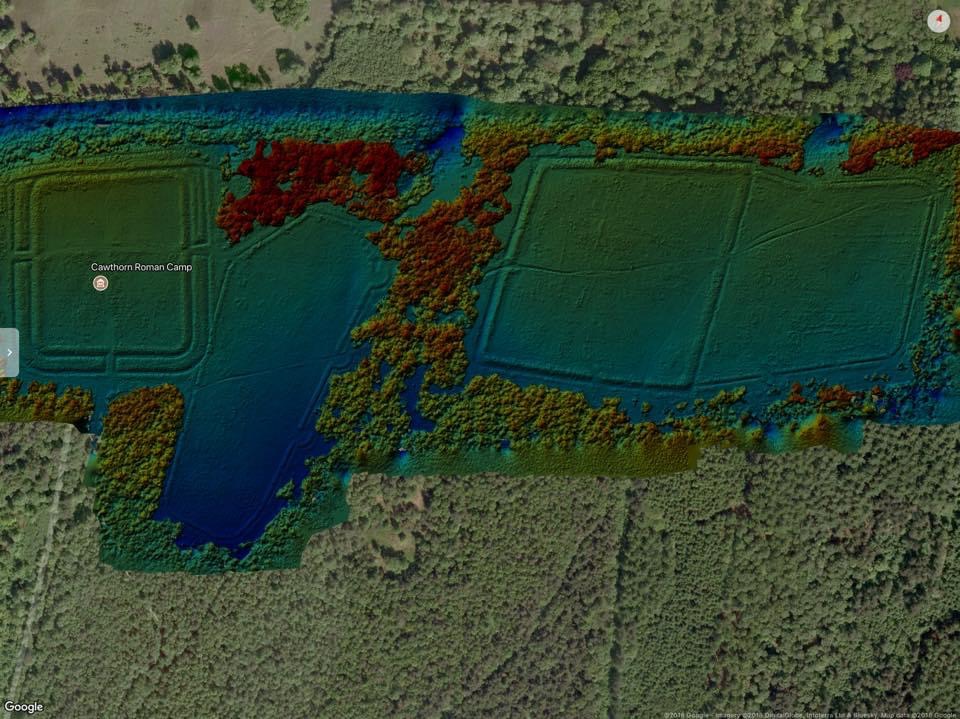
IMG_2051
Images of the complete Cawthorne Camp near Pickering which comprises four elements which are (L-R) Fort D, Camp C, Fort A and Annexe B. Photo by Tony Hunt of Yorkshire Archaeological Aerial Mapping

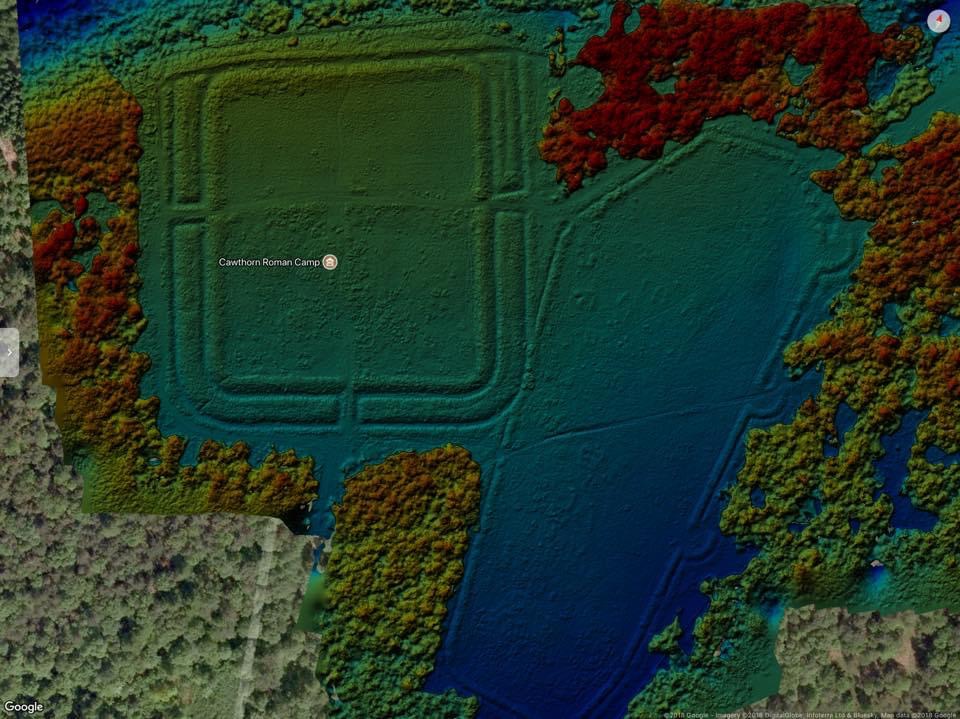
IMG_2050
Fort D (left) whose boundary overlaps Camp C (right) which shows it was built later. Three clavicula gates can clearly be seen to the eastern boundary of Camp C. Pictures by Tony Hunt of Yorkshire Archaeological Aerial Mapping.

I studied Greek and Roman history at university and am fascinated by the ancient world and the remnants of the past that lie beneath the ground we walk upon today.

That’s why I was captivated by some pictures of Cawthorn Roman Camp taken from the air by Tony Hunt of Yorkshire Archaeological Aerial Mapping (YAAM) that popped up on Facebook. The specialist imaging revealed the camp in far more detail than can be seen with the naked eye, bringing it to life in a way I had not yet experienced.

Cawthorn Camp lies atop a rocky escarpment a few miles north of Pickering. I’ve mentioned it before in relation to Wade’s Causeway, sometimes referred to as the Roman Road, which runs across Wheeldale Moor from Goathland. Although only a short section is visible now, some believe it linked Whitby with a settlement at Amotherby near Malton, passing through Cawthorn Camp en route. Some archaeologists suggest it is much later and of mediaeval construction, while others think it dates from even earlier than the Romans, and attribute it to the Neolithic or Bronze ages. My theory is based on logic rather than expertise: perhaps the first moor-dwellers forged what they thought was the easiest route across the landscape, and then the Romans came along and rather than go to the trouble of digging out a whole new road across tricky unfamiliar terrain, used what was already there to create a more formal and recognisable highway. Then in the mediaeval period, more features were added. Thus, this mishmash of eras and styles has led to historians arguing as to which period the road officially belongs.

The camp dates from around AD75, although is believed to have been abandoned, re-inhabited, rebuilt and expanded several times over its lifetime. Although finds such as coins, tools and pots peter out after AD120, the camp would likely have been occupied after this date, possibly as a training ground, especially as the Romans occupied Britain until the start of the 5th century. We don’t really know why there are so few finds later than AD120 though.

There are four distinct elements across two separate plots, referred to as Fort A, Annexe B, Camp C and Fort D with A and B adjacent to each other at the eastern end, while C and D are a slight distance away towards the west. On the ground, although you get an idea of its scale through the deep ditches and mounds it is only through aerial photography that you can truly appreciate it. The forts, as the name suggests, will have been more permanent structures, with a building at their centre and ramparts surrounding them. The temporary camps will have served a more transient population of marching infantry. Similar settlements can be found along the routes of many of our Roman roads lying around 25 miles apart, the distance a cohort of soldiers would be expected to march in a single day.

Three of the plots are shaped like rounded-cornered rectangles, with gates facing every direction. We know Fort D was built later than its immediate neighbour, Camp C, thanks to the fact its boundary overlays that of Camp C, as seen in the accompanying YAAM image. Camp C is a bit of a rarity, shaped as it is like a coffin, and instead of having gates on every side as you’d expect, has three large portals along its eastern boundary. There is also one small opening on the western side, but no entrances to the north and south, which is very unusual.

The canny Romans knew a thing or two about building fortifications, and the three gateways (which are clearly visible in the YAAM image on the right side of Camp C), are known as Claviculae (vine tendrils), their curved shape meaning you cannot see in from the outside. The narrowing entrance would force any attacking enemies to shimmy through, trailing their cumbersome shields behind them as they tried to see where they were going with their sword arms before them, vulnerable and exposed, which allowed the defending Romans to easily disable them.

If space permitted, I could go on and on about Cawthorn Camp but I urge you to go and visit. There is still one question though; how much more lies beneath our feet that has yet to be discovered?

I’d love to hear from you about your stories, memories, opinions and ideas for columns. Use the ‘Contact’ button on the top right of this page to get in touch.

This column appeared in the Darlington & Stockton Times on Friday 11th and the Ryedale Gazette and Herald on Wednesday 9th Oct 2024

Hard as snails

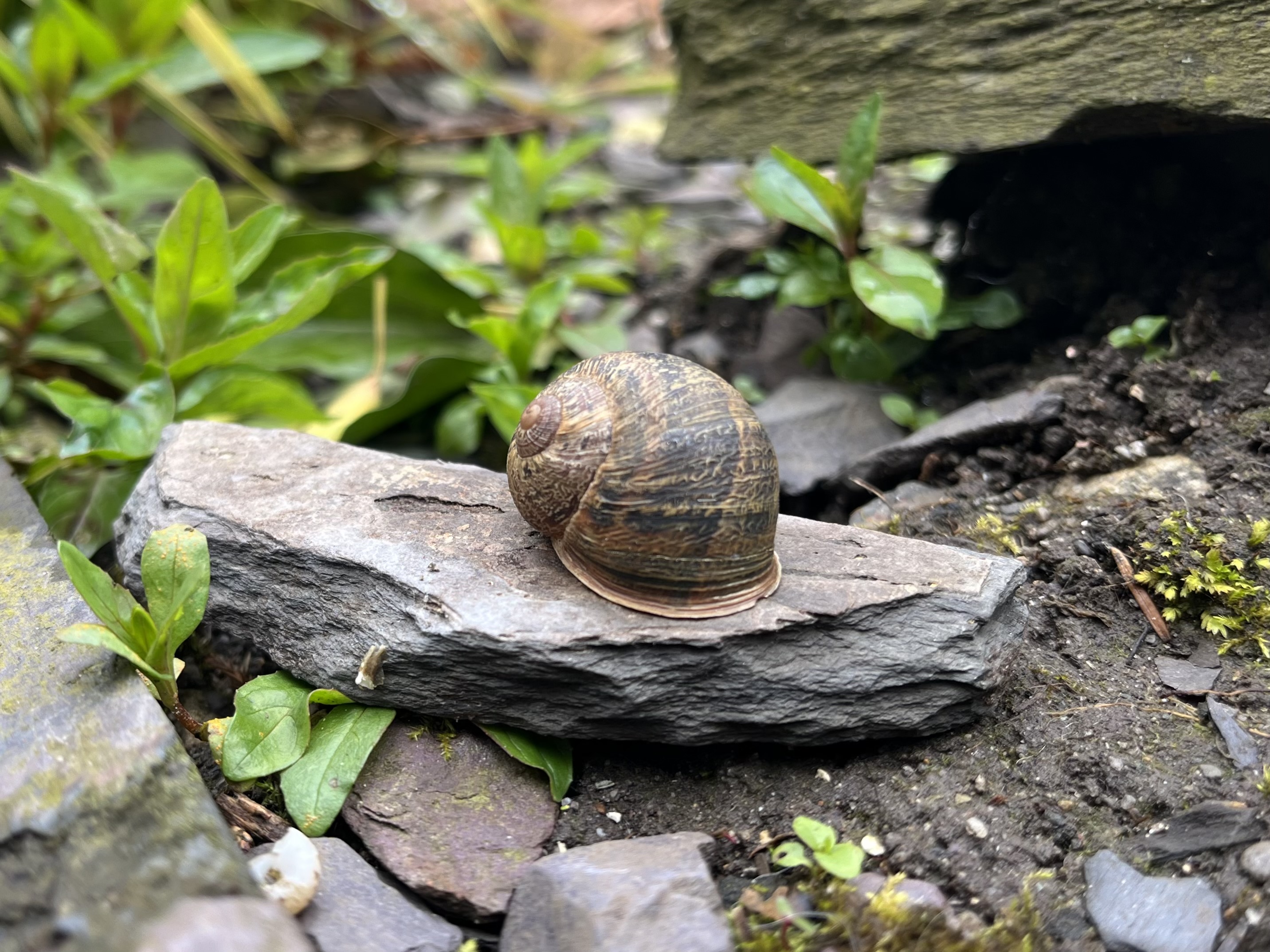
IMG_3022
A cluster of garden snails found under a rock in my back yard
IMG_3035
A snail needs to consume lots of calcium-rich food as contained in green vegetables like spinach and broccoli to keep its shell strong
I love it when an idea for a column comes from something that I see every day and yet have not paid much attention to before. It was on a dog walk that I spotted a snail on the path on front of me and thought what an amazing pattern and colour its shell was. It struck me that I had no idea how these shells were formed, nor how they gained their colours and patterns.

I do know that snails are the bane of most horticulturists’ lives who will go to many lengths to deter or prevent these stubborn gastropods from ruining their much toiled over gardens. But you see, I am to gardening what Rab C Nesbit is to personal hygiene (willingly neglectful) and therefore I do not see snails as the enemy but instead am rather fascinated by them.

There are upwards of 120 different varieties of snail in this country, and the average British garden is home to several thousand at any given time. You probably know that they are hermaphrodites (i.e. have both male and female reproductive organs), but they need to mate and exchange sperm to have babies, which they do around February and March. They lay their fertilised eggs in dark moist places, often underground, and it takes around 15 to 21 days for them to hatch, depending on the species.

Initially, the baby snailettes, which are born with a wafer-thin flimsy shell, eat the calcium-rich eggshell from which they hatched to see them through the first five days or so. But after that, they have to go in search of more fodder to continue to thrive. As they emerge into the open air they are extremely vulnerable to an array of hungry predators which is the reason their average lifespan is a mere nine to 12 months, even though they can live longer. Their first and urgent mission is to find sources of calcium to grow and nourish their hardening protective shell.

Their distinctive shells are formed thanks to an organ called the ‘mantle’ which secretes layer upon layer of calcium carbonate to build size and thickness. Green vegetables such as broccoli, spinach, cabbage, and lettuce are particular delicacies, as are flowers like hosta, marigold and rudbeckia. The swirly shape is thanks to the way in which the calcium carbonate is secreted, and in almost every case flows in a right-handed, or clockwise, direction, otherwise known as dextral. There is the odd species that has a left-hand swirl which is referred to as ‘sinistral’, but they are pretty rare.

You can use pesticides to control the snail population in your garden, but there is a trend towards more environmentally friendly methods. There are a surprising number of snail-repellent flowers, vegetables and herbs (a quick Google search will tell you what they are) and you can take steps to make your patch an attractive des res for natural predators like birds and hedgehogs. Again, Google is your friend if you want tips on how to draw them in.

Incidentally, if you spot a rock that is surrounded by cracked snail shells, this is likely to be a bird’s anvil stone. Garden birds like the songthrush love eating snails, and cleverly use the rock to bash it and crack open the shell. If a snail is ever separated from its shell, it cannot survive.

Snails love to hide in the daytime in warm, moist places, so another suggestion is to lay planks within your flower borders before nightfall, and then first thing the next day, lift them up and collect any snails you find hiding underneath. They will graze an area of no more than about 20 metes around the spot where they were born and get very disorientated if they are moved further away so if you take them out into the countryside and set them free in a woodland, for example, they won’t be able to find their way back.

Of course, with thousands at a time dwelling in your garden, you might need to make a lot of trips. But perhaps, if you embrace all of these deterrent methods, alongside a healthy dose of persistence, you might just end up with a full crop of lettuce this year.

I’d love to hear from you about your opinions, memories and ideas for columns. Use the ‘Contact’ button on the top right of this page to get in touch. This column appeared in the Darlington & Stockton Times on Friday 3rd and the Ryedale Gazette and Herald on Wednesday 1st May 2024.

A house with no name

IMG_1631
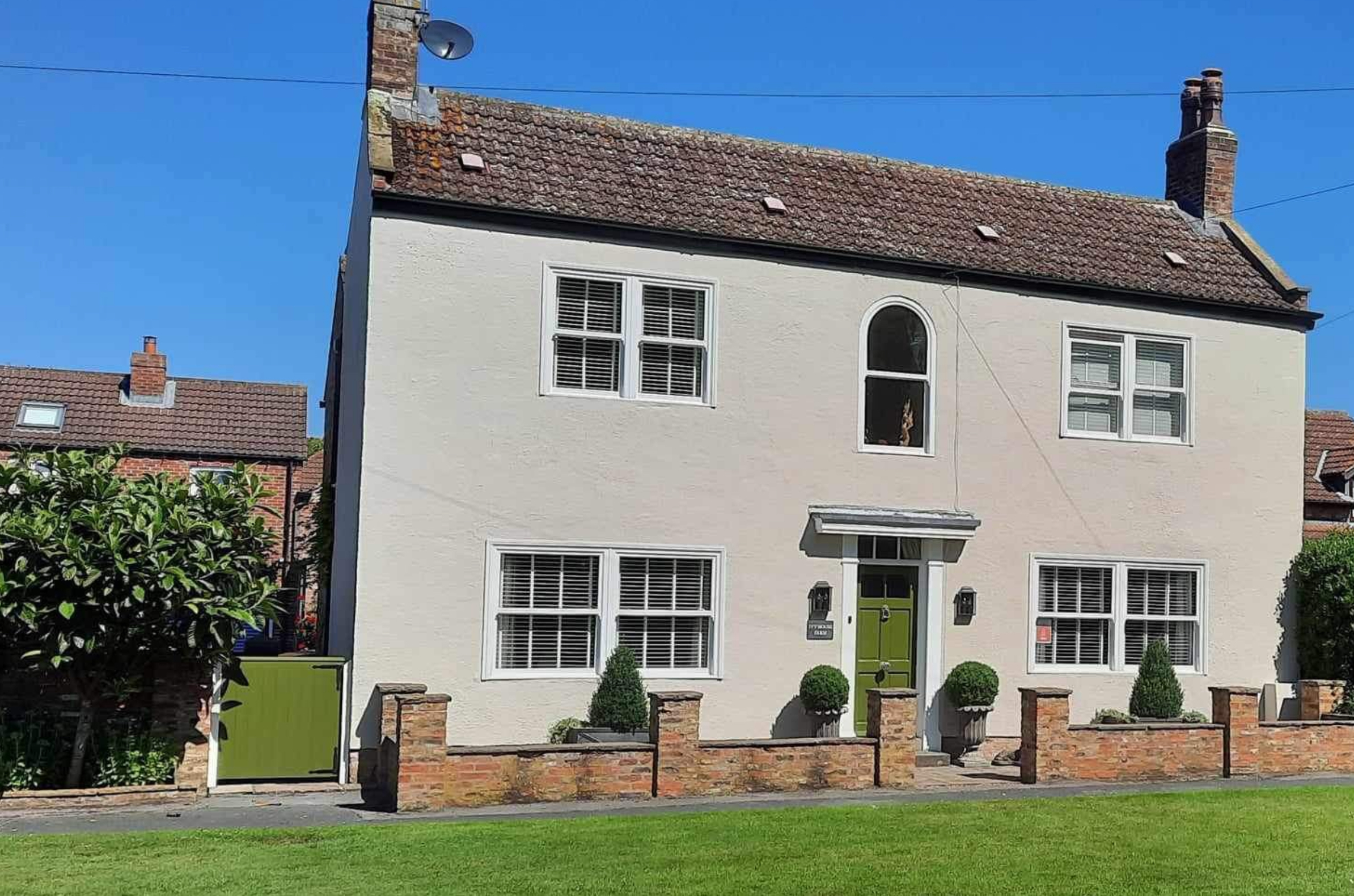
Clare’s house has been called Ivy House Farm for more than 200 years, even though the farm is long gone

IMG_1630
Ivy House Farm back in the 1940s when it was still in operation.

I had some interesting comments about house names following my column that mentioned the fact that Old Pond House in Newton-on-Rawcliffe had no name until reader Paul Ireson bought it in the mid-1980s. He’d wanted to call it Pond House (the village pond lay not far from their front window) but a neighbouring house had already used that name, hence they called it ‘Old Pond House’.

Reader Andy Long says that when he moved into his house in the late 1990s, although it had a number, there was also a name on the gate. “The gate was rotten so was removed and the name was never replaced or used. Maybe we thought a house name was too posh for us!” Andy isn’t completely sure he’s right but thinks the name was ‘Ingleside’. “The Gaelic origin or link to an open fire possibly went over our heads…or the pending birth of our first child seemed more important!”

And Lynn Catena says her sister’s first house was called Brae Side, but as it also had a number, they never used it. You often see houses on numbered streets that also have their own name, but it used to be seen as rather pretentious, the point being that you don’t need a name if your house already has a number. If such a house does have a name, would you use it when telling someone your address? And if you choose to name a house that already has a number, does it ever become recognised by Royal Mail? Can you ditch your house number altogether and change it to a name?

I grew up in a North Yorkshire village where most of the houses, including ours, had names rather than street numbers. When I was a teenager, we moved to a new house in the same village, and Mum and Dad were able to choose what to call it. They romantically named it after a wood where they would go for walks before they were married. Claire Dunstan-Elliott, who originates from Yorkshire, has spent many years living and working in Wales. She says: “I’ve named every house I’ve owned after the previous place I lived which has worked out quite well.” But she found visiting some small Welsh villages for work quite taxing: “There are no street names, no house numbers, and every house in the village is just named – it is really hard work, especially when they are in Welsh!” Imagine how hard it must be for a new postman or postwoman in these small country villages. Let’s hope they get paid per hour and not per round!

Most people who are going to name a house often, like my parents, have some meaningful reason for the one they choose. Judging by the most popular house names in the UK, though, you can tell that most go with far more practical and obvious choices. At the top of the list is Rose Cottage, and close behind are Orchard House, The Coach House, The Cottage, The Bungalow, The Lodge, The Barn, The Stables, The Gables and The Willows. Hillside and Hillcrest are also up there as are Sunnyside, Woodlands and Meadow View.

Clare Proctor says naming can be a weighty responsibility. “We were hoping to buy a lovely house called Corner Cottage (old house; newish name). I hated the name and was going to change it, but to what? For the few months we were in the running we debated new names. It was worse than trying to choose a baby’s name, or even worse, a pet’s name!” Clare and her husband eventually bought a house called Ivy House Farm, but the farm had long gone, so they pondered changing it, but again, couldn’t think of a suitable moniker. “We eventually decided that as it had held the name for nearly 200 years it was not for us to change it. I just tell people it’s a retired farmhouse!”

Paul Ireson, who lives in Rosedale and whose house-naming sparked this column, might be interested to know that Clare once ran a hotel there: “We used to own the White Horse Farm Hotel. It also was not a farm, but the previous owners bought some sheep and chickens and thought the name would give it a more rustic appeal!”

Have you ever named a house, and if so, what name did you choose and why?

I’d love to hear from you about your opinions, memories and ideas for columns. Use the ‘Contact’ button on the top right of this page to get in touch. This column appeared in the Darlington & Stockton Times on Friday 29th March and the Ryedale Gazette and Herald on Wednesday 22nd March 2024.