Don’t call me Nanny!

My boys with their Dutch grandparents, who were known as Opa (Grandad) and Oma (Grandma). At home, we used Nonny and Grandad to refer to their English grandparents.

A couple of weeks ago I discussed the subject of nominative determinism where a person ends up in a career that reflects their surname. My ballet teacher was called Miss Toes, and my son reminded me that his boss, who was a joiner, was called Mr Stick. Such names sound like characters from Roger Hargreaves’ Mr Men books, with famous examples including Mrs Berry the Baker (Mary), Mr Bolt the Sprinter (Usain), Miss Stepanova the Hurdler (Marina), and Mr Crapper the Sanitary Engineer (Thomas)

Lynn Catena used to know a music teacher called C. Sharp, and Deborah Steed revealed: “My husband worked at a bank with a guy called Nick Money and I used to refer clients in need of a medical to Dr Death.”

I’m not sure how I’d feel being sent to see Dr Death! I am sure there are many more wonderful examples out there, so do get in touch if you have any to share.

I was contacted by Mary Harrison again after she’d read my column featuring her story about a new baby named ‘Mr Harry’ after her husband, who’d raced the expectant parents to hospital in his car.

“Great amusement among my family to see my name in print!” she says. “Since our 55-year-old son was four when we left Kenya, Mr Harry will probably be 51. Sadly, we have no photographs of him; but if he went on to secondary school he would probably have changed his name. Pupils had to confirm their names when filling in the forms for their final exams, and were told they would not be able to change them again afterwards…thank you for all the interesting articles you write!”

I also revealed last week that my sister and husband are due to become grandparents in May next year, and are wondering what they might be called when the time comes.

Alison Davies got in touch to say: “I’m plain old Grandma but love it. I have two beautiful grandsons. I think you refer back to what you called your own grandparents. I’m not a fan of Nanna – just personal preference…My mum as a great grandma is known as GG.”

She is not the only GG I’ve come across. Mary Raynar says: “I’m Granny. My granny was Nanna and my mum was Granny Marie to my children and GG to her great grandson.”

In my own case, we referred to my grandparents as Nana and Grandad Walker and Nana and Grandad Smith, which seems quite formal. By the time my own children were born, Nana Walker was the only remaining great grandparent, and they referred to her less formally as Nana Mary.

Billy Goode states firmly: “It’s Granny and Grandad. If you’re another name you’re the secondary grandparents.” He’s saying that tongue in cheek, of course, and clarifies: “I’m just making the point that everyone thinks what they say is the right one! My mum had a nana not a granny. I’ll ask Dad what he had!”

I wonder if there is competition between the opposing ‘grands’ as to nabbing the preferred term first. For my children, the boxing gloves were not needed because their paternal grandparents were Dutch, and thus Oma and Opa.

Janet Pearce has a lovely name: “I am Bibi, which is Swahili for grandmother because I was born in Tanzania and my daughter suggested it.”

A friend suggested it should be up to the children to decide what they want to call their grandparents (which is how my mum came to be Nonny). But of course, these names only come about once your baby can talk, and so a decision does need to be made before that. Some grandparents can be quite determined, as Clare Proctor discovered: “My maternal grandmother was something of a snob and said she was Grandma, not Nanny, because “Nannies are people you pay to look after the children!” I became a Grammy in April – my daughter suggested it as an alternative to Granny, which I thought I would hate (so aging, darling!) but actually I am so besotted with my beautiful granddaughter that I don’t care what she calls me!”

And that is a sentiment that I am sure I will share if I am ever fortunate enough to experience grandparenthood.

Do you have opinions, memories or ideas to share with me? Get in touch with me using the ‘Contact’ button on the top right.

This column appeared in the Darlington & Stockton Times on Friday 28th and the Ryedale Gazette and Herald on Wednesday 26th Nov 2025

Hey Nonny! No?

My niece Eleanor and husband Ben shared some exciting news this week! Baby Walker is due in May next year!

Do you remember two weeks ago I mentioned that I had no immediate relatives that would be able to carry on the family name of Walker? That was until my niece Eleanor happened to marry into a totally separate family of Walkers.

Her mum, my sister Janet, was delighted: “It’s lovely to have another Walker back in the family.”

Having read the column, my own mum said: “I wasn’t bothered to lose my surname ‘Smith’ as there were still millions of ‘Smiths’ in the world. But now I’m a ‘Walker’ and there are millions of them too!”

Alison Davies recommended a rather drastic way to reclaim your own surname: “Get divorced! I did and went back to my family name.” She adds: “I did sneak Davies in as a middle name for my eldest.” Although having said that, getting divorced is not that drastic if you consider around half of us married people do it in the end.

Jane Ridley did the same as Alison when naming her son: “I couldn’t bear to give up my maiden name as I’m the last of the Ridleys. Bobby’s middle name is Ridley. My husband’s middle name is his grandmother’s maiden name of Powell.”

Since I’ve become aware of the convention of preserving a family name in children’s middle names, I discovered that so many people have embraced it, and yet it never occurred to me to do it with any of my boys.

Sarah Mason says: “Both my boys have Mason as part of their middle names. I wanted them to have my surname somewhere! Hopefully they might continue the tradition, although it may well be difficult for my youngest as his partner is from Chile and they keep their mother’s surname and just add to it.”

That’s an interesting convention, and I feel it’s rather enlightened of Chile to ensure the female name is so prominent. But does it also mean that it leads to really long surnames?

Janet Pearce adds: “My late husband was the last male of his family to have children. He had three sons but none of them have had children and are unlikely to, so that branch of the family name will die out. He was sad about it, but I don’t worry about these things!”

Kate Broad says: “I will never understand why women changed and continue to adopt their husband’s name.”

And I agree to some extent, because if I had my time again, I probably would not adopt my husband’s name, or at least would combine mine and his in some way.

Clare Powell’s family used an interesting method to preserve a name: “My husband’s dad had Slingsby as a middle name, as did his grandfather. It was a family surname, but we didn’t use it – unless you count naming the cat Slingsby!”

Of course, we live in a patriarchal society that has been that way for centuries, where the male line dominates. But there are cultures across the world where women have always led the way. In India, the Khasi tribe has a matriarchal structure where children take on their mother’s name and girls inherit the wealth. Mosuo (China) and Minangkabau (Indonesia) both have matriarchal societies where women are heads of the household and property is passed down the female line. In Kenya there is a village called Umoja which was founded by women who rebelled against patriarchal oppression and domestic violence.

Since I wrote my original piece, I have received some absolutely wonderful news! Eleanor and husband Ben are expecting their first child and Baby Walker is due in May next year. It is all rather fitting, because both my dad and myself were born in May (and even though it is not our family branch, we are very happy to hang on to the coattails of another set of Walkers!).

My sister and imminent grandparent Janet is debating how she would like to be referred to once the baby comes along. Should she be Granny, Grandma, Nan or Nana? Families often have their own quirky names for grandparents and I’ve heard ‘Gangan’, ‘Pops’ and ‘Runny and Dumper’. When my eldest began to talk, he could not pronounce ‘Granny’ and so my mum became ‘Nonny’. Twenty-nine years later, Nonny she remains.

Did you call your grandparents anything unusual? Let me know!

Do you have opinions, memories or ideas to share with me? Get in touch with me using the ‘Contact’ button on the top right.

This column appeared in the Darlington & Stockton Times on Friday 14th and the Ryedale Gazette and Herald on Wednesday 12th Nov 2025

Baby naming keeps us on our toes

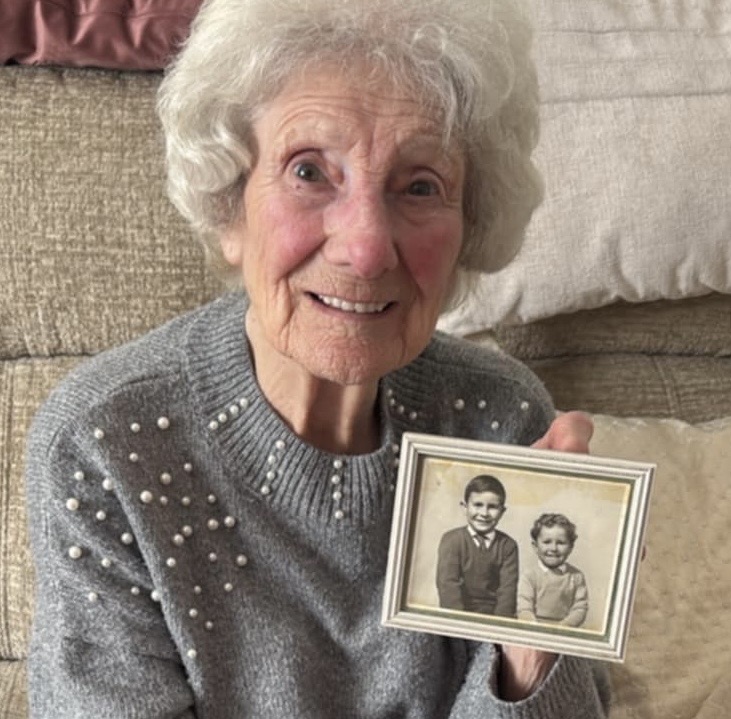
Rob Ainsley’s mum Barbara holding a 1961 photo of her sons John (left) and Rob. She was so convinced Rob was going to be a girl she didn’t have a boys’ name ready when he was born.
Rob Ainsley and his mum Barbara at a recent family wedding.

Not since I wrote about the highly controversial topic of Yorkshire puddings back in 2019 have I received as much reader feedback as I have about family names. It has been fascinating to hear all your stories.

Mary Harrison wrote: “My husband and I were reminded of the time we were teaching in Western Kenya. One of the workers on the compound rushed round to ask John to take his pregnant wife to the hospital…John says he had never driven so quickly as she was already in labour. A few hours later we had a visit from the proud father to tell us his new son had been called ‘Mr Harry’ (after Harrison) – in recognition of John’s help.”

When I was pregnant with my first child, I used to refer to my baby as ‘he’ for no other reason than ease. By then, the mid-1990s, you could find out the sex at your 20-week scan, but we had no desire to know in advance. During one examination, as my midwife felt around my large bump, we were discussing the imminent arrival. When I used the word ‘he’, she stopped, looked up and said: “You mean she.” I was shocked, and a little upset, because she knew I wanted to experience that ‘Ahhh, it’s a boy/girl’ moment when you meet your baby for the first time. But how could she tell? Was it the shape of my bump? Or was she using some midwifery magic to determine the sex?

From then on, I was convinced I was having a girl, although we made sure we had both female and male names ready. Of course, if you were paying attention in previous weeks, you will already know that my first baby was not a girl at all, and we called our little boy Oliver. It would have been Hannah had he been a girl.

Rob Ainsley contacted me to say: “My mum was so confident I was a girl, she’d decided on ‘Joan’. It was 1960, so way pre-scanning. When I popped out I clearly was a boy, so there was some hurried rethinking. Mum tried ‘Robin’, but Dad thought that wasn’t strong enough, so they compromised on ‘Robert’. I’ve never especially liked it, but I suppose ‘Joan’ could have been problematic for me in 1960s Britain. Not that it stopped the artist Joan Miró, of course.”

I’m intrigued as to why his mum was so certain he would be a girl when there was absolutely no proven way back then to know what sex your baby was going to be. Was it some old wives’ indicator, like a small neat bump meaning it was a going to be a boy, and a more spread-out bump was a girl, as I was told.

Clare Proctor says: “My mum was so convinced my eldest brother would be a boy that she refused to choose a girl’s name.” As Rob’s mother discovered, that kind of conviction is not always accurate, but in this case, Clare’s mum was spot on, and Peter was born in 1950. He made a rather exciting entrance into the world as Clare describes: “My dad had to deliver him in the back of a Land Rover with my mum (a trained midwife) telling him what to do, in between asking if it was a boy. He just said, “Let’s get it out first, then check!””

I asked Clare if he’d been nervous: “Apparently, he was surprisingly calm, but then he had been chased out of Burma (literally) by the Japanese army when he served in WW2, so I guess delivering a baby was a doddle!”

My first-born is now 29, and his partner Gigi messaged me on the subject of names: “Have you heard of nominative determinism? It’s a phenomenon where people with certain names end up in professional fields relating to the name, such as John Bones ends up a doctor, or Olivia Sweet becomes a pastry chef. It’s so interesting!”

My childhood ballet teacher was called Miss Toes and it always makes me giggle (it was probably spelled Toase but I didn’t know that when I was little!).

I bet some of you have some cracking examples of such names, and by now you should know the drill – get in touch using the methods below.

Do you have opinions, memories or ideas to share with me? Get in touch with me using the ‘Contact’ button on the top right.

This column appeared in the Darlington & Stockton Times on Friday 7th and the Ryedale Gazette and Herald on Wednesday 5th Nov 2025

Walking the family line

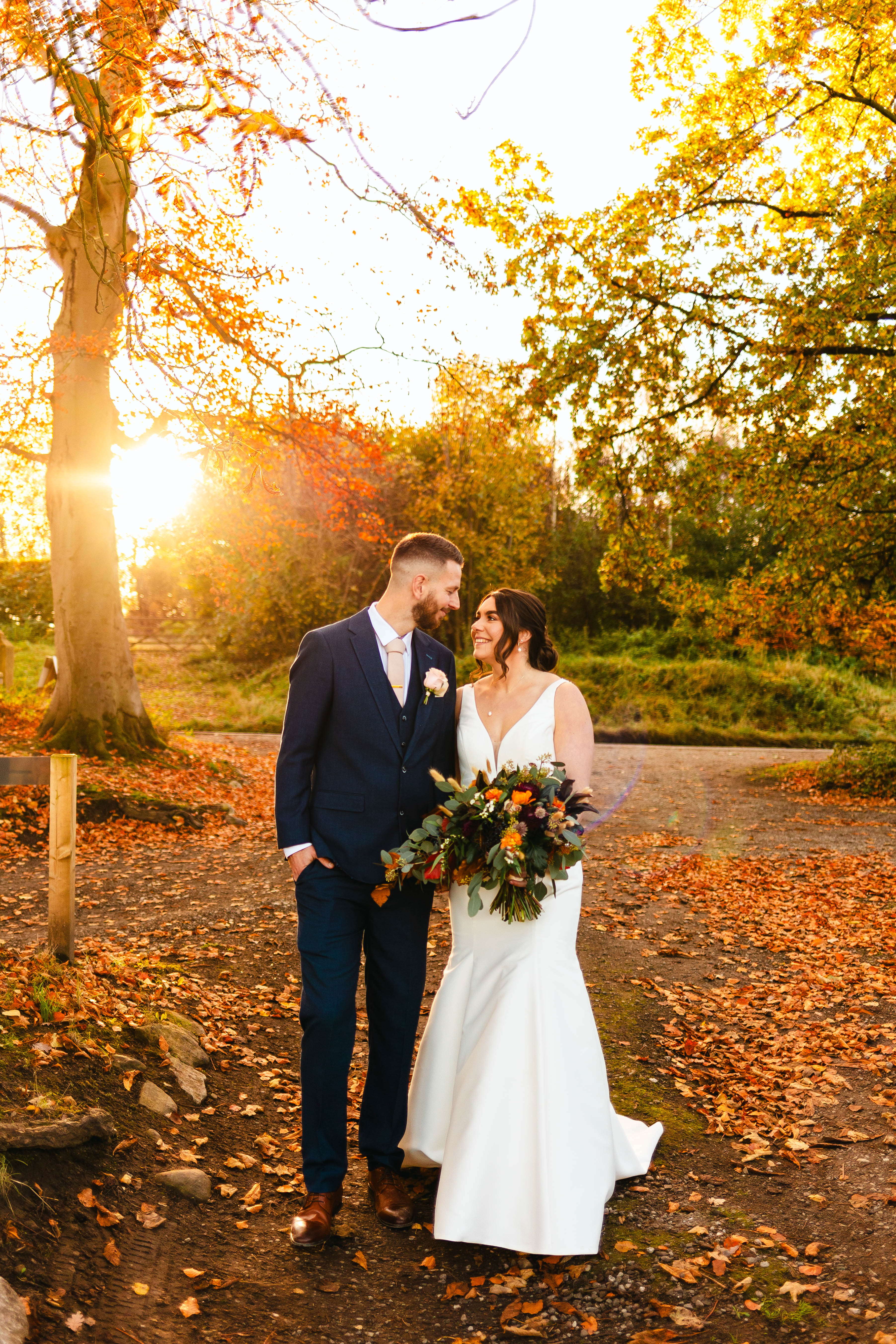
My niece Eleanor preserved the family name by a happy accident when she married Ben. Picture by Bella Bradford Photography

You might remember that a couple of weeks back I talked about family names, and reader Wendy Sissons mentioned that her father’s side of the family use ‘Leedham’ as a middle name for some of the men in the family. She wasn’t sure where it came from, but assumed it was the surname of a relative.

Since then, I‘ve been talking to my mum, and she remarked that her eldest brother, Henry (b.1932), had the middle name ‘Harland’, which was the surname of their father’s mother. Her second brother, John (b.1935), was given the middle name ‘Lacy’ which was their mum’s maiden name.

Was this a convention to preserve the surnames of the female lines due to the fact that women surrendered their own surnames upon marriage? By including it as a given name in the male line of descendants it would not only ensure the ancestors were memorialised, but there would be less chance that the family names would vanish altogether, should there be no other males to carry it forward as a surname.

Do you know the middle names of your aunts, uncles and cousins? I certainly didn’t, and that’s where our family tree came in handy. Using that, I discovered that, interestingly, my Uncle Henry’s son, my cousin Richard (b.1964), was given the middle name ‘Lacy’, and he also passed it on to his own son Charles (b.1997). As far as I am aware, that’s where the references to the family name ‘Lacy’ end. I do wonder why Henry chose ‘Lacy’ for his son, rather than the ‘Harland’ of his own name, and I can’t see any others on the tree with that as a middle name either. My mum had five siblings in total, but the rest were all girls (my mum being the eldest, born in 1937).

I wonder if there exists a field of expertise that focuses on the history of surname usage, and how practices have changed down the centuries? A family name was, and still is, a source of great pride for lots of us, but with many women now opting to keep their own surname on marriage, there is perhaps less likelihood of them disappearing from the family line. It is also a fact that in 2025 there are more couples who choose not to get married at all and therefore the choice as to whether to keep your own or take on your spouse’s name is irrelevant.

When I was young, we associated double-barrelled surnames with ‘posh’ people, but today they are much more common among we plebs. Unmarried parents will often link their surnames together when children are born. There are also more divorces and more second marriages, and children born through a second marriage are sometimes given the surname of both parents combined which will also mean they have a name in common with their older step siblings.

I have mentioned before that I was married to a Dutch man, and in the more enlightened Netherlands, the convention is for women to keep their own surname which they add to that of their husband when they marry so that it becomes double-barrelled (with the woman’s surname last). However, it only applies to the wife, so any children born of that marriage will still have just the husband’s last name.

I divorced ten years ago, and kept my married name for a long time afterwards, simply because it was the same as my children who were still in their teens when we split up. I wanted to keep some kind of normalcy for them as we navigated a very difficult period. However, as they grew into adulthood, having the same name as them grew less important, while wanting to go back to my own became more so, particularly after I lost my dad and sister Tricia, who was still a Walker. With them gone, and my eldest sister Janet married and my Buddhist monk brother switching to a chosen Buddhist name, there was just my mum who still had the surname ‘Walker’. Therefore, once I took over these columns, I decided to reclaim my family name.

My little story doesn’t quite end there. My eldest niece, Eleanor Bradshaw – daughter of Janet – got married in 2023 and took her husband’s name.

And that name? Of course, it is Walker.

Do you have opinions, memories or ideas to share with me? Get in touch with me using the ‘Contact’ button on the top right.

This column appeared in the Darlington & Stockton Times on Friday 24th and the Ryedale Gazette and Herald on Wednesday 22nd Oct 2025

All you have to do is tri

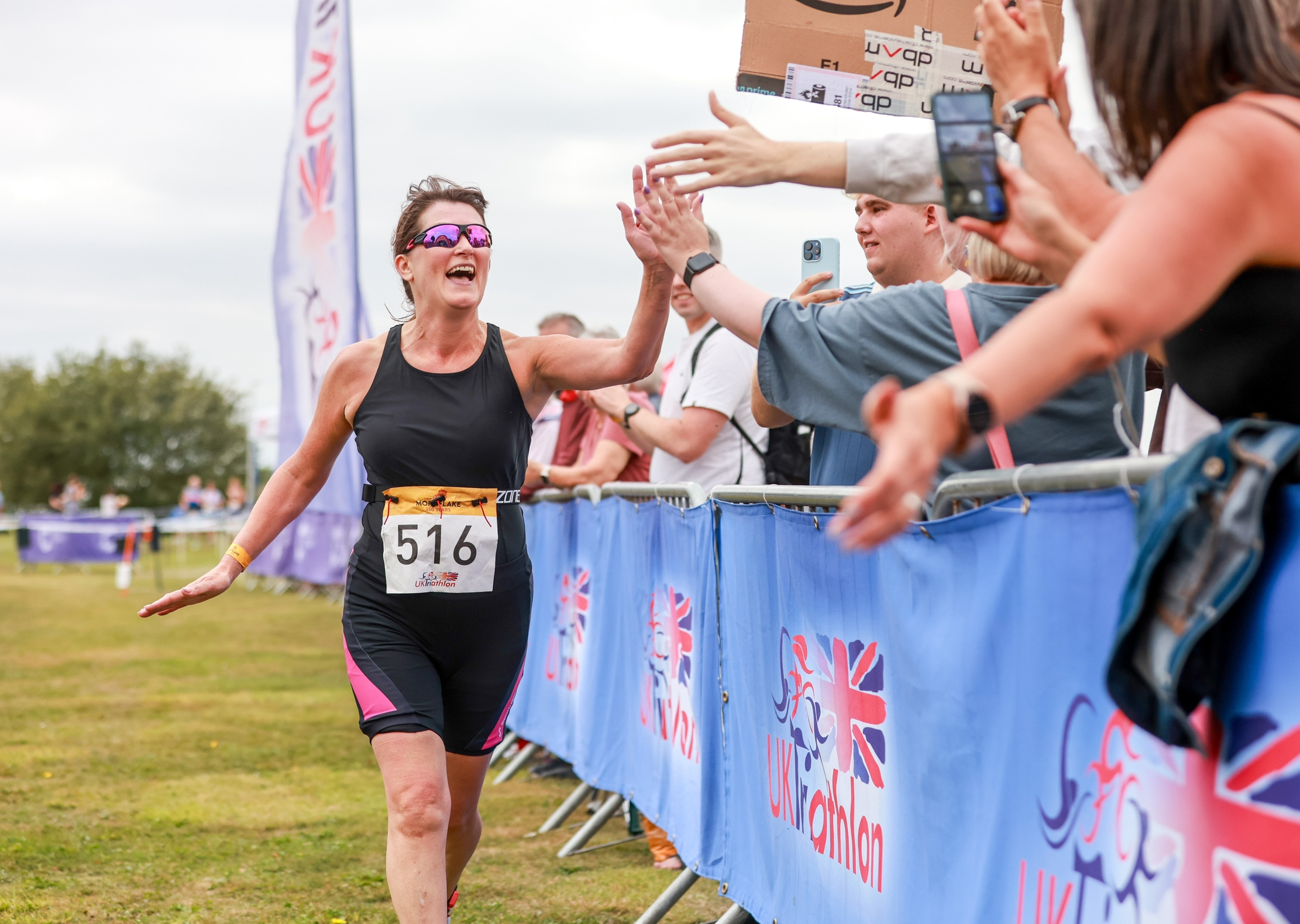
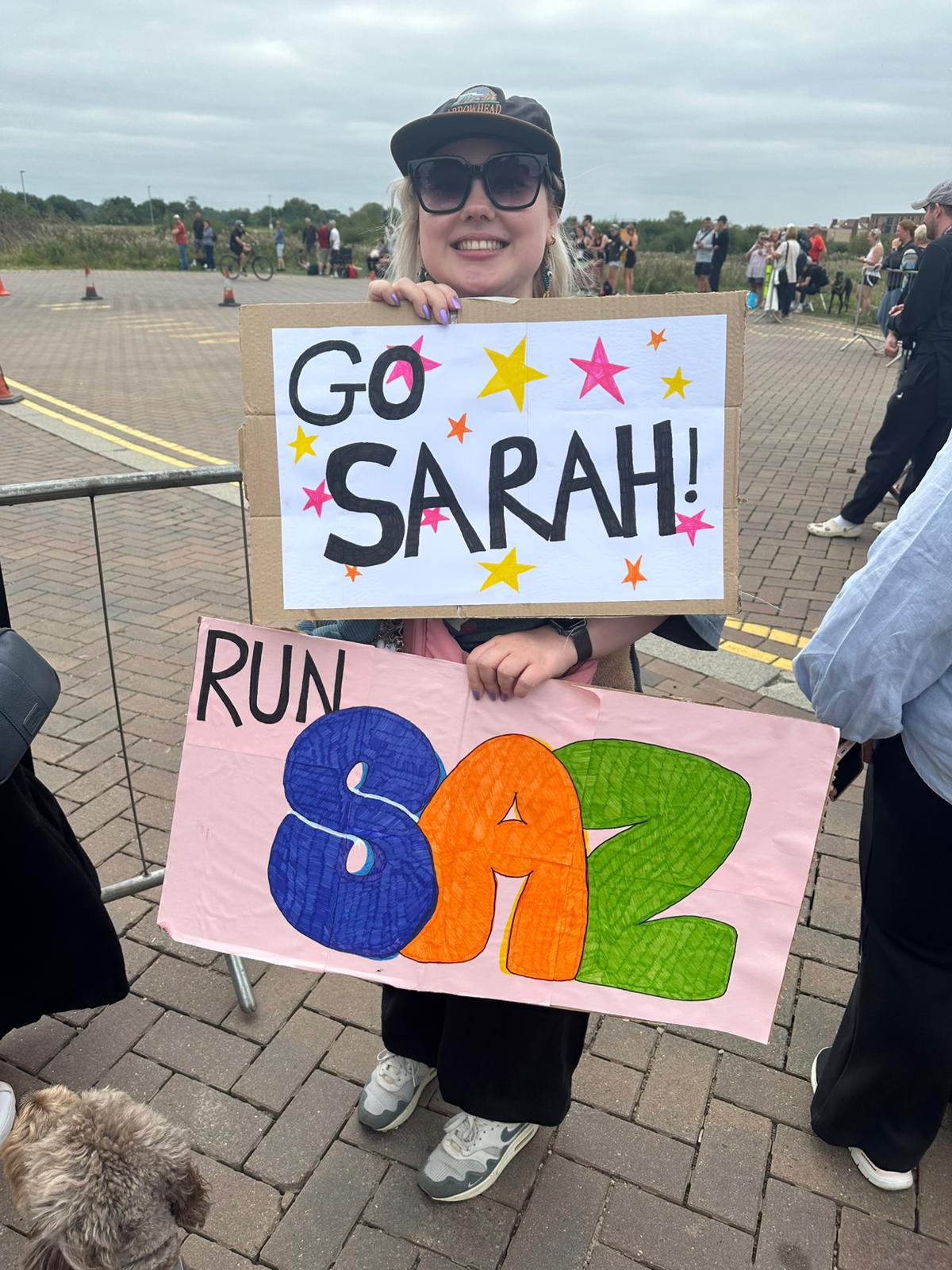
I hi-fived my loved ones who were waiting by the finish line. Their support got me to the end.


Seeing my loved ones with home-made signs cheering me from the sidelines kept me going


Do you remember that way back in January I announced that in a moment of madness, I had applied to take part in a triathlon? I wrote: “For those not familiar with this ridiculous athletic challenge, a triathlon is three sporting disciplines performed back-to-back in this order: Swim, cycle, run. There are various distances and mine is a 400-metre swim, followed by a 20-kilometre bike ride and a five-kilometre run.” I’d had this latent desire to do a triathlon for many years which I can’t really explain, and neither can I explain why I waited until I was old and creaky to actually get round to giving it a go.

I can now reveal that I have done it! It was held at York Sport Village with around 400 competitors from all over the country. I completed it in under two hours without sinking, falling off my bike or tripping over. My legs and knees are still reminding me of it every minute of every day but I have to admit, the sense of achievement feels pretty damn good. This was my first attempt at doing anything like this, so I took it nice and steady, my goal being to preserve energy for the final run to ensure I actually made it to the end without collapsing in exhaustion.

I was not tempted to chase other people who sailed by me in the pool, whizzed past on fancy racing bikes, or glided effortlessly by on the run. The competitor in me resisted the urge to try and go a bit faster or to push harder, because the fear of failing after I had told so many people I was going to do it was greater than the fear of being overtaken by speedier participants.

As for the training that I had pledged to do at the start of the year, well, it was patchy at best, and I would not recommend that anyone follow my example when preparing for an athletic endeavour. I bought my bike three weeks before the race from a second-hand shop for £85 and I can count on the fingers of one hand the number of times I have been in the pool since the start of the year. As for running, I did a few long walks and threw in a bit of running now and then. I’m not sure the Brownlee brothers would be impressed with my preparation.

That’s not to say I didn’t do any physical activity. I play racquet sports regularly, and relied on the fitness I gain from that to see me through. One thing that helped was the fact that I managed to shed a few pounds (to get into that bridesmaid’s dress for the July wedding that I mentioned in my January column). It meant there was a bit less of me to drag around the course.

I was very nervous before the event though, nervous of the unfamiliarity of it all, of being surrounded by people who had done proper training and preparation, people looking like they knew what they were in for, people who seemed ready and confident. But it was a lovely and supportive atmosphere, and as I trotted around the route, those who overtook me offered words of encouragement to keep going.

The best thing was having my friends and family on the sidelines. On every lap, I could see my little posse of loved ones holding huge signs with my name on that I could easily spot. Although they were all cheering, the voice I could hear most was my friend Hayley (the bride from said wedding) shouting words of encouragement. I can’t tell you how much I looked forward to seeing and hearing them on every lap, knowing that every time I spotted them I was another step closer to the finish.

What I didn’t expect was the surge of emotion on nearing the end. My friend Stefan (who has done six of these so far!) had completed the event earlier in the day and we were both taking part in memory of our mutual friend Andy Wilkinson who passed away from pancreatic cancer a few years ago. He had been a proper triathlete, and I hope he’d be proud that I kept going and made it over the finish line.

This column appeared in the Darlington & Stockton Times on Friday 5th Sept and the Ryedale Gazette and Herald on Wednesday 3rd Sept 2025

A close call for my son

Joey on his third birthday, just three weeks before he fell ill


Joey in Leeds General Hospital after an operation that saved his life after he contracted sepsis


Joey and I on a recent walk around York City Walls 20 years after he contracted sepsis. He lives with the after effects every day, but it’s a small price to pay compared to the alternative.


As I write this, I am basking in the glow of lovely bank holiday upon which it also happened to be my birthday. My boys came over with their girlfriends and yet again I was blessed to receive cards from each of them with words inside that touched my heart.


My older two would be embarrassed if I publicised what they had written, but my youngest, Joey, has given me his blessing to share his message, which had me crying from both laughter and emotion.


He wrote: “From the bottom of my heart, thank you for giving me toilet paper when I come over.


“Thank you for all your sacrifices over the years to make sure we boys were happy and healthy. We don’t forget what you do for us (car insurance, my new bed, pancakes on Sunday, cooking, washing, cleaning, new toothbrush heads, lifts, supporting our choices, and an infinite amount more).”


These are simple things that his words demonstrate he doesn’t take for granted. I need to explain the first line though, and why that hilarious sentence stems from something far less amusing.


When Joey was a toddler, he became ill on a visit to my mum’s. He could not stop vomiting and I assumed it was a stomach bug. I was not too worried at first, but by the evening was getting concerned and took him to the out-of-hours doctor. He advised me that it was likely a bug and to come back if it didn’t clear up.


By the following day, things had not improved. Joey was gulping down beakers full of water, yet did not pass any urine all day. My unease was mounting, and by the evening, I was really worried. Joey would lie down on the sofa, then stand up and run to another seat, as if he could not get comfortable. I called the out-of-hours doctor, and she asked me some questions:


Did Joey have a temperature? I felt his forehead and it wasn’t hot. “No,” I replied.


Was he alert? Yes, he was running from pillar to post.


Was he drinking? “Yes, loads,” I replied, but informed her that his nappy had been dry all day.


She suggested to give it another night and call back if he hadn’t improved by morning.


It was the worst advice she could have given me. What I had unknowingly described were classic signs of septic shock, but she didn’t pick up on them. I spent a sleepless night with a child who would not settle, who was vomiting a dark brown substance (I now know were dried specks of blood called ‘coffee grounds’), and I STILL did not call an ambulance because I trusted the doctor’s advice. I ignored all my instincts screaming at me to get help (I have never done it since).


I took him back to the doctors first thing and we were very soon in an ambulance speeding on blue lights to Leeds General Infirmary for emergency surgery to save Joey’s life.


He made it through the operation in which a large portion of his dead small intestine had to be removed. He’d had a Meckel’s diverticulum, which is a pouch-shaped piece of excess tissue many people have from birth. In rare cases like Joey’s, it can become entangled with the bowel, cutting it off. This led to an infection which in turn led to the sepsis, the UK’s second biggest killer after cardiovascular disease. Many kinds of infection can lead to sepsis, so knowing the signs is extremely important. Despite awareness campaigns, it is still being missed, 20 years after it happened to Joey.


Had the doctor worded her questions differently, I believe she would have realised he was in an urgent situation. Joey had low body temperature, which we rarely look for. I now have a thermometer to take accurate readings rather than relying on my hand. Agitation and lack of urination are also signs of the body entering septic shock, the advanced, life-threatening stage of sepsis where the vital organs start to shut down.


The long-term effect is that he lives with the discomfort and inconvenience of an upset stomach every single day. Hence, Mum supplements his higher-than-average loo roll costs.


But that is a very small price to pay to still have my beautiful son in my life.


Do you have opinions, memories or ideas to share with me? Get in touch with me using the ‘Contact’ button on the top right.

This column appeared in the Darlington & Stockton Times on Friday 13th and the Ryedale Gazette and Herald on Wednesday 11th June 2025

The oldest are the best


My old school photo taken in 1981 using a camera on a rotating stand
If you moved, you ended up blurry like the boy in the middle of this picture


When I was visiting my mum the other day, who still lives in the house where I grew up, I found an old school photograph that I had forgotten existed. It was taken in 1981 and was a rare ‘whole school’ image. My school used to do this every few years and it was quite a feat to get everyone – pupils, teachers and other staff – to all sit still and and smile (or grimace) at the same time.

To get 450 or so of us in shot, we were arranged in rows of about 80 on a tiered platform. The photographer had to mount the camera on a tripod in the centre of the playground which then rotated from right to left. We were warned sternly that we had to stay as still as possible because if we were moving as the camera scanned us, we would end up out of focus in the final photo. One of the boys did not listen and is forever immortalised as a blurry blob. Another boy, whose ingenuity I rather admire, decided to try and appear on the final picture twice. He started off at one end, then planned to run behind everyone and get to the other end before the camera had finished its journey. Unfortunately for him, he was caught mid-run and unceremoniously plonked in between some much younger boys. He is easy to spot on the final image thanks to standing a good head and shoulders above those around him.

Because the photograph is more than three feet long, it never made it on to any wall, nor into a photo frame, and has remained curled up in a cupboard since 1981.

One of the joys of finding it has been to scan the faces to spot people I knew then, and people I still know now, while laughing at our fabulous 1980s hairstyles. I’m pleased to say that I am still good friends with quite a few of them.

Old friendships are very special, and a few weeks ago I asked if any of you had friendships longer than reader Gurli Svith from Denmark, who told us she had had the same best friend for more than 60 years.

Mary Raynar contacted me to say: “Not quite…Me and Janet met. 59 years ago! I can’t believe I’m saying that!” Mary is my sister Janet’s best friend and they met at primary school in April 1966.

Liz Davidson, who is 78, has the record so far. She still has pals from when she started school at age 5, which adds up to 73 years of friendship. Very impressive!

Lynn Catena, who is originally from Bradford but now lives in Canada, says: “When I visit the UK, I still catch up with friends from the first day of infant school in 1962.”

Artist Neil McBride adds: “It’s 63 years since I became a lifelong friend of my art teacher from secondary school.” I asked Neil if he still sought his mentor’s advice. He replied: “We talk in general terms about art, particularly painting. Where my paintings are quite commercial, his are very purist in contrast so any mutual advice is usually limited to painting technique as any questions arise during discussion. We have some strange discussions about how paint behaves due its physicality, if that makes sense.”

Michale Kilmartin’s comment demonstrated the important role long-term friends can play when you are going through a difficult time: “I’ve known friends since starting school at St George’s Primary in York in 1965. My friend Sean started with me. I became his best man in the 1980s. He supported me through chemotherapy and is still on the end of a phone.”

Lastly Clare Powell has many friends she has known for years, and she wrote me a message explaining her relationships with them from early childhood and into parenthood, where they became godparents to each other’s children. Then, as an afterthought she added: “Oops! I forgot to mention my most important lifelong friend – my husband! We met at school when we were 13 and were part of a gang that are still in touch today. We didn’t get romantic till we were 23 though and now have been married for 42 years.”

This column appeared in the Darlington & Stockton Times on Friday 23rd and the Ryedale Gazette and Herald on Wednesday 21st May 2025

Having presents of mind

Reader Clare Proctor, seen here 2nd left with her family, says choosing her favourite day of the year is like choosing between her children – impossible! 

Do you remember a few weeks back I asked about your favourite day of the year and mentioned that I treasure the greetings cards that I receive from my boys on special occasions like my birthday and Mother’s Day? They write really lovely things, expressing their feelings in a way that they are unable to do face to face. I commented that in general, girls and women find it easier to talk openly about their deep emotions than men and boys and are far more likely to share their difficulties with close friends and family, who can then offer crucial emotional support.

A few readers got in touch on those two topics. Caroline Newnham says: “We’re not too good as a family at writing heartfelt messages in cards, though one daughter is developing the habit of doing this and I’m not going to discourage it! I asked them not to spend any money on Mother’s Day this year as they’d been very generous for my birthday in February. Some flowers arrived with a message that said succinctly “We have chosen to ignore your silly instruction.”

I loved that, because it sums up what we parents are like. How many of us, when asked by our children what we’d like for our birthday, say: “Oh, you don’t need get me anything!” And do they listen? Of course they don’t, because for them, the pleasure comes from the giving of gifts as much as the receiving of them, and it is a chance to express their love and gratitude.

Having said that, if your relationship with your loved ones is not harmonious, could gift giving be a chance to express that too? Have you ever received a terrible present? Or one that is laced with spite? I have a friend who received a book for Christmas from a relative with whom they had had a recent spat. The book was called ‘S**t Happens, Get Over It’. It ended up in the bin. Another of my friends puts enormous thought into buying special presents for loved ones, not to mention a lot of money too, but she does not always get the same in return. One year, on receipt of a dreary book, she tossed it across the room in disgust at the person’s lack of effort.

It makes me wonder why some people are so good a finding just the right present, knowing exactly what the recipient would like, while others are plain rubbish. I’ll admit that for some of my male friends, I resort to buying them the same thing every year because I don’t know what else to get them. I often rely on the tried and tested – an expensive bottle of wine or, for my brother-in-law, a voucher for his favourite artisan bread shop. I initially apologised for getting the same thing again but much to my relief he replied: “Don’t stop, I love it and use it all the time.”

As for favourite days, Janet Pearce writes: “Our Mother died when we were very young, so Mother’s Day was not a thing in our house. My special day of the year is 13th April, which is the anniversary of my first date with my beloved late husband. We went to Laugherne in South Wales, home of Dylan Thomas whose work we both loved. I still go on the same date each year like we did when he was alive. It is my happy place.”

And Clare Proctor adds: “I don’t have a favourite day of the year. I enjoy every day! It’s like picking your favourite child – impossible because each one is unique and you love them all. As for greeting cards, I have been known to waffle a bit, or write a rhyme, but never too emotional. I’m far too British for that. As for Mother’s Day, I’m a bit of a Scrooge, in that I don’t really believe in it. I tell my girls every day is Mother’s Day in our house. But I do like a card from them, usually humorous rather than sentimental, and being taken out to lunch. But again, they can do that every day as far as I’m concerned!”

What I’d like to know is, what was the worst gift you’ve ever received, and what was the best?

Do you have opinions, memories or ideas to share with me? Get in touch with me using the ‘Contact’ button on the top right.

This column appeared in the Darlington & Stockton Times on Friday 16th and the Ryedale Gazette and Herald on Wednesday 14th May 2025

You can lead a horse to water

A drawing of Sir Ralph Payne-Gallwey from Vanity Fair magazine in 1893. Sir Ralph of Thirkleby Hall, paid for a roadside water trough in the village (Photo: Leslie Ward, public domain via Wikimedia Commons)


A few weeks ago I wrote about how my best friend and I celebrate the longevity of our relationship by having an annual weekend away together.


Gurli Svith from Denmark wrote: “Your column on friendship touched me very much because I have a very good friend I have known since I was 14 and she was 12. She was going to start at my school and came to my home to ask if we could cycle together. That was the beginning and now being 76 and 74 we are still close friends. We do not meet very often but when we do it is as if we saw each other just yesterday. We can talk about everything, and we have helped each other through hard times. For many, many years we have given each other birthday presents, but sometimes we have not seen each other for two or three years so it is like Christmas when we are sitting there drinking tea, eating cakes and unwrapping our presents.”


Is it true that many people are closer to their best friends than their own family? The saying goes, you can choose your friends but you can’t choose your family, so if you could opt out of spending Christmas and Easter with relatives, would you? (I acknowledge that I might be opening a can of worms with that question!)


Let’s get back on safer ground with troughs. Regular reader Clare Powell says: “We do have a couple of stone troughs we bought in a farm sale in Rosedale in the 1980s (Paid more than we should have because my husband kept bidding against himself – much to the locals’ amusement!). We transported them in the back of a Volvo. No idea how old they are, so it was interesting to read your article. Like you, I never really thought about who made them, and how. And you’re right, your dad would have had the answer at his fingertips.”


He sure did, and I now have the space to tell you what I discovered inside his old file. There were a few cuttings, columns, and notes, one of which was in Dad’s handwriting dated 15th May 1993. He had written it during a phone call from a chap called Dick Thompson who lived in our village and whose family had made locally quarried stone troughs for years.


“Each trough was excavated with a pickaxe and drawn down to the road on a sledge,” he’d scribbled. “It took seven or eight days to make one trough – all sizes done. Circular pig troughs also made so pigs could eat together.” He added that the troughs were made on spec, bought mainly by farmers, although parish councils paid for communal troughs situated in villages.


Among other things, the file also contained a newspaper cutting from March 1973 written by the esteemed founder of the original Countryman’s Diary column, Major Jack Fairfax-Blakeborough.


“The wayside water troughs were a real blessing both to parched travellers and to horses,” he wrote, “Especially in the heat of the summer when roads sent up a cloud of dust. Many of the troughs were erected by landowners who knew their value to man and beast. Some of them have inscriptions which tell us of their donor and his consideration for horseflesh.”


He mentions one between Burnsall and Appletreewick in the Dales which has a Latin verse ‘De torrential in via bibet propteren exaltabit caput’ which translated means ‘He will drink at the spring on the way, and thereafter lift his head with joy’, which is the last line of Psalm 110 in the Old Testament. The Major (and my dad when he wrote about it 20 years later) could not shed any light on who had placed the trough there. Can any of our Dales contingent add any more detail about this particular trough?


Dad mentions another placed at Thirkleby near Thirsk, paid for by Sir Ralph Payne-Gallwey (1848-1916), 3rd Baronet of Thirkleby Hall, who was an accomplished engineer, historian and artist. Its inscription, with a bit of poetic license where the rhyme is concerned, reads: ‘Weary traveller bless Sir Ralph, who set for thee this welcome trough.’


I have a feeling we have a lot more to come on these once indispensable features of our countryside highways and byways.


Do you have opinions, memories or ideas to share with me? Get in touch with me using the ‘Contact’ button on the top right.

This column appeared in the Darlington & Stockton Times on Friday 2nd and the Ryedale Gazette and Herald on Wednesday 30th April 2025

A little means a lot

My boys always write beautiful and meaningful words  in the cards they give me on special occasions

Spring has sprung in earnest now, and as I write this, the sky is cloudless blue and the sun is beating down. Trees and flowers have burst into life, and the chattering birds are furiously building nests in preparation for the arrival of their young. Life is good!

It has been like this all week and is set to continue well into next. In the UK, because our weather is so unpredictable, we are extra grateful when we get a sustained patch of good weather and never take such things for granted.

A few weeks ago I mentioned that my favourite day of the year is the Spring Equinox because it represents a beacon of hope for good weather after a long, miserable winter. It also heralds the arrival of shorter nights and longer days, which cheers me up no end. I also tried to explain the difference between the well-known Spring Equinox and the lesser-known Spring Equilux which resulted in me declaring afterwards that I needed a lie down.

These two annual milestones are determined by scientists who use the rising and the setting of the sun to calculate the length of daytime versus night. They are each measured slightly differently, which is why we have the two.

Alastair Smith, whose wonderful photograph of a sunrise over Runswick Bay accompanied the column, contacted me to say: “Thank you for the credit Sarah. Your explanation of the difference is deserving of a lie down, however make sure it is in the Spring sunshine. Wishing you a great year!”

And Caroline Newnham said: “It’s all a bit mind boggling for me…I need to lie down after reading it. I understand the Latin but that’s as far as it goes!”

I asked if any of you also had a favourite day and for Karl Lynch it is December 25th: “To me Christmas Day is about sharing and creating memories with loved ones. I believe there’s a child in every one of us, and it brings back memories of feeling safe triggered by the smell of Christmas dinner. Merry Christmas, Sarah,” he says.

Although I do love Christmas Day, the fact that it is such hard work for hosts and ridiculously expensive means it lies further down the ‘favourite day’ rankings for me.

Mother’s Day has not long gone, and that too rates highly on my list because it gives me an excuse to lounge about while my boys pamper and spoil me. They also send me cards in which they write really lovely things, expressing their feelings in a way that they are unable to do face to face. In general, girls and women find it easier to talk openly about their deep emotions than men and boys.

That is a sweeping generalisation, but nevertheless it is a fact that suicide is the biggest killer of males under 50, and three quarters of all suicide victims are men. Not unburdening themselves of their innermost struggles is given as a major contributor.

Undoubtedly women can struggle too, but we are far more likely to share our difficulties with close friends and family, who can then offer crucial emotional support.

One thing I taught my boys when they were very little was to say how they felt when they wrote a greetings card. It was a way to get them to express themselves without the embarrassment of doing it out loud or face to face. For example, instead of the simple ‘To Granny, love from Ollie’ I’d ask them to think of something they really liked about their granny to write down, and so the contents of the card would be more meaningful to her.

They continued to do that into their teens and adulthood, and now, with all of them in their 20s, they write truly heartfelt comments in the cards they send to me and their closest loved ones.

I cannot say if it has helped them in terms of expressing their feelings in other areas of life, and they certainly have not escaped their mental health ups and downs, but I do think it has given them a little leg up in the ability to talk openly about their states of mind.

And sometimes, it is the little things that matter.

Do you have opinions, memories or ideas to share with me? Get in touch with me using the ‘Contact’ button on the top right.

This column appeared in the Darlington & Stockton Times on Friday 18th and the Ryedale Gazette and Herald on Wednesday 16th April 2025