
Bugged by same problem each year

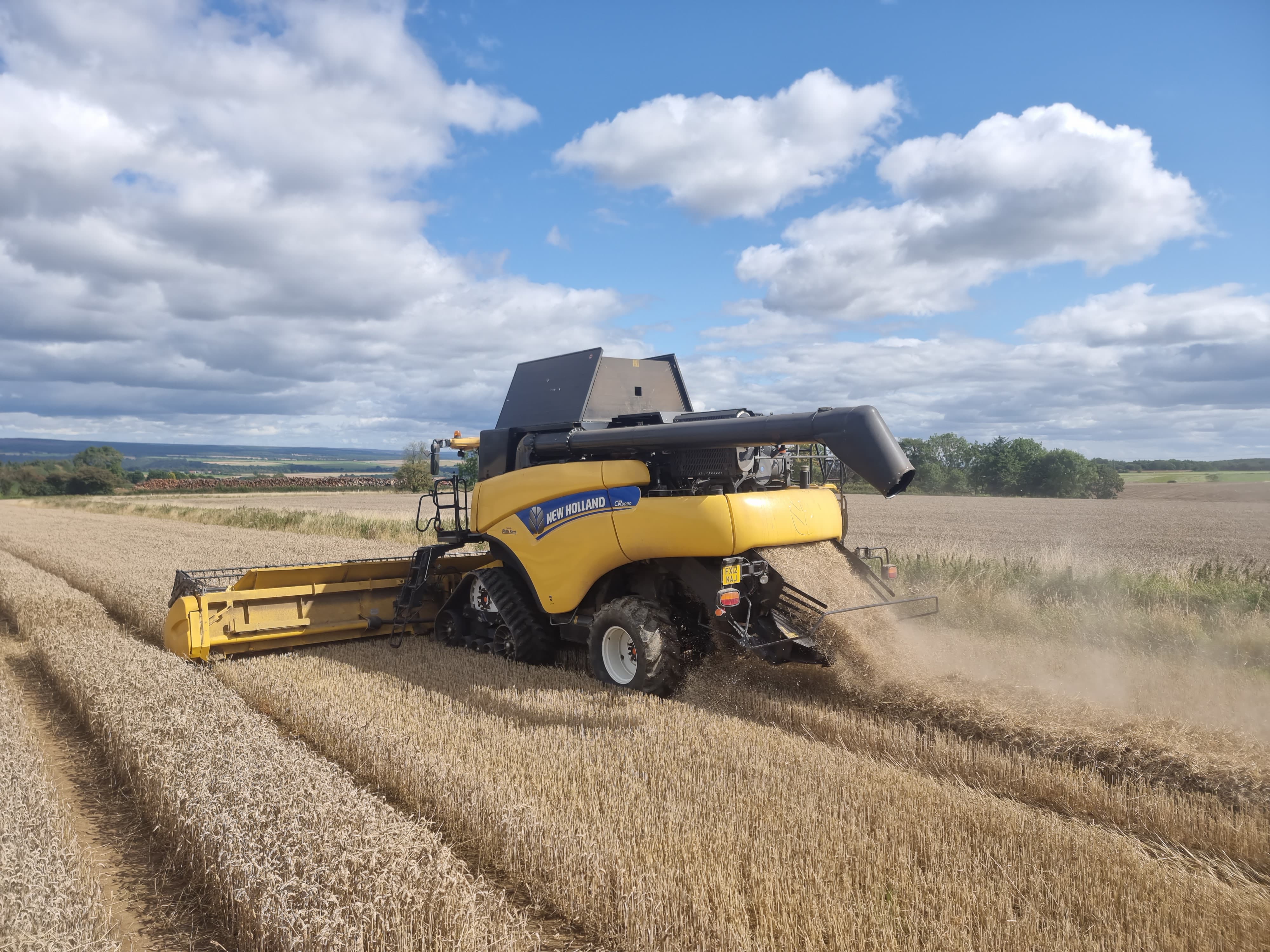
Thrips are a persistent problem for crop farmers – and are getting worse each year according to Billy Goode. Picture by Billy Goode
Thrips look like a tiny splinter against the skin, and make you itch like mad! Picture by Billy Goode.

I was contacted by a friend, Billy Goode, who farms and runs a kiln-dried log business not far from the top of Sutton Bank.

He sent me a link to a July 1905 Guardian newspaper column called ‘A Country Lover’s Diary’ which had struck a chord with him. Entitled ‘The Trouble with Thrips’ the piece describes what an utter nuisance these insects can be, especially to farmers.

He’d sent it not only because it might be of interest, but also because they were making his working day a misery. He explained: “It’s every year as soon as the temperature is above 24 degrees. We call them harvest bugs or thunder bugs – it’s markedly worse than it was five years ago.” Not only are they a pest for farmers, but they also land on our skin and clothes, and can be very irritating, as described in the 1905 Guardian article below:

‘Thrips are a plague to the farmer and a cause of much annoyance to everyone else; they are so very tiny, measuring only about one-twelfth of an inch, that it seems absurd to think that they can damage wheat. Unfortunately it is their small size that makes them so difficult to deal with, and the tiny larvae suck the juices from the growing grain and cause it to shrivel up. Those of us who are not farmers are not much troubled by the male thrip, for it is wingless, but the flying female bumps up against our faces, settles and walks about, unless it is unfortunate enough to fly right into our eyes, when it dies a watery death, much to our discomfort.’

I know exactly the tiny black bug in question. They are very thin, longer than they are wide, and look a little like a splinter on the skin. I also know how much it tickles when, on a close summer’s day, they land on your skin and wriggle about. Imagine dozens of the things plaguing you while you’re trying to work!

There are at least 150 species in the UK, with males and females both winged and wingless (some of which hitched rides on cargo ships to land on our shores after 1905), and most are named after the particular plant they are most commonly found upon, such as the pea, onion, gladiolus, privet and honeysuckle, as well as the western flower thrip and the glasshouse thrip. We ordinary folk would probably not be able to tell the difference between them, but we will have seen the evidence, such as pea pods with a grey/brown blight on the outside, flower petals with white squiggly lines on them where the pigment has disappeared, leaves with a whitish bloom on them, or malformed buds and foliage, all signs of thrip activity. This is caused by the way the little blighters feed – by puncturing the outside layer of the plant and sucking out the juicy insides.

Another sign of thrips are tiny black speckles on leaves, which is evidence they have used that particular bit of plant as a toilet.

Although plants can recover, the damage can affect crop yields and if you are a commercial farmer, your customers will not be happy with disfigured produce. For example people are unlikely to buy your peas if the pods are covered in blight, even if the peas inside are perfectly fine. You will not be able to sell flowers if the petals have marks or the leaves black speckles all over them.

Thrip activity can introduce viruses that cause far greater problems, particularly for cereal and vegetables crops. The virus is transmitted into the plant because of the thrips breaching the outer protective layer leaving an open channel for it to enter, in the same way we humans can contract an infection through an open wound.

Thrips are difficult to stop because they breed for most of the year, each producing one to two eggs per day over their 45-day life cycle. They go from egg to full grown adult in around two weeks.

Obviously there are chemical solutions, but a more planet-friendly method is to encourage natural predators, such as lacewings, ladybirds and thrip-loving mites that disrupt the breeding cycle.

Do you know a tried and tested method of thrip control you can pass on to poor Billy?

Do you have opinions, memories or ideas to share with me? Get in touch with me using the ‘Contact’ button on the top right.

This column appeared in the Darlington & Stockton Times on Friday 15th Aug and the Ryedale Gazette and Herald on Wednesday 13th 2025

New homes lead to cross words

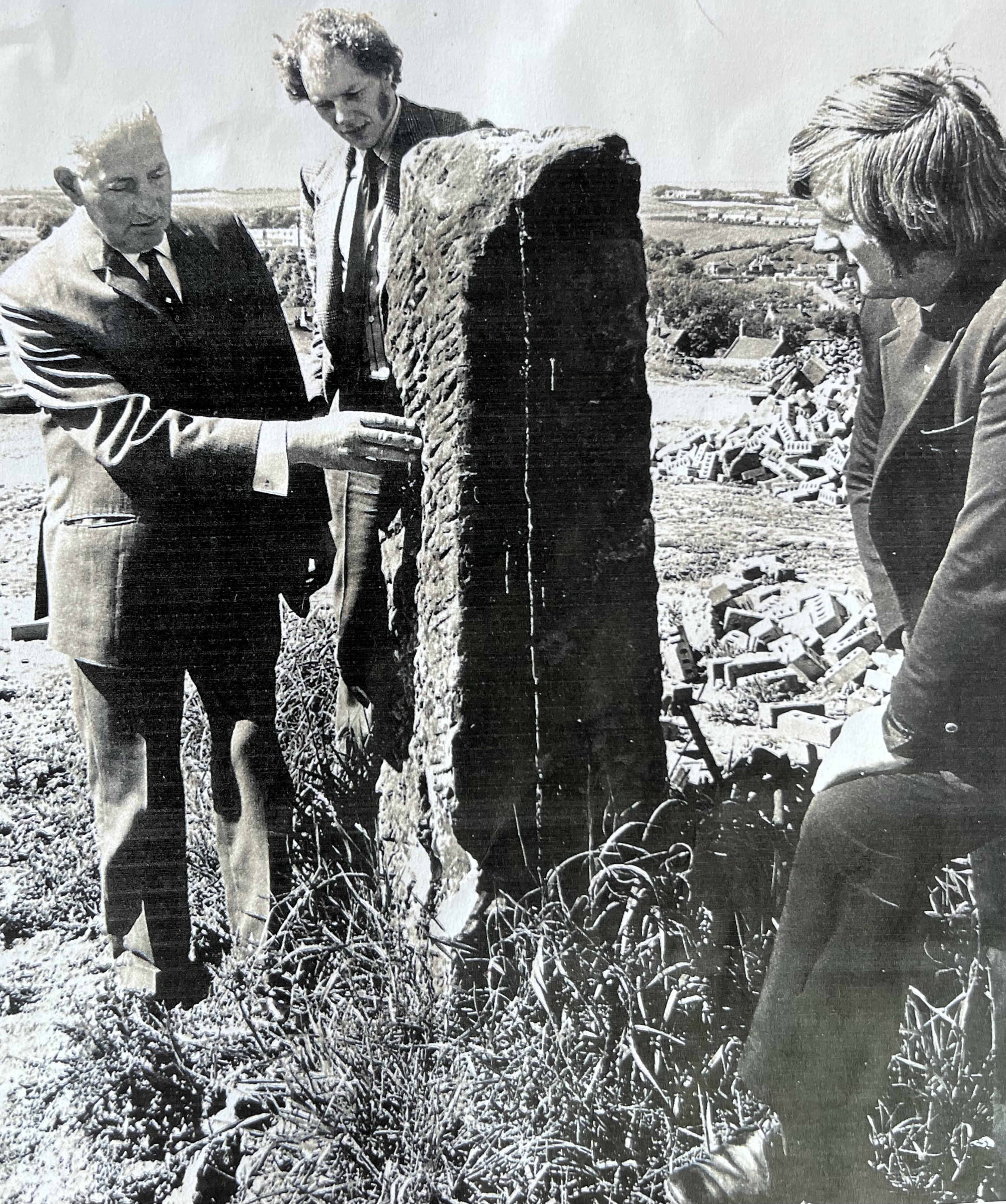
Beryl Richardson’s father Bob Carter, left, inspects the stone on Seymour Hill Loftus, which became the trouble-hit Westfield Estate. Reverend John Theobald is on the right, with a Mr Colari from Cleveland Museums in the middle.

Last week when I wrote about a mystery carved stone I had found on a regular walking route, I mentioned Beryl Richardson who comes from Skelton-in-Cleveland. She had a theory about my stone: “The measurements suggest it could be part of an ancient gate post or boundary marker. Some similar to this are on the North York Moors and relate to the boundaries between landowners’ estates.”

She mentioned that her late father, Bob Carter, who came from Loftus, spent many days looking for these boundary stones which he then included in local history talks.

Since then, Beryl has sent me a copy of a photograph, seen here, of her father and a similar carved stone with a mystery attached to it, which makes another interesting-stone related story that readers might be able to flesh out for me.

Beryl is not sure of the exact date of the photo which shows her father Bob, who is touching the stone, alongside a Mr Colari from Cleveland Museums (middle) and on the right, the Reverand John Theobald, Rector of Loftus.

She explains that her father believed this stone to have originally been a cross because it showed traces of a type of lime mortar which would have been used to fix the cross head in place. However, that had long gone. “The old stone cross on Seymour Hill, Loftus, was shown on an Ordnance Survey map from 1858 and was destroyed when building the Westfield Estate in 1974. My father believed the stone marked a burial site,” says Beryl. Her father asked the authorities concerned to open up the site before any houses were built so that they could inspect it for graves, but his pleas fell on deaf ears. Beryl points out that the stone was in direct line of sight towards the Anglo-Saxon burial ground discovered at Street House Farm, three miles northeast of Loftus where 112 graves were found, including that of the ‘Saxon Princess’. It was an incredible archaeological discovery and included artefacts such as gold brooches and pendants and glass beads suggesting royal connections. These finds can now be seen at Kirkleatham Old Hall Museum in Redcar.

Beryl’s old photo must have accompanied a news story about the stone and judging from the piles of bricks and rubble in the background, was taken at the very start of development when the site was being cleared before building work began, which dates it to either late 1973 or early 1974.

The construction of 320 new council houses on Seymour Hill, which became the Westfield Estate, was highly controversial. The development cost the local authority £2.25m (around £21m today) and was dubbed ‘Colditz’ by some of the incoming tenants. The architect came in for a lot of criticism, not only for the general ugliness, but also for not having included back doors in some of the properties, meaning there was no secondary exit should a fire break out blocking the only external door. There were other complaints, such as only being able to hang out washing right outside the lounge window, doors locking automatically leaving children stranded outside, and no central heating upstairs.

In an article from the Middlesbrough Evening Gazette in October 1974 Rev Theobald, who was also a local councillor, described the situation as a ‘tragedy’. “During my calls on my new tenants as Rector of Loftus, people have drawn my attention to a number of factors which point to bad design – all of which are apparent to even the humblest layman,” he said.

I don’t know Loftus well and would welcome any information from people who do, to let me know whether the estate is still there, and if residents still have the same views as they did back in 1974. I do know that it was regenerated about 18 years ago.

It is not uncommon for housing developments to be built on ancient burial sites, but there are rules that developers have to adhere to in terms of respecting human remains and the heritage of any archaeological discovery.

Was the Westfield Estate built on an ancient burial site, as Bob Carter believed? If the local authorities and developers ignored or even destroyed evidence, such as the old cross, were the catalogue of troubles it experienced the ghosts from the past making their displeasure felt?

Do you have opinions, memories or ideas to share with me? Get in touch with me using the ‘Contact’ button on the top right.

This column appeared in the Darlington & Stockton Times on Friday 4th and the Ryedale Gazette and Herald on Wednesday 2nd July  2025

Do you know your boundaries?

The second carved stone that is on my regular walking route. Are these drilled holes marking where it was meant to be split, as described by Andy Brown? Could it be a boundary marker, as suggested by Beryl Richardson?
Mike Broadley’s stone trough that has been in his garden for more than 70 years

When I first started writing about stone troughs back in April I had no idea that these seemingly overlooked lumps of rock would lead to so many memories and stories coming in from readers, some of you with direct knowledge of the history and processes involved in making them.

Andy Brown got in touch with the following: “Early in my career I was taught how to cut large sandstone blocks for building work by the stonemason at Shipley Quarries near Barnard Castle. Sandstone is known as a freestone as it can (fairly) easily be split and shaped both along and across its bedding plane (the layers in which sedimentary rocks are deposited). Small blocks can be split using hammers and chisels by chasing a groove all around where you intend to split the stone and gradually widening this out into a crack. Feathers and wedges are used to split larger blocks by hammering them into a series of holes drilled along where the block is to be split. The blocks are then further worked with hammer and chisel into the desired shape and finish.”

Feathers and wedges are tools used to help shape and split stones. A recent trough-related column of mine mentioned a carved stone that I passed regularly but to which I had previously paid no attention. It was about two and a half feet long, one and a half wide and about a foot deep, but the basin part (if indeed it had been intended to be a trough) had not been hollowed out. It seemed too big to have been a stone intended for a building, so I wondered how it got there, when was it placed there and why was it left unfinished.

Andy answers the question as to how it may have been transported: “Skilled quarrymen and masons could ‘walk’ sizeable stone blocks by pivoting them on their point of balance, but for large blocks, rollers or sledges would be used to transport short distances. For transporting longer distances both fixed and portable windlasses (winches) would be used to load and offload large blocks into sturdy carts…I imagine your trough is a drinking trough for cattle or horses and would be filled by bucket or positioned by a pump.”

Mike Broadley has had a stone trough in his garden for as long as he can remember: “On reading your column about stone troughs I thought I would tell you about one in our front garden. It is still in situ, and I have been here for 70 years. It was fed by a hand pump from a well under the lawn. The pump has long gone but the lead pipe that supplied it is still present, sealed off at ground level. The well is one of a chain linking the houses either side of us in High Ellington village and I think they date back to the time before water mains…I can remember the pump being used when the mains were off.”

Beryl Richardson had another theory about my stone: “The measurements suggest it could be part of an ancient gate post or boundary marker. Some similar to this are on the North York Moors and relate to the boundaries between landowners’ estates. Each stone mason would have their own ‘signature’ marking. My late father from Loftus spent many days looking for these boundary stones which he then included in his local history talks to various groups and students…My dad’s name was John Robert Verrill Carter but was known by everyone as Bob Carter. He was a friend of Tom Leonard who started the museum at Skinningrove and he also knew your father’s column’s predecessor Major Jack Fairfax Blakeborough.”

Beryls’ comments prompted me to return to the stone to see if I could spot a signature, but it was covered with ivy and I couldn’t make anything out. What I did spot, though, was another stone nearby, slightly hidden by a tree. It was smaller and had holes drilled into it, possibly indicating a line along which the intention was to split it (as described by Andy above). Maybe Beryl is right and these stones were deliberately placed there many moons ago to mark the boundary of a local estate now long gone.

I wonder if we will ever know?

Do you have opinions, memories or ideas to share with me? Get in touch with me using the ‘Contact’ button on the top right.

This column appeared in the Darlington & Stockton Times on Friday 27th and the Ryedale Gazette and Herald on Wednesday 25th June 2025

Difficult fact to swallow

Swallows chatting on overhead lines above me, as if they were scoping out the property’s conservatory to set up home


A swallow feeds its young in a nest under the eaves. Photo by Alastair Smith


I was conducting a house viewing recently where the potential buyers had come for a second look before deciding whether they were going to make an offer or not. It was a lovely stone cottage in the Hambleton Hills with a gorgeous garden and wonderful views at the back.

Because the viewers had been before, I allowed them some privacy and selected a sunny spot outside to sit and wait until they had finished their visit. At the back of the house was a beautiful oak-framed conservatory, and I had opened up the bifold doors to make the most of the wonderful weather.

Not long after I sat down, I noticed a pair of swallows chattering on an overhead power line not far away. I had seen them on an earlier visit, and it had lifted my spirits knowing that the swallows had returned from the southern hemisphere, a portent of the summer soon to follow.

They seemed to be observing the conservatory, nodding to each other and chattering excitedly. It looked as if they were considering it as a suitable place to make a home. To a swallow, it would seem perfect, with sturdy timber y-frame struts and beams offering a selection of nesting sites under the vaulted ceiling, the slate roof providing safety, warmth and shelter.

Soon the birds left their spot on the overhead line, and performed a couple of ‘fly-bys’, sweeping round in wide circles, getting closer to the doors each time, then landing back on the power line to resume their excited chatter.

Moments later, they disappeared into a small shed in the neighbouring garden with a gap at the top of the door. Soon, they were back on the line, resuming their conversation.

Having studied the Swallowish language, I can tell you that the conversation went like this:

“Look at that spot Rita! What a fancy des res. So much light and and space, and with direct access to a bounty of food supplies.”

“Yes, it really is the dream home, isn’t it, Bertie. Imagine bringing up the children here, the garden is to die for. It is so much nicer than that pokey little shed you’ve made us move into. Dark and dingy, and only a wall for a view! The kids will be miserable there, whereas here…”

“I know dear, but then again it is so big, it could be a bit draughty…”

“Draughty? Nonsense! It’s south facing which is exactly what we need – all that sunlight! That grotty shed is north facing, and the roof has holes in it. The kids will be freezing, as will I! I didn’t fly 6000 miles from Johannesburg to spend my summer in a dingy old shed. I need warmth and a view while I bring up the kids, Bertie, and I deserve it after surviving that bloomin’ journey.”

“I suppose you are are right, Rita. I wonder if anyone else is interested in it? I wouldn’t want any dodgy neighbours.”

I kept my beady eye on them the whole time I was there, because anyone who has had swallows resident in their garden knows just how quickly they can dive into an open shed, garage or barn, and then get locked in. We once had to leave our own garage open for a day or so, keeping our eyes on it to see when both swallows had popped out so we could shut the door and prevent them from completing their nest. It felt a bit cruel, but they soon moved on to a more suitable nesting site.

Swallows fly south for the winter because the insects they rely upon for survival are no longer available. Before the 20th century, we didn’t even know they had left the country, and some scientists believed they hibernated, with one bizarre theory suggesting they survived at the bottom of ponds.

It was in 1912, after the introduction of bird ringing, that a swallow was found on a farm in South Africa bearing a ring that had been placed on its leg 18 months earlier by amateur naturalist John Masefield from Staffordshire.

However, more recently, with milder winters becoming commonplace, some swallows have been found to stay in the southern UK all year.

Is it just me, or does news unsettle some of you too?

Do you have opinions, memories or ideas to share with me? Get in touch with me using the ‘Contact’ button on the top right.

This column appeared in the Darlington & Stockton Times on Friday 30th and the Ryedale Gazette and Herald on Wednesday 28th May 2025

Theories put through the mill

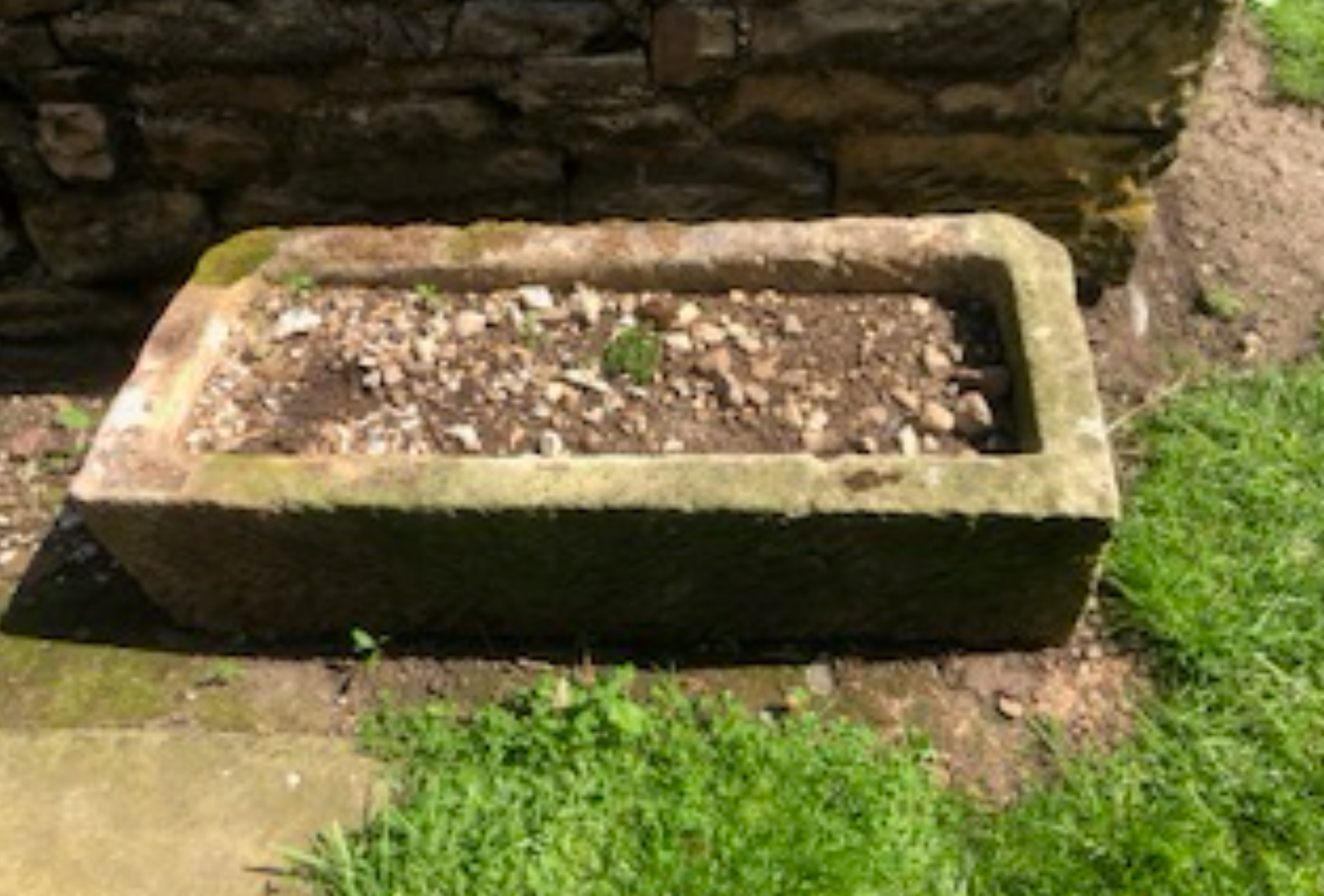
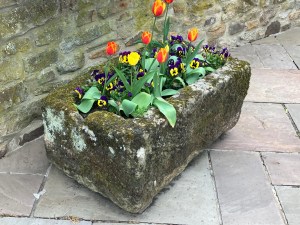
Some beautiful stone troughs that stand in the garden of a reader who lives near Durham

I received some wonderful images of stone troughs from a reader who says: “I enjoyed your article on stone troughs as I have been puzzling over how on earth they were made, by whom, and who paid/got rewarded for making them with no more than manual tools. We have six such troughs of various sizes…We brought one small one from Durham, the rest were on site when we came here, origins unknown.”

As the pictures show, they make super containers for plants, flowers and herbs and nestle naturally into their surroundings, far more at home than a modern equivalent, don’t you think?

I’ve also been contacted about the huge millstone on the moor above Kildale. Reader John Buckworth got in touch a few weeks ago because he had been pondering about the massive, unfinished stone for more than 50 years. It has been chiselled out on one side, but left unfinished on the other, and had been abandoned far from any mill that would have been its ultimate destination. Why was it never finished or moved?

Mick Garratt, who blogs about his travels around the North York Moors, has wondered for years about the baffling millstone. He contacted me to discuss his theories and hopes someone reading this might shed more light upon the mystery.

“I’ve been really curious about that unfinished millstone too! I’ve written about it a few times on my blog and speculated some of my thoughts, but I still have so many questions that haven’t been answered,” he says.

On his blog, Mick mentions that in the 18th century there were two mills in Kildale. The first started life as a fulling mill, a process which thickened and matted together wool fibres, but once the wool industry declined the mill was converted into a bleaching mill to whiten linen cloth. The other mill was ‘the first recorded corn mill in Cleveland’, with the earliest record dating it to 1262, and another stating that it ‘was totally destroyed by a great inundation in 1321’ (A History of the County of York North Riding, Volume 2, ed. William Page, 1923). The corn mill was located near Old Meggison waterfall on the River Leven, north of Kildale village, while the bleaching mill was further down the valley, just below the current ‘Bleach Mill Farm’. On the night of 21st July 1840, the corn mill was wiped out and the bleaching mill severely damaged when, according to Bulmer’s History and Directory of North Yorkshire (1890), ‘Two artificial lakes or fish ponds, which added greatly to the charms of this picturesque vale, unable to bear the pressure of the water which the flood poured into the ponds, were completely swept away, and very considerable damage done by the water.’

Mick suggests: “Maybe the millstone was destined for the corn mill in Kildale but the flood of 1840 caused its manufacture to be abandoned. Purely a guess of course.”

Mick has another suggestion relating to the quality of the stone. “The North York Moors Historic Environment Record dates it to ‘post medieval’, which is any time between 1540 and 1799. The bedrock at this location is recorded as ‘undifferentiated sandstone, siltstone and mudstone’, none of which make particularly good millstones, but probably good enough for grinding proggin (cattle food). At Rievaulx, French burrstone (a sturdy limestone) was used for grinding wheat for flour, and millstone grit from the Derbyshire Peaks for proggin. Our unfinished millstone points then to a poor quality…Perhaps that’s the reason it was abandoned…perhaps a flaw was found.”

Mick also describes the method of carving a stone of sufficient quality to grind fine flour: “Once the millstone is shaped and transported to the mill, it would have to be finally dressed. The miller would ensure the grinding face was flat by proving it with a staff smeared with red rudd (a soft red stone collected from riverbeds and often used to colour front steps of cottages). Next, furrows or grooves would have to be chiselled out using a mill bill or pick. Furrows must be of the correct depth with a straight and sloping side. They act as scissors with those on the top stone during the grinding.”

If any of you have many further suggestions concerning in our mysterious millstone, I’d love you to get in touch via my contact page (above right).

Do you have opinions, memories or ideas to share with me? Get in touch with me using the ‘Contact’ button on the top right.

This column appeared in the Darlington & Stockton Times on Friday 9th and the Ryedale Gazette and Herald on Wednesday 7th May 2025

Solid as a rock

The unfinished millstone near Kildale. You can clearly see the markings made by the mason. But why was it never finished? Picture by John Buckworth

What happens when you suddenly pay attention to something that has not been on your radar before? That thing starts popping up everywhere! A couple of weeks ago I mentioned I’d spotted an old stone trough in the garden of a house near York that piqued my attention. Since then, I have seen them all over the place, in gardens, on roadsides, on footpaths and in fields. Clearly, the stonemasons of North Yorkshire were kept very busy a few centuries ago.

I posed a few questions in the hope that a knowledgeable reader would help me flesh out the history of these troughs. Stan Willis is that knowledgeable reader: “I was fascinated to read your article on stone troughs…The trough would certainly have been cut from a solid piece of rock. To cut a rock that size out of a quarry would have been an achievement in itself. Then it would be to square up before any cutting out was done. It would be dragged to its intended site. The mason wouldn’t risk many weeks of chipping out before transport in case the finished article broke on the final journey. Pickaxes would not be used to cut out the trough…The main cutting would be done with a hammer and cold chisel, a laborious task which probably took several weeks.”

The one pictured with my column was between five and six feet long, about two to three feet wide and almost the same in depth. Stan informed me that such a piece would have been transported on wooden rollers pulled by horses, and that it was likely a drinking trough for large livestock.

He added: “I had the privilege to meet a man from Barnard Castle who probably cut out the last one in the area 50 years ago. He also ran a haulage business; I think is name was Marwood.”

Gurli Svith, who contacted me all the way from Denmark, reads my columns online. She said: “When I saw the picture of a trough, my first thought was ‘The Curse of the Golden Trough’, written by your father.” Gurli was referring to the 5th book in Dad’s Inspector Montague Pluke series, where the eccentric inspector’s hobby, between solving murders, is to seek out and catalogue long forgotten drinking troughs on the North York Moors.

Gurli continued “I do not know much about troughs (we had one at home when I was a child), but since I read your father’s book I notice every trough I see. On some occasions I just take a look at it or into it, and at other times I take photos. But from now on I am sure I will look at the pattern if I see one.”

My column also prompted John Buckworth to contact me on a related subject: “Your article on the stone trough reminded me of the huge millstone in the middle of the moor west of Kildale…I’ve visited it a few times but it is not on a public footpath and difficult to locate when the bracken is up. It is about seven feet in diameter and the top face is finished and ready to flip over and face off the other side. It would take a good team of horses to move it. The nearest water source would be Kildale I assume. I have known about it for 50+ years…I would love to know more about it.” John, like me, imagined that it would have taken the mason many hours of hacking the stone out, and yet the other side remains unfinished. Why, after all that hard work, did he not complete the job?

I wonder if there are any readers out there who know the stone and the history of the area who has any suggestions as to why that is the case? (Please note: I have deliberately not published the exact location due to the fact it is not on a public footpath and there are nesting game birds that should not be disturbed).

Last time I wrote about troughs, I also bet that my dad had a file on them. Sure enough, on my last trip home I found it. But I’ve now run out of space, so I will have to leave what I have discovered for another day.

Do you have opinions, memories or ideas to share with me? Get in touch with me using the ‘Contact’ button on the top right.

This column appeared in the Darlington & Stockton Times on Friday 25th and the Ryedale Gazette and Herald on Wednesday 23rd April 2025

No stone unturned

The huge stone trough I spotted in someone’s garden. How did it get there?
The deliberate diagonal markings of the mason’s tool can clearly be seen


Do you remember a while back I wrote about stone masons, and the incredible skills that went into creating the distinctive masonry that features in many homes on the North York Moors? Masons had their own particular way of marking, and the ‘posher’ homes often featured the more labour-intensive herringbone pattern, while more basic patterns were used for less fancy constructions.

I was reminded of those stone masons the other day when I came across a magnificent trough in the back garden of a home near York. I was so captivated by it that it distracted me from the job I was meant to be doing. Thankfully, the clients were interested in hearing what I knew about the markings on the trough. Until I turned up, they’d not considered much about its past and how it had got there.

What initially struck me was the size of the thing. It was between five and six feet long, and about two to three feet wide and the almost same in depth. The internal and external surfaces all featured the distinctive markings made by the stone mason’s tool in a uniform and deliberate diagonal pattern.

It appeared to have been formed out of a single piece of rock because I could not see any joins. I guessed the trough was at least a couple of hundred years old, maybe more, and we all wondered how this huge, heavy beast had got there, if indeed it had ever been transported from elsewhere. The owners said their house was at one time a farm, built in the 1700s, and so it is possible the trough has been in that spot in their garden for up to 300 years.

This is the point where I appeal to those among you who have grown up on ancient farmsteads, or who are familiar with the history of such troughs. I have some questions for you.

–        Would the trough have been built from a single piece of masonry?

–        If so, how long would it take to hew out all the stone to make such a trough?

–        I understand pickaxes were used. Is that true?

–        Would it have been built onsite? Or transported from elsewhere? If it was moved, how did they do it in the days before mechanisation?

–        This trough has no outlet for water to drain out, so what would it have been used for (It is very deep, so only suitable for big livestock, if indeed that’s what it actually is)?

–        Could it be anything other than an ancient water container for animals?

It is one of those occasions where I wish my dad was here, because I am certain he would have been able to answer all those questions. In fact, ancient horse troughs feature heavily in one of his series of books, the Inspector Montague Pluke collection. The eccentric inspector’s hobby, between solving murders, is to seek out and catalogue long forgotten drinking troughs on the North York Moors. I’m sure my dad would have done plenty of research into these often ignored but common features of the landscape. Next time I go home, I will be rifling through his old files!

Before I took over these columns eight years ago, I would have barely given the trough a second glance. But I have learned so much about the lives and traditions of our part of the world, thanks to having to sit down and write them each week, that I’ve found myself appreciating the world around me in a lot more depth. The history, folklore, traditions and skills of our wonderful neck of the woods mean so much more to me now. It really is a blessing, and I must not only thank my dad (for if it wasn’t for his passing, I would not be doing this), but also all of you who continue to read my columns, and who get in touch to help me solve my little mysteries. Your contributions play such an important role, for without them, much of this stuff would be forgotten. Who knows if the following generations will ever be interested, but unless we put our memories down in writing, they will be lost forever.

So, from me to you, please accept a great big THANK YOU!


Do you have opinions, memories or ideas to share with me? Get in touch with me using the ‘Contact’ button on the top right. 

This column appeared in the Darlington & Stockton Times on Friday 11th and the Ryedale Gazette and Herald on Wednesday 9th April 2025

To bag or not to bag?

I saw a sign hanging in a wooded area that read: ‘As you are so confident in the biodegradability of your used dog poo bag, please take it home to your own garden and hang it in your own tree. Thank you. From the wildlife.’

On the same day I had a request from a friend to discuss what is clearly a continuing and divisive problem, that of abandoned dog mess around popular walking routes. I did write about this topic some time ago, but clearly some dog owners are still upsetting others with their thoughtless actions. It is worth pointing out that many of the people who are upset are dog owners themselves, tired of being tarred with the same brush as the thoughtless and ignorant ones.

Am I alone in remembering that, as a child in the 1970s, it was my responsibility to watch out for doggy business on footpaths? If I trod in it, I was my fault for not paying attention to where I was putting my feet. The owner was not expected to pick it up, nor were they blamed for the fact that their pet decided to go to the toilet on the path. Dogs would be dogs.

Times changed once someone invented a special bag which you could use to pick up the poo, and then later, another invented dedicated bins in which to place them. Thankfully over time it became socially unacceptable to not pick up Fido’s dirty deposits.

But since then of course, we have become more aware of how polluting plastic bags are and how much damage they do to our water and land-dwelling wildlife, and to the habitats in which they dwell. As a result of this never-ending problem, a clever person then invented the biodegradable poo bag, which seemed to be the answer to all our problems. The guilt of sealing it inside a bag evaporated.

If only. As we all know, a solution to one problem usually creates another. The newish problem is that some dippy dog owners among us now dispose of their bulging bags by either tossing them into bushes or hanging them on trees. They think that they do no harm because the bag will degrade over time. Little matter to them that they take weeks or even months to do so. What an utterly selfish approach that is.

I don’t know about you, but on my walks, I like to admire the flora and fauna as nature intended, and not as a doggy-doo-doo dumping ground. Who on earth enjoys seeing a smelly bag dangling from a hawthorn like a bauble on Shrek’s Christmas tree? However annoying it is that your pooch chooses to perform early on your walk miles from a suitable bin, you chose to have a dog, so you still have to deal with it considerately. Lobbing it into the bushes, even in a biodegradable bag, is not acceptable. Some people declare that they plan to collect it on the return journey. Even if that is the case, it still means that A: other people have to walk past it. B: You might forget it. And C: Judging by how many I see abandoned, that’s a lie. It is more likely that you can’t be bothered to carry it.

There are occasions, though, where the ‘stick and flick’ method might be acceptable, and even preferable, to using bags. In areas where there is dense undergrowth, you are encouraged to use a stick to flick it away, out of sight where no-one is likely to step on it. That way it will happily fertilise the ground and erases the need to bag it and carry it. However, a quick look at the Forestry England and National Trust websites shows that their policies are still to bag it and either bin it or take it home. The reasoning is that certain livestock and animals can be poisoned through eating dog faeces and ingesting plastic, even if it is biodegradable.

So what is the answer? More bins around country car parks and walks, and signage clearly illustrating the preferred methods and locations for disposal would help. But I have a feeling this is a debate that will run and run.

I’d love to hear from you about your opinions, memories and ideas for columns. Use the ‘Contact’ button on the top right of this page to get in touch. This column appeared in the Darlington & Stockton Times on Friday 5th April and the Ryedale Gazette and Herald on Wednesday 3rd April 2024.