Stop all the clocks

IMG_6278
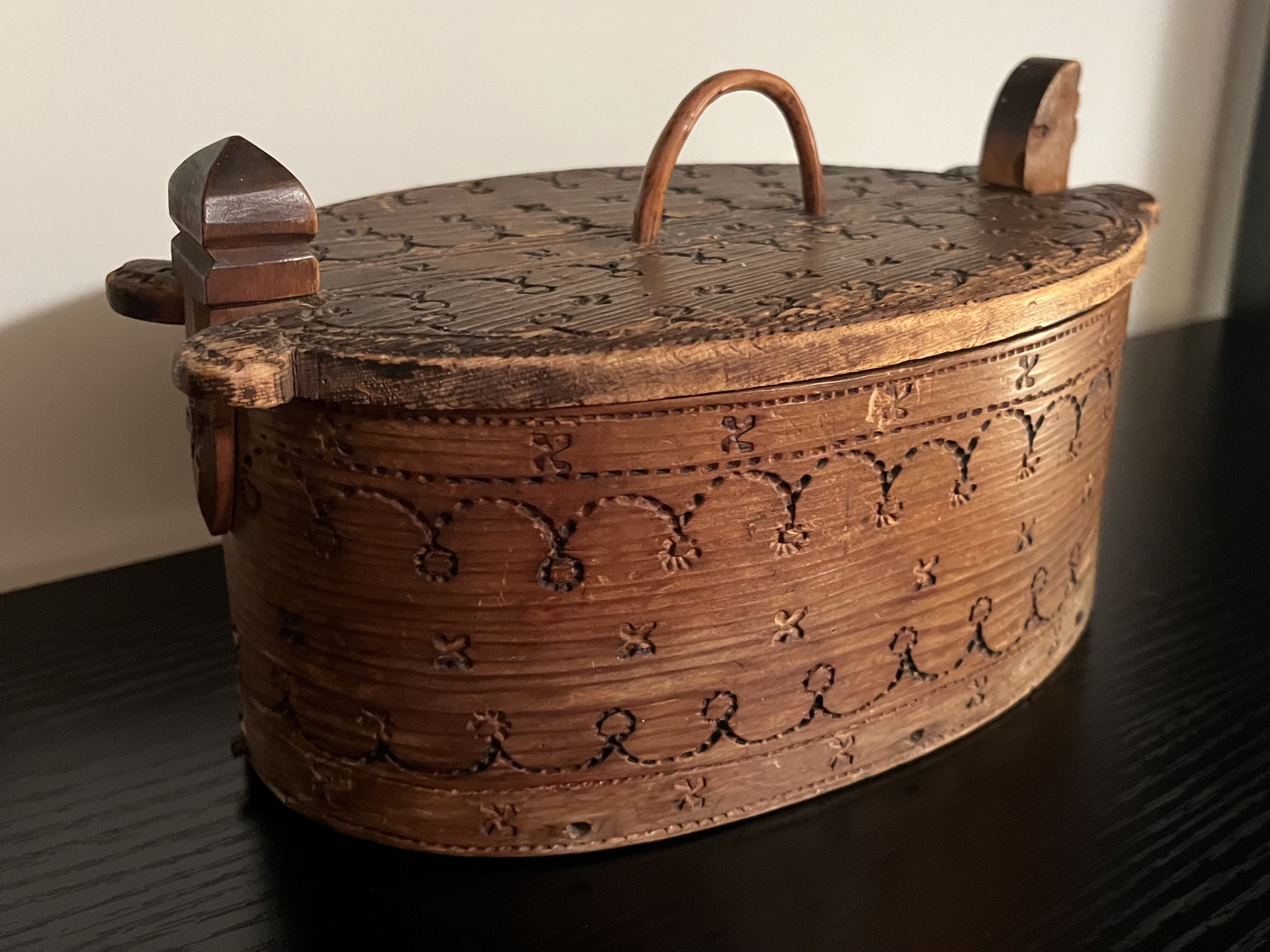
The hand-carved wooden box given to me by my grandad. It is very precious to me.
IMG_9505
Sandra’s 18th century long-case clock made by Northallerton’s Hugh Pannell. Will it find a new home?

IMG_9507

Back in August I wrote about 18th-century Northallerton clockmaker Hugh Pannell after being contacted by one of his descendants, David Severs. I’d been talking about the herringbone pattern that was commonly seen on the stones used to build moorland homes. David informed me that Pannell had used the same herringbone pattern to decorate his clocks and watches.

Following that, reader Sandra Parkerson has been in touch all the way from Arkansas, USA, because she has one of Pannell’s long-case clocks which needs to find a new home. She writes: “I have a grandfather clock that was made by Hugh Pannell. It has been in my family for way over two hundred years. It is in a beautiful walnut case. I am 80 now and want to move into a condominium so probably won’t have room for it…I do hate to part with it.”

She adds: “It is a brass dial with the herringbone pattern…It was running all my life, but when I got it we had carpet and never could get it levelled correctly. So, I assume with a good cleaning, it will work fine.”

I would not normally use this column as an antiques’ marketplace, but with the connection to Hugh Pannell and the herringbone pattern, and the fact that somehow my column has been read by someone all the way over in Arkansas, USA, I thought it appropriate to mention it. It would be lovely to pair up this noble clock with someone who would appreciate it as much as Sandra (Please note: I do not plan to advertise items for sale in future columns and suggest you try Christie’s (for valuable antiques) or eBay (for general tat)).

It does raise the question of what to do with precious family items that the following generation have no inclination to take on. About 25 years ago, my aunt was moving from a large home in North Yorkshire to a smaller one in Ireland. She could not take all her furniture with her and so offered me her beautiful antique mahogany dining table with six upholstered chairs. I willingly accepted it but then found that once it was installed in my pokey dining room, it took up all the space and was really too posh for the likes of us, a working family with young boisterous boys. It was impractical and unappreciated, and I ended up reluctantly selling it for a song when we moved house again. I was told by the auctioneer that large pieces of dark wood furniture had fallen out of favour and they’d struggle to get rid of it. It was heartbreaking to see such a beautifully crafted piece of fine furniture go for so little money.

One thing I treasure greatly is a small oval wooden box that my grandad gave me. He was a skilled wood worker, and I have a number of his beautiful hand-turned bowls. This box is what an antiques expert might call ‘naïve’, in that it is clearly handmade and hand-carved, with a series of little flowers and garlands etched into its surface. Nothing is straight or symmetrical, which is precisely why I love it so much. Someone has taken a lot of time and effort to chisel out all the tiny decorative elements which makes it so unique and personal. They have also coaxed the wood into this oval shape, with tiny little dowel joints holding the base in place. I have no idea of its age, whether my grandad himself made it, or whether it was passed down to him from his own ancestors. I do know he kept bits and bobs for fishing inside it, like hooks and flies, and when I was little I spotted it on a bench in his workshop and said how much I liked it. And so my kind grandad gave it to me. Unfortunately, my youth meant I didn’t ask any pertinent questions about its origin and therefore its history is lost in the mists of time.

Because this is just a small thing, I am fairly confident that one of my boys will happily hang on to it when I take my final leap into the great unknown, but the question is, which one?

If you have more than one child to inherit your precious stuff, how do you decide who gets what?

Do you have opinions, memories or ideas to share with me? Get in touch with me via the ‘Contact’ tab at the top right of this page.

This column appeared in the Darlington & Stockton Times on Friday 27th Dec and the Ryedale Gazette and Herald on Wednesday 18th Dec 2024

Will Satan come down the chimney?


IMG_0901
Will Satan or Santa come down your chimney this Christmas?


I had a message from a reader that made me titter. Jean McKendree said: “Regarding your column on spelling errors that get people’s backs up; mine (though I also have to laugh when I see it) is when people write, “Please bare with me,” to which I reply, “I would really rather not.”

This brings to mind those awkward occasions when you fail to properly proofread an email or text message and send something that has an embarrassing mistake in it. With more and more people switching to messaging rather than speaking on the phone, I’m sure it happens a lot, especially since the dawn of ‘autocorrect’, a function which decides what it thinks you want to say, but which is often some way away from your intentions.

A famous one came from a father who texted his son to say, “Your mum and I are going to Divorce next month”. The shocked son was relieved when he quickly received a follow-up text to say “DISNEY! I meant DISNEY!”

One that I experienced myself came on the first anniversary of the death of my friend Ian’s mum. We were on a walk in beautiful Givendale in the Yorkshire Wolds, her favourite place, when a text came through from a close friend. “Thinking of your dead mum,” it read.

“That’s a bit blunt,” said Ian, puzzled, because this friend was normally so gracious and polite. Before he could react any further, the phone rang, and I could hear her apologising desperately down the phone: “DEAR MUM!” she cried, “I meant your DEAR MUM!” We both found it completely hilarious, and were very grateful to her, because for the rest of what would have been a rather sad day, we kept collapsing into fits of giggles.

Other corkers blamed on autocorrect include: “You have my full condoms” (condolences), “Your dog Dexter is dead” (ready), “Sent with love and fried shrimp” (friendship), “Okay donkey” (okey-dokey).

Thankfully, most messaging services now offer you the opportunity to edit your messages after you have sent them, so you do have a chance to correct them if something erroneous sneaks through (although you have to be really quick to catch them before the receiver reads them).

At the moment, there is a fair amount of debate around the topic of AI (Artificial Intelligence) and whether we should be worried about its power or embrace it. Clearly it is being used in both negative and positive ways, but I did love the story about Daisy, the ‘AI Granny’, who has been tripping up ruthless phone scammers who target the old and vulnerable to steal their money. She is driving them crazy with her daft questions, meandering monologues and delaying tactics. She is a joint enterprise between O2 and YouTube ‘scambaiter’ Jim Browning and is on duty 24/7 intercepting fraudulent calls and taking revenge on people who thoroughly deserve it (give her a Google if you want to see her in action).

On the AI theme, I did see one message that read: “Just tried to type ‘probably’ and autocorrect turned it into ‘peanut uterus’. Don’t think AI is taking over anytime soon.”

It has just dawned on me that this is my last column before Christmas. I love seeing all the lights, decorations, and trees going up to mark the festive season, and when the days are short and the weather is as miserable, it lifts the spirits no end. But it is a time of mixed feelings for many. In 2017 we were bracing ourselves for our first Christmas without my dad, when my sister was unexpectedly diagnosed with cancer. Christmas took second place to hospital visits, and she died in the first week of January 2018. Seven years on, I have found happiness in Christmas once more, but that experience means I am mindful of those who are in hospital, those missing lost loved ones, or those spending Christmas with no-one at all.

So with that in mind, I am sending my thoughts and good wishes to you all at this very special time of year, and will leave you with a festive autocorrect classic:

“Taking the kids to see Satan now.”

“Well, I know they’re not perfect but that’s a bit harsh.”

“SANTA!! I MEAN SANTA!”

Do you have opinions, memories or ideas to share with me? Get in touch with me via the ‘Contact’ tab at the top right of this page.

This column appeared in the Darlington & Stockton Times on Friday 20th Dec and the Ryedale Gazette and Herald on Wednesday 24th Dec 2024

From loss to love

image1
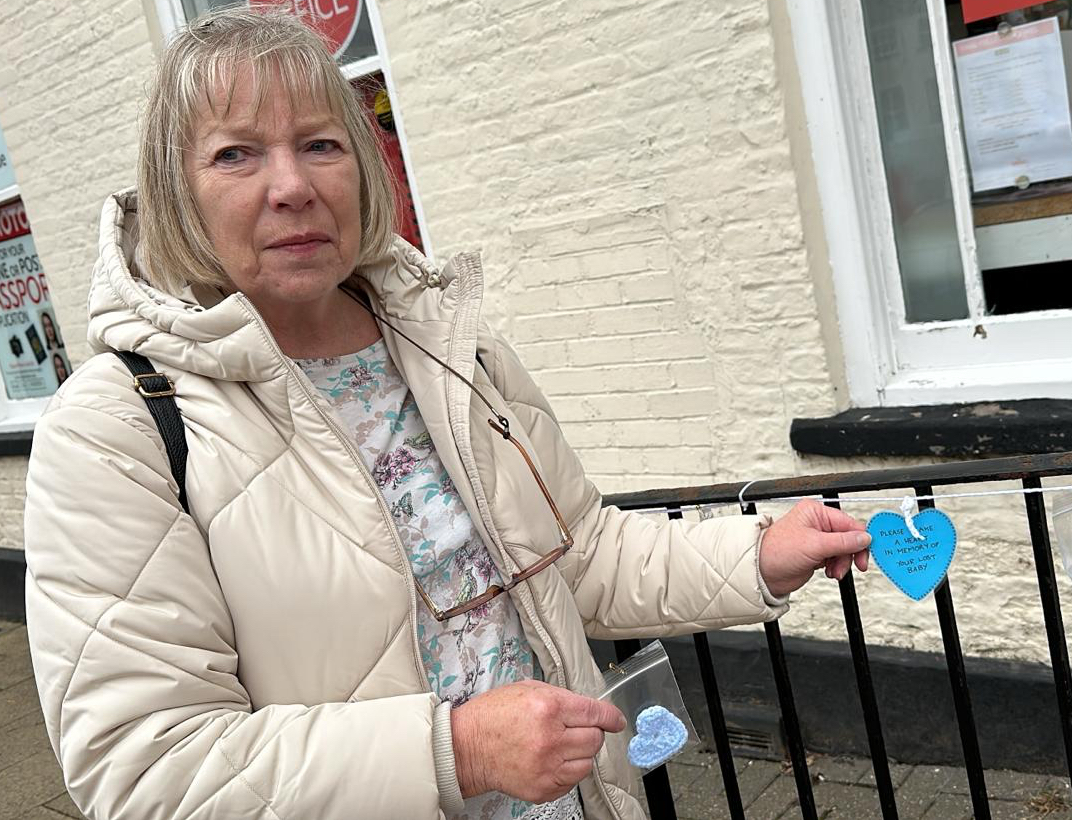
Carol Hepplestone with some hearts of remembrance outside Bedale Post Office during Baby Loss Awareness Week in October


image0
The work of yarnbombers in Bedale during Baby Loss Awareness Week in October
118178277
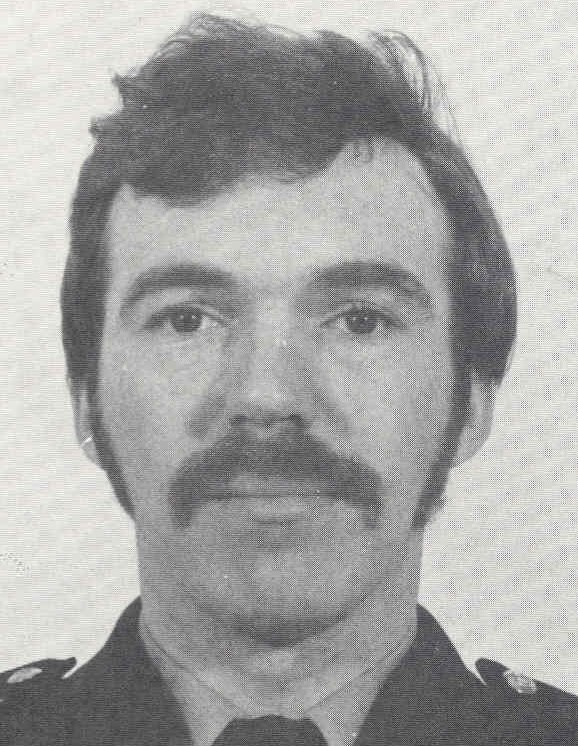
PC David Haigh, who showed such kindness to Carole Hepplestone after the loss of her baby, Leigh. PC Haigh was murdered by Barry Prudom in 1982.

Occasionally I give talks where I often discuss my dad’s role in the Barry Prudom case. Dad was Press Officer for North Yorkshire Police when Prudom murdered Constable David Haigh near Harrogate in 1982. While on the run, he also killed Sergeant David Winter in Malton and pensioner George Luckett in Nottinghamshire. George’s wife Sylvia was also shot but miraculously survived.

After one such talk, I was approached by Carol Hepplestone who told me a very moving story and, with her permission, I am sharing it with you today.

On 3rd November 1981, Carol gave birth to her second baby, Leigh, at Carlton Lodge Maternity Home in Harrogate. Unfortunately, Leigh passed away very suddenly at six days old on 9th November 1981. What prompted Carol to approach me was the fact that Constable David Haigh played a significant role in her life around that time. “Your talk brought it all back to me,” she said.

Carol explained that after losing Leigh, not only did she have to go through the trauma of a postmortem to find out why he had died, but there was an agonisingly long wait for the results. When they finally did come, the doctor delivering them did a terrible job. “He said they couldn’t find a reason why he had haemorrhaged so they were just going to put it down to a cot death…He said I could go away and have more children. It was quite dismissive and there was no offer of any follow up care.”

The whole experience left Carol bereft and on one particular night she decided she needed some time to herself and headed out without telling anyone where she was going. Her panicked husband phoned the police fearing she was vulnerable and may be in danger. “David Haigh was with my husband when I rang home and the phone was passed to him. In a calm way he asked where I was and told me he would come and collect me, which he did and took me home. He then sat us down and acted as a mediator/councillor/listener between us.”

Afterwards, Constable Haigh visited regularly to see how they were. “He was a father of three small boys at the time and could empathise… He went above and beyond his duties as a police officer.”

It was only a week after his last visit that she learned that he had been killed. It hit her hard, and her heart broke for his wife and boys. Sadly, Carol’s marriage did not survive but as time went on, she grew stronger and reached a stage where she felt she could help other women going though what she had. She joined her local baby bereavement support group, Sands.

“It’s a place where we could talk, listen and support couples,” she says. “We liaised with hospital staff on how to treat bereaved parents. We introduced the idea of memory boxes. We raised funds for a dedicated room for these parents. We also raised funds for a Sands memorial statue which stands in Stonefall Cemetery, Harrogate. I recently visited the cemetery and was astounded to see the volume of graves, plaques and memorials dedicated to our lost babies.”

Carol has two other sons, Jonathan, born in 1979, and Ben, her ‘rainbow’ baby, born in 1983 (a rainbow baby is one who is born following miscarriage, stillbirth or after a sibling has died). On what would have been Leigh’s 40th birthday, Jonathan completed a challenge to raise funds for Sands, running four miles every four hours for 48 hours.

Carol was walking through Bedale last month and was pleasantly surprised to see the town was decorated by yarnbombers to mark Baby Loss Awareness Week (9th -15th October), something that would never have happened back in the 1980s: “How encouraging to see how things have come on over the years, instead of very little being spoken about it like in the past,” she says.

At 71, Carol has now found happiness with a new partner and remains eternally grateful for the kindness shown by David Haigh at a time she most needed it. She hopes that today, with more awareness and organisations offering support after the loss of a baby, no-one will feel let down in the way she was when Leigh died.

“No matter how many years go by, you never forget.”

Do you have opinions, memories or ideas to share with me? Get in touch with me via the ‘Contact’ tab at the top right of this page.

This column appeared in the Darlington & Stockton Times on Friday 29th Nov and the Ryedale Gazette and Herald on Wednesday 27th Nov 2024

Does anyone love a festive birthday?

IMG_1540
Photographer Bella Bradford  and her daughter Heidi, who both have New Year birthdays

My column about festive birthdays sparked some interesting feedback, with most declaring that they don’t like it and would prefer to have a birthday at a different time of year away from Christmas.

Claire Dunston-Elliot was born on 20th December and says: “I hate joint Christmas/birthday cards or presents. Sometimes people forget my birthday because of Christmas, or I get birthday gifts wrapped in Christmas paper.” She also points out that it’s often tricky to find places to eat that do a normal menu not just Christmas food. “I would love a summer birthday,” she says.

Sarah Robinson’s birthday is on 20th December too and she tries to be as organised as possible, making sure that all the Christmas presents are bought and wrapped before the 20th and that ‘Christmas stops for just a day’ so she can enjoy her birthday to the full. She adds: “I did a joint 50th in the summer with my husband and it was much better! I find I am mellowing with this the older I become, and I’m just glad family and friends are around to call by.”

That’s a valid sentiment which is shared by Rob Fawcett, whose birthday falls on 16th December: “I guess it would be nice to have it in July, but I’m getting to that age when I don’t give a monkey’s when it is…just as long as they keep coming!”

Jenny Jagger, who celebrates on 29th December, declares: “It’s rubbish. I made sure I had my babies in the spring!” She also tried celebrating in the summer, but people tended to forget her birthday altogether.

Katie Westmorland says: “I’m a December birthday and I don’t like it. Christmas cards come before birthday cards in the post!”

Clare Proctor adds: “We happily have all our birthdays in the summer, so we can have shared celebrations, but when the girls (both August) were small we made sure to celebrate their individual birthdays so they both got equal attention. I remember a friend’s daughter’s birthday being 2nd January and it often got forgotten because everyone was exhausted from the festive season!”

Michael Kilmartin’s daughter Rose was born on Boxing Day 2014: “For me this is a pain because Christmas has to be finished or put on the back burner. When at home, I used to look forward to a second roast dinner or a visit to a working men’s club for a pint and a bag of crisps. Rose now chooses what she would like to eat and would agree that some of her celebration gets mixed up with Christmas. Presents seem to be smaller too. My wife believes Rose should have a half birthday but this creates issues with her brother and her friends who don’t know what to buy her etc. I will never, however, forget dinner on Boxing Day 2014.” I bet he won’t!

Elise Dawson says: “Our Jack’s is on 16th December. We always put decorations up on the first weekend of December and he doesn’t seem bothered. I’m sure he will as he gets older though.”

I think Elise has a point in thinking that young children don’t mind having a festive birthday, but as they get older they begin to notice things they might be missing out on.

Photographer Bella Bradford has a double whammy, with herself and her five-year-old daughter Heidi both having New Year birthdays. “Having a birthday on the 30th December has always been a weird one. I’ve never truly been able to celebrate with a big group of people on the day itself because people want a quieter day before the New Year’s party after a busy festive period. Luckily Heidi’s birthday is on New Year’s Eve and there is always a party so she will always be around people to celebrate.”

John Walker seems to be the lone adult voice who doesn’t mind having a festive birthday. His falls on New Year’s Eve and he says: “I used to get invited round to the next-door neighbours’ to celebrate. It’s a great time to have a birthday, just about everyone worldwide celebrates it!”

And the obliging neighbour who would always throw a party on New Year’s Eve? Well, that was me!

Are there any of you out there who enjoy having a festive birthday? If so, do get in touch!

Contact me via my webpage at countrymansdaughter.com.

This column appeared in the Darlington & Stockton Times on Friday 16th and the Ryedale Gazette and Herald on Wednesday 14th Feb 2024.

The giving spirit of Christmas

IMG_0888
Even if  Christmas has become too commercial I still want to get a luxurious  present!


I can’t quite believe that this is my last column before Christmas, and as I write, I am wondering what to wear for my annual works night out tonight. We usually end up having a great time, thanks to the free-flowing wine and cocktails, and end the night embarrassing ourselves with some energetic mum/dad dancing in a local bar. It was American stand-up comedian and actress Phyllis Diller who said: “What I hate about office Christmas parties is looking for a job the next day.” I’m hoping I will still have mine in the morning!

I’m sure these sentiments are familiar to many of you, and I’d be interested to hear your cringe-worthy party stories. If you do have any, don’t keep them to yourself but share them with us by getting in touch via the contact details at the bottom of this column (of course, anonymity is guaranteed!).

Good old Les Dawson bemoaned the fact that his family didn’t have much money with which to celebrate: “We were so poor that we couldn’t afford a turkey. We gave the budgie chest expanders. It was five a side to a cracker.”

This time of year can be stressful, especially with having to buy presents for a lot of people, all with different personalities and tastes. There is a stereotype that suggests men are not very good at buying gifts for their other halves. Now I know it is a sweeping generalisation, but stereotypes are stereotypes because they are, on the whole, true. One year, my mum was less than enamoured by the fact that my dad had bought her some pans, and my ex-husband would buy me practical things for the house, like towels, or crockery. It’s not exactly romantic and is an indication of how they see us – as their domestic home helps rather than the love of their lives.

If, until you began to read this, you were considering buying your dearest love pans or crockery, I suggest you take this advice from English comedian Jeff Green: “Women do not consider the following to be gifts: diet books, cooking utensils, cleaning products, petrol for the car, anything from the Pound Shop”. I would add to that that if you want to make sure that you and your partner are still talking to each other once the presents have been unwrapped, then you can’t go far wrong with jewellery (made from precious metals and stones and not from the supermarket), expensive perfume or after shave (not the sort you get from the garage shop), or fancy toiletries (again, not from the supermarket). If you’re struggling, go to your local Boots or department store, follow the waft of perfume to the luxury scent counter and ask the assistant for advice. Believe you me, most of us would prefer one thing of high quality than a whole drawerful of cheap tat. And by high quality, I don’t mean a Dyson vacuum cleaner. Your gift has to leave the recipient with the feeling that they are being spoiled and, more importantly, that you have thought about what they might actually like to receive rather than what you think will make the job of cleaning the house easier.

I’m not the sort of person who will let on how disappointed I am when I get a rubbish present but I think I was justified on what I now call My Worst Christmas Ever. A receipt for a pair of expensive earrings had been carelessly left on the desk in our study weeks before Christmas, and I’d pretended I hadn’t seen it, awaiting the big day with eager anticipation. For once, I thought, I was not getting something useful, but something luxurious and just for me.

Unfortunately, the earrings ended up under another woman’s tree.

Of course, there are those who complain that the true meaning of Christmas has been lost, a victim to commercialism, overindulgence and greed. And I do think it does us good to remember how it all began, and who we should be thinking about at this time of year. With that in mind, I’m going to wish you happiness and joy over the coming festive period, and will give my last words to someone with a great deal more wisdom than me, Bart Simpson:

“Aren’t we forgetting the true meaning of Christmas – the birth of Santa?”

Contact me via my webpage at countrymansdaughter.com, or email gazette@gazetteherald.co.uk.

This column appeared in the Darlington & Stockton Times on Friday 22nd and the Ryedale Gazette and Herald on Wednesday 20th December 2023.

Out on a limb for leeches

242322A0-0D4B-4DD7-ABEA-008FC8E9CF1E
Dad loved his garden pond. Here he is feeding the fish a couple of years ago.

This column appeared in the Darlington & Stockton Times on 2nd February 2018, & the Gazette & Herald on 31st January 2018.

I went through the ‘frogs and snails and puppy dogs tales’ phase with each one of my three boys when they were at primary school. They were fascinated by ‘minibeasts’, which was a new word to me, but referred to what we would have called creepy crawlies. They had no squeamishness about picking up spiders, worms, slugs, snails and wood lice and presenting them to me with great glee.

Even more excitement was to be had whenever we came across a pond, as there were more fascinating minibeasts to found in and around it. When my oldest was a toddler, we lived in house with a pond in the garden and I can’t forget the noise the frogs used to make, and the undulating surface of the water, during mating season. The females are attracted to the males with the loudest croak, hence the cacophony! They also lay up to 2000 eggs, so soon our pond would be teeming with tadpoles, although not all would make it to adulthood, and those that did risked a messy confrontation with the lawnmower if they ventured far from the water.

My brother was also fascinated with such creatures in his youth, and in his February 4th 1978 column, Dad recalls the occasion when he built his own pond. Finding that a hole in the ground lined with polythene was no good, my brother resorted to using an old, Belfast sink, sunk into the rockery outside Dad’s study window. He filled it with with plants and pond life gathered from a local disused swimming pool and nearby lakes. He was very proud that soon his family of great crested newts had started breeding. He wouldn’t have known that 40 years later, if he disturbed the habitat of a great crested newt, he’d face up to six months in prison and an unlimited fine!

Alongside newts, frogs, sticklebacks and minnows, he also unwittingly rehomed a number of freshwater leeches, thankfully a small variety which were harmless to humans.

In medieval times, doctors were called ‘leeches’ due to their custom of treating all manner of ailment by bleeding their patients with the sluglike bloodsuckers. For many centuries, it has been one of the most effective treatments for a number of reasons, and this medical practice continues to this day. There is a farm in Wales which breeds medicinal leeches for this purpose, which is known as hirudotherapy (from the Latin name for these leeches, hirudo medicinalis). As well as supplying the NHS, the company sends them all over the world for use in surgery. The leech, which is about three and half inches long, is particularly effective in treating areas of poor circulation, especially in parts of the body with delicate soft tissue, for example when surgeons are trying to repair or reattach a severely injured limb. They clean up the wound by removing the clotted blood that is inhibiting blood flow, and then encourage circulation to restart.

It is the mechanics of mouth of the leech, a curious biological triumph, which makes it so effective for medical treatment. It has a circular, overlapping lip, and then three jaws, shaped a bit like the Mercedes-Benz logo, each with a row of 100 tiny teeth, perfect for making clean incisions into the skin at exactly the right depth. As they bite, they secrete a local anaesthetic, making the bite painless, alongside another substance, known as a vasodilator, which stimulates blood flow. Once the leech has filled its boots with blood, it then simply drops off to digest it. However, it leaves behind two important chemicals called hirudin and calin, which prevent further clotting and continue to stimulate blood flow for up to 48 hours after the leech has dropped off, which is so important when when it comes to success in treating these kinds of injuries. Although it all sounds a bit gruesome, it is one of nature’s amazing accomplishments, far more effective than many other medicinal treatments, and in fact the leeches only consume a relatively small amount of blood before they become full, around 15ml.

Incidentally, trials have shown that the anti-inflammatory and anaesthetic properties of leech saliva have been shown to be effective in treating pain and tenderness in the joints of people suffering conditions such as osteoarthritis. Vets are also finding them useful during surgical procedures on animals.

Now my question is, how would you feel with a leech let loose on your injured limb?
(Sources: biopharm-leeches.com, guysandstthomas.nhs.uk).

The Mystery of the Disappearing Chestnuts

F9A9518C-92CE-4D9B-9E1C-45A8A175B392
Marmalade the cat


555EB19F-21C0-46F1-B7E0-2A2067E9A7CD
Sweet chestnuts

This column appeared in the Darlington & Stockton Times on 19th January 2018, & the Gazette & Herald on 17th January 2018. 

You may remember that in my column from the Gazette & Herald on 6th September 2017 (‘Dad’s swift actions stop a catastrophe’) and the D&S Times from 8th September 2017 (‘Saved from catastrophe by Dad’s swift action’) that I talked about the various family cats, both tame and feral, that lived in and around my childhood home.

Dad recounts a lovely story about our longest-surviving cat, Marmalade, in his January 21st 1978 column. She had wandered into our garden as a very young stray and never left, becoming a much-loved part of the family. She had come from a nearby farm, but the farmer had no interest in the cats that frequented his hay barn and was more than happy when they took up residence elsewhere.

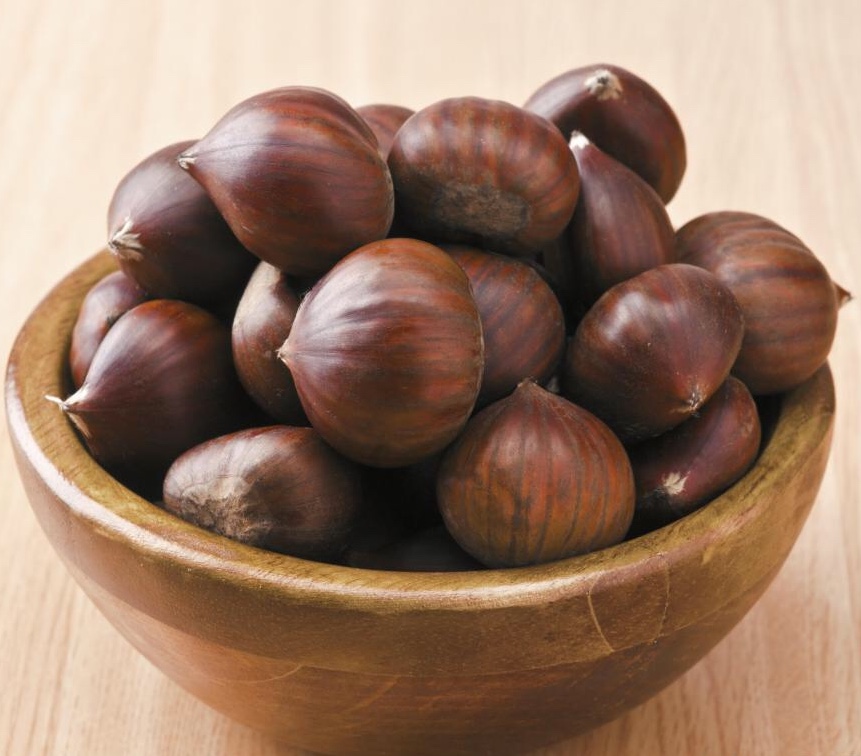
Mum and Dad had been stumped by the mystery of the disappearing chestnuts from the windowsill. What was a full bowl a few days earlier, was now no more than half full, and no-one confessed to having eaten any.

Then one day, Dad saw the cat jump on to the ledge and scoop out a chestnut with her paw, which then fell to the ground. She leapt after it in an uncharacteristically energetic way, and chased it across the floor, flicking it up into the air and batting it from paw to paw, as she would had she caught a mouse. Once the chestnut had disappeared under the furniture, she went back again for another one. What was it about the chestnut that ignited this new obsession? Dad had no idea, and my own searches have shed no light on it.

It brings to mind the effect of catnip, often used to scent pet toys. Catnip is a plant from the nepeta, or catmint, genus in the Lamiaceae family, and there are many varieties. In an article by the appropriately-named Kat Arney on the Royal Society of Chemistry website (www.chemistryworld.com), she explains that catnip contains a chemical called nepetalactone, which in cats induces behaviour similar to a person having taken drugs. They act with languid abandon, brushing their bodies against the leaves or rolling around among the stems. If they chew or eat it, they soon become what one might call ‘out of it’. For us humans, the plant can be infused to make herbal tea, and in times gone by small doses were used as a mild sedative. It is not recommended to be taken in large quantities, even though hopeful hippies gave it a go in search of a cheap high. All they ended up with was a painful headache and an upset stomach.

Catmint is a lovely garden plant, but to avoid delirious kitties flattening your borders, it is recommended that you place a small crop of nepeta cataria, the most potent catnip, in a place where you don’t mind them being mauled by frolicking felines, and then they will ignore the other milder varieties you have planted in pride of place. I have no idea if this distraction tactic works, and would be delighted if any readers can tell me!

After Marmalade arrived, she was soon followed by her sister Eric (my brother chose this name. He was outnumbered by females of both the human and feline variety, which might explain why!).

Eric remained feral, and we could never get close enough to tame her. After she had been with us for about a year, she produced a litter of kittens. We’d known she was pregnant and, due to her sudden change in appearance, that she had given birth, but we couldn’t find her litter anywhere. Then, on Christmas Eve 1977, she produced her own feline nativity scene in a very prominent position near our back door. Of course when we found the kittens, we instantly fell in love, and they were named (again courtesy of my brother) Alfred, Rodney (both girls) and Jackson (a boy).

But Eric would never be able to live indoors, and so Dad found the little family a cosy place in our disused henhouse, ensuring they had plenty of straw to keep them warm. We carried the kittens up to the henhouse ourselves, and lured Eric with some cat food on a spoon. She stayed there for about a week, before bringing her kittens back down to the back door on New Year’s Eve. So we repeated the process again, and this time she stayed. The young kittens thrived, and although they never became household pets, they became very much a part of our family history.

One less Christmas stress

187BAD10-0245-40D1-A2CE-016FC50E81D5
My dad Peter Walker heading towards my house to celebrate Christmas on a snowy December 25th in 2010.

This column appeared in the Darlington & Stockton Times on 15th December 2017, & the Gazette & Herald on 13th December 2017.

As a mother of three children and host to family at Christmas, I often had so much to do that one year I decided to put sending cards at the bottom of the priority list. Each year leading up to this decision, I would envision an evening where I’d be sitting cozily by the fire, a glass of mulled wine on the side and Christmas music gently wafting in the background as I lingered over meaningful festive sentiments to express to friends near and far.

But that imagined evening would never materialise. Instead I’d end up at the last minute furiously scribbling the same short bland message in each one, race to our post office to queue for ages under its horrible fluorescent lights, before gasping incredulously at the ever-increasing cost of the stamps.

So I relegated the chore to the bottom of the pile, and of course, it never got done. Amazingly, my friends didn’t disown me, so the following year, I did the same, until eventually I stopped thinking about it altogether. Now, I don’t post any at all except to hand-deliver a few to people I see regularly. Some might see it as a sad diminishing of a well-loved tradition, but I’m just glad to have one less thing to stress about on my festive ‘to-do’ list.

That’s not to say I don’t enjoy receiving them, and am very happy for people who want to carry on the tradition to do so, just as long as they don’t expect one from me. Nowadays, it is so easy to share your good wishes through social media that sending cards is less necessary.

When I was a child, only posh or rich people sent fancy cards worth keeping to turn into gift cards for the following year (Yes, I actually do that!). The rest of us were content with sending those you bought in a box of 50 for a couple of quid, and extravagances such as glitter, embossing and cards thick enough to stay upright were few and far between.

In his column from 11 December 1976, Dad mentions a splendid example from one such posh friend which featured a coach and horses galloping through the snow.

He says: ‘It all looks so cosy and romantic, but in truth it was far from the case. After one coach trip, Queen Elizabeth I confided to the French ambassador that she was unable to sit down for several days.’

That was when coaches had no suspension to speak of, and it must have been incredibly uncomfortable on our appallingly uneven, muddy and pot-holed roads. Springs were introduced in 1754, and by 1775 there were 400 commercial coaches operating, with one running from Leeds to London in 39 hours. As they travelled at an average speed of eight miles an hour, they would have stopped at the various coaching inns along the route to rest, change horses and take on refreshments (and no doubt to rub ointment into sore bottoms!).

The late 1700s became known as the ‘golden era of coaching’ until they were superseded by the ascension of the railways early the following century. One of the most famous coaches was the Wellington, which travelled a route between Newcastle and London. One of its drivers was a Northallerton man called Thomas Layfield, who was reputed to be one of the finest, and a favourite of the Duke of Northumberland. But he realised the days of coaches had come and gone when he set off one day from Newcastle, stopping at Darlington, Northallerton and Thirsk, without collecting a single passenger. By 1830, the railways had become firmly established in our region, reaching speeds of thirty miles an hour.

I’d like to say thank you to readers Frank Boocock and John Woolway who spotted an error in an earlier column (One potato, two potatoes, three potatoes…splat! November 17th). They pointed out that the Lion Inn, Blakey Ridge, is not the highest point in the North York Moors National Park, but that that honour goes to Urra Moor which stands at 1489 feet above sea level (454 metres). The pub lies at a mere 1325 feet (404 metres). Perhaps someone can tell me if instead it’s the highest point accessible by road?

It’s one of those questions that had Dad still been here, he’d have known the answer to immediately. Clearly, I still have a way to go!

Who put the snail in the mail?

63F85F17-D774-4E2C-B843-29C8C998BA32
The post box near Eden Camp, Malton, with its adapted slot to deter hungry snails

This column appeared in the Darlington & Stockton Times on 8th December 2017, & the Gazette & Herald on 6th December 2017

Now that it’s December, I’ve lifted my embargo on all things Christmas. I no longer shut my eyes when the festive John Lewis TV advert comes on and am less irritated by Christmas music. Talking of the John Lewis ad, hasn’t that become such a ‘thing’? Although they’d been making cutesy adverts for years, Monty the Penguin really captured our imaginations in 2014. Set to Tom Odell’s tender version of the Beatles’ Real Love, it was a perfect storm of fluffy snowflakes, twinkling lights and festive coziness enveloping the heartwarming story at its centre. When the little boy found a longed-for friend for Monty, it had the nation reaching for the tissues before we hurried out to the shops to stock up on cuddly Monty’s for our little ones. Every year, we await the new John Lewis advert with great anticipation. What a marketing triumph it has been, and other retailers must look on with envy. Most have tried to emulate it, but it is still John Lewis that sets the bar for Christmas TV advertising.

I love Christmas, but hate the way the build-up has crept forward over the years, diluting the excitement while increasing the stress. I blame the supermarkets who put up ‘Back to School’ displays before the children have even broken up for the summer holidays, and then when they go back in September, out comes the Christmas stock. And no sooner have you finished singing Auld Lang Syne than the Easter Eggs are on the shelves. The supermarkets say its down to consumer demand, but I don’t believe it. I don’t know anyone who buys their Easter eggs in January unless they are posting them to Outer Mongolia via snail mail.

Talking of snail mail, do you know when that term first began to be used? Although it had been heard sporadically before, it is American tech entrepreneur Jim Rutt who is credited with being the first to use the term when comparing the speed of surface mail to email.

I know for certain it wasn’t in common use when Dad wrote his column on 4th December 1976, as he would never have passed up the opportunity for a pun when naming this story, which he instead called ‘Snails in the post’.

Apparently, a recent decision to stop postal collections on a Sunday lay behind a new problem. According to Dad, some rural areas became plagued with the arrival of snails in their pillar boxes over the weekends.

Instead of heading for their usual feeding grounds, namely our vegetable patches and flowerbeds, they would slither up and into the postbox and feast upon the missives within. A snail’s tongue comprises thousands of rasp-like teeth, which they used to gnaw through the defenceless piles of post.

But what was making the mail so attractive to these ghastly gastrpods? It turned out that the gum used to seal the envelopes contained something akin to snail catnip. As the last collection was lunchtime on a Saturday, the snails had all weekend to sniff out the letters and feast to their hearts’ content. Come Monday morning, the poor postman would open the box to find it full of replete snails lounging on beds of mutilated mail.

Despite Dad highlighting the problem 41 years ago, it still hasn’t been solved. I’ve found articles in the national press from 2001, 2009, 2012, 2014 and 2016 (most of whom by then, of course, were using the ‘snail mail’ pun in their headlines!). The most recent was a case near Eden Camp, Malton, in April this year.

Various deterrents have been implemented, including leaving slug pellets in the pillar box and adapting the posting slot by either fitting bristles to it, or by reducing its size. So far, no-one has come up with a definitive solution, and it leaves a challenge for all you ingenious thinkers out there.

As I was only nine when Sunday collections ceased, I’d forgotten all about them, but Dad was pretty miffed, especially as it was the first time since the reign of Charles I that this country didn’t have a Sunday mail collection. So miffed, in fact, that he included in his column the address where you could send a note of protest to the Post Office.

He advised people to send their letters before the weekend, or risk it becoming a snail’s breakfast.


An unforgettable moment of inspiration

EA219DB4-9685-4A16-B086-99424B95EF21
Our garden was full of flowers. Here’s me, far left, with my sisters Janet and Tricia and brother Andrew

498961B5-5AEF-4CF0-9E4B-AB1CFA376DE7
The same day in 1970 with Dad, Mum and Nana (Dad’s mum)

856B8D8F-E9D5-4E5F-928E-0EA7A4FFF4D9
Dad’s study, and the now silent keyboard, where I first had the idea to taken on his columns

This column appeared in the Darlington & Stockton Times on 24th November 2017, & the Gazette & Herald on 22nd November 2017

One of the most satisfying things about writing these columns, apart from the obvious joy of reading my dad’s words from long ago, is that every week I learn something new, be it about the countryside, North Yorkshire, customs, folklore, history, or special days in the calendar to name a few of the topics he covered. It is expanding my knowledge in a way that never would have happened under different circumstances. All those months ago, when we were facing the most awful of times, I never imagined I would be where I am now.

I had absolutely no thoughts about taking on Dad’s columns. But I very clearly remember the moment when it struck me how sad it would be that something he had loyally written for so many years would come to an end. It came when I was staying with my mum, and along with my siblings we were sharing Dad’s care. He’d moved into a room downstairs with a surgical bed and all the paraphernalia that was needed to look after him. By now, his health was deteriorating rapidly, and we knew the inevitable was a matter of days away.

I’d gone into my dad’s study for something and there lying across his now silent computer keyboard was his latest column, which my mum had cut from the newspaper to keep. I was taken aback, as his happy, healthy smiling face beamed out at me from the paper, while in reality, he lay gravely ill at the other end of the corridor. The contrast was stark, and hit me like a blow to the stomach. When you’re in the midst of caring for someone, you’re so busy, and so taken up with the practicalities of the care, that you can easily block out, perhaps intentionally, what is actually happening to them. Seeing him in that picture, reading his words, written as if there was nothing at all wrong, made it abundantly clear to me that his readers would have no idea what was about to happen.

And so I determined that I needed to do something to ensure the columns would not be forgotten. I knew Dad had written them for many years, but at the time, was unaware of the story behind him taking them on from Major Jack-Fairfax Blakeborough. It was only later, with help from my family, that I found out that the Major had written the column for 54 years before his death on January 1st 1976, and that he had been a significant influence on my dad becoming a writer and countryside expert.

This weekend, my brother revealed that he’d found a book given by the Major to my dad when he was aged just 10. The book was called ‘Lizzie Leckonby’ and was a collection of stories from the Whitby Gazette about the exploits of moorswoman Lizzie and her wayward contemporaries. It seems this little book was a source of huge inspiration to Dad, and the seeds that were to become his Constable series (which inspired the ITV drama Heartbeat) must have been sown through reading that book.

This morning, when I sat down to read his column from November 20th 1976, I could picture my dad gazing towards the garden as I read his words about an old Yorkshire saying that suggested a bad winter was due when flowers bloom in late autumn: “As I look from my study window,” he says, “I wonder how much truth there is in this ancient piece of weather lore. Nasturtiums are in full colour, and smaller flowers adorn the rockeries and borders of our cottage garden. I’ve a primrose in bloom, the hydrangea is glowing pink, roses are out and one rose-bud is about to burst into colour. If this argument holds good, it seems we are in for a rough time.”

He wasn’t to know then, but the old Yorkshire folklore was spot on, as I discovered when I looked it up. The website netweather.tv has a history of British winters, stretching right back to the 17th century. It says that heavy snow fell in early December 1976, and then in January 1977 there were drifts of up to six feet! It continued to be heavy, particularly in the north-east, into February too.

So take a look out of the windows into your garden at your flowering plants. Are we in for a cruel winter?