Snippets from the past all sewn up


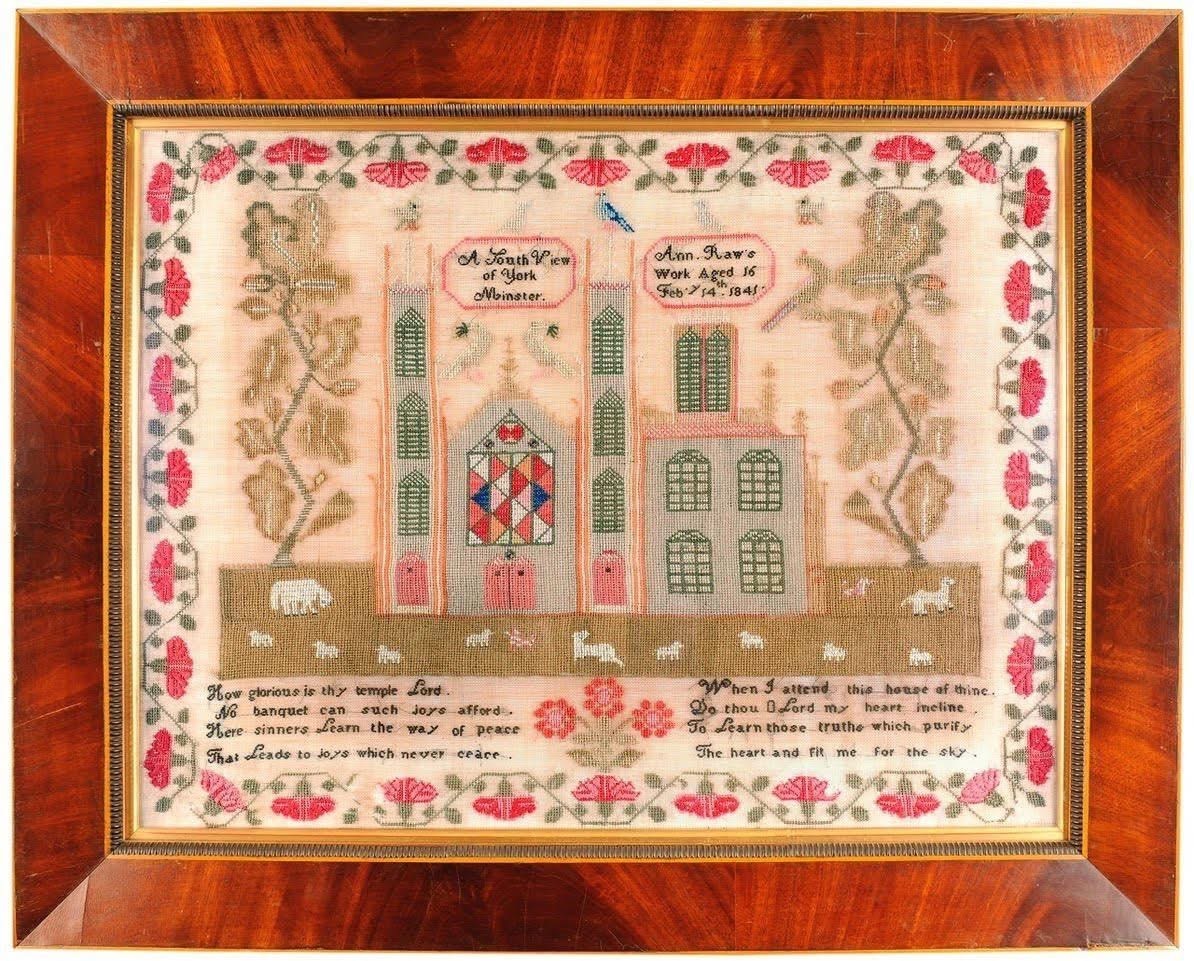
A needlework sampler showing a view of York Minster created in 1841 by 16-year-old Ann Raw. She included a depiction of a stained glass window and grazing sheep and cattle next to the building. Picture by Witney Antiques.

Another family mystery has landed in my inbox after a reader came across a series of columns I wrote in late 2022/early 2023 about a set of three needlework samplers that had been hanging in my family kitchen for years.


Two were done by ancestors on my mum’s side of the family while the third was by a little girl called Hannah Raw, who was only nine when she created it in 1835, but about whom we knew nothing.


Following some expert internet sleuthing by my wonderful readers, over the following weeks and months we managed to flesh out much of Hannah’s story, discovering that by the age of 13 she was an orphan, but later married a John Hall, had two children, and even later became a grandmother. She died in 1890 aged 64 and was buried at St Thomas’ Church, Glaisdale. I was ultimately able to find her grave and go and pay my respects.


Sarah Duce, who is based in Limerick, Ireland, got in touch: “I am interested in a school of samplers based around Lastingham. My great aunt Hannah Stonehouse…in 1808 completed a sampler which is quite rare apparently and recently sold to the States for a tidy sum because it depicted the Napoleonic Wars.”


Sarah’s family came originally from Lastingham, but moved first to Hartlepool then to Scunthorpe. Sarah moved to Ireland 30 years ago and is trying to piece together her North Yorkshire roots.


She goes on to explain that Hannah Stonehouse’s sampler was one of four about which she is trying to find out more. “I believe one might have been by a Mary Wilson who was born around 1791 in Hartoft, and wondered if there might have been some sort of connection…I believe my Great Grandma x5, Sarah Harding (nee Smith), may have been the teacher of these girls…She was schoolmistress of Lastingham following the death of her schoolmaster husband from consumption at the young age of 30.”


It was not unusual for widows to take on the work of their late husbands to earn a living to support themselves and their children. Sarah had three little ones, the youngest just two weeks old, and was still the schoolmistress at the age 80, as revealed in her entry on the 1841 census.


Sarah wondered if Hannah Raw was one of the girls sent to the Lastingham sewing school. She explains that her 5x great grandmother Sarah would have had no formal education and was likely illiterate at the time of her marriage  “…so must have brushed up her skills quickly, but maybe sewing was the backbone of her teachings…I also saw during my research…a newspaper of 1997 illustrating a 1841 sampler by Ann Raw, age 16, entitled the ‘South View of the Minster’…I wonder if there might be a connection there?”


I cannot answer that question, and Lastingham is a good 15 miles away from where Hannah Raw lived in the Lealholm area. But perhaps a family history sleuth reading this might be able to help, as they did before when finding out such useful information about Hannah. Raw is a common name, and I would imagine that to produce an image of that view of York Minster in 1841, Ann would have had to have sat in front of it to know what it looked like. That would possibly mean she would have been living in York, which in the 19th century was a long journey from the North York Moors. She was a similar age to Hannah Raw, so perhaps they were cousins?


I found an image of the sampler in question on a Facebook page run by Witney Antiques, an Oxfordshire-based specialist in embroidery and samplers. They describe it as follows:


‘This sampler, which shows a view of York Minster, was completed by 16-year-old Ann Raw on 14th February 1841. Her handling of the cathedral’s stained glass window is incredibly charming, as is the depiction of grazing sheep and cattle in the grass next to the building.’


Sarah ended her message by saying: “You never know where little snippets of info can come from, so you have to keep asking!”


You do indeed, Sarah, and I am hoping that someone reading this might just have the key to the little snippets we are looking for.

Do you have opinions, memories or ideas to share with me? Get in touch with me using the ‘Contact’ button on the top right.

This column appeared in the Darlington & Stockton Times on Friday 13th and the Ryedale Gazette and Herald on Wednesday 11th March 2026
Homing in on Hamer


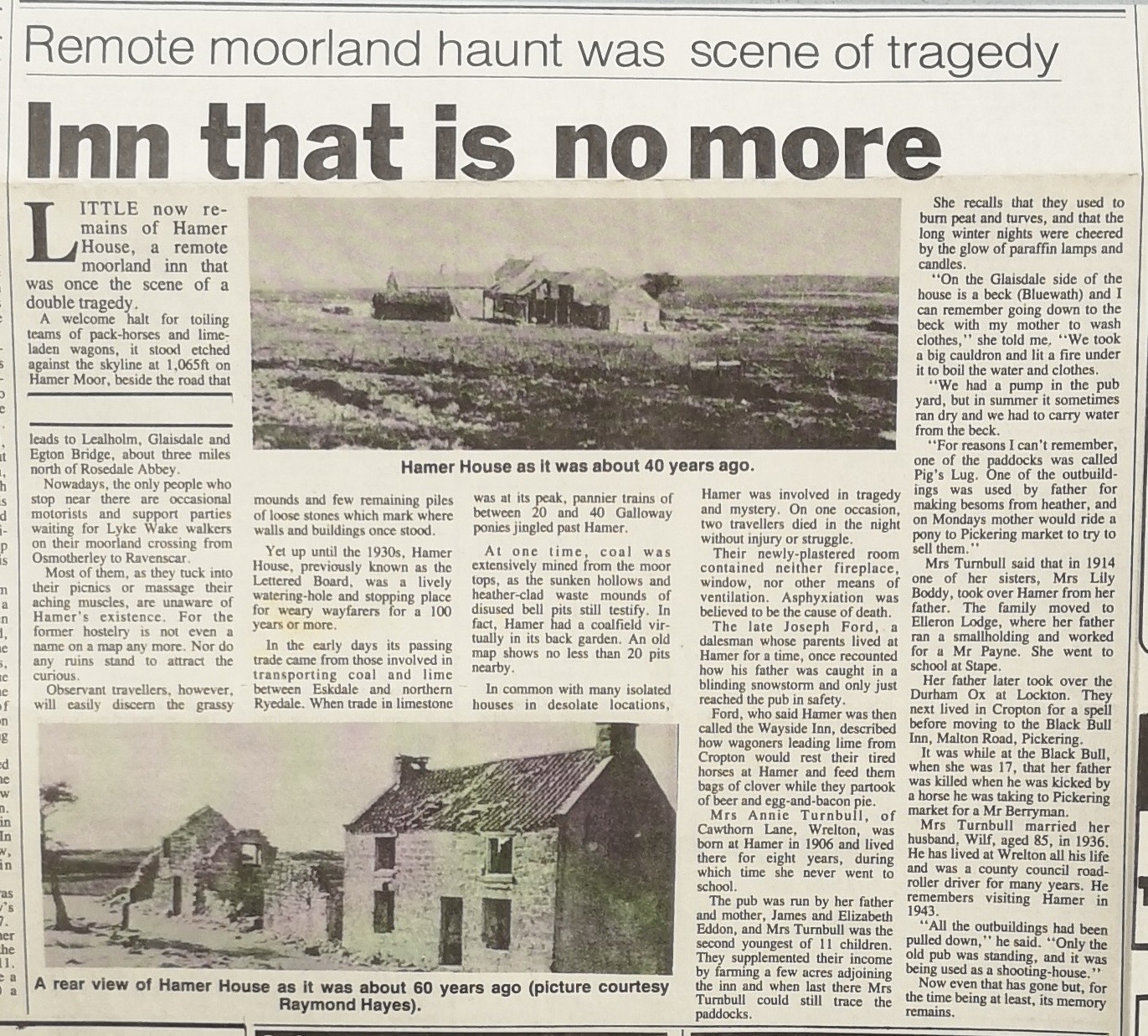
The 1989 Malton Gazette and Herald article about Hamer House sent to me by Howard Campion. Do you know who wrote it?

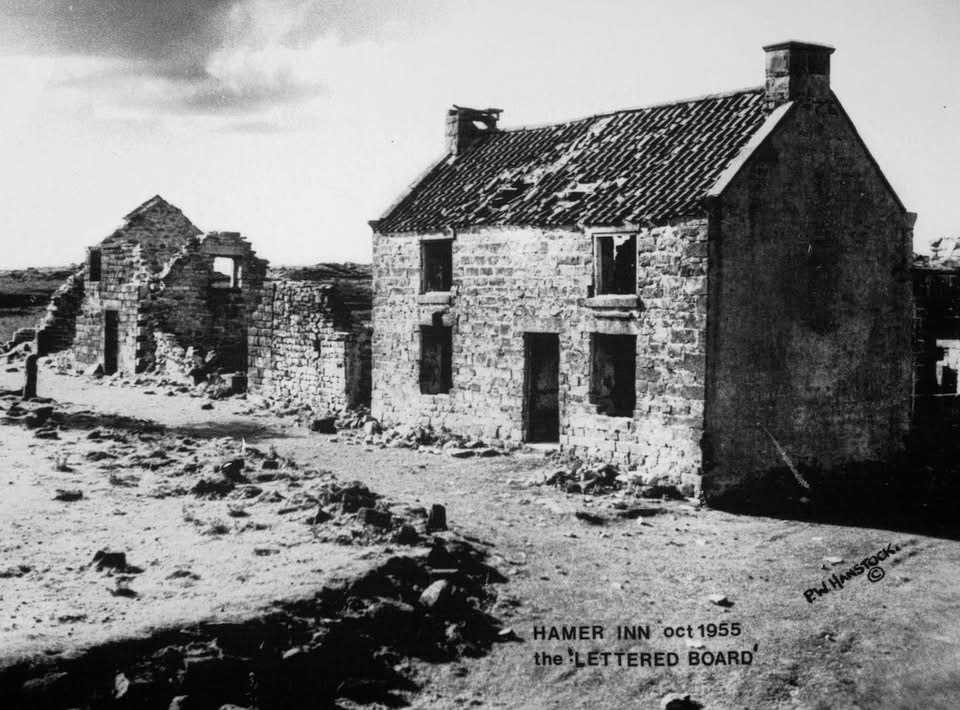
A couple of weeks ago I mentioned that reader Howard Campion was sending me a copy of a 1989 article that talked about Hamer Inn that once stood on the road between Glaisdale and Rosedale Abbey on the North York Moors. Also known as the Lettered Board, all that now remains is a pile of stones on an expanse of smooth grass surrounded by heather. It used to be a thriving inn providing rest and sustenance for weary travellers and workers from the coal mines operating nearby.


Howard wondered if the article had been written by my dad (there was no writer’s name attached to it) and now that I have had a chance to read it, I think not. The writing style is a little different and because my dad was not an employed ‘reporter’ as such, he rarely conducted interviews like those that are featured. Unless the writer recognises his work and gets in touch, we might never know! I have attached a picture of said article, so that you can see it for yourself. It is a fascinating piece!


The article features first-hand accounts from those who remember it before it became derelict, which is highly useful when putting together a historical record. What I found really interesting is that this inn of many names had yet another, according to writer Joseph Ford, who was born there while his father, also called Joseph, was licensee in the mid to late 1800s. Joseph Ford junior, who died in 1944, was the great great uncle of David Ford, the reader who first contacted me, setting off this whole chain of Hamer-related columns.


The article states: ‘Ford, who said Hamer was then called the Wayside Inn, described how wagoners leading lime from Cropton would rest their tired horses at Hamer and feed them bags of clover while they partook of beer and egg-and-bacon pie.’


A lady called Annie Turnbull was born at Hamer in 1906, after the Ford family had left. ‘The pub was run by her father and mother, James and Elizabeth Eddon, and Mrs Turnbull was the second youngest of 11 children. They supplemented their income by farming a few acres adjoining the inn, and when last there, Mrs Turnbull could still trace the paddocks.’


Annie remembered: “On the Glaisdale side of the house is a beck (Bluewath) and I can remember going down to the beck with my mother to wash clothes. We took a big cauldron and lit a fire under it to boil the water and clothes.


“We had a pump in the pub yard but in summer it ran dry and we had to carry water from the beck. For reasons I can’t remember, one of the paddocks was called Pig’s Lug. One of the outbuildings was used by my father for making besoms from heather, and on Mondays, Mother would ride a pony to Pickering market to try to sell them.”


Annie’s sister, Lily Boddy, took over from her father in 1914, and it remained an inn for some time thereafter. Wilf Turnbull, Annie’s husband, recalled visiting Hamer in 1943: “All the outbuildings had been pulled down. Only the old pub was still standing and it was being used as a shooting house.”


Terry Ashby has also contacted me about Hamer: “At school in the early 1960s I discovered the delights of the one-inch OS maps and having moved to the North York Moors, I bought ‘Sheet 86 Redcar & Whitby’. There was Hamer House clearly marked. I wondered what it was and I probably pestered my dad to drive there to have a look. There wasn’t much left of it even then. I found out later that it had been an inn and later still I found it mentioned in an historical novel. I can’t remember the title or the author. I find these old ruins fascinating and quite poignant as they always pose questions about who lived there and when and why they were abandoned.”


Does anyone know the novel Terry refers to? And don’t forget, David Ford is still  searching for a photo of the inn before it became derelict. Do any of you have one lurking at the back of a drawer somewhere? Maybe it’s time to have a clear out. You never know what you might find!


Do you have opinions, memories or ideas to share with me? Get in touch with me using the ‘Contact’ button on the top right.

This column appeared in the Darlington & Stockton Times on Friday 13th and the Ryedale Gazette and Herald on Wednesday 11th Feb 2026

Hamer Home a family story

A 1955 photo of the ruins of Hamer Inn, previously known as the Lettered Board. David Ford’s ancestors lived there. Do you have a photo of the inn before it became derelict? Photo: P.W.Hanstock


I received an interesting message from reader David Ford: “I’ve just spotted a picture of the ruins of Hamer House on Facebook…My great grandfather Robert Ford was born there, along with several of his siblings. He emigrated to the USA as a young man seeking a better life, and tried gold mining. However he did not find it any easier over there and returned to Glaisdale. His brother Joseph wrote a book about life and times in Danby Dale…I would like a photo of Hamer when it was open as an inn.”

Although I’d heard of Hamer House, I didn’t know much about it. The first article that came up on Google was a piece written 15 years ago by none other than my dad. It jogged a memory of seeing it in one of his books and sure enough, on my very own bookshelf was a copy of Dad’s ‘Murders & Mysteries From The North York Moors’ with a whole section on Hamer.

Dad wrote: “It is believed the licence of this old inn continued until 1929, although it did survive as a private house into the 1930s. The last family living there was called Boddy, and I recall the old house still standing when I cycled past as a child.”

The building had a colourful past, and no doubt makes David’s family history research intriguing. The reason the inn was featured in the ‘Murders’ book is because there are three separate tales of deaths associated with it.

The inn stood at one of the highest parts of the moors, on the road between Glaisdale and Rosedale Abbey at the point where an old monk’s trod, or path, crossed it (where the Lyke Wake Walk traverses that road now). All that remains is a pile of stones, and yet the inn’s ghostly silhouette can be detected in the form of a wide expanse of smooth grass amongst the rough heather, hinting at what was once there – a busy, thriving coaching inn providing rest, warmth and succour for weary travellers. There were active coal mines nearby which drew men to the moors for work, and Eskdale farmers would send wagons of coal to supply places like Cropton, Hutton-le-Hole and Kirkbymoorside.

Although known by many as Hamer Inn, its previous name was the Lettered Board, and my dad believes it had been there for around three centuries. He talks about David’s ancestors in his book:

‘Hamer’s role as an inn declined after 1870, the year a local writer called Joseph Ford was born at the remote house. His father was landlord and I have a copy of a licensing application dated 1858 in which the liquor licence of the Lettered Board was transferred to Joseph Senior.

‘The younger Joseph Ford, who died in 1944, has left behind some stories of Hamer and they provide a vivid picture of the windswept and snowbound inn. He relates how elderly travelling salesmen would trek onto these moors, even in the height of winter, to sell trinkets.’

One sad story concerns a cork-seller who supplied local inn keepers and farmers, and Joseph Ford’s mother knew him well. He succumbed to the ferocious winter weather, and his skeleton was found much later not far from the Lettered Board Inn, his basket of corks lying nearby enabling his body to be identified.

The three cases of deaths at the inn include that of two apparently healthy guests retiring to bed, only to be found dead the next day with no apparent wounds or obvious cause. They may have been poisoned by noxious fumes resulting from recent replastering of the room, but no-one was ever sure.

The second case was a licensee who killed his wife, and quickly moved elsewhere in the dale. He was never prosecuted or imprisoned. The third story tells of a fight breaking out in the bar, and a man being bludgeoned to death with a poker.

Dad writes: “The only remnant of that tale was a heavy iron poker that was chained to the hearth to ensure this sort of thing never happened again. That poker was still there within the memory of my grandparents, but I never saw it.”

Can any of you reading this help David Ford track down a picture of Hamer Inn before it became derelict?

Do you have opinions, memories or ideas to share with me? Get in touch with me using the ‘Contact’ button on the top right.

This column appeared in the Darlington & Stockton Times on Friday 16th and the Ryedale Gazette and Herald on Wednesday 14th Jan 2026

Building family foundations

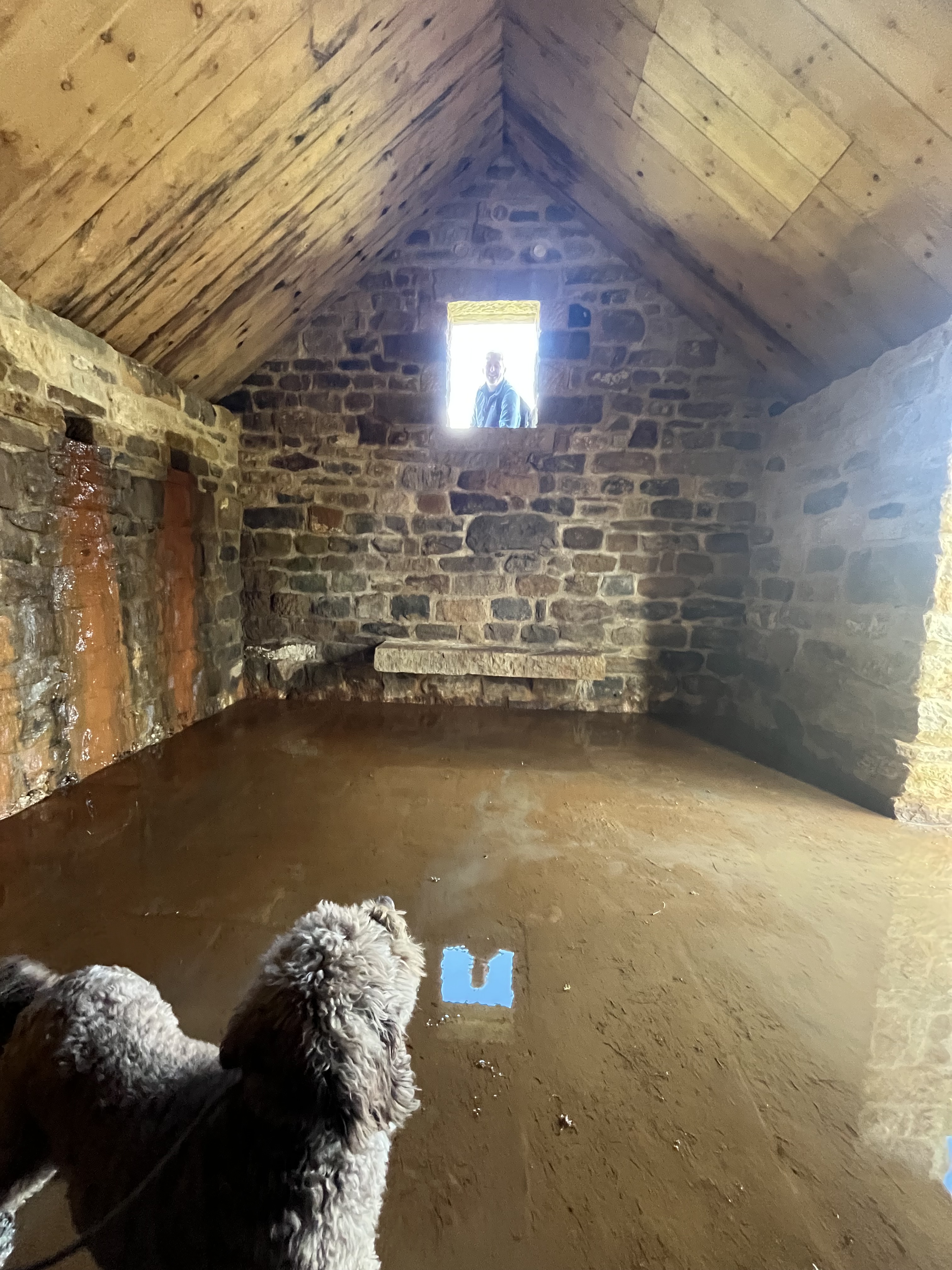
One of the buildings on the Hanging Stones Walk in Rosedale that Nick Harland helped to construct (that’s my friend Dave in the window, looking down at his confused dog Frank).
Andrew Goldsworthy gave Nick Harland this signed book with a hand-drawn picture of the Hanging Stones


I’ve been contacted by readers Ian and Catherine Wilson who had a great titbit about middle names. They wrote: “We would like to add an important advantage to ancestors having maiden names as middle names. When doing family history research the inclusion of a maiden name has often helped to confirm a link.”

I had never thought about that aspect before. They add: “McLaren is an ancestral name that is extremely common in Perthshire not helped by William passing through the generations. Thankfully one generation included Sorley as a middle name and it unlocked our research.”

It makes me think of all the hard work put in by my dad’s brother, Charles Walker, who spent huge amounts of time compiling our family tree. His side of the family had the common name of Walker, and my mum’s side had the even more common Smith. Trying to trace the correct members to create an accurate family tree was extremely tricky, especially when there were first names that were very popular among families of the North York Moors with the same surname. There were dozens of Johns, Henrys and Williams, and Mary’s, Hannahs and Helens too. Uncle Charles’ job was made slightly easier because some of the descendants were given maternal maiden names for middle names. My mum’s eldest brother, was Henry Harland Smith after his paternal grandmother, and her second brother was John Lacy Smith, from his mum’s maiden name. The name Lacy was passed down the next two generations to Henry’s son Richard, and on to his son Charles.

I don’t think this tradition was followed on my dad’s side of the family though, and tracing the Walker line did prove tricky as Uncle Charles wrote back in 2004: “I have a number of possible Walkers living around Lingdale/Skinningrove/Hinderwell. Can Peter remember any names of brothers/sisters of our Grandfather Walker?” He then lists a number of names of possible ancestors. Clearly, trying to sort out who was who was quite the task.

Funnily enough, I was contacted not long ago by Nick Harland, and we discussed whether we might be related through my mum’s side. As mentioned above, her paternal grandmother was a Harland – Edith Richardson Harland. Edith’s parents were William and Ann Harland, and as you might have guessed from Edith’s middle name, Ann’s maiden name was Richardson. Are you keeping up? This is just one tiny segment of our family tree, and I can imagine how mind-boggling it must be when you go down the rabbit hole of trying to piece it all together.

Nick and I didn’t know off the top of our heads if we were related, but that was not the reason he was getting in touch. He wrote: “My father Dennis Harland has often spoken about your dad over the years and I when I first started work, Mary Walker (my dad’s mother) often got me to do little jobs for her as she lived opposite the Glaisdale Institute…my dad’s parents used to live in Brinkburn, the house above where Mary used to live, opposite the institute.”

Nick has a link to the Andrew Goldsworthy ‘Hanging Stones Walk’ in Rosedale about which I wrote a couple of years ago. “All the ten Andy Goldsworthy projects which have been put together have been done with the help of our building firm,” he said.

The Hanging Stones Walk is an amazing feat of creativity, engineering and construction so I am hoping some time to chat more to Nick so he can explain how they did what they did. It is really an art project, rather than simply a walk, and is sponsored by the Ross Foundation (an organisation that supports initiatives related to art, community, sport, music and education) which commissioned sculptor Andrew Goldsworthy, famous for his spectacular pieces of land art. He transformed tumbling down agricultural buildings into amazing pieces that blend seamlessly into their moorland surroundings.

Nick finished by saying: “Another thing you touched on a while ago was about making stone troughs. I make a lot of stone troughs, up to five foot long. There is an easy way and a hard way but it is good fun seeing one completed.”

I think if Nick and I meet, we will have an awful lot to talk about!

Do you have opinions, memories or ideas to share with me? Get in touch with me using the ‘Contact’ button on the top right.

This column appeared in the Darlington & Stockton Times on Friday 19th and the Ryedale Gazette and Herald on Wednesday 17th Dec 2025

The tragic lives of some famous names

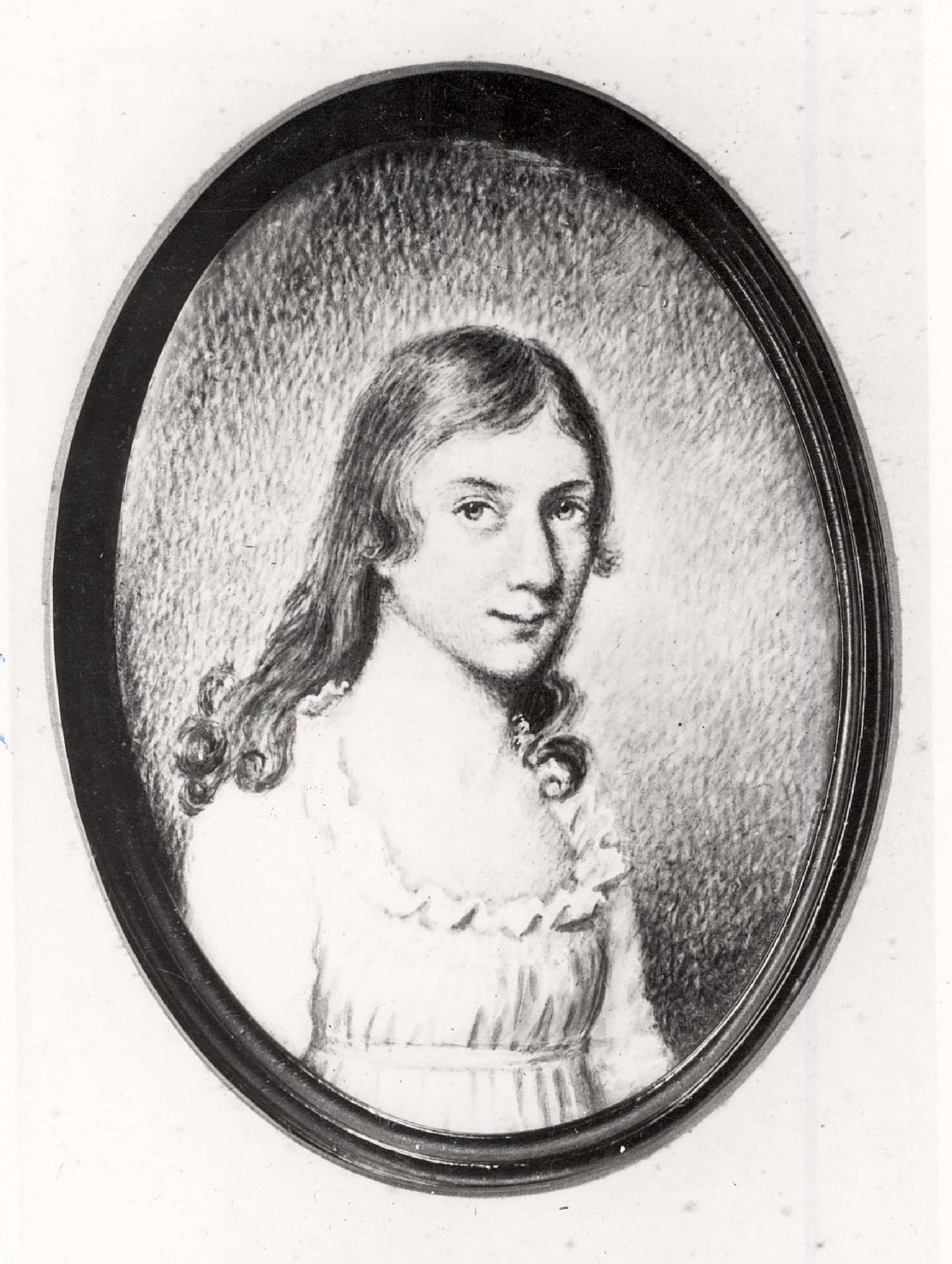
Maria Branwell, who fell in love at first sight with the Reverend Patrick Brontë and went on to give birth to six children, including the famous literary sisters. Picture used courtesy of the Brontë Society

A few more people have contacted me about nominative determinism, where a person ends up in a job that reflects their name. Strangely, these all seem to be in the medical or related fields.

Anne-Marie Samuel used to work with a Dr Hurt, while Janet Pearce worked alongside a Nurse Nurse! And LJ Stevens says: “There was a probate registrar in the Ipswich District Probate Registry called Mr De’Ath.” You really couldn’t make it up, could you?

On using maiden names as middle names, Gareth Child says: “I was very nearly given my grandmother’s maiden name as a forename. Luckily for me my mother didn’t want her son to be called Crowther.”

Gareth is a registrar and explains: “At work in the register office I do see relatives’ surnames given to babies as middle names. It’s not frequent, but it is in double figures every year. Also, a growing trend among married women who take their husband’s name is for them to keep their maiden name as a middle name after marriage.”

By that, he means officially adopting their maiden name as a middle name, rather than creating a double-barrelled surname.

He adds: “We have the record of every birth, marriage and death in York since 1837, and it’s a fascinating living record of the city.”

Gareth contacted me again a little later with this piece of trivia: “A buried memory has been niggling away at me for a few days and it finally surfaced today. Branwell Brontë was given that name because it was his mother’s maiden name.”

As I am sure you know, Branwell was the brother of Charlotte, Emily and Anne Brontë, but Gareth’s comment made me more curious about the people in that famous family about whom we hear much less, such as their mother, Maria. And the more I learn, the more tragedy I discover.

Maria Branwell was born in Penzance, Cornwall in 1783, but lost both parents within a year of each other. In 1812, she decided to go and stay with her Aunt Jane in Yorkshire who had married a chap called John Fennell, headmaster of Woodhouse Grove School in Appleby Bridge near Bradford. Maria hadn’t planned to move there permanently but soon after arriving met her Uncle John’s friend, Irish clergyman Patrick Brontë. According to the sources I’ve read, the pair fell instantly in love, and married in December 1812. By then, Maria was 29 and Patrick 35, which was considered a bit long in the tooth to be newly wed, but the pair seemed very happy and their first child, Maria, was born in 1814, swiftly followed by their second, Elizabeth, the following year. Charlotte came along in 1816, followed by Patrick Branwell in 1817. He was given his mother’s maiden name as a middle name, but it was the one by which he was known. Maria gave birth to two more children, Emily in 1818, and finally Anne in 1820.

Unfortunately, in January 1821 when Anne had just turned one, Maria began to feel unwell. She became gravely ill, and died in the September, likely from some form of cancer. Four years later in 1825, the two eldest children, Maria, aged 11, and Elizabeth, aged 10, also died. Poor Patrick Brontë was destined to outlive his whole family, with Branwell and Emily dying in 1848, Anne in 1849, and finally Charlotte in 1855.

The Brontë children were all very intelligent and, as we know, excellent writers. Most would assume their literary prowess was inherited from their learned father, but in fact their mother was talented in that department too, as Charlotte discovered when her father gave her some letters that Maria had written to him during their courtship, 40 years earlier.

“It was strange now to peruse, for the first time, the records of a mind whence my own sprang,” she wrote, “And most strange, and at once sad and sweet, to find that mind of a truly fine, pure, and elevated order…There is a rectitude, a refinement, a constancy, a modesty, a sense, a gentleness about them indescribable I wish she had lived and that I had known her.”

Isn’t it fascinating where the topic of using maiden names as middle names has led me? I wonder where I will end up next week?

Do you have opinions, memories or ideas to share with me? Get in touch with me using the ‘Contact’ button on the top right.

This column appeared in the Darlington & Stockton Times on Friday 12th and the Ryedale Gazette and Herald on Wednesday 10th Dec 2025

Don’t call me Nanny!

My boys with their Dutch grandparents, who were known as Opa (Grandad) and Oma (Grandma). At home, we used Nonny and Grandad to refer to their English grandparents.

A couple of weeks ago I discussed the subject of nominative determinism where a person ends up in a career that reflects their surname. My ballet teacher was called Miss Toes, and my son reminded me that his boss, who was a joiner, was called Mr Stick. Such names sound like characters from Roger Hargreaves’ Mr Men books, with famous examples including Mrs Berry the Baker (Mary), Mr Bolt the Sprinter (Usain), Miss Stepanova the Hurdler (Marina), and Mr Crapper the Sanitary Engineer (Thomas)

Lynn Catena used to know a music teacher called C. Sharp, and Deborah Steed revealed: “My husband worked at a bank with a guy called Nick Money and I used to refer clients in need of a medical to Dr Death.”

I’m not sure how I’d feel being sent to see Dr Death! I am sure there are many more wonderful examples out there, so do get in touch if you have any to share.

I was contacted by Mary Harrison again after she’d read my column featuring her story about a new baby named ‘Mr Harry’ after her husband, who’d raced the expectant parents to hospital in his car.

“Great amusement among my family to see my name in print!” she says. “Since our 55-year-old son was four when we left Kenya, Mr Harry will probably be 51. Sadly, we have no photographs of him; but if he went on to secondary school he would probably have changed his name. Pupils had to confirm their names when filling in the forms for their final exams, and were told they would not be able to change them again afterwards…thank you for all the interesting articles you write!”

I also revealed last week that my sister and husband are due to become grandparents in May next year, and are wondering what they might be called when the time comes.

Alison Davies got in touch to say: “I’m plain old Grandma but love it. I have two beautiful grandsons. I think you refer back to what you called your own grandparents. I’m not a fan of Nanna – just personal preference…My mum as a great grandma is known as GG.”

She is not the only GG I’ve come across. Mary Raynar says: “I’m Granny. My granny was Nanna and my mum was Granny Marie to my children and GG to her great grandson.”

In my own case, we referred to my grandparents as Nana and Grandad Walker and Nana and Grandad Smith, which seems quite formal. By the time my own children were born, Nana Walker was the only remaining great grandparent, and they referred to her less formally as Nana Mary.

Billy Goode states firmly: “It’s Granny and Grandad. If you’re another name you’re the secondary grandparents.” He’s saying that tongue in cheek, of course, and clarifies: “I’m just making the point that everyone thinks what they say is the right one! My mum had a nana not a granny. I’ll ask Dad what he had!”

I wonder if there is competition between the opposing ‘grands’ as to nabbing the preferred term first. For my children, the boxing gloves were not needed because their paternal grandparents were Dutch, and thus Oma and Opa.

Janet Pearce has a lovely name: “I am Bibi, which is Swahili for grandmother because I was born in Tanzania and my daughter suggested it.”

A friend suggested it should be up to the children to decide what they want to call their grandparents (which is how my mum came to be Nonny). But of course, these names only come about once your baby can talk, and so a decision does need to be made before that. Some grandparents can be quite determined, as Clare Proctor discovered: “My maternal grandmother was something of a snob and said she was Grandma, not Nanny, because “Nannies are people you pay to look after the children!” I became a Grammy in April – my daughter suggested it as an alternative to Granny, which I thought I would hate (so aging, darling!) but actually I am so besotted with my beautiful granddaughter that I don’t care what she calls me!”

And that is a sentiment that I am sure I will share if I am ever fortunate enough to experience grandparenthood.

Do you have opinions, memories or ideas to share with me? Get in touch with me using the ‘Contact’ button on the top right.

This column appeared in the Darlington & Stockton Times on Friday 28th and the Ryedale Gazette and Herald on Wednesday 26th Nov 2025

Hey Nonny! No?

My niece Eleanor and husband Ben shared some exciting news this week! Baby Walker is due in May next year!

Do you remember two weeks ago I mentioned that I had no immediate relatives that would be able to carry on the family name of Walker? That was until my niece Eleanor happened to marry into a totally separate family of Walkers.

Her mum, my sister Janet, was delighted: “It’s lovely to have another Walker back in the family.”

Having read the column, my own mum said: “I wasn’t bothered to lose my surname ‘Smith’ as there were still millions of ‘Smiths’ in the world. But now I’m a ‘Walker’ and there are millions of them too!”

Alison Davies recommended a rather drastic way to reclaim your own surname: “Get divorced! I did and went back to my family name.” She adds: “I did sneak Davies in as a middle name for my eldest.” Although having said that, getting divorced is not that drastic if you consider around half of us married people do it in the end.

Jane Ridley did the same as Alison when naming her son: “I couldn’t bear to give up my maiden name as I’m the last of the Ridleys. Bobby’s middle name is Ridley. My husband’s middle name is his grandmother’s maiden name of Powell.”

Since I’ve become aware of the convention of preserving a family name in children’s middle names, I discovered that so many people have embraced it, and yet it never occurred to me to do it with any of my boys.

Sarah Mason says: “Both my boys have Mason as part of their middle names. I wanted them to have my surname somewhere! Hopefully they might continue the tradition, although it may well be difficult for my youngest as his partner is from Chile and they keep their mother’s surname and just add to it.”

That’s an interesting convention, and I feel it’s rather enlightened of Chile to ensure the female name is so prominent. But does it also mean that it leads to really long surnames?

Janet Pearce adds: “My late husband was the last male of his family to have children. He had three sons but none of them have had children and are unlikely to, so that branch of the family name will die out. He was sad about it, but I don’t worry about these things!”

Kate Broad says: “I will never understand why women changed and continue to adopt their husband’s name.”

And I agree to some extent, because if I had my time again, I probably would not adopt my husband’s name, or at least would combine mine and his in some way.

Clare Powell’s family used an interesting method to preserve a name: “My husband’s dad had Slingsby as a middle name, as did his grandfather. It was a family surname, but we didn’t use it – unless you count naming the cat Slingsby!”

Of course, we live in a patriarchal society that has been that way for centuries, where the male line dominates. But there are cultures across the world where women have always led the way. In India, the Khasi tribe has a matriarchal structure where children take on their mother’s name and girls inherit the wealth. Mosuo (China) and Minangkabau (Indonesia) both have matriarchal societies where women are heads of the household and property is passed down the female line. In Kenya there is a village called Umoja which was founded by women who rebelled against patriarchal oppression and domestic violence.

Since I wrote my original piece, I have received some absolutely wonderful news! Eleanor and husband Ben are expecting their first child and Baby Walker is due in May next year. It is all rather fitting, because both my dad and myself were born in May (and even though it is not our family branch, we are very happy to hang on to the coattails of another set of Walkers!).

My sister and imminent grandparent Janet is debating how she would like to be referred to once the baby comes along. Should she be Granny, Grandma, Nan or Nana? Families often have their own quirky names for grandparents and I’ve heard ‘Gangan’, ‘Pops’ and ‘Runny and Dumper’. When my eldest began to talk, he could not pronounce ‘Granny’ and so my mum became ‘Nonny’. Twenty-nine years later, Nonny she remains.

Did you call your grandparents anything unusual? Let me know!

Do you have opinions, memories or ideas to share with me? Get in touch with me using the ‘Contact’ button on the top right.

This column appeared in the Darlington & Stockton Times on Friday 14th and the Ryedale Gazette and Herald on Wednesday 12th Nov 2025

Royal intervention for grieving mother

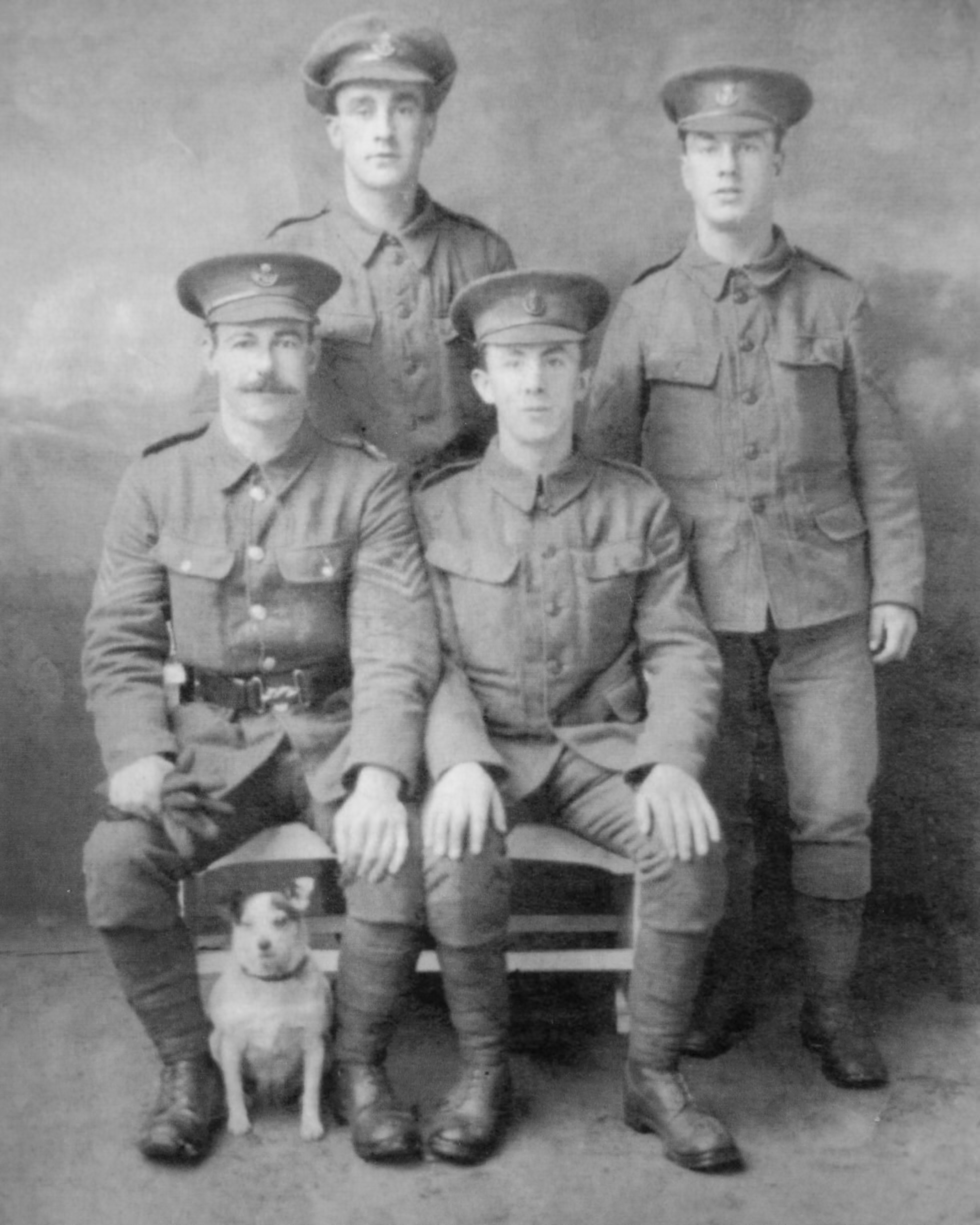
Brothers John, Alfred, Frederick and George Smith from Barnard Castle who were all lost during  World War I. The first son to be killed, Robert, is not on this photograph, so perhaps it was taken after he had died. Credit: Smith family


As we approach Remembrance Day (11th November), it seems appropriate to continue on the theme of the brave souls who perished while serving their country in war.

Claire Dunstan has been in touch to mention a memorial garden with benches that she remembers at the top of Broughton Road in the town of Malton. She says they were placed there as a tribute by school friends of the fallen men. I could find out very little about this small garden, so next time I am in Malton, I will go and have a look for myself (it is separate to the main Malton War Memorial at the junction of Horsemarket Road and Yorkersgate).

She also recalls: “There was woodwork by Mousey Thompson in the Green Man Hotel in memory of the Malton soldiers that never came home. Such a shame that it is shut now…the Mouseman furniture was paid for by family and friends.”

It makes me wonder what furniture it was and and in what form the soldiers were commemorated – presumably by having their names inscribed on the furniture? Perhaps there is someone reading this who knows the full story, and can tell us where that furniture ended up.

Claire used to live in the Welsh village of Llangwn which commemorated the 100th anniversary of the First World War in 2014 with a specially-written opera. According to the Llangwyn Local History Society, there were at least five sets of brothers from the area who served. One of the saddest stories involved the John brothers. In 1917, older brother Edwin John was shot at Lens in Northern France. His younger sibling, James, went to his aid but was killed while cradling his body.

The trauma experienced by families after such tragedy is hard to imagine, and similar stories will have been repeated time and again. But there can be few that are more poignant than the one to which reader Tony Eaton drew my attention. Tony first contacted me after reading my column mentioning the Pals Battalions a few weeks ago. This time he wrote: “On the theme of lost brothers…on the Barnard Castle War Memorial there are the names of five Smith brothers who died in World War I. There was a sixth son and their mother petitioned Queen Mary for help in having him brought home.”

Barnard Castle resident Margaret Smith suffered more than anyone should when she lost five of her six sons to WWI. Her story echoes the plot of the 1994 Steven Spielberg film Saving Private Ryan, where a group of soldiers are sent on a mission to locate James Ryan and return him to his family following the deaths of his three other brothers.

In our real life case, Private Robert Smith, 22, of the Durham Light Infantry, died on September 19, 1916, followed by Corporal George Smith, killed in action in November 1916, aged 26. Private Frederick Smith, aged 21, and eldest son John, 37, were killed in action in 1917. And lastly, Alfred, 30, perished in August 1918.

It was the local vicar’s wife, Mrs Bircham (not in fact the boys’ own mother) who was so moved by the tragedy that she felt compelled to write to Queen Mary, consort to King George V, on Margaret Smith’s behalf. She received the following reply from the Queen’s private secretary:

“I am commanded by the Queen to … convey to Mr and Mrs Smith of Bridgegate, Barnard Castle, an expression of Her Majesty’s deep sympathy with them in the sad losses they have sustained by the death of their five sons. He added that the Queen “has caused Mr and Mrs Smith’s request concerning their youngest son to be forwarded for consideration of the war authorities.”

With Her Majesty’s intervention, Margaret’s last remaining son, 19-year-old Wilfred, was allowed to return home to be with his mother. He went on to marry and have a family of his own, and died in 1968 at the age of 69. His descendants still live locally, and the war memorial featuring his five brothers’ names can be seen in the grounds of the Bowes Museum in Barnard Castle.

Do you have opinions, memories or ideas to share with me? Get in touch with me using the ‘Contact’ button on the top right.

This column appeared in the Darlington & Stockton Times on Friday 31st and the Ryedale Gazette and Herald on Wednesday 29th Oct 2025

Walking the family line

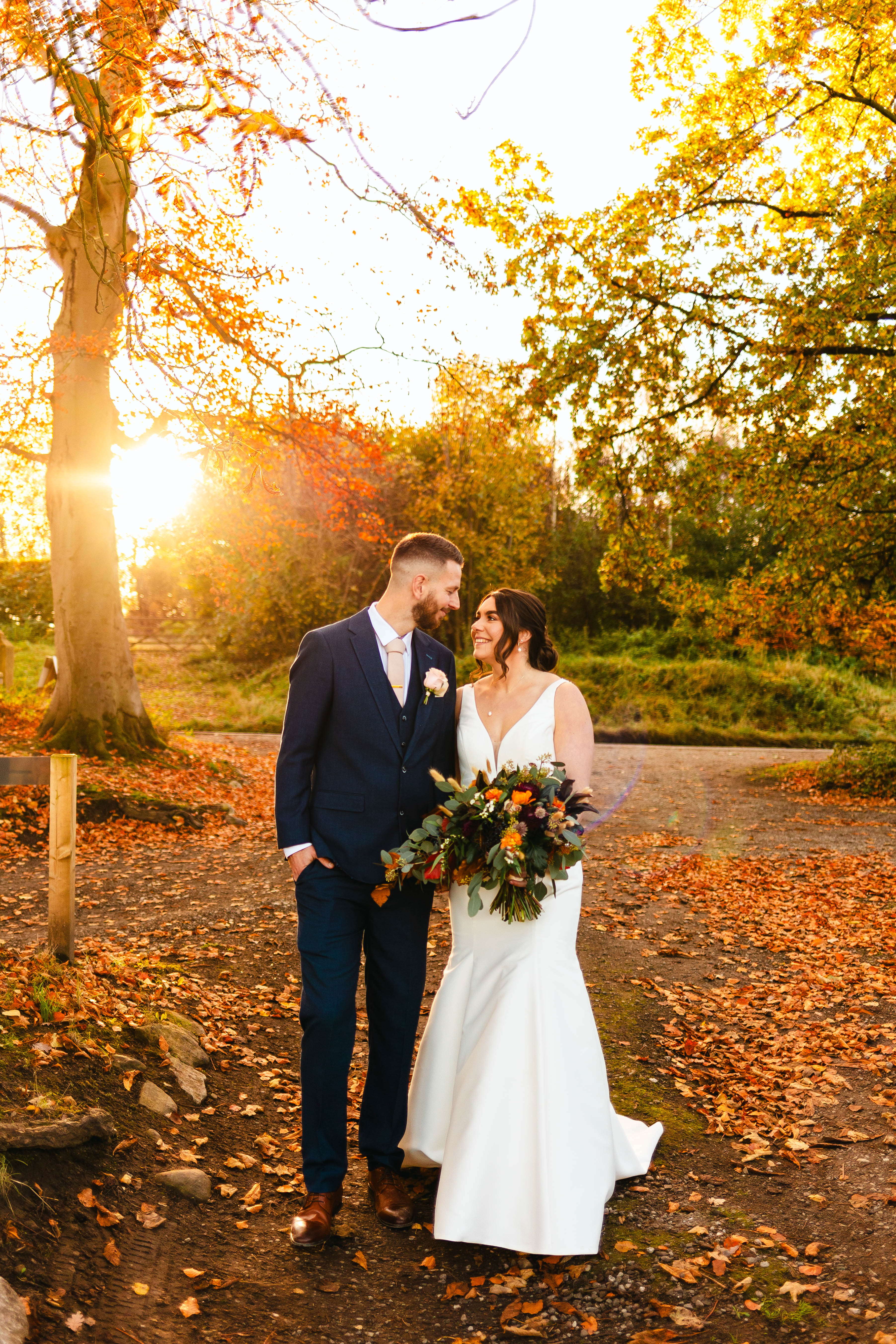
My niece Eleanor preserved the family name by a happy accident when she married Ben. Picture by Bella Bradford Photography

You might remember that a couple of weeks back I talked about family names, and reader Wendy Sissons mentioned that her father’s side of the family use ‘Leedham’ as a middle name for some of the men in the family. She wasn’t sure where it came from, but assumed it was the surname of a relative.

Since then, I‘ve been talking to my mum, and she remarked that her eldest brother, Henry (b.1932), had the middle name ‘Harland’, which was the surname of their father’s mother. Her second brother, John (b.1935), was given the middle name ‘Lacy’ which was their mum’s maiden name.

Was this a convention to preserve the surnames of the female lines due to the fact that women surrendered their own surnames upon marriage? By including it as a given name in the male line of descendants it would not only ensure the ancestors were memorialised, but there would be less chance that the family names would vanish altogether, should there be no other males to carry it forward as a surname.

Do you know the middle names of your aunts, uncles and cousins? I certainly didn’t, and that’s where our family tree came in handy. Using that, I discovered that, interestingly, my Uncle Henry’s son, my cousin Richard (b.1964), was given the middle name ‘Lacy’, and he also passed it on to his own son Charles (b.1997). As far as I am aware, that’s where the references to the family name ‘Lacy’ end. I do wonder why Henry chose ‘Lacy’ for his son, rather than the ‘Harland’ of his own name, and I can’t see any others on the tree with that as a middle name either. My mum had five siblings in total, but the rest were all girls (my mum being the eldest, born in 1937).

I wonder if there exists a field of expertise that focuses on the history of surname usage, and how practices have changed down the centuries? A family name was, and still is, a source of great pride for lots of us, but with many women now opting to keep their own surname on marriage, there is perhaps less likelihood of them disappearing from the family line. It is also a fact that in 2025 there are more couples who choose not to get married at all and therefore the choice as to whether to keep your own or take on your spouse’s name is irrelevant.

When I was young, we associated double-barrelled surnames with ‘posh’ people, but today they are much more common among we plebs. Unmarried parents will often link their surnames together when children are born. There are also more divorces and more second marriages, and children born through a second marriage are sometimes given the surname of both parents combined which will also mean they have a name in common with their older step siblings.

I have mentioned before that I was married to a Dutch man, and in the more enlightened Netherlands, the convention is for women to keep their own surname which they add to that of their husband when they marry so that it becomes double-barrelled (with the woman’s surname last). However, it only applies to the wife, so any children born of that marriage will still have just the husband’s last name.

I divorced ten years ago, and kept my married name for a long time afterwards, simply because it was the same as my children who were still in their teens when we split up. I wanted to keep some kind of normalcy for them as we navigated a very difficult period. However, as they grew into adulthood, having the same name as them grew less important, while wanting to go back to my own became more so, particularly after I lost my dad and sister Tricia, who was still a Walker. With them gone, and my eldest sister Janet married and my Buddhist monk brother switching to a chosen Buddhist name, there was just my mum who still had the surname ‘Walker’. Therefore, once I took over these columns, I decided to reclaim my family name.

My little story doesn’t quite end there. My eldest niece, Eleanor Bradshaw – daughter of Janet – got married in 2023 and took her husband’s name.

And that name? Of course, it is Walker.

Do you have opinions, memories or ideas to share with me? Get in touch with me using the ‘Contact’ button on the top right.

This column appeared in the Darlington & Stockton Times on Friday 24th and the Ryedale Gazette and Herald on Wednesday 22nd Oct 2025

A conventional name?

Reader Clare Proctor’s siblings in a photo taken in 1950s Tanzania, where they lived at the time. L-R: Janet (J.A.P), Michael (M.A.P) and Peter (P.A.P.).


My dad holding my eldest son Oliver Sebastiaan on the day he was born in April 1996. We had chosen names that we liked rather than ones passed down the family.


My middle son Jasper Marcus was named using the same initials as his Dutch father Johannes Marcus, and his grandfather, Jan Marie, seen here meeting him for the first time in 1998.


I’ve had some lovely messages on the subject of family names. A few weeks ago, we heard from Brian Reader who had ancestors called Rocious, Fera and Ellengor. Last week we also heard from David Severs, whose family passed down the biblical name ‘Lot’, and whose great grandfather James Foster was the boilerman at the local brewery in Thornton Le Moor. James’ employers had a daughter named Ethel Carlotta which is where David believes his great aunt Ada (the boilerman’s daughter) came across the fancy name ‘Carlotta’ which she chose for her own daughter and which handily incorporated the family preference of ‘Lot’. She called her son ‘Lancelot’, which she perhaps snaffled from the Arthurian legend for the same reason.

Vicky McDonald got in touch to say: “I have just read your article entitled “There’s a Lot in a name”. How fascinating and how strange that I should stare back at a photo of my Great Great Uncle Lance (or Lancelot as he is referred to in the article)! Lancelot married my maternal grandmother’s aunty (my Great Great Aunty Gladys). I have fond memories of them both. 

“I would be grateful if you would be able to pass my email address on to David Severs mentioned in the article as it seems we are related. It would be lovely to get in touch with him.”

How wonderful that my little column is bringing families together! I have passed on Vicky’s email address to David and will let you know what transpires.

I also heard from Wendy Sissons: “Leedham as a middle name was passed down to the eldest son in my dad’s family. My dad’s dad was Ernest Leedham, his eldest brother was Eric Leedham and Eric’s eldest son, my cousin, is Paul Leedham.

“Funnily enough although my grandfather was Ernest, he passed that name onto my dad who was the third son after Eric and then Dennis. Presumably they didn’t like it enough to give to the eldest!”

Wendy is not sure where the name Leedham came from, but guesses it was the surname of an ancestor and adopted by their descendants at some point as a middle name to commemorate them.

Clare Proctor has an interesting story on the theme: “We don’t have unusual names in our family, but my Dad’s initials were A.A.P. so his four children were all given ‘A’ middle names. We are M.A.P., J.A.P., P.A.P. and C.A.P. Funnily enough, as my sister and I both married Ps, we remain so! Our two daughters have family names, but we chose them because we liked them, then made the link afterwards.”

Clare’s eldest daughter is Molly Paget after her mother’s name and mother-in-law’s maiden name. Her younger daughter is called Lily Alice-Rose which is a combination of both her and her husband’s grandmothers’ names.

Clare adds: “My friend knew a family in the USA with five daughters all named Mary, so there was Mary Jane, Mary Sue, Mary Ann etc!” Unless both parts of the name were used, it must have been very confusing when the postman delivered letters!

Is it something peculiarly American that we regularly see numbers after their male names? For example, former president Bill Clinton’s name at birth was William Jefferson Blythe III (i.e. the Third – he took his stepfather’s surname Clinton later in life). At birth, actor Will Smith was named Willard Carroll Smith II (i.e. the Second). This use of patronymic suffixes is considered a bit pretentious by we Brits because here, the convention is reserved for the Royal family and nobility only. Imagine if your relative started to refer to himself as ‘John Smith the Second’? We’d laugh him out of the building for getting ideas above his station wouldn’t we?

When it came to finding names for my own children, we did use some family names, although not with my eldest whose first and middle names were chosen simply because we liked them. Our second son had the same initials as his father and paternal grandfather because that was a tradition on that side of the family. Our youngest was named after my godfather and my dad, who were two of my favourite men of all time.

Do you have a story of an unusual way of choosing children’s names? Do get in touch using the methods below.

Do you have opinions, memories or ideas to share with me? Get in touch with me using the ‘Contact’ button on the top right.

This column appeared in the Darlington & Stockton Times on Friday 17th and the Ryedale Gazette and Herald on Wednesday 15th Oct 2025