The tragic lives of some famous names

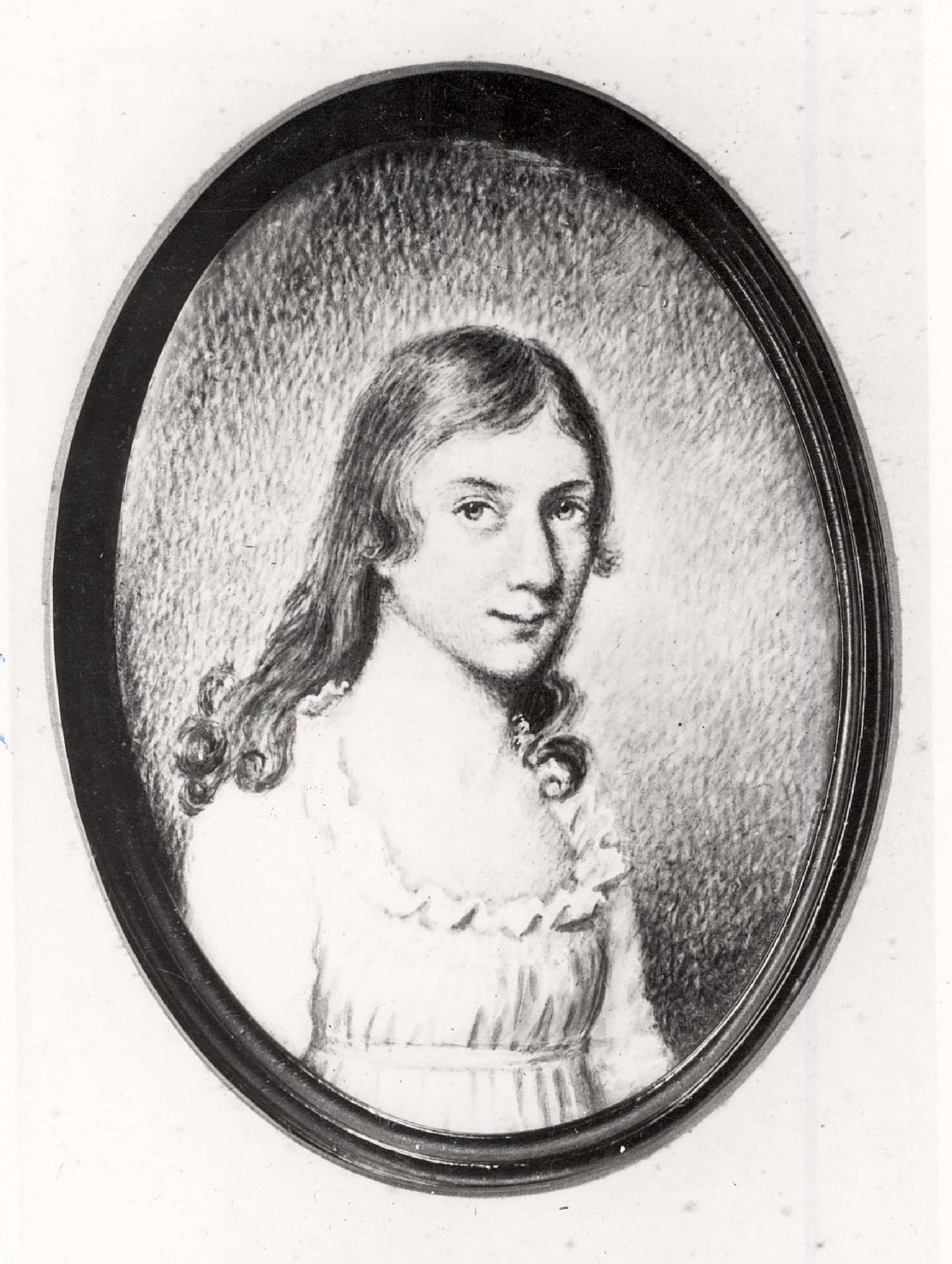
Maria Branwell, who fell in love at first sight with the Reverend Patrick Brontë and went on to give birth to six children, including the famous literary sisters. Picture used courtesy of the Brontë Society

A few more people have contacted me about nominative determinism, where a person ends up in a job that reflects their name. Strangely, these all seem to be in the medical or related fields.

Anne-Marie Samuel used to work with a Dr Hurt, while Janet Pearce worked alongside a Nurse Nurse! And LJ Stevens says: “There was a probate registrar in the Ipswich District Probate Registry called Mr De’Ath.” You really couldn’t make it up, could you?

On using maiden names as middle names, Gareth Child says: “I was very nearly given my grandmother’s maiden name as a forename. Luckily for me my mother didn’t want her son to be called Crowther.”

Gareth is a registrar and explains: “At work in the register office I do see relatives’ surnames given to babies as middle names. It’s not frequent, but it is in double figures every year. Also, a growing trend among married women who take their husband’s name is for them to keep their maiden name as a middle name after marriage.”

By that, he means officially adopting their maiden name as a middle name, rather than creating a double-barrelled surname.

He adds: “We have the record of every birth, marriage and death in York since 1837, and it’s a fascinating living record of the city.”

Gareth contacted me again a little later with this piece of trivia: “A buried memory has been niggling away at me for a few days and it finally surfaced today. Branwell Brontë was given that name because it was his mother’s maiden name.”

As I am sure you know, Branwell was the brother of Charlotte, Emily and Anne Brontë, but Gareth’s comment made me more curious about the people in that famous family about whom we hear much less, such as their mother, Maria. And the more I learn, the more tragedy I discover.

Maria Branwell was born in Penzance, Cornwall in 1783, but lost both parents within a year of each other. In 1812, she decided to go and stay with her Aunt Jane in Yorkshire who had married a chap called John Fennell, headmaster of Woodhouse Grove School in Appleby Bridge near Bradford. Maria hadn’t planned to move there permanently but soon after arriving met her Uncle John’s friend, Irish clergyman Patrick Brontë. According to the sources I’ve read, the pair fell instantly in love, and married in December 1812. By then, Maria was 29 and Patrick 35, which was considered a bit long in the tooth to be newly wed, but the pair seemed very happy and their first child, Maria, was born in 1814, swiftly followed by their second, Elizabeth, the following year. Charlotte came along in 1816, followed by Patrick Branwell in 1817. He was given his mother’s maiden name as a middle name, but it was the one by which he was known. Maria gave birth to two more children, Emily in 1818, and finally Anne in 1820.

Unfortunately, in January 1821 when Anne had just turned one, Maria began to feel unwell. She became gravely ill, and died in the September, likely from some form of cancer. Four years later in 1825, the two eldest children, Maria, aged 11, and Elizabeth, aged 10, also died. Poor Patrick Brontë was destined to outlive his whole family, with Branwell and Emily dying in 1848, Anne in 1849, and finally Charlotte in 1855.

The Brontë children were all very intelligent and, as we know, excellent writers. Most would assume their literary prowess was inherited from their learned father, but in fact their mother was talented in that department too, as Charlotte discovered when her father gave her some letters that Maria had written to him during their courtship, 40 years earlier.

“It was strange now to peruse, for the first time, the records of a mind whence my own sprang,” she wrote, “And most strange, and at once sad and sweet, to find that mind of a truly fine, pure, and elevated order…There is a rectitude, a refinement, a constancy, a modesty, a sense, a gentleness about them indescribable I wish she had lived and that I had known her.”

Isn’t it fascinating where the topic of using maiden names as middle names has led me? I wonder where I will end up next week?

Do you have opinions, memories or ideas to share with me? Get in touch with me using the ‘Contact’ button on the top right.

This column appeared in the Darlington & Stockton Times on Friday 12th and the Ryedale Gazette and Herald on Wednesday 10th Dec 2025

For the ones who never came home

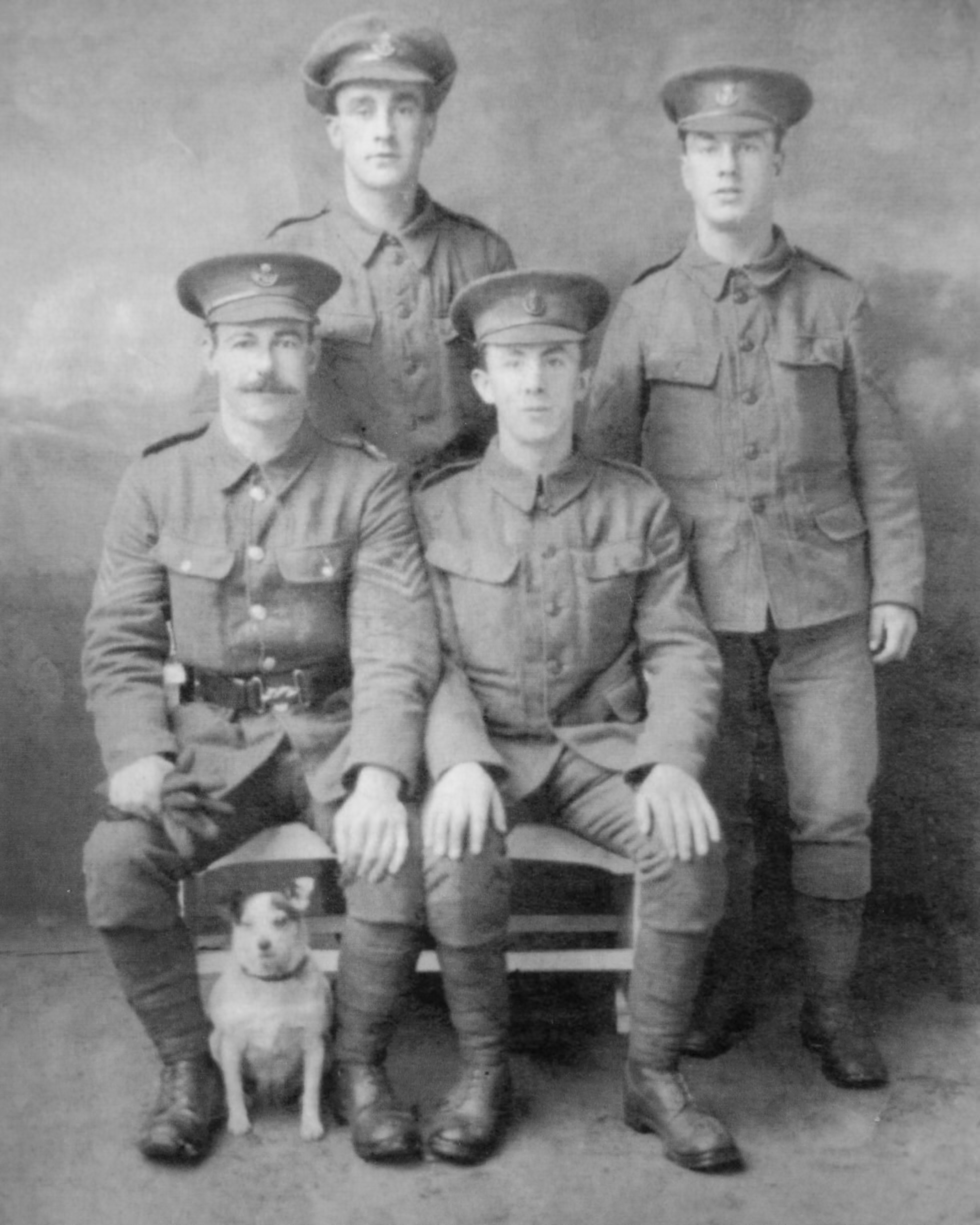
Lynne Catena’s uncle, Arthur Pearce, who was killed in WWII during the North Africa campaign in 1941. This picture was taken before the war, in his early 20s, and proudly dressed for a military tattoo.

A few more responses have come in on recent topics. Maxine Gordon contacted me about the convention of incorporating a maiden name into a child’s given name: “Both my sister and I and my best friend from Kirkcaldy have this tradition. We have our grandma’s maiden names as our middle names…I think it was unusual and raised some eyebrows at school etc, so probably dying out even in the 1970s. We might have been a last generation – my mum doesn’t even have a middle name.”

Maxine mentioned something which had not before occurred to me: “As kids you don’t want to stand out, so when they read your name at primary school and people laughed, that wasn’t so nice.” An unusual name certainly could make you a target for mockery among your childhood peers.

Until Fiona White contacted me, I had only come across the maiden name used as a middle name. But her family did something different: “My brother was given my mum’s maiden name as his first name – Innes.” Like Maxine’s family, the name Innes is Scottish. Are there more maiden names given as first names in that part of the world I wonder?

A couple of weeks ago I told the story of Lynn Catena’s Uncle Arthur, who was killed at age 24 while serving in the North Africa campaign in WWII. The war generation are notably reluctant to talk about their experiences. While Clare Proctor was watching the recent Remembrance commemorations, she was particularly captivated by the recollections of a veteran who, like her own father, had served in Burma (now Myanmar). “This veteran was saying that when returning from that war zone they were instructed by their superiors not to go home and talk about their war, because the people of Britain had suffered enough! So, he said, they never talked about it. My father certainly didn’t.”

She adds: “My cousin (30 years older than me) said our family did not celebrate VE Day because her Uncle Allan was still at war in the Far East. Their big day was VJ Day.” It’s satisfying to see that VJ Day is now being suitably commemorated, considering how many of our soldiers fought and died out there.

Robert Carter contacted me after seeing my piece about the Alamein Memorial a couple of weeks ago. Robert visited the Commonwealth, German, and Italian memorials and the Al Alamein Military Museum.

He says: “I was particularly interested to see the number of joint graves which were the last resting places of mainly armoured vehicle crews who presumably could not be separated because of the circumstances of their deaths. As a former soldier I thought it very apt that as they had fought and died together that they should be buried together.”

He adds: “The German and Italian memorials were built in the fifties which involved collecting the bodies from both nations that were widely distributed across the former battlefield and as a result many are listed as ‘Unknown’. The Italian memorial is, as you might expect, a tall very elegant building whereas the German is more sombre and fortress-like. Interestingly, inside the German building is a ring of sarcophagi, each one dedicated to each of the German states, ie Brandenberg, Mecklenburg, and so on, with a list of the servicemen from that state who died during the course of the battle…The museum was an excellent tribute to all of the nations involved with each being given equal status and range of exhibits.”

It is a sombre reminder that ordinary families on both sides of the conflict suffered equally with the loss of their loved ones.

When Lynn told me the story of her Uncle Arthur, I was saddened that I didn’t know what he looked like and assumed that I was unlikely to ever see a picture of him.

But I was wrong. Lynn found a photo and explains: “This is an old photo of Arthur Pearce that I took from my mum’s collection. She told me he wanted to be a career soldier. I believe, in this photo, he’d taken part in a military tattoo. RIP to the uncle I never met.”

Using his picture here is my small tribute to just one of the many young men who never came home.

Do you have opinions, memories or ideas to share with me? Get in touch with me using the ‘Contact’ button on the top right.

This column appeared in the Darlington & Stockton Times on Friday 5th and the Ryedale Gazette and Herald on Wednesday 3rd Dec 2025

A war to remember

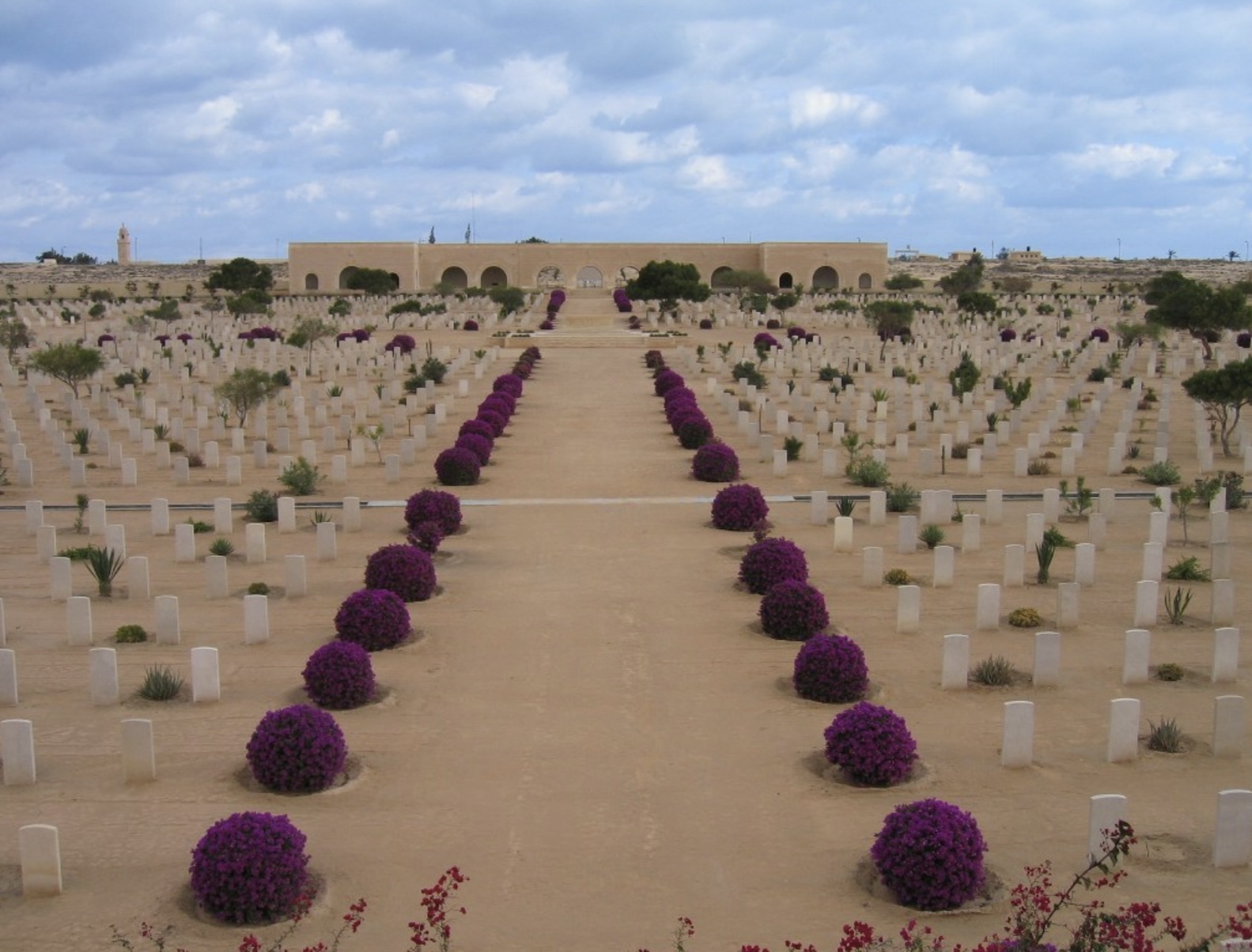
The Alamein Memorial at the entrance to the El Alamein War Cemetery in Egypt which commemorates WW2 fallen servicemen who fought in the North Africa campaign and whose remains have never been found. Lynn Catena’s uncle, Arthur Pearce, can be found on Column 32 (Picture CWGC)
The huge El Alamein War Cemetery in Egypt which commemorates more than 20,000 fallen servicemen (Picture CWGC)

In response to my column about the six Smith Brothers of Barnard Castle, five of whom were killed in World War I, Lynn Catena contacted me to say: “My mum’s brother was killed in action on December 19th, 1941, at 24 years of age. Apart from a tatty telegram there was no further word (that I know of). Several years ago I discovered the Commonwealth War Graves Commission (CWGC). I messaged them with the scant details I had and within 24 hours they responded with a list of the deceased (including my uncle), along with the cemetery and memorial reference. His name is etched on Column 32 at the Alamein Memorial in Egypt. He was my grandparents’ only son.”

His name was Arthur Pearce, and Lynn’s grandmother was long gone before the record was found. I can’t imagine the grief she must have suffered knowing her only son died in a country more than 3,000 miles away. The lingering pain of not knowing where his remains lay, of not being able to visit his final resting place, must have been acute. Did the fact that many other familles were suffering in the same way at the same time help, alongside the fact that they died heroes defending the freedom of their home and country? Sadly, most of those who could answer this question are no longer with us, but do let me know if you have ever spoken to your relatives about it. They came from a generation that was not used to discussing such deep internal emotions, and therefore may not ever have felt able to express their memories openly.

Lynn’s message prompted me to visit the CWGC website again, to see if I could find her uncle’s record – and sure enough I did, but not before I had to scroll past pages and pages of names engraved on the Alamein Memorial. It was truly sobering to see hundreds of fallen men, most of whom were aged in their 20s and 30s. The oldest was 50, and the youngest a mere 16 years old. They came from the various countries that united in the North Africa campaign to oppose German and Italian forces in a battle over control of the Mediterranean. The sea gave access to the East via the Suez Canal, a vital supply route leading to Russia via the oil-rich Middle Eastern block. As well as the UK soldiers from the Royal Artillery, there was air support from Australia, and infantry from New Zealand, South Africa and a few other countries.

What caught my attention was that 9th December 1941 was a particularly bad day for casualties. Where most dates listed from a few deaths into the 10s and 20s, on 9th December more than 300 servicemen were killed. My knowledge of WWII is what you might call at ‘headline’ level, and I know even less about the North Africa campaign. I felt I owed it to the men whose memorial I was looking at to educate myself a bit more.

The 9th December 1941 was just two days after the Japanese bombing of the US naval base Pearl Harbour on the island of Hawaii which prompted the States and a number of other countries to officially enter the war. It was also around the mid-point of Operation Crusader, the allied offensive to once and for all take the strategically important Mediterranean port of Tobruk on the north Libyan coast, 150km west of the border with Egypt. Rommel’s German troops supported by Italian allies had been trying to capture the port since the previous April in what is called The Siege of Tobruk. The new offensive, made up of British, Indian, New Zealand, South African and Free French forces, drove the Germans and Italians back into Libya enabling allied troops to gain firm control of the port.

The Alamein Memorial forms part of the huge El Alamein War Cemetery where more than 20,000 fallen commonwealth soldiers are commemorated. There are around 8,000 graves (812 of which are unidentified), and nearly 12,000 more names listed on the memorial because, like Lynn’s uncle, their remains have never been located.

Statistics like that make me grateful that I have never had to face the horror of a world war. I hope such a thing is never allowed to happen again.

Do you have opinions, memories or ideas to share with me? Get in touch with me using the ‘Contact’ button on the top right.

This column appeared in the Darlington & Stockton Times on Friday 21st and the Ryedale Gazette and Herald on Wednesday 19th Nov 2025

Hey Nonny! No?

My niece Eleanor and husband Ben shared some exciting news this week! Baby Walker is due in May next year!

Do you remember two weeks ago I mentioned that I had no immediate relatives that would be able to carry on the family name of Walker? That was until my niece Eleanor happened to marry into a totally separate family of Walkers.

Her mum, my sister Janet, was delighted: “It’s lovely to have another Walker back in the family.”

Having read the column, my own mum said: “I wasn’t bothered to lose my surname ‘Smith’ as there were still millions of ‘Smiths’ in the world. But now I’m a ‘Walker’ and there are millions of them too!”

Alison Davies recommended a rather drastic way to reclaim your own surname: “Get divorced! I did and went back to my family name.” She adds: “I did sneak Davies in as a middle name for my eldest.” Although having said that, getting divorced is not that drastic if you consider around half of us married people do it in the end.

Jane Ridley did the same as Alison when naming her son: “I couldn’t bear to give up my maiden name as I’m the last of the Ridleys. Bobby’s middle name is Ridley. My husband’s middle name is his grandmother’s maiden name of Powell.”

Since I’ve become aware of the convention of preserving a family name in children’s middle names, I discovered that so many people have embraced it, and yet it never occurred to me to do it with any of my boys.

Sarah Mason says: “Both my boys have Mason as part of their middle names. I wanted them to have my surname somewhere! Hopefully they might continue the tradition, although it may well be difficult for my youngest as his partner is from Chile and they keep their mother’s surname and just add to it.”

That’s an interesting convention, and I feel it’s rather enlightened of Chile to ensure the female name is so prominent. But does it also mean that it leads to really long surnames?

Janet Pearce adds: “My late husband was the last male of his family to have children. He had three sons but none of them have had children and are unlikely to, so that branch of the family name will die out. He was sad about it, but I don’t worry about these things!”

Kate Broad says: “I will never understand why women changed and continue to adopt their husband’s name.”

And I agree to some extent, because if I had my time again, I probably would not adopt my husband’s name, or at least would combine mine and his in some way.

Clare Powell’s family used an interesting method to preserve a name: “My husband’s dad had Slingsby as a middle name, as did his grandfather. It was a family surname, but we didn’t use it – unless you count naming the cat Slingsby!”

Of course, we live in a patriarchal society that has been that way for centuries, where the male line dominates. But there are cultures across the world where women have always led the way. In India, the Khasi tribe has a matriarchal structure where children take on their mother’s name and girls inherit the wealth. Mosuo (China) and Minangkabau (Indonesia) both have matriarchal societies where women are heads of the household and property is passed down the female line. In Kenya there is a village called Umoja which was founded by women who rebelled against patriarchal oppression and domestic violence.

Since I wrote my original piece, I have received some absolutely wonderful news! Eleanor and husband Ben are expecting their first child and Baby Walker is due in May next year. It is all rather fitting, because both my dad and myself were born in May (and even though it is not our family branch, we are very happy to hang on to the coattails of another set of Walkers!).

My sister and imminent grandparent Janet is debating how she would like to be referred to once the baby comes along. Should she be Granny, Grandma, Nan or Nana? Families often have their own quirky names for grandparents and I’ve heard ‘Gangan’, ‘Pops’ and ‘Runny and Dumper’. When my eldest began to talk, he could not pronounce ‘Granny’ and so my mum became ‘Nonny’. Twenty-nine years later, Nonny she remains.

Did you call your grandparents anything unusual? Let me know!

Do you have opinions, memories or ideas to share with me? Get in touch with me using the ‘Contact’ button on the top right.

This column appeared in the Darlington & Stockton Times on Friday 14th and the Ryedale Gazette and Herald on Wednesday 12th Nov 2025

Royal intervention for grieving mother

Brothers John, Alfred, Frederick and George Smith from Barnard Castle who were all lost during  World War I. The first son to be killed, Robert, is not on this photograph, so perhaps it was taken after he had died. Credit: Smith family


As we approach Remembrance Day (11th November), it seems appropriate to continue on the theme of the brave souls who perished while serving their country in war.

Claire Dunstan has been in touch to mention a memorial garden with benches that she remembers at the top of Broughton Road in the town of Malton. She says they were placed there as a tribute by school friends of the fallen men. I could find out very little about this small garden, so next time I am in Malton, I will go and have a look for myself (it is separate to the main Malton War Memorial at the junction of Horsemarket Road and Yorkersgate).

She also recalls: “There was woodwork by Mousey Thompson in the Green Man Hotel in memory of the Malton soldiers that never came home. Such a shame that it is shut now…the Mouseman furniture was paid for by family and friends.”

It makes me wonder what furniture it was and and in what form the soldiers were commemorated – presumably by having their names inscribed on the furniture? Perhaps there is someone reading this who knows the full story, and can tell us where that furniture ended up.

Claire used to live in the Welsh village of Llangwn which commemorated the 100th anniversary of the First World War in 2014 with a specially-written opera. According to the Llangwyn Local History Society, there were at least five sets of brothers from the area who served. One of the saddest stories involved the John brothers. In 1917, older brother Edwin John was shot at Lens in Northern France. His younger sibling, James, went to his aid but was killed while cradling his body.

The trauma experienced by families after such tragedy is hard to imagine, and similar stories will have been repeated time and again. But there can be few that are more poignant than the one to which reader Tony Eaton drew my attention. Tony first contacted me after reading my column mentioning the Pals Battalions a few weeks ago. This time he wrote: “On the theme of lost brothers…on the Barnard Castle War Memorial there are the names of five Smith brothers who died in World War I. There was a sixth son and their mother petitioned Queen Mary for help in having him brought home.”

Barnard Castle resident Margaret Smith suffered more than anyone should when she lost five of her six sons to WWI. Her story echoes the plot of the 1994 Steven Spielberg film Saving Private Ryan, where a group of soldiers are sent on a mission to locate James Ryan and return him to his family following the deaths of his three other brothers.

In our real life case, Private Robert Smith, 22, of the Durham Light Infantry, died on September 19, 1916, followed by Corporal George Smith, killed in action in November 1916, aged 26. Private Frederick Smith, aged 21, and eldest son John, 37, were killed in action in 1917. And lastly, Alfred, 30, perished in August 1918.

It was the local vicar’s wife, Mrs Bircham (not in fact the boys’ own mother) who was so moved by the tragedy that she felt compelled to write to Queen Mary, consort to King George V, on Margaret Smith’s behalf. She received the following reply from the Queen’s private secretary:

“I am commanded by the Queen to … convey to Mr and Mrs Smith of Bridgegate, Barnard Castle, an expression of Her Majesty’s deep sympathy with them in the sad losses they have sustained by the death of their five sons. He added that the Queen “has caused Mr and Mrs Smith’s request concerning their youngest son to be forwarded for consideration of the war authorities.”

With Her Majesty’s intervention, Margaret’s last remaining son, 19-year-old Wilfred, was allowed to return home to be with his mother. He went on to marry and have a family of his own, and died in 1968 at the age of 69. His descendants still live locally, and the war memorial featuring his five brothers’ names can be seen in the grounds of the Bowes Museum in Barnard Castle.

Do you have opinions, memories or ideas to share with me? Get in touch with me using the ‘Contact’ button on the top right.

This column appeared in the Darlington & Stockton Times on Friday 31st and the Ryedale Gazette and Herald on Wednesday 29th Oct 2025

Walking the family line

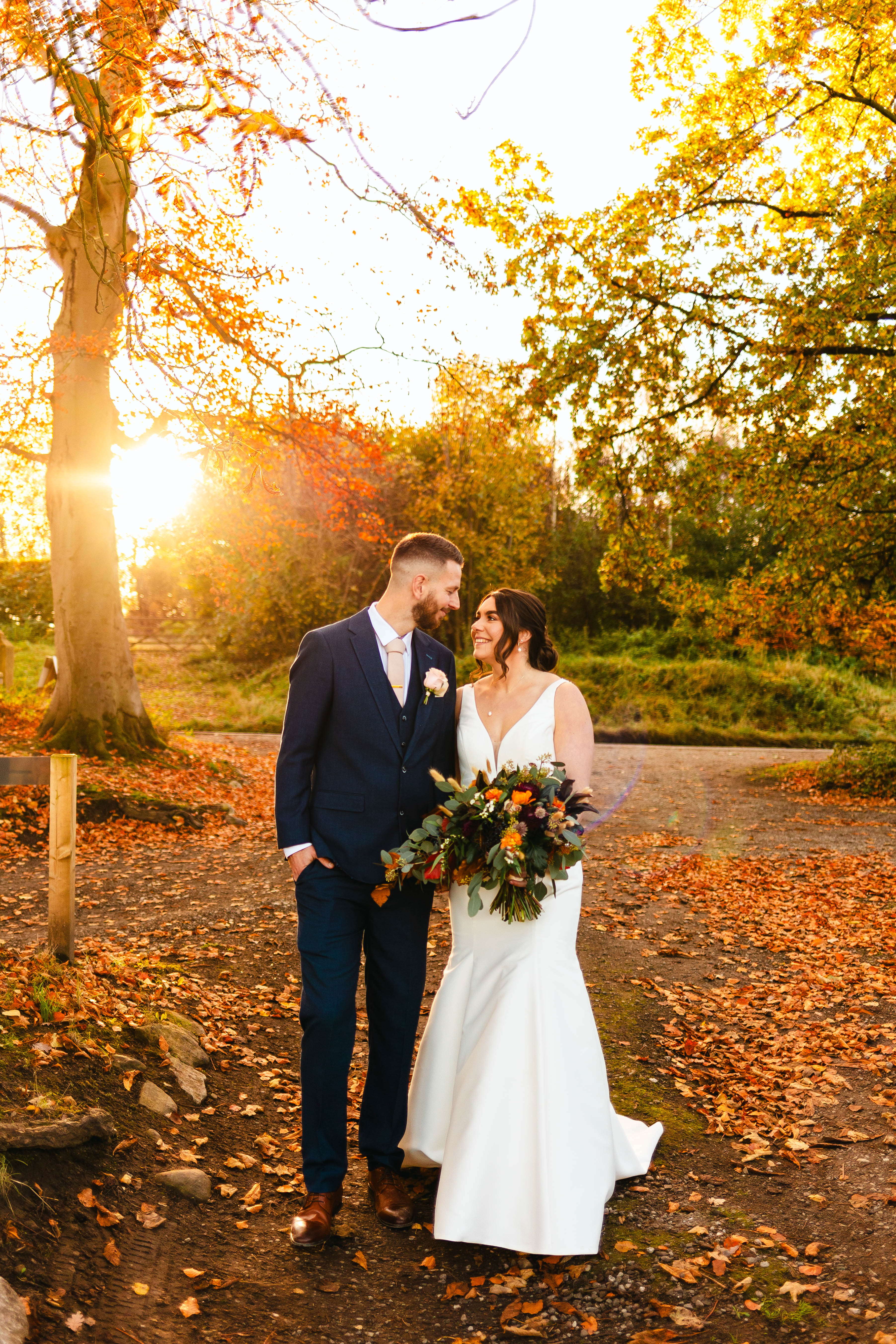
My niece Eleanor preserved the family name by a happy accident when she married Ben. Picture by Bella Bradford Photography

You might remember that a couple of weeks back I talked about family names, and reader Wendy Sissons mentioned that her father’s side of the family use ‘Leedham’ as a middle name for some of the men in the family. She wasn’t sure where it came from, but assumed it was the surname of a relative.

Since then, I‘ve been talking to my mum, and she remarked that her eldest brother, Henry (b.1932), had the middle name ‘Harland’, which was the surname of their father’s mother. Her second brother, John (b.1935), was given the middle name ‘Lacy’ which was their mum’s maiden name.

Was this a convention to preserve the surnames of the female lines due to the fact that women surrendered their own surnames upon marriage? By including it as a given name in the male line of descendants it would not only ensure the ancestors were memorialised, but there would be less chance that the family names would vanish altogether, should there be no other males to carry it forward as a surname.

Do you know the middle names of your aunts, uncles and cousins? I certainly didn’t, and that’s where our family tree came in handy. Using that, I discovered that, interestingly, my Uncle Henry’s son, my cousin Richard (b.1964), was given the middle name ‘Lacy’, and he also passed it on to his own son Charles (b.1997). As far as I am aware, that’s where the references to the family name ‘Lacy’ end. I do wonder why Henry chose ‘Lacy’ for his son, rather than the ‘Harland’ of his own name, and I can’t see any others on the tree with that as a middle name either. My mum had five siblings in total, but the rest were all girls (my mum being the eldest, born in 1937).

I wonder if there exists a field of expertise that focuses on the history of surname usage, and how practices have changed down the centuries? A family name was, and still is, a source of great pride for lots of us, but with many women now opting to keep their own surname on marriage, there is perhaps less likelihood of them disappearing from the family line. It is also a fact that in 2025 there are more couples who choose not to get married at all and therefore the choice as to whether to keep your own or take on your spouse’s name is irrelevant.

When I was young, we associated double-barrelled surnames with ‘posh’ people, but today they are much more common among we plebs. Unmarried parents will often link their surnames together when children are born. There are also more divorces and more second marriages, and children born through a second marriage are sometimes given the surname of both parents combined which will also mean they have a name in common with their older step siblings.

I have mentioned before that I was married to a Dutch man, and in the more enlightened Netherlands, the convention is for women to keep their own surname which they add to that of their husband when they marry so that it becomes double-barrelled (with the woman’s surname last). However, it only applies to the wife, so any children born of that marriage will still have just the husband’s last name.

I divorced ten years ago, and kept my married name for a long time afterwards, simply because it was the same as my children who were still in their teens when we split up. I wanted to keep some kind of normalcy for them as we navigated a very difficult period. However, as they grew into adulthood, having the same name as them grew less important, while wanting to go back to my own became more so, particularly after I lost my dad and sister Tricia, who was still a Walker. With them gone, and my eldest sister Janet married and my Buddhist monk brother switching to a chosen Buddhist name, there was just my mum who still had the surname ‘Walker’. Therefore, once I took over these columns, I decided to reclaim my family name.

My little story doesn’t quite end there. My eldest niece, Eleanor Bradshaw – daughter of Janet – got married in 2023 and took her husband’s name.

And that name? Of course, it is Walker.

Do you have opinions, memories or ideas to share with me? Get in touch with me using the ‘Contact’ button on the top right.

This column appeared in the Darlington & Stockton Times on Friday 24th and the Ryedale Gazette and Herald on Wednesday 22nd Oct 2025

A conventional name?

Reader Clare Proctor’s siblings in a photo taken in 1950s Tanzania, where they lived at the time. L-R: Janet (J.A.P), Michael (M.A.P) and Peter (P.A.P.).


My dad holding my eldest son Oliver Sebastiaan on the day he was born in April 1996. We had chosen names that we liked rather than ones passed down the family.


My middle son Jasper Marcus was named using the same initials as his Dutch father Johannes Marcus, and his grandfather, Jan Marie, seen here meeting him for the first time in 1998.


I’ve had some lovely messages on the subject of family names. A few weeks ago, we heard from Brian Reader who had ancestors called Rocious, Fera and Ellengor. Last week we also heard from David Severs, whose family passed down the biblical name ‘Lot’, and whose great grandfather James Foster was the boilerman at the local brewery in Thornton Le Moor. James’ employers had a daughter named Ethel Carlotta which is where David believes his great aunt Ada (the boilerman’s daughter) came across the fancy name ‘Carlotta’ which she chose for her own daughter and which handily incorporated the family preference of ‘Lot’. She called her son ‘Lancelot’, which she perhaps snaffled from the Arthurian legend for the same reason.

Vicky McDonald got in touch to say: “I have just read your article entitled “There’s a Lot in a name”. How fascinating and how strange that I should stare back at a photo of my Great Great Uncle Lance (or Lancelot as he is referred to in the article)! Lancelot married my maternal grandmother’s aunty (my Great Great Aunty Gladys). I have fond memories of them both. 

“I would be grateful if you would be able to pass my email address on to David Severs mentioned in the article as it seems we are related. It would be lovely to get in touch with him.”

How wonderful that my little column is bringing families together! I have passed on Vicky’s email address to David and will let you know what transpires.

I also heard from Wendy Sissons: “Leedham as a middle name was passed down to the eldest son in my dad’s family. My dad’s dad was Ernest Leedham, his eldest brother was Eric Leedham and Eric’s eldest son, my cousin, is Paul Leedham.

“Funnily enough although my grandfather was Ernest, he passed that name onto my dad who was the third son after Eric and then Dennis. Presumably they didn’t like it enough to give to the eldest!”

Wendy is not sure where the name Leedham came from, but guesses it was the surname of an ancestor and adopted by their descendants at some point as a middle name to commemorate them.

Clare Proctor has an interesting story on the theme: “We don’t have unusual names in our family, but my Dad’s initials were A.A.P. so his four children were all given ‘A’ middle names. We are M.A.P., J.A.P., P.A.P. and C.A.P. Funnily enough, as my sister and I both married Ps, we remain so! Our two daughters have family names, but we chose them because we liked them, then made the link afterwards.”

Clare’s eldest daughter is Molly Paget after her mother’s name and mother-in-law’s maiden name. Her younger daughter is called Lily Alice-Rose which is a combination of both her and her husband’s grandmothers’ names.

Clare adds: “My friend knew a family in the USA with five daughters all named Mary, so there was Mary Jane, Mary Sue, Mary Ann etc!” Unless both parts of the name were used, it must have been very confusing when the postman delivered letters!

Is it something peculiarly American that we regularly see numbers after their male names? For example, former president Bill Clinton’s name at birth was William Jefferson Blythe III (i.e. the Third – he took his stepfather’s surname Clinton later in life). At birth, actor Will Smith was named Willard Carroll Smith II (i.e. the Second). This use of patronymic suffixes is considered a bit pretentious by we Brits because here, the convention is reserved for the Royal family and nobility only. Imagine if your relative started to refer to himself as ‘John Smith the Second’? We’d laugh him out of the building for getting ideas above his station wouldn’t we?

When it came to finding names for my own children, we did use some family names, although not with my eldest whose first and middle names were chosen simply because we liked them. Our second son had the same initials as his father and paternal grandfather because that was a tradition on that side of the family. Our youngest was named after my godfather and my dad, who were two of my favourite men of all time.

Do you have a story of an unusual way of choosing children’s names? Do get in touch using the methods below.

Do you have opinions, memories or ideas to share with me? Get in touch with me using the ‘Contact’ button on the top right.

This column appeared in the Darlington & Stockton Times on Friday 17th and the Ryedale Gazette and Herald on Wednesday 15th Oct 2025

A battle to be remembered


A June 1961 image of Roye New British Cemetery at Somme in France showing the conifer tree to the right of the stone cross memorial (Photo Commonwealth War Graves Commission copyright).

My dad’s 1979 photo taken from a similar spot. The conifer has grown somewhat.

A couple of weeks ago, I featured an old photo of a graveyard on one of the Somme battlefields and asked for your help to identify which one.

As usual, you have come up trumps! Reader Andrew Jackson says: “I think the photograph was taken in Roye New British Cemetery.”

Andrew directed me to a website documenting World War I cemeteries and commemorating the men interred there. It has recent pictures of Roye New British Cemetery, but it was difficult to work out if it was the same place. It was only when I came across some older photos that I began to recognise it. There was one in particular taken in June 1961 from the same vantage point as mine. The fir tree to the right of the stone cross memorial gives it away – although by the time my 1979 image was taken, it had grown somewhat! In the more recent photos, the tree has gone which is why it was harder to identify.

What makes the website so moving is that they have tracked down photos of some of the men interred there, putting faces to the names on the rows and rows of silent headstones. It brings home the stark reality of the massive sacrifice made by the soldiers and the families that had to continue to live without them. Interestingly, there are no special places for the higher-ranked men, no separating the rank and file from the captains and majors. As reader Tony Eaton from Northallerton pointed out, in death, everyone is equal.

Tony, a self-confessed World War I ‘buff’, enlightened me on a few things. I had wondered if the army had stopped recruiting members of the same families into the same regiment as a result of the disastrous ‘pals’ initiative, where the army canvassed groups from the same locality, enticing them with the promise that they could serve alongside people they knew (in other words, their ‘pals’), rather than randomly being assigned to regiments. Unfortunately, because they served side by side, so they died side by side, leaving gaping holes in communities and families. The strategy was abandoned after the Battle of The Somme in July 1916.

Tony explained: “You mentioned family brothers joining up which was common in the early part of the war and many households lost several of their sons during that conflict, but far as I know there was no embargo on family groups joining up until 1915, when the Conscription Act was passed, becoming law in 1916.

“The Somme showed the folly of the Pals Battalions. Conscription was the way of recruitment due to high numbers of highly qualified specialist personnel being taken out of the industrial and scientific side of prosecuting the war. This act may have precluded brothers being called up until the desperate times of 1918.”

Tony also mentioned a friend of his, Stanley Bewsher from Ripon, who went ‘over the top’ on that fateful day in July 1916. Despite his comrades being gunned down around him, Stanley bravely forged on, picking up a discarded machine gun and advancing towards the enemy.

“He was then struck in the helmet by a shell fragment that indented it into his head. He was taken from the battlefield back to England and after lengthy treatment and rehabilitation stayed in the army acting as a driver…he was awarded the Military Medal,” says Tony.

Tony also explains that the casualties of the Somme battle, although high, were not quite as high as I mentioned. “It is generally accepted that the Allies suffered c900,000 to 1,000,000 casualties…I highly recommend a book by Gordon Corrigan entitled ‘Mud, Blood and Poppycock’ where Corrigan states that 74% of all British and Empire troops that fought on the Somme came out without the proverbial scratch. It is true that on 1st July only six miles of ground was captured, but by the end of the battle, the Germans began withdrawing behind the Hindenburg Line some ten miles eastward.

“The Battle of Arras campaign in the spring of 1917 had a higher rate of attrition, dead and wounded than did the Battle of the Somme.”

Whatever the true number, we must never forget the sacrifice of every singe person whose life was lost during that terrible time of war.

Do you have opinions, memories or ideas to share with me? Get in touch with me using the ‘Contact’ button on the top right.

This column appeared in the Darlington & Stockton Times on Friday 10th and the Ryedale Gazette and Herald on Wednesday 8th Oct 2025

Pals for all eternity

A photo taken by my dad in 1979 on our visit to the Somme battlefields. I’m not sure which cemetery it is, but it is possibly that of the Yorkshire Regiment. Please feel free to tell me if you recognise it.

Another photo taken on the same visit. Again not sure which cemetery but perhaps one of you know? Do get in touch if so.

When Brian reader contacted me about his quirkily-named relatives Rocious, Fera and Ellengor last week, he also posed a question about his family’s history of serving during World War I.

He explained how his forebears had joined up: “Albert and his brother John Elliott were both in the Northallerton Borough Band and in the 4th Battalion Yorkshire Regiment band. Rocious and two of his brothers were also in the Yorkshire Regiment, John Jackson and James Edward (killed in action in France in 1918).”

Brian posed the question: “What was the maximum number of people from the same family serving in the same regiment?”

I’m not sure if Brian meant what was the ‘permitted’ maximum of soldiers from the same family serving in the same regiment (if there was a limit), or whether he meant what is the ‘record’ for the most people from the same family serving in the same regiment. Large families were common in the early 20th century, so it was possible that the number could have been a pretty high.

However, my guess is that large families serving in the same regiment would only have been recruited before 1916. You might remember that back in 2019 I wrote a piece about my family’s 1979 visit to the battlefileds of the Somme in France when I was 12 years old. My young self failed to understand the significance of the ground upon which I walked.

When they launched their River Somme offensive on July 1st 1916, the British Army expected little German resistance after a sustained artillery bombardment the week before. They couldn’t have been more wrong, and within the first hour, almost 20,000 of the 120,000 allied troops lay dead, while 37,000 were wounded. The Battle of the Somme lasted 141 days and resulted in around 1.5 million casualties on both sides, yet enabled our troops to advance a mere six miles.

The awful death toll led to the military abandoning their recruitment strategy known as the ‘pals’ battalions. To encourage men to join up, the army had canvassed potential soldiers in groups from the same locality, from workplaces, towns, villages, sports clubs and practically any community with a common interest. They promised them that they could serve alongside their family, friends, neighbours and work colleagues (in other words, their ‘pals’), rather than the usual method of being assigned randomly to regiments. Entering the unknown with familiar faces next to you was far more attractive than being thrust into a war alongside total strangers. The drive was highly successful, with ‘pals’ battalions being established all over the country.

It’s worth remembering that most of the soldiers recruited from places like the North York Moors would be farmers and labourers who would never before have ventured far from their own homes. National Service didn’t come in until after the Second World War and so the training would have been extremely limited and the men would have little concept of the atrocities they were about to confront. Entering this scary and unfamiliar world would be easier if you had family and friends coming along with you.

Sadly, as men from the same places served side by side, so it meant they were killed side by side. It left gaping holes in the communities to which they belonged, and devastated families who had sent fathers, sons and cousins to fight. Certain areas suffered far higher losses than they otherwise would had they been assigned randomly to regiments. One of the worst affected was the East Lancashire Regiment, better known as the Accrington Pals. Of the 700 members who all came from in and around that Lancashire town, 235 were killed and 350 were wounded in the space of 20 minutes on the first day of the Battle of the Somme.

Following the carnage, the army reverted to more traditional methods of recruitment to avoid anything like it happening again. Therefore it is unlikely that a high number of people from the same family would have been enlisted to serve in the same regiment after that date.

I wonder if Brian’s ancestors were recruited through the ‘pals’ scheme to fight in WWI? And do you have relatives who joined up through the ‘pals’ scheme? I’d be interested to hear any interesting war stories, so do get in touch.

Do you have opinions, memories or ideas to share with me? Get in touch with me using the ‘Contact’ button on the top right.

This column appeared in the Darlington & Stockton Times on Friday 26th and the Ryedale Gazette and Herald on Wednesday 24th Sept 2025

We are getting stoned again

The photograph sent to me by Peter Sotheran of a horse with cart on Lythe Bank out of Sandsend. It was taken between 1905 and 1907 and a copy of it is held at the Teesside Archive, accessed via the Dorman Museum in Middlesbrough

A couple of weeks back, along the continuing theme of troughs and boundary stones, I asked what the holes in the bottom of a carved stone that I found on one of my local walks might be. Once again, a kind reader has jumped to the rescue.

John Buckworth explains: “Hi Sarah. The holes in your stone are probably lifting holes, or dimples, on each side to which they attached a lewis.”

I had no idea what a lewis was and had to look it up, which is no effort for me because I love learning new stuff! For those of you as ignorant as me, a lewis is a device used by stonemasons to lift heavy blocks of masonry and is fitted into pre-drilled holes to evenly distribute the weight of the block, allowing safe and accurate movement from one place to another. John explains: “It has a scissor action, and the curved points stick into the holes and the block and tackle tightens them whilst being lifted. Some of these holes can be on buildings and railway bridges. However, most are concealed because they are covered by the adjacent block. I am still enjoying your articles thank you. Tek care lass.”

Incidentally, I was furnished with even more knowledge that I did not previously possess, namely that the term ‘Lewis’ is also used in the mysterious world of freemasonry. This essential tool symbolises strength and the ability to lift weighty burdens. A freemason’s son is known as a ’Lewis’ because he is meant to support his father and the brotherhood in whatever ways are deemed necessary.

Another reader, Peter Sotheran, also contacted me with a very interesting stone-related story.

“Your paragraphs on moving large blocks of sandstone brought to mind Canon Atkinson, author of ‘Forty Years in a Moorland Parish’.

“After serving as Curate at St. Mary’s Church in Scarborough, Atkinson was appointed Vicar of Danby where he served for 50 years. In his ‘Forty Years’ book Atkinson describes the two-day journey on horseback from Scarborough to Danby. After breaking his journey with an overnight stay in Whitby, Atkinson describes the second leg to Danby.

‘I was told I should find but few on the road I was to pursue, and I might not see a passenger or traveller for miles and miles together. Nor did I.

‘Then the solitude of my way was broken. I was no longer the sole traveller on this rugged lonely roadway; for here I encountered a cavalcade such as I had never before imagined…I met a stone-wagon with a team of no less than twenty horses and oxen, half of either kind. They were drawing a huge block of freestone up the terribly steep bank.’ “

Peter adds: “From other clues in his ‘Forty Years’ book, this would appear to be Lythe Bank, leading up from Sandsend. Atkinson continues:

‘At the foot of the bank were standing four other wagons similarly loaded. The full complement of animals dragging each ponderous load – five tons’ weight on average – in succession to the top; and then, when all were up, the cavalcade re-assembled and proceeded on its slow march again.’ ”

If any of you have ever walked up that notoriously steep bank out of Sandsend, as I have VERY slowly with very little in the way of a heavy load, you will be able to understand just how difficult it must have been to get the horses and oxen and their huge boulders up. I can’t help but feel sorry for the poor animals! Peter sent me a copy of a lovely old postcard of a horse and cart labouring up the hill, which I have included with this article. Peter says: “The picture of the cart and single horse is not from Atkinson’s book. It was a postcard that I picked up in Whitby some years ago. Unfortunately, Atkinson does not mention where the stones are from or where they are destined for.”

Peter told me that over the years he amassed a collection of more than 2500 old local pictures and postcards which he donated to the Teesside Archive, accessed via the Dorman Museum in Middlesbrough, from where this picture comes. It was taken between 1905 and 1909 by a chap called Tom Watson.

I wonder here the stones will lead us next?

Do you have opinions, memories or ideas to share with me? Get in touch with me using the ‘Contact’ button on the top right.

This column appeared in the Darlington & Stockton Times on Friday 11th and the Ryedale Gazette and Herald on Wednesday 9th July  2025