To name but a few

Dad was very good at coming up with quirky character names in his novels

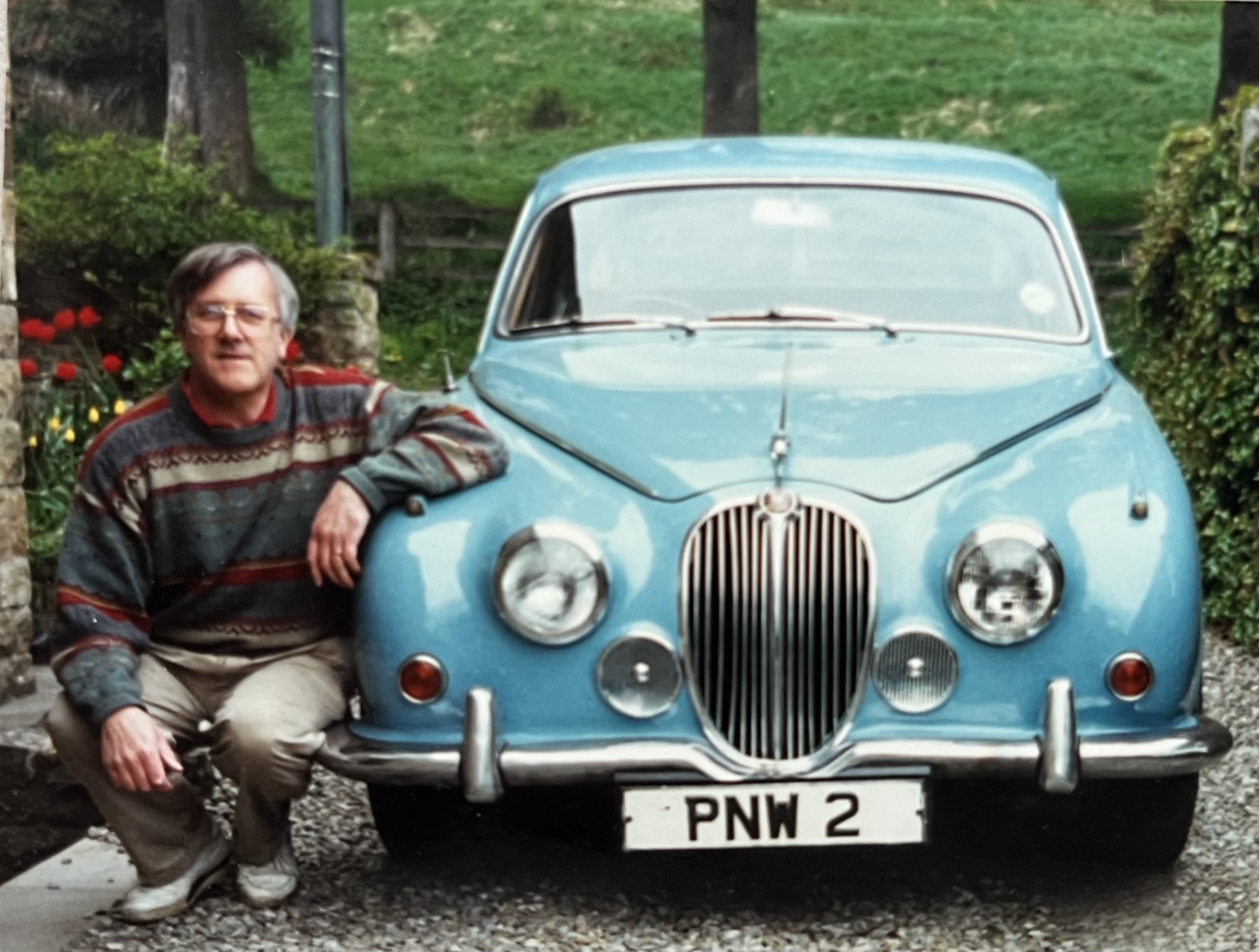
Back in 2018 I wrote a column about unusual names inspired by an archive piece I’d found by my dad from April 1978 in which he explained that he’d had a schoolfriend called Septimus thanks to the fact he was his family’s seventh son. He was unique because his father was also a seventh son, and so he was in the auspicious position of being the seventh son of a seventh son. These fortunate humans were supposed to have been blessed with supernatural powers, but Dad observed that his friend, whom everyone called Sep, displayed no discernible mystical talents.

Dad was good at coming up with quirky names for the characters in his novels. His best-known was the loveable rogue Claude Jeremiah Greengrass who appeared in many of his Constable books that inspired the TV series Heartbeat. According to Dad, that was a genuine name he had come across as a young bobby and he stored it away in his memory bank until it resurfaced many years later on the pages of the first ‘Heartbeat’ novel (Constable on the Hill, published in 1979). Other fun names he conjured up included Detective Inspector Montague Pluke, Detective Sergeant James Aloyisius Carnaby-King, Sergeant Oscar Blaketon and Constable Alf ‘Volcano’ Ventress.

Brian Reader got in touch via my Countryman’s Daughter web page and informed me: “Two of my grandfather Rocious’s sisters were named Fera and Ellengor! So far I haven’t found the origins.”

I’ve never heard of Rocious, Fera or Ellengor. The only reference I came up with for ‘Rocious’ was in a dictionary of slang where it means ‘amazing’ or ‘cool and trendy’. I wonder if his parents had those traits in mind when naming him? The nearest known name I got to was the Spanish ‘Rocio’, a gender neutral name meaning ‘dew’. The Spanish have used it to refer to the Virgin Mary – ‘La Virgen del Rocio’ (Mary of the Dew).

The next nearest I could get to was ‘Roscius’ which online dictionaries say was a noun first used in Englsih in 1607 to mean ‘actor’. It links back to a famous Roman thespian called Quintus Roscius Gallus, whose reputation in the theatre was legendary, and thus the word ‘Roscian’ became commonplace in the 1600s to refer to someone who had delivered a particularly fine stage performance.

I found a bit more on the name Fera. It is a feminine name derived from the Latin ‘ferus’ which means ‘wild’ or ‘untamed’, and today the Italian word ‘fiero’ means ‘fierce’ or ‘fiery’. ‘Fiera’ as an adjective means ‘proud’ and as a noun means ‘a fete’ or ‘a fair’. In the Calabrian dialect of Italy ‘Fera’ means ‘dolphin’. Fera is also used in Arabic regions and means ‘brave’. It is close to the Irish ‘Feara’ too, which means ‘truth’. I wonder if Brian’s great aunt Fera possessed any of these characteristics?

As for Ellengor, I can find very little in terms of its history as a name or its etymology as a word in any language, never mind English. To me, the name sounds like a character from Arthurian legend, or a queen from Viking mythology. I have found a few mentions of women called ‘Ellengor’, most of whom came from the Northallerton area and one of which might well be Brian’s great aunt. We have Ellengor Barker (1862-1955), Ellengor Bramley (1871-1965), and Ellengor Barker Rollins (1889-1977) all from Northallerton and who might well be related. My guess is that Ellengor Barker Rollins is the daughter of Ellengor Barker.

There are also a couple more: Ellengor Kimberley (b.Boynton) who was born in either 1889, 1899, or 1900 and died in 1961, and her daughter Ellengor Collins (1922-2015). Both of these women came from the Bedale area. I wonder if all the Ellengors are related and named after one original family matriarch?

I’d love to know if any of you have interesting names or do you have a relative who has or had a quirky name? Get in touch with me using the methods below.

(Thanks to Brian inspiring this week’s column, and I hope readers will forgive this public personal message, but it’s the only way I will know that he will see it! Brian just to let you know that I replied to you by email, but have a feeling they may have ended up in your junk folder!).

Do you have opinions, memories or ideas to share with me? Get in touch with me using the ‘Contact’ button on the top right.

This column appeared in the Darlington & Stockton Times on Friday 19th and the Ryedale Gazette and Herald on Wednesday 17th Sept 2025

Falling write into our hands

The books of poems my brother and I found in my dad’s study and library after being contacted by the poet Bill Fall’s (AKA Erimus) great-granddaughter
Yorkshire dialect poet William E Fall, who wrote under the pseudonym ‘Erimus’.


A lady called Sophie-Jean Fall has been in touch asking about a Countryman’s Diary column that appeared in March 2007. She says: “The author mentions William Fall / Erimus, the Danby poet. He was my great-grandfather…I cannot find his biography or books online, and this article is the sole trace of his name when I Google it. If you can, please could you try find who the author was or who he contacted to garner William’s poetic works? It would mean the world to me if I could read such books.”

The answer to the first question is easy, of course, because it is my dad Peter Walker (AKA Nicholas Rhea), who wrote the Countryman’s Diary for 41 years from 1976 until 2017. I had not heard of William Fall or Erimus, but having looked up the column, I discovered the following (in my dad’s own words):

“Who was William E Fall, known to everyone as Bill? Under the pen-name of Erimus, William Fall wrote dialect poetry and prose, his dialect being that of the district around Danby in Cleveland. He was born at Easby in the Cleveland Hills and, in retirement, settled in a cottage near Danby Castle.

“A kindly correspondent from Durham has sent me four of his collections published in the late 1970s and early 1980s…To give a flavour of his sense of humour, part of his biography reads: ‘He worked successively as a grocer’s assistant, a farmer’s boy and wielded a pick and a shovel in a quarry until he heard a voice, as if from heaven, saying, ‘William, thou shalt work no more.’ So he joined Middlesbrough Police where he served for the next thirty years.’”

I was determined to find those books, and the next time I visited my mum, embarked on one of my favourite pastimes – ferreting around in my dad’s study for interesting stuff. I had a trusty sidekick in my brother, and we both set about the task with gusto.

We had no idea what the books looked liked, although I had found online references to them, including the names, when they were published and how many pages each had. That told us that they were likely very slim volumes, with no room for the title on the spine, making finding them in dad’s vast collection more tricky. There were five published in total and called ‘Wi’ t’Accent on Yorkshire’ (Feb 1976), ‘Tom Boyes, Deealsman’ (Feb 1977), ‘Queer Fooaks, Tykes!’ (Nov 1977), ‘Hermit and Recluse’ (June 1979) and finally ‘Poetry for t’Peasantry’ (Aug 1981).

To find anything in Dad’s study or library (a large bedroom with floor to ceiling shelves crammed with books), you have to know how his brain worked. Dad arranged his collection in loose categories (mostly unlabelled), and we started our search in his study by locating the section on ‘Yorkshire dialect’. Initially, it failed to bear fruit so we tried other sections, including ‘Biographies’ (seeing as his 2007 column mentioned a biography). Again we failed to find anything.

We then headed upstairs to the library and after scanning the numerous shelves found a section on poetry. Many of the greats nestled there, including Shakespeare, Tennyson, Wordsworth, Browning and Burns. To the far left of one shelf was a collection of pamphlets entitled ‘Transactions of the Yorkshire Dialect Society (YDS)’. They all looked very similar and unpromising, but nevertheless I took the pile of pamphlets and began to flick through.

And what do you know? Hidden right in the middle, barely visible, was a little green book. As soon as my eyes fell on it, my heart sang. It was ‘Queer Fooaks, Tykes!‘. After a little celebratory dance (and knowing there were another three to find), we kept going. A fruitless search in the library followed, but now we knew what one book looked like, we tried again in the study downstairs, and sure enough, hidden among dozens more copies of YDS pamphlets, we found ‘Poetry for t’Peasantry’ and finally, ‘Tom Boyes, Deealsman’. Each book is signed by the author and tucked inside in the last one was an old photo and some intriguing correspondence.

As I write, I have not yet told Sophie-Jean of my discovery, and cannot wait to pass on the good news. I wonder what she will say?

Look out for part two of this story next week to find out!

Do you have opinions, memories or ideas to share with me? Get in touch with me using the ‘Contact’ button on the top right.

This column appeared in the Darlington & Stockton Times on Friday 1st Aug and the Ryedale Gazette and Herald on Wednesday 30th July  2025

You can lead a horse to water

A drawing of Sir Ralph Payne-Gallwey from Vanity Fair magazine in 1893. Sir Ralph of Thirkleby Hall, paid for a roadside water trough in the village (Photo: Leslie Ward, public domain via Wikimedia Commons)


A few weeks ago I wrote about how my best friend and I celebrate the longevity of our relationship by having an annual weekend away together.


Gurli Svith from Denmark wrote: “Your column on friendship touched me very much because I have a very good friend I have known since I was 14 and she was 12. She was going to start at my school and came to my home to ask if we could cycle together. That was the beginning and now being 76 and 74 we are still close friends. We do not meet very often but when we do it is as if we saw each other just yesterday. We can talk about everything, and we have helped each other through hard times. For many, many years we have given each other birthday presents, but sometimes we have not seen each other for two or three years so it is like Christmas when we are sitting there drinking tea, eating cakes and unwrapping our presents.”


Is it true that many people are closer to their best friends than their own family? The saying goes, you can choose your friends but you can’t choose your family, so if you could opt out of spending Christmas and Easter with relatives, would you? (I acknowledge that I might be opening a can of worms with that question!)


Let’s get back on safer ground with troughs. Regular reader Clare Powell says: “We do have a couple of stone troughs we bought in a farm sale in Rosedale in the 1980s (Paid more than we should have because my husband kept bidding against himself – much to the locals’ amusement!). We transported them in the back of a Volvo. No idea how old they are, so it was interesting to read your article. Like you, I never really thought about who made them, and how. And you’re right, your dad would have had the answer at his fingertips.”


He sure did, and I now have the space to tell you what I discovered inside his old file. There were a few cuttings, columns, and notes, one of which was in Dad’s handwriting dated 15th May 1993. He had written it during a phone call from a chap called Dick Thompson who lived in our village and whose family had made locally quarried stone troughs for years.


“Each trough was excavated with a pickaxe and drawn down to the road on a sledge,” he’d scribbled. “It took seven or eight days to make one trough – all sizes done. Circular pig troughs also made so pigs could eat together.” He added that the troughs were made on spec, bought mainly by farmers, although parish councils paid for communal troughs situated in villages.


Among other things, the file also contained a newspaper cutting from March 1973 written by the esteemed founder of the original Countryman’s Diary column, Major Jack Fairfax-Blakeborough.


“The wayside water troughs were a real blessing both to parched travellers and to horses,” he wrote, “Especially in the heat of the summer when roads sent up a cloud of dust. Many of the troughs were erected by landowners who knew their value to man and beast. Some of them have inscriptions which tell us of their donor and his consideration for horseflesh.”


He mentions one between Burnsall and Appletreewick in the Dales which has a Latin verse ‘De torrential in via bibet propteren exaltabit caput’ which translated means ‘He will drink at the spring on the way, and thereafter lift his head with joy’, which is the last line of Psalm 110 in the Old Testament. The Major (and my dad when he wrote about it 20 years later) could not shed any light on who had placed the trough there. Can any of our Dales contingent add any more detail about this particular trough?


Dad mentions another placed at Thirkleby near Thirsk, paid for by Sir Ralph Payne-Gallwey (1848-1916), 3rd Baronet of Thirkleby Hall, who was an accomplished engineer, historian and artist. Its inscription, with a bit of poetic license where the rhyme is concerned, reads: ‘Weary traveller bless Sir Ralph, who set for thee this welcome trough.’


I have a feeling we have a lot more to come on these once indispensable features of our countryside highways and byways.


Do you have opinions, memories or ideas to share with me? Get in touch with me using the ‘Contact’ button on the top right.

This column appeared in the Darlington & Stockton Times on Friday 2nd and the Ryedale Gazette and Herald on Wednesday 30th April 2025

Getting it in the neck

Dad wrote more than 2000 Countryman’s Diary columns over 41 years

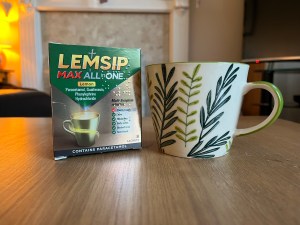
Will either of these help my cough symptoms?

Would you believe this is my 400th column since I took over from my dad in 2017? I’m pleased that I have made it this far without missing one, despite deaths, illnesses and pandemics trying to throw me off my stride.

Dad was committed to his column-writing duties and made sure he submitted them well before the deadline. Of course, my seven and a bit years pale into insignificance compared to his 41 years of service, which means he compiled more than 2000 of them. If ever I achieve that milestone, I will be 91 years of age, which is quite a thought!

Even then though, I’ll be some way off the record of the man who started this column in the first place, Major Jack Fairfax-Blakeborough. His first ‘Countryman’s Diary’ appeared in the Darlington and Stockton Times in 1922, and his last one at the very end of 1975 when he was aged 93. He died on New Year’s Day 1976, and my dad’s first column (a tribute) appeared on 10th January. That means the Major contributed more than 2750 columns, quite a feat. I’d be interested to know if anyone in this country has (or had) written a weekly column for longer.

We columnists are so attached to our little corners of glory that we are loathe to let anyone else step in, even when we are sick. As I mentioned last week, I was rather below par, and am thankfully much better now, although the nagging cough is hanging on. Everyone I speak to seems to have had it and offer the cheery warning that it will ‘go on for weeks’. I really hope not, and if you’ve been afflicted, then I hope you are not suffering too badly.

The fact it is persisting, even though I can function normally, means that I have ditched the Lemsip. I do not like to take medication for too long if I can help it, but the rattly chest is rather annoying so I have investigated some traditional ‘at home’ remedies that are supposed to help.

I have found plenty, although I am not sure I am going to give all of them a go. I am most tempted to try the first one – drinking hot chocolate. Dark chocolate with a minimum 70% cocoa content contains a good dose of theobromine which is a stimulant similar to caffeine. Recent research suggests it is better at suppressing an annoying cough than codeine, and if you melt it and turn it into hot chocolate by pouring into hot milk, the milk will also help you sleep. But I am a little confused. Does the milk override the stimulating effect of the theobromine? Or is it the other way round? I have yet to find out!

Another tip for a persistent cough is to eat mashed turnip. Not only is the vegetable packed full of vitamins (C, A and B) but it acts as an expectorant, that is, it loosens the mucus that causes you to cough. Spicy foods and curries are also believed to do the same thing, so perhaps if I add chilli powder to my mashed turnip I’ll be on to a winner.

There are some remedies that are more suited to survival experts like Bear Grylls than soft old columnists like me. According to Lady Eveline Camilla Gurdon in a self-help manual published in 1893 by the Folk Lore Society, you must place a large, live, flat fish on your bare chest and keep it there until it dies. It is supposed to help with congestion in the chest and ease coughing. She also advises eating roasted mouse or drinking milk that has already been ‘lapped by a ferret’.

If you are suffering from a sore throat and fever, then you can try basting your throat with lard or chicken fat before wrapping your neck with dirty socks. This is similar to the wartime advice of wrapping your neck with a rope dipped in tar. The fumes from the stinky socks & the toxic tar are supposed to help clear the lungs and a blocked nose. I suppose if you die from inhaling poisonous fumes then you won’t be so bothered about your fever, will you.

I don’t know about you but I will stick to eucalyptus oil soaked into a tissue, thank you!

Do you have any interesting home remedies?

Do you have opinions, memories or ideas to share with me? Get in touch with me via the ‘Contact’ tab at the top right of this page.

This column appeared in the Darlington & Stockton Times on Friday 31st Jan and the Ryedale Gazette and Herald on Wednesday 29th Jan 2025

A doze of the flew


Lemsip is helping me keep on top of my symptoms of the flue flew FLU!


When I took over writing this weekly column from my dad in 2017, I was aware that it came with a number of burdens. Firstly, to step into my dad’s shoes, which are substantial, secondly, to do that every single week for 52 weeks a year, and thirdly, to keep coming up with interesting stuff to write about.


Fulfilling those requirements becomes even more difficult when you are feeling below par. As I write this, I am laid low with my third fluey bug in as many months. The first was definitely the worst, with me confined to bed for three full days, unable to do much more than make a cup of tea without feeling like I’d just run a marathon. The second was similar, but I was confined to bed for just the one day. This time, I don’t think it is as bad, but I have been full of cold and sneezing for several days now, yet still able to carry on as normal. I went to bed last night thinking that by today (day 4) I would be beginning to get better, only to find I woke up feeling like a limp dishrag. Motivation and inspiration are staying well away, clearly afraid of the germs lingering in the air.

It is at times like these when I am more grateful than usual for readers getting in touch with their own stories and comments because it means I can shamelessly use what they send me to fill column inches.

This week it is Albert Elliot from Castleton who, in my time of need, has come galloping to my rescue. He writes: “I was amused to read (last year!) the comments in your article in December on spelling mistakes. I wondered if you had ever seen this piece of doggerel that I picked up somewhere many years ago (see below)?

“In the early days of computers, before predictive text, spellcheckers were used, or so I understand (I am not particularly computer literate). I think it quite amusing. I still struggle with correct spelling myself and often make blunders, although I don’t like predictive text systems as they ‘jump the gun’ and get in the way! As far as I know the piece is by that famous author called ‘Anon’.”

This is the poem that Albert sent me, and it did make me chuckle because it is very clever and takes me back to the early days of PCs and Microsoft Word. Ahh things were so much simpler then (were they?).

Spell-cheque

I halve a spelling chequer

It came with my pea sea

It plainly marques four my revue

Miss steaks I do knot sea


Eye strike a quay and type a word

And weight four it too say

Weather eye I am write or wrong

It shows me strait a weigh


As soon as a missed ache is maid

It nose bee fore two long

And eye can putt the error rite

It’s rare lea ever wrong


Eye have run this poem threw it

I am shore your pleased two no

The spelling’s perfect awl the weigh

My chequer tolled me sew!

As this poem demonstrates, and as those who have been caught out more recently by Autocorrect understand, it is never a good idea to rely on technology to do work you really ought to do yourself – that is to check your copy and messages before you send them to anyone else. Otherwise it could be very embarrassing indeed.

Albert also recalled a time when he met my dad: “Your father, Peter Walker, kindly came along to my writers’ group (the Egton Bridge Writers Group – still in full vigour and of which I remain a member) and gave us an interesting talk on himself and his writing career…Although this was a long time ago, I remember the talk was fascinating and thoroughly enjoyed by the whole group. He has left a lasting legacy with his Heartbeat stories and other Yorkshire writings.”

I never tire of hearing about tales involving my dad, many of which I would never know if people didn’t get in touch.

So very many thanks to Albert, and on that note, I’m off back to bed with a Lemsip. Normal service will, I hope, resume next week.

Do you have opinions, memories or ideas to share with me? Get in touch with me via the ‘Contact’ tab at the top right of this page.

This column appeared in the Darlington & Stockton Times on Friday 24th Jan and the Ryedale Gazette and Herald on Wednesday 22nd Jan 2025

Finding a silver lining

IMG_3690
I now have a Silveroid teapot stand thanks to a clear out at my mum’s house
IMG_3582
The stamp on the bottom reads ‘National Products England’ and ‘National Silveroid’


A couple of challenges for you this week which will hopefully prove that real people can still be more useful for factual information than the seemingly omniscient internet.

Just over a year ago I was invited to give a talk at Rosedale Reading Room and while there Linda Chambers from the Rosedale History Archive asked me if I could find out anything about King Henry’s Night. “I was told about this some years back by an elderly gentleman (now dead) who lived at Thorgill, just along the dale side,” she wrote. “It apparently centred around young people going out on a particular night and meeting up with likely suitors. Not sure what their parents thought but no doubt it was eagerly anticipated!”

I had a look in my dad’s collection of cuttings and files but could not find anything labelled King Henry’s Night. I also looked in a few of his books, Folk Tales from the North York Moors, Folk Stories from the Yorkshire Dales and Yorkshire Days, but again nothing. He did write about occasions where young men and women would go out and perform certain charms and spells in the hope of attracting suitors, but I don’t recall him ever mentioning King Henry’s Night.

I then resorted to that most useful source of miscellaneous information, the British Newspaper Archive, but again, came up empty handed. So, I’m turning to you, dear readers, in the hope that one of you can explain exactly what it is. Perhaps you went out yourself on King Henry’s Night and found your one and only?

The second mystery might be more straightforward to solve. We were having a clear out at my mum’s house when I came across what looked like an old pewter teapot stand that had been abandoned on a windowsill for years. I asked Mum if I could have it. As regular readers know, I drink tea using a proper pot, and a recurring conundrum is how to avoid it scalding whatever surface I place it upon. Now I need worry no more!

Mum couldn’t remember how she came by it, but it was either used at home when she was young or picked up at a jumble sale. There is a stamp on the reverse labelled ‘National Products England’ and ‘National Silveroid’. It brought to mind the war effort and the ‘National Loaf’, but it turns out Silveroid appeared much earlier than that. 

The stand looks a bit like pewter, which is an alloy consisting mostly of tin mixed with small amounts of other metals such as copper, lead or antimony. It has been used for making household items since Roman times and in the 17th and 18th centuries it would have been found in every household in the form of plates, cutlery, cups, jugs, buttons and the like.

Pewter was rather soft and prone to dents, and in the late 19th century, Silveroid started to appear. It was far more durable and yet mimicked the stylish look of pewter along with the shine of silver. It was patented in the USA where it was often used for watch cases. I did find a few references to it in the newspaper archive, the earliest of which appeared in the Daily Gazette in September 1878 and read: ‘Silveroid is the name of a new metal which has just been introduced in America in the manufacture of tableware. It has a fine texture, is susceptible of a high finish, and can be supplied at much less cost than anything heretofore used as a substitute for real silver.’

I also found the exact same paragraph in a number of other newspapers in subsequent years, so I did wonder how long it had to be around for it to be no longer considered ‘new’.

Six years later in 1884, there were adverts extolling the benefits of the product, but they now tell us that Silveroid is ‘the cheapest substitute for silver yet introduced, which being of a uniform white colour throughout, renders Nickel or Silver Plating quite unnecessary. This Metal is specially adapted for Steamship Fittings, Railway Carriage Furniture, and Art Metal Work. Specimens and price on application.’

So what do you know about Silveroid, what happened to it, and what are ‘National Products England’? Do get in touch via the usual channels!

I’d love to hear from you about your opinions, memories and ideas for columns. Use the ‘Contact’ button on the top right of this page to get in touch. This column appeared in the Darlington & Stockton Times on Friday 7th and the Ryedale Gazette and Herald on Wednesday 5th June 2024.

A past to be Pict apart

20231229_100121
The now disused St Hilary’s Church in Picton near Yarm.

This  Saturday (13th January) was St Hilary’s Day and it is said to be the coldest day of the year. Its chilly reputation came about after a severe frost in 1205 which started on 13th January and lasted until 22nd March.  

Reader Jim Ackrill from Picton near Yarm got in touch with a lovely message connected to St Hilary. He said: “I was doing some research into my local parish church (now closed and sold) and came across an article by someone you may know! A certain Nicholas Rhea published the article in the Darlington and Stockton Times on the 13th of January 2012. It interested me as our local church was dedicated to St. Hilary when it was built in 1911.”

My dad’s article explained that St Hilary was born in 315 in Poitiers, a town in France known for its architecture and hill-top setting. Hilary followed the beliefs of his prominent pagan parents until the age of 35 when he became a Catholic priest and pledged to lead a life of abstinence, despite the fact he was already married with a daughter. He was elected Bishop of Poitiers in 353, and travelled extensively visiting the Middle East, Greece, and Italy.

He was known for being outspoken, and his writings upset Emperor Constantine II, leading to him being banished to Phrygia (now in modern central Turkey) and then back to Poitiers. St Augustine refers to him as an illustrious doctor and, as a progressive thinker, was said to be keen to educate children with learning difficulties. St Hilary died in Poitiers on or around 13th January 368 and is known as St Hilary of Poitiers, Pope Pius IX having named him Doctor of the Church in 1851.

Jim Ackrill wonders more about the connection of St Hilary to his home village: “Now this is the interesting information which I discovered. Poitiers is in western France and was founded by the Celtic Pictones tribe (also known as Pictavi or Picts) and which, after Roman influence, became known as Pictavium. As Christianity was officialised across the Roman Empire during the 3rd and 4th centuries, the first Bishop of Poitiers from 350-367 was St. Hilarius (Hilary). The connection between Picton and the Pictones cannot be a coincidence. I believe some well-read cleric connected the two and suggested St Hilary for the church at Picton.”

It is possible that Jim’s theory about how St Hilary’s in Picton came by its name is correct. It was closed to worship in 2004, and hence St Martin’s Church in neighbouring Kirklevington was rededicated to St Martin and St Hilary in 2011, the centenary of the original St Hilary’s Church. The village name has evolved from Pyketon to Pykton, then Pickton to Picton, and has been said to mean ‘peak town’ which would fit in very well with its hilltop location and as such, echoes its French counterpart.

However, there is a possibility that ‘peak town’ is wrong, if an historical link with Poitiers can be established. Could Picton actually come from ‘Picts town’? As Jim says, Poitiers was called ‘Pictavium’ during St Hilary’s lifetime and is believed to mean ‘painted people’, referencing the Gallic Picts’ habit of painting or tattooing their skin.

It could of course just be a remarkable coincidence that Picton and the Pictones have similar names as well as a link to St Hilary. During the reign of Edward 1st (1272 – 1307), the family that owned the village took the name Picton to symbolise their ownership of it and the surrounding land. It is interesting to note that as a youth, King Edward I was heavily influenced by his relatives from the Poitou region of France (known as Pictavia) of which Poitiers was the capital.

It is also worth mentioning the Scottish Picts, a tribe with a ferocious reputation from the far north and east. Like their Gallic cousins they were named by the invading Romans, thanks to their habit of painting their skin to make them seem more ferocious in battle. Although they have links to the French, I think it is unlikely they have any connection to the village of Picton.

There must be a lot more to be discussed in this story, but it will need someone with a bigger and more knowledgeable brain than mine to get to the bottom of it.

Contact me via my webpage at countrymansdaughter.com, or email gazette@gazetteherald.co.uk or dst@nne.co.uk. 

This column appeared in the Darlington & Stockton Times on Friday 12th and the Ryedale Gazette and Herald on Wednesday 10th Jan 2024.

Flowing up the hill

IMG_9405
The outline of one of Joseph Foord’s water races can still be seen at Newgate Bank on the Helmsley to Stokesley Road

IMG_9419

I was contacted by reader Ted Naisbitt in connection with my columns on how ancient folk living in dry areas managed to get access to drinking water. Reader Jo Bird had suggested that perhaps wells were constructed, and I wondered if prehistoric humans had the engineering know-how to be able to dig deep wells. My research revealed that indeed they did, as evidenced by a sophisticated drainage system that has been discovered at the 4th century BC settlement of Skara Brae in the Orkneys.

Accessing fresh water was a continuous battle for people living in remote communities, and Ted mentioned a hydraulic engineer called Joseph Foord who was active on the North York Moors in the 18th century. He was prompted to find out more after a visit to Thirsk Tourist Information Office (where Ted volunteers) by Coxwold resident Ken Ward who used to live by one of these water channels. Ken was keen to find out about the engineer whom it is said performed ‘miracles’ by making water seemingly run up hills.

“Prior to the 18th century the towns and villages along the southern edge of the Moors (roughly the A170) did not have access to fresh running water,” says Ted, “But just a bit further north on the other side of the tabular hills there was plenty. This engineer managed to bring fresh water to these places by surveying for and digging out narrow ‘canals’ around them often for many miles and overcoming many obstacles on the way. In places an optical illusion made it seem as if the water was running uphill.”

Ted pointed me to an article about Foord on a website called ‘Yorkshiremoors.co.uk’, and I must give credit to that website for what appears in this column, as there doesn’t seem to be a great deal online about him. I will also have a look in my dad’s archives next time I go see my mum as I’d be surprised if he hasn’t written about him. What Foord achieved is highly noteworthy, and he deserves to be remembered.

Joseph was born in 1714 in Fadmoor near Kirkbymoorside into a Society of Friends (Quaker) family and at the age of 20, when his father Matthew passed away, he inherited their farm at Skiplam Grange, along with some mills and shares in mines at Ankness between Fadmoor and Bransdale. 1744 was a momentous year for Foord, as he was also ejected from the Quakers for having fathered an illegitimate child.

Foord became an engineer and a surveyor and, having grown up on the North York Moors, was well aware of the difficulties faced by inhabitants of remote villages on top of these limestone hills. They would have to transport heavy vessels of water over rough terrain and up steep inclines, making an already tough life even more so.

In about 1747, Foord came up with the idea of constructing channels, or ‘races’, to transport water from the springs on the high moors to the dry communities. His first experimental race ran for five miles and supplied Gillamoor and Fadmoor. What was particularly unique, though, was that these two villages sat high on the hills, and the task of getting water up the hill was the problem, or so it seemed.

According to Yorkshiremoors.org: “Gillamoor is about 525ft above sea level. The northern, highest, tip of the tabular hill that contains the village is at Boon Hill, about a mile and a half to the northwest. The ground at the base of Boon Hill is 650ft above sea level, and thus 125 feet higher than Gillamoor. Foord was thus able to construct a water course that could run downhill, while at the same time appearing to climb up the steep slopes below Gillamoor!”

In 1759, the water course was extended to Kirkbymoorside, then ultimately to Carlton, Newton, Pockley, Old Byland and Rievaulx, delivering precious fresh water to the residents. As he was so familiar with the geology and geography of the area, in the end, Foord was able to construct around 70 miles of water courses, some of which are still visible today, such as from Newgate Bank on the A1257 Helmsley to Stokesley road.

Foord died in January 1788 at his daughter Mary’s home in Fawdington near Thirsk. Despite never being welcomed back into the Society of Friends, he was interred as a non-member in their burial ground.

Read more at countrymansdaughter.com. Follow me on Twitter @countrymansdaug.

This column appeared in the Darlington & Stockton Times on Friday 20th and the Ryedale Gazette and Herald on Wednesday 18th October 2023.

And the beat goes on

IMG_7710
Patient Heartbeat stars Tricia Penrose, Vanessa Hehir and David Lonsdale spent hours signing autographs for fans.

IMG_7717
Myself with Heartbeat Vehicle Rally organiser Lee Jones, with his Austin A40 that was used by Dr Summerbee in the Heartbeat TV series

I had the pleasure recently to be able to join the annual Heartbeat Vehicle Rally that has taken place in Goathland for the past eleven years.

Thousands of fans flock to the village to see the impressive classic vehicles, some of which featured in the TV series inspired by my dad’s series of Constable books. It also attracts owners of other vintage cars, bikes, tractors and trucks as well as fans of the 1960s and families looking for an entertaining day out.

I was fortunate to have been invited by the organiser, Lee Jones, to join him and his merry band of helpers for the weekend. It’s not a money-making exercise, but simply a bunch of fans and vehicle enthusiasts who work together to create a memorable occasion all for the love of doing it.

Lee was supported by volunteers hailing from all over the country, including Wales, Scotland, the Midlands, Teesside, Durham, Lincolnshire and Suffolk to name just those I had the pleasure of meeting. Visitors came from even further afield, including from the USA, Sweden, Norway, Ireland, Devon, Cornwall, Dorset, Essex, Hampshire, Somerset, and even – wait for it – Lancashire!

A few of the stars were in attendance too, including Tricia Penrose, who played barmaid Gina Ward, David Lonsdale, who played hapless David Stockwell, and Vanessa Hehir who played Scripps Garage mechanic Rosie Cartright. Adoring and ever-patient fans queued for up to two hours in the bracing wind just for a chance to speak to their heroes. Despite sitting at tables exposed to the elements for several hours, the actors were completely gracious, and gave each individual the time for a short chat, an autograph and a photo, which clearly meant the world to them.

The considerable collection of classic vehicles was a significant draw, and the owners adore their cars with the kind of ferocious love that I save for my children (although it might be argued that they give their cars far more care and attention). The metal beauties were absolutely gleaming, and some were adorned with pictures of their appearances in the show, alongside Heartbeat memorabilia. A couple of owners (namely members of the Sunderland and District Classic Vehicle Society) dressed up as characters from the series, walking around rattling buckets to raise funds for Goathland Primary School and the Village Hall, while others were giving people lifts in these special cars for the same reason. It was a thoughtful touch to give something back to the community that hosted the event.

There was such a positive and friendly atmosphere, although for the villagers of Goathland, it must be rather daunting having so many people descend. I’d be intrigued to know how many people attended over the two days, and popularity like this is a double-edged sword, but I know the organisers were at pains to ensure the least upset to those who lived there. When the first short series was aired in 1992, no-one predicted that it would be so successful, that at its peak, Heartbeat would attract 18 million viewers, and last for 18 series over 18 years.

And yet, it is this kind of economical boost and public exposure that rural communities in North Yorkshire need, but very few get. I am sure some residents will object to the intrusion, and I absolutely understand that, but you cannot ignore the financial benefit that is brought into these often neglected areas by the tourism that results from film or TV success. Without the Heartbeat-inspired influx, how else would remote Goathland prosper? It is worth noting that almost all the businesses lining the village thoroughfare feature the word ‘Aidensfield’ either on their shop front or on the merchandise they are selling. My dad created that name, but our family does not benefit from any of it. All the money generated goes to those small businesses that sell it.

In 2023, we are 13 years on from when the last episode of Heartbeat was aired, but the popularity of the show is undiminished. It is repeated every day on ITV3 and available on various streaming services, remaining one of the most popular of all the British vintage shows. I do wonder what my dad, a humble soul, would think of it all, but I witnessed the years and years of hard graft that he put in to achieve that success.

I am one seriously proud countryman’s daughter.

Read more at countrymansdaughter.com. Follow me on Twitter @countrymansdaug

This column appeared in the Darlington and Stockton Times on 14th July and Ryedale Gazette and Herald on 12th July 2023

A fledgling emergency

This slideshow requires JavaScript.

(This column appeared in the Darlington & Stockton Times  on 15th June, & the Gazette & Herald on 13th June 2018).

I was on a dog walk this morning when I came across a scruffy, chubby little chick perched by the side of the path. Every now and then, he’d give a few cheeps and look about himself in bewilderment, as if saying, “How on earth did I get here? And now what am I supposed to do?”

I had visions of him bravely leaping out of his nest into the unknown, and landing in unfamiliar territory without any notion of how to take off again. He didn’t look very happy, and I wondered if I ought to help him in any way. I couldn’t spot his parents anywhere.

In years gone by, I would have stood there agonising about what to do, fearing he’d be a tasty meal for the next passing cat. But one of the benefits of the modern age is that we have technology at our fingertips. So I took out my phone and Googled ‘What to do if I find a baby bird’. Those clever people at the RSPB came to my rescue, having dedicated a whole page on their website to just such a emergency.

For those you who don’t know, they say: “It’s common in spring and summer to find young birds sitting on the ground or hopping about without any sign of their parents…interfering with a young bird like this will do more harm than good.” It goes on to say they will not have been abandoned by their parents, who will either be watching unseen, or gathering food, and that you should leave them as they they are. “Removal of a fledgling from the wild has to be a very last resort – then only if it is injured or has definitely been abandoned or orphaned.”

So, thanks to my phone, I was very quickly reassured that I was doing the right thing by simply leaving it where it was, despite its anxious chirping and my worries about dastardly feline predators.

He was quite a chunky, round, fellow, with pleasantly dishevelled feathers, a tell-tale sign that he was just a youngster. He was mostly dark brown, yet speckled with dashes of light brown, and my gut instinct told me he was a baby blackbird, although I wasn’t sure. I took a few photos to look it up on my return, and, sure enough I was right. I think my dad would have been pleased. My countryside knowledge is growing by the week!

Dad just loved the nature that surrounded him, and he described June as a ‘beautiful time’ in his column from 17th June 1978. He goes on to talk about its reputation of being a ‘dry’ month, and the long-range forecast in that year predicted it would live up to that reputation. “However,” he adds, “We must not overlook the possibility of heavy downpours – indeed they’ve already come!”

Which is pretty much the same as now, with the first few days of June being as Dad described 40 years ago. I’ve checked the long-range forecast for this month too and it is strikingly similar, predicting mostly dry weather with the occasional heavy downpour.

He goes on to explain that is also known as the month of the ‘haysel’, an ancient word no longer in use, and not found in any of his trusty dialect glossaries. It refers to the period of gathering in the hay, when the ripe grass is cut, dried and carried into the barns for storage. When Dad was a boy, it was a time of great communal activity, and the whole village would turn out to help the farmers gather in their hay before the next heavy downpour. The farmer’s wife would provide a ready supply of drinks to the thirsty workers, including beer and cider, although according to Dad, the rather unappetising-sounding ‘cold tea’ was more commonly drunk.

Dad’s favourite part was once they were in the yard, when him and the other small children would launch themselves into the barn and, as it was in the days before bale machines, make dens and hiding places in the fresh, warm grass as it was unloaded off the carts. He notes that by 1978, almost all of the hay-gathering was done by machinery, and wistfully observes, “Haysel has gone from our language; I wonder how long it will be before haymaking as we knew it also disappears?”

Follow me on Twitter @countrymansdaug