Learning brick by brick

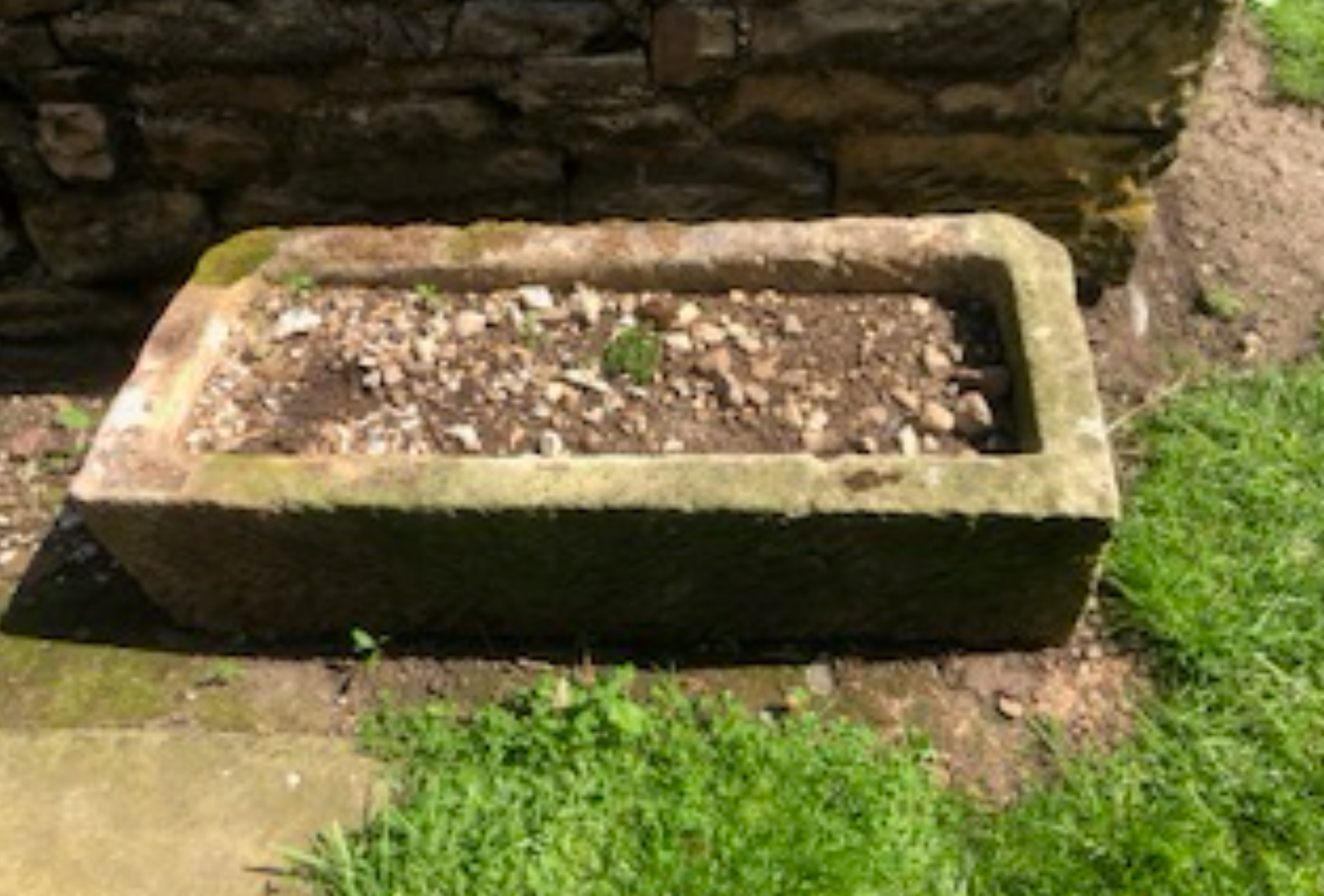
The carved stone I spotted on walk which I believe is an unfinished trough


The Railway Pond which used to be near a brickworks


Do you remember a few weeks ago I talked about an abandoned millstone above Kildale, while at the same time observing that once I began discussing stone troughs, suddenly I was seeing them everywhere?

Well blow me, I was on a dog walk this morning, and there nestled in the undergrowth was a big, carved lump of stone. I must have walked past it dozens of times and not paid any attention to it. But this was the first walk there since I started writing about stone troughs and so, finally, I paid it some attention. Instead of wandering past, I stopped and was immediately able to recognise that it had been deliberately carved by a stone mason at some point, thanks to the chisel marks all over it. Also, thanks to the useful information that came in from readers like John Buckworth, Mick Garratt and Stan Willis, I guessed that, like the Kildale millstone, it was another unfinished piece of masonry.

It was about two and a half feet long, one and a half wide and perhaps a foot deep, but the basin part (if indeed it had been intended to be a trough) had not been hollowed out. Having been gratefully educated by Stan, I now know that the hollowing out part would only have been done once it had reached its final destination. If hollowed out beforehand, it would become weaker and therefore more prone to the disaster of cracking on the bumpy horse and cart journey across dodgy road surfaces, and hours of painstaking work would have gone to waste.

This one seemed too big to have been a stone intended for a building, but how did it get there, when was it placed there and why was it left unfinished? Or is it not a trough at all?

The interesting thing is that it lies near a small pond, which suggests there would be no need to place a trough there because water is already plentiful. Also, compared to the original huge trough that sparked my interest in the topic, this one is relatively modest, and therefore would have served smaller animals rather than cattle or horses. But what? Poultry? Dogs? Your theories are most welcome!

The pond in question is called ‘Railway Pond’ because it is not far from the East Coast Main Line, although I am uncertain as to its connection to the railway. What I do know is that in the late 19th century, there used to be a brickworks nearby, and this pond was fundamental in the brick making process.

As bricks were handmade using clay, having a pond nearby was essential. Water was used to cleanse the clay of impurities, such as small stones and other debris. If left in, the end product would be weakened and therefore not be suitable for building a sturdy house. Once released, the impurities would sink to the bottom of the pond, leaving behind clean water which would then be drained off and used for the final clay-mixing process. Once the bricks were shaped (initially by hand, later using moulds), they would be fired at extremely high temperatures to drive out any moisture, hardening the bricks and rendering them resistant to water. The pond water was also used at the end of the process for cleaning equipment and tools.

One thing to note though, bricks are not totally impervious to moisture, as I’m sure you will know if you’ve had problems with damp in your home. If you’ve ever had the pleasure of visiting a musty cellar that has not been protected from damp, just touching the bricks will demonstrate how absorbent they can be if exposed to enough moisture. There are ways to mitigate against this, such as ‘tanking’ and other methods of damp proofing, but I’ll leave that fascinating topic to a more expert column writer!

You may have noticed that old bricks are sometimes coated in a white powdery substance, as if they are going mouldy. It is actually salt crystals that have been left behind when moisture inside the brick evaporates, driving the crystals to the surface. This is called efflorescence, and is generally harmless, if a bit unsightly. If it bothers you, the best way to remove it is to scrub it with a wire brush.

Do you have opinions, memories or ideas to share with me? Get in touch with me using the ‘Contact’ button on the top right.

This column appeared in the Darlington & Stockton Times on Friday 6th and the Ryedale Gazette and Herald on Wednesday 4th June 2025

Difficult fact to swallow

Swallows chatting on overhead lines above me, as if they were scoping out the property’s conservatory to set up home


A swallow feeds its young in a nest under the eaves. Photo by Alastair Smith


I was conducting a house viewing recently where the potential buyers had come for a second look before deciding whether they were going to make an offer or not. It was a lovely stone cottage in the Hambleton Hills with a gorgeous garden and wonderful views at the back.

Because the viewers had been before, I allowed them some privacy and selected a sunny spot outside to sit and wait until they had finished their visit. At the back of the house was a beautiful oak-framed conservatory, and I had opened up the bifold doors to make the most of the wonderful weather.

Not long after I sat down, I noticed a pair of swallows chattering on an overhead power line not far away. I had seen them on an earlier visit, and it had lifted my spirits knowing that the swallows had returned from the southern hemisphere, a portent of the summer soon to follow.

They seemed to be observing the conservatory, nodding to each other and chattering excitedly. It looked as if they were considering it as a suitable place to make a home. To a swallow, it would seem perfect, with sturdy timber y-frame struts and beams offering a selection of nesting sites under the vaulted ceiling, the slate roof providing safety, warmth and shelter.

Soon the birds left their spot on the overhead line, and performed a couple of ‘fly-bys’, sweeping round in wide circles, getting closer to the doors each time, then landing back on the power line to resume their excited chatter.

Moments later, they disappeared into a small shed in the neighbouring garden with a gap at the top of the door. Soon, they were back on the line, resuming their conversation.

Having studied the Swallowish language, I can tell you that the conversation went like this:

“Look at that spot Rita! What a fancy des res. So much light and and space, and with direct access to a bounty of food supplies.”

“Yes, it really is the dream home, isn’t it, Bertie. Imagine bringing up the children here, the garden is to die for. It is so much nicer than that pokey little shed you’ve made us move into. Dark and dingy, and only a wall for a view! The kids will be miserable there, whereas here…”

“I know dear, but then again it is so big, it could be a bit draughty…”

“Draughty? Nonsense! It’s south facing which is exactly what we need – all that sunlight! That grotty shed is north facing, and the roof has holes in it. The kids will be freezing, as will I! I didn’t fly 6000 miles from Johannesburg to spend my summer in a dingy old shed. I need warmth and a view while I bring up the kids, Bertie, and I deserve it after surviving that bloomin’ journey.”

“I suppose you are are right, Rita. I wonder if anyone else is interested in it? I wouldn’t want any dodgy neighbours.”

I kept my beady eye on them the whole time I was there, because anyone who has had swallows resident in their garden knows just how quickly they can dive into an open shed, garage or barn, and then get locked in. We once had to leave our own garage open for a day or so, keeping our eyes on it to see when both swallows had popped out so we could shut the door and prevent them from completing their nest. It felt a bit cruel, but they soon moved on to a more suitable nesting site.

Swallows fly south for the winter because the insects they rely upon for survival are no longer available. Before the 20th century, we didn’t even know they had left the country, and some scientists believed they hibernated, with one bizarre theory suggesting they survived at the bottom of ponds.

It was in 1912, after the introduction of bird ringing, that a swallow was found on a farm in South Africa bearing a ring that had been placed on its leg 18 months earlier by amateur naturalist John Masefield from Staffordshire.

However, more recently, with milder winters becoming commonplace, some swallows have been found to stay in the southern UK all year.

Is it just me, or does news unsettle some of you too?

Do you have opinions, memories or ideas to share with me? Get in touch with me using the ‘Contact’ button on the top right.

This column appeared in the Darlington & Stockton Times on Friday 30th and the Ryedale Gazette and Herald on Wednesday 28th May 2025

Having presents of mind

Reader Clare Proctor, seen here 2nd left with her family, says choosing her favourite day of the year is like choosing between her children – impossible! 
Do you remember a few weeks back I asked about your favourite day of the year and mentioned that I treasure the greetings cards that I receive from my boys on special occasions like my birthday and Mother’s Day? They write really lovely things, expressing their feelings in a way that they are unable to do face to face. I commented that in general, girls and women find it easier to talk openly about their deep emotions than men and boys and are far more likely to share their difficulties with close friends and family, who can then offer crucial emotional support.

A few readers got in touch on those two topics. Caroline Newnham says: “We’re not too good as a family at writing heartfelt messages in cards, though one daughter is developing the habit of doing this and I’m not going to discourage it! I asked them not to spend any money on Mother’s Day this year as they’d been very generous for my birthday in February. Some flowers arrived with a message that said succinctly “We have chosen to ignore your silly instruction.”

I loved that, because it sums up what we parents are like. How many of us, when asked by our children what we’d like for our birthday, say: “Oh, you don’t need get me anything!” And do they listen? Of course they don’t, because for them, the pleasure comes from the giving of gifts as much as the receiving of them, and it is a chance to express their love and gratitude.

Having said that, if your relationship with your loved ones is not harmonious, could gift giving be a chance to express that too? Have you ever received a terrible present? Or one that is laced with spite? I have a friend who received a book for Christmas from a relative with whom they had had a recent spat. The book was called ‘S**t Happens, Get Over It’. It ended up in the bin. Another of my friends puts enormous thought into buying special presents for loved ones, not to mention a lot of money too, but she does not always get the same in return. One year, on receipt of a dreary book, she tossed it across the room in disgust at the person’s lack of effort.

It makes me wonder why some people are so good a finding just the right present, knowing exactly what the recipient would like, while others are plain rubbish. I’ll admit that for some of my male friends, I resort to buying them the same thing every year because I don’t know what else to get them. I often rely on the tried and tested – an expensive bottle of wine or, for my brother-in-law, a voucher for his favourite artisan bread shop. I initially apologised for getting the same thing again but much to my relief he replied: “Don’t stop, I love it and use it all the time.”

As for favourite days, Janet Pearce writes: “Our Mother died when we were very young, so Mother’s Day was not a thing in our house. My special day of the year is 13th April, which is the anniversary of my first date with my beloved late husband. We went to Laugherne in South Wales, home of Dylan Thomas whose work we both loved. I still go on the same date each year like we did when he was alive. It is my happy place.”

And Clare Proctor adds: “I don’t have a favourite day of the year. I enjoy every day! It’s like picking your favourite child – impossible because each one is unique and you love them all. As for greeting cards, I have been known to waffle a bit, or write a rhyme, but never too emotional. I’m far too British for that. As for Mother’s Day, I’m a bit of a Scrooge, in that I don’t really believe in it. I tell my girls every day is Mother’s Day in our house. But I do like a card from them, usually humorous rather than sentimental, and being taken out to lunch. But again, they can do that every day as far as I’m concerned!”

What I’d like to know is, what was the worst gift you’ve ever received, and what was the best?

Do you have opinions, memories or ideas to share with me? Get in touch with me using the ‘Contact’ button on the top right.

This column appeared in the Darlington & Stockton Times on Friday 16th and the Ryedale Gazette and Herald on Wednesday 14th May 2025

Theories put through the mill

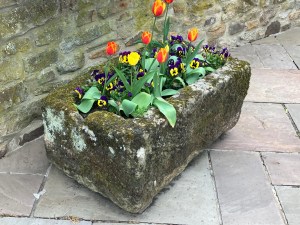
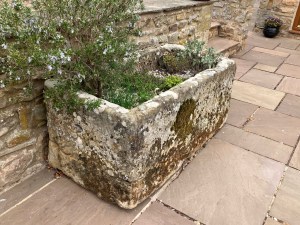
Some beautiful stone troughs that stand in the garden of a reader who lives near Durham

I received some wonderful images of stone troughs from a reader who says: “I enjoyed your article on stone troughs as I have been puzzling over how on earth they were made, by whom, and who paid/got rewarded for making them with no more than manual tools. We have six such troughs of various sizes…We brought one small one from Durham, the rest were on site when we came here, origins unknown.”

As the pictures show, they make super containers for plants, flowers and herbs and nestle naturally into their surroundings, far more at home than a modern equivalent, don’t you think?

I’ve also been contacted about the huge millstone on the moor above Kildale. Reader John Buckworth got in touch a few weeks ago because he had been pondering about the massive, unfinished stone for more than 50 years. It has been chiselled out on one side, but left unfinished on the other, and had been abandoned far from any mill that would have been its ultimate destination. Why was it never finished or moved?

Mick Garratt, who blogs about his travels around the North York Moors, has wondered for years about the baffling millstone. He contacted me to discuss his theories and hopes someone reading this might shed more light upon the mystery.

“I’ve been really curious about that unfinished millstone too! I’ve written about it a few times on my blog and speculated some of my thoughts, but I still have so many questions that haven’t been answered,” he says.

On his blog, Mick mentions that in the 18th century there were two mills in Kildale. The first started life as a fulling mill, a process which thickened and matted together wool fibres, but once the wool industry declined the mill was converted into a bleaching mill to whiten linen cloth. The other mill was ‘the first recorded corn mill in Cleveland’, with the earliest record dating it to 1262, and another stating that it ‘was totally destroyed by a great inundation in 1321’ (A History of the County of York North Riding, Volume 2, ed. William Page, 1923). The corn mill was located near Old Meggison waterfall on the River Leven, north of Kildale village, while the bleaching mill was further down the valley, just below the current ‘Bleach Mill Farm’. On the night of 21st July 1840, the corn mill was wiped out and the bleaching mill severely damaged when, according to Bulmer’s History and Directory of North Yorkshire (1890), ‘Two artificial lakes or fish ponds, which added greatly to the charms of this picturesque vale, unable to bear the pressure of the water which the flood poured into the ponds, were completely swept away, and very considerable damage done by the water.’

Mick suggests: “Maybe the millstone was destined for the corn mill in Kildale but the flood of 1840 caused its manufacture to be abandoned. Purely a guess of course.”

Mick has another suggestion relating to the quality of the stone. “The North York Moors Historic Environment Record dates it to ‘post medieval’, which is any time between 1540 and 1799. The bedrock at this location is recorded as ‘undifferentiated sandstone, siltstone and mudstone’, none of which make particularly good millstones, but probably good enough for grinding proggin (cattle food). At Rievaulx, French burrstone (a sturdy limestone) was used for grinding wheat for flour, and millstone grit from the Derbyshire Peaks for proggin. Our unfinished millstone points then to a poor quality…Perhaps that’s the reason it was abandoned…perhaps a flaw was found.”

Mick also describes the method of carving a stone of sufficient quality to grind fine flour: “Once the millstone is shaped and transported to the mill, it would have to be finally dressed. The miller would ensure the grinding face was flat by proving it with a staff smeared with red rudd (a soft red stone collected from riverbeds and often used to colour front steps of cottages). Next, furrows or grooves would have to be chiselled out using a mill bill or pick. Furrows must be of the correct depth with a straight and sloping side. They act as scissors with those on the top stone during the grinding.”

If any of you have many further suggestions concerning in our mysterious millstone, I’d love you to get in touch via my contact page (above right).

Do you have opinions, memories or ideas to share with me? Get in touch with me using the ‘Contact’ button on the top right.

This column appeared in the Darlington & Stockton Times on Friday 9th and the Ryedale Gazette and Herald on Wednesday 7th May 2025

You can lead a horse to water

A drawing of Sir Ralph Payne-Gallwey from Vanity Fair magazine in 1893. Sir Ralph of Thirkleby Hall, paid for a roadside water trough in the village (Photo: Leslie Ward, public domain via Wikimedia Commons)


A few weeks ago I wrote about how my best friend and I celebrate the longevity of our relationship by having an annual weekend away together.


Gurli Svith from Denmark wrote: “Your column on friendship touched me very much because I have a very good friend I have known since I was 14 and she was 12. She was going to start at my school and came to my home to ask if we could cycle together. That was the beginning and now being 76 and 74 we are still close friends. We do not meet very often but when we do it is as if we saw each other just yesterday. We can talk about everything, and we have helped each other through hard times. For many, many years we have given each other birthday presents, but sometimes we have not seen each other for two or three years so it is like Christmas when we are sitting there drinking tea, eating cakes and unwrapping our presents.”


Is it true that many people are closer to their best friends than their own family? The saying goes, you can choose your friends but you can’t choose your family, so if you could opt out of spending Christmas and Easter with relatives, would you? (I acknowledge that I might be opening a can of worms with that question!)


Let’s get back on safer ground with troughs. Regular reader Clare Powell says: “We do have a couple of stone troughs we bought in a farm sale in Rosedale in the 1980s (Paid more than we should have because my husband kept bidding against himself – much to the locals’ amusement!). We transported them in the back of a Volvo. No idea how old they are, so it was interesting to read your article. Like you, I never really thought about who made them, and how. And you’re right, your dad would have had the answer at his fingertips.”


He sure did, and I now have the space to tell you what I discovered inside his old file. There were a few cuttings, columns, and notes, one of which was in Dad’s handwriting dated 15th May 1993. He had written it during a phone call from a chap called Dick Thompson who lived in our village and whose family had made locally quarried stone troughs for years.


“Each trough was excavated with a pickaxe and drawn down to the road on a sledge,” he’d scribbled. “It took seven or eight days to make one trough – all sizes done. Circular pig troughs also made so pigs could eat together.” He added that the troughs were made on spec, bought mainly by farmers, although parish councils paid for communal troughs situated in villages.


Among other things, the file also contained a newspaper cutting from March 1973 written by the esteemed founder of the original Countryman’s Diary column, Major Jack Fairfax-Blakeborough.


“The wayside water troughs were a real blessing both to parched travellers and to horses,” he wrote, “Especially in the heat of the summer when roads sent up a cloud of dust. Many of the troughs were erected by landowners who knew their value to man and beast. Some of them have inscriptions which tell us of their donor and his consideration for horseflesh.”


He mentions one between Burnsall and Appletreewick in the Dales which has a Latin verse ‘De torrential in via bibet propteren exaltabit caput’ which translated means ‘He will drink at the spring on the way, and thereafter lift his head with joy’, which is the last line of Psalm 110 in the Old Testament. The Major (and my dad when he wrote about it 20 years later) could not shed any light on who had placed the trough there. Can any of our Dales contingent add any more detail about this particular trough?


Dad mentions another placed at Thirkleby near Thirsk, paid for by Sir Ralph Payne-Gallwey (1848-1916), 3rd Baronet of Thirkleby Hall, who was an accomplished engineer, historian and artist. Its inscription, with a bit of poetic license where the rhyme is concerned, reads: ‘Weary traveller bless Sir Ralph, who set for thee this welcome trough.’


I have a feeling we have a lot more to come on these once indispensable features of our countryside highways and byways.


Do you have opinions, memories or ideas to share with me? Get in touch with me using the ‘Contact’ button on the top right.

This column appeared in the Darlington & Stockton Times on Friday 2nd and the Ryedale Gazette and Herald on Wednesday 30th April 2025

A little means a lot

My boys always write beautiful and meaningful words  in the cards they give me on special occasions

Spring has sprung in earnest now, and as I write this, the sky is cloudless blue and the sun is beating down. Trees and flowers have burst into life, and the chattering birds are furiously building nests in preparation for the arrival of their young. Life is good!

It has been like this all week and is set to continue well into next. In the UK, because our weather is so unpredictable, we are extra grateful when we get a sustained patch of good weather and never take such things for granted.

A few weeks ago I mentioned that my favourite day of the year is the Spring Equinox because it represents a beacon of hope for good weather after a long, miserable winter. It also heralds the arrival of shorter nights and longer days, which cheers me up no end. I also tried to explain the difference between the well-known Spring Equinox and the lesser-known Spring Equilux which resulted in me declaring afterwards that I needed a lie down.

These two annual milestones are determined by scientists who use the rising and the setting of the sun to calculate the length of daytime versus night. They are each measured slightly differently, which is why we have the two.

Alastair Smith, whose wonderful photograph of a sunrise over Runswick Bay accompanied the column, contacted me to say: “Thank you for the credit Sarah. Your explanation of the difference is deserving of a lie down, however make sure it is in the Spring sunshine. Wishing you a great year!”

And Caroline Newnham said: “It’s all a bit mind boggling for me…I need to lie down after reading it. I understand the Latin but that’s as far as it goes!”

I asked if any of you also had a favourite day and for Karl Lynch it is December 25th: “To me Christmas Day is about sharing and creating memories with loved ones. I believe there’s a child in every one of us, and it brings back memories of feeling safe triggered by the smell of Christmas dinner. Merry Christmas, Sarah,” he says.

Although I do love Christmas Day, the fact that it is such hard work for hosts and ridiculously expensive means it lies further down the ‘favourite day’ rankings for me.

Mother’s Day has not long gone, and that too rates highly on my list because it gives me an excuse to lounge about while my boys pamper and spoil me. They also send me cards in which they write really lovely things, expressing their feelings in a way that they are unable to do face to face. In general, girls and women find it easier to talk openly about their deep emotions than men and boys.

That is a sweeping generalisation, but nevertheless it is a fact that suicide is the biggest killer of males under 50, and three quarters of all suicide victims are men. Not unburdening themselves of their innermost struggles is given as a major contributor.

Undoubtedly women can struggle too, but we are far more likely to share our difficulties with close friends and family, who can then offer crucial emotional support.

One thing I taught my boys when they were very little was to say how they felt when they wrote a greetings card. It was a way to get them to express themselves without the embarrassment of doing it out loud or face to face. For example, instead of the simple ‘To Granny, love from Ollie’ I’d ask them to think of something they really liked about their granny to write down, and so the contents of the card would be more meaningful to her.

They continued to do that into their teens and adulthood, and now, with all of them in their 20s, they write truly heartfelt comments in the cards they send to me and their closest loved ones.

I cannot say if it has helped them in terms of expressing their feelings in other areas of life, and they certainly have not escaped their mental health ups and downs, but I do think it has given them a little leg up in the ability to talk openly about their states of mind.

And sometimes, it is the little things that matter.

Do you have opinions, memories or ideas to share with me? Get in touch with me using the ‘Contact’ button on the top right.

This column appeared in the Darlington & Stockton Times on Friday 18th and the Ryedale Gazette and Herald on Wednesday 16th April 2025

No stone unturned

The huge stone trough I spotted in someone’s garden. How did it get there?
The deliberate diagonal markings of the mason’s tool can clearly be seen


Do you remember a while back I wrote about stone masons, and the incredible skills that went into creating the distinctive masonry that features in many homes on the North York Moors? Masons had their own particular way of marking, and the ‘posher’ homes often featured the more labour-intensive herringbone pattern, while more basic patterns were used for less fancy constructions.

I was reminded of those stone masons the other day when I came across a magnificent trough in the back garden of a home near York. I was so captivated by it that it distracted me from the job I was meant to be doing. Thankfully, the clients were interested in hearing what I knew about the markings on the trough. Until I turned up, they’d not considered much about its past and how it had got there.

What initially struck me was the size of the thing. It was between five and six feet long, and about two to three feet wide and the almost same in depth. The internal and external surfaces all featured the distinctive markings made by the stone mason’s tool in a uniform and deliberate diagonal pattern.

It appeared to have been formed out of a single piece of rock because I could not see any joins. I guessed the trough was at least a couple of hundred years old, maybe more, and we all wondered how this huge, heavy beast had got there, if indeed it had ever been transported from elsewhere. The owners said their house was at one time a farm, built in the 1700s, and so it is possible the trough has been in that spot in their garden for up to 300 years.

This is the point where I appeal to those among you who have grown up on ancient farmsteads, or who are familiar with the history of such troughs. I have some questions for you.

–        Would the trough have been built from a single piece of masonry?

–        If so, how long would it take to hew out all the stone to make such a trough?

–        I understand pickaxes were used. Is that true?

–        Would it have been built onsite? Or transported from elsewhere? If it was moved, how did they do it in the days before mechanisation?

–        This trough has no outlet for water to drain out, so what would it have been used for (It is very deep, so only suitable for big livestock, if indeed that’s what it actually is)?

–        Could it be anything other than an ancient water container for animals?

It is one of those occasions where I wish my dad was here, because I am certain he would have been able to answer all those questions. In fact, ancient horse troughs feature heavily in one of his series of books, the Inspector Montague Pluke collection. The eccentric inspector’s hobby, between solving murders, is to seek out and catalogue long forgotten drinking troughs on the North York Moors. I’m sure my dad would have done plenty of research into these often ignored but common features of the landscape. Next time I go home, I will be rifling through his old files!

Before I took over these columns eight years ago, I would have barely given the trough a second glance. But I have learned so much about the lives and traditions of our part of the world, thanks to having to sit down and write them each week, that I’ve found myself appreciating the world around me in a lot more depth. The history, folklore, traditions and skills of our wonderful neck of the woods mean so much more to me now. It really is a blessing, and I must not only thank my dad (for if it wasn’t for his passing, I would not be doing this), but also all of you who continue to read my columns, and who get in touch to help me solve my little mysteries. Your contributions play such an important role, for without them, much of this stuff would be forgotten. Who knows if the following generations will ever be interested, but unless we put our memories down in writing, they will be lost forever.

So, from me to you, please accept a great big THANK YOU!


Do you have opinions, memories or ideas to share with me? Get in touch with me using the ‘Contact’ button on the top right. 

This column appeared in the Darlington & Stockton Times on Friday 11th and the Ryedale Gazette and Herald on Wednesday 9th April 2025

Who’s going to watch over us?

Dad signing books in the garden wearing his silver watch

Dad having a cuppa a few years later wearing his smart gold watch

Following my story a couple of weeks ago about some friends who were reunited with lost possessions, Michael Brown from Stokesley got in touch with his own tale. If you recall, one friend, Aisling, thought her diamond wedding earrings had been stolen, only to have them given back to her 10 years later after they’d been found in an old jacket pocket. Another friend, Stefan, was reunited with his smart suit jacket after it had been accidentally donated to the school fair and sold for 50p. Stefan bumped into the new owner wearing it on the street who sold it back to him for 50p.

Michael’s story centres around a Christmas party for members of the National Federation of Retail Newsagents. As District President, Michael was invited to the Newcastle branch’s party in Ponteland one year. He’d been planning to drive back home afterwards but was worn out after a long and tiring journey and on top of that, the weather was awful. Having learned that the pub did not have accommodation, the evening’s host, Richard, offered him a room in his home for the night.

Richard and his wife Karen were very warm hosts and provided Michael with most of what he needed for the night, including a dressing gown.

Michael explains: “The next morning, I slipped on the dressing gown and discovered a watch in the pocket. Reaching the kitchen, I presented my find to Karen. She was overjoyed. Although not hugely valuable, the watch held a lot of sentimental value as it was her grandmother’s and had been missing for quite some time.”

Whenever Michael sees Richard and Karen now, they reminisce about the occasion and Karen’s unexpected reunion with her grandmother’s long lost watch. “That evening has created a special bond between us,” says Michael.

What a lovely tale, with serendipity playing a vital part, as it so often does in stories like this. So many variables had to slot into place to enable Stefan to get his jacket back, for Aisling to recover her earrings and for Michael to discover Karen’s watch. She may never have otherwise found it had she not offered the dressing gown to Michael on his impromptu stopover. Perhaps from above, Grandmother had been influencing the way all the chips fell so that her watch and her granddaughter could be happily reunited.

It makes me wonder how many people still wear watches? I haven’t had one for years and have not missed it because there are so many clocks surrounding me, on my phone, in the car, on household appliances. Having a clock hanging on the kitchen wall that the whole family rely on is no longer necessary thanks to the electronic gadgets at our fingertips.

There’s a fair few of us who will have watches that have been passed down through the generations though. My dad used to wear his own dad’s timepiece, although in later life, a smart gold one replaced it.

A couple of weeks ago, I asked you which is the one item you’d save from a fire and wondered if you’d be practical – like a passport; or valuable – like jewellery; or sentimental – like photos. If I had to choose one of the two watches I mentioned above I’d probably save my dad’s rather than Grandad’s because I remember him wearing it with much pride and therefore has more sentimental value to me. It is a hard choice, though, and I have no doubt that I wouldn’t get rid of either unless I really had to.

Harbouring of items of sentimental value is the reason I have a garage that is still full of boxes I have not unpacked; boxes that contain a load of stuff I cannot bring myself to throw away and yet cannot face sorting out either. How does one make the decision to throw away hundreds of letters sent between myself and my best friend, or my parents, or my siblings? They become even harder to let go once the writer has passed away. But they are in a box, and unlikely to be read by anyone except me, and only now and then. What the heck do I do with them?

It makes me ask again, what you might save from a fire if you had to choose but one item?


Do you have opinions, memories or ideas to share with me? Get in touch with me using the ‘Contact’ button on the top right. 

This column appeared in the Darlington & Stockton Times on Friday 21st March and the Ryedale Gazette and Herald on Wednesday 19th March 2025

Out of the fire

Betty McDonald on holiday in Southern Spain last year. She has kept diaries since she was young

I’ve had some more feedback from readers on the subject of photographs. Betty MacDonald, who will turn 90 this year (I hope you don’t mind me mentioning that, Betty!) writes: “I have many photographs from years gone by, and memories of sending them off to be developed and printed, and especially onto slides…we used to have many an evening watching a slide show.”

She adds: “I’ve kept diaries for decades, which I enjoy writing, and call my ‘reference library’. I can look up what I did 50 years ago on any given date. These are for me only. I have mentioned to my daughter when the time comes to find a spot in the garden and burn them all, although this might not be possible as I fear the fire brigade might have to be in attendance!

“Queen Elizabeth kept a diary and at 6 o’clock every day she sat down to write in it. So I feel as though I have been in good company…I’ve enjoyed my time with all of my collections of stuff over the years, but nothing is forever.”

Betty’s daughter send me a sweet note about her mother too: “She’s a fantastic mam and nana, always has an interesting story to tell and has such a happy outlook on life.” And at the end she added: “P.S. I won’t burn the diaries!”

Do many people still keep daily diaries? My gut tells me not, because everything is so ‘visual’ today that it is rare to find someone who takes the time to sit down and write about their day. I did it when I was a teenager, and when I was away on a gap year in the mid-1980s. I also wrote diaries when I went travelling in South-East Asia because my dad said I would regret it if I didn’t. They came in useful on my return when the newspaper I worked for asked me to do a series of travelogues about each country I visited. It would have been impossible without the diaries, and so I was very grateful for my dad’s advice.

I occasionally look back upon them now with an understanding of why it was so important to keep a contemporaneous record. There is so much detail that I would never have remembered, and they take me back to a time when I was young and carefree. The 1980s don’t seem that long ago, and yet so much has changed since then that they make a fascinating read. They may not mean much to anyone else, but perhaps my children will one day find them interesting.

Alan Graham also got in touch to say: “I always read your piece and was interested in the recent topic of printing photos. Like others I rarely if ever print photos nowadays but I do print and enlarge those that are good, clear and of lasting interest…and mount them in a traditional photo album, the sort with blank pages and a sheet of tracing paper between…Double-sided sellotape is all that’s needed on the back and they never come adrift, even decades later. A short typed label under each photo (who, where, when) adds a permanent memory.

“I’ve got precious pictures of my daughter growing up, my wife, even my cars and motorbikes going back 40 years and these albums are the things I’d save – as they say – in a fire.”

And that prompts me to ask, what would you save from a fire? Would it be something practical like your passport, or something valuable, like your jewellery? Or like Alan, would it be pictures of your loved ones?

For me, the material stuff means nothing, but there are certain things that cannot ever be replaced, such as signed copies of my dad’s books, handwritten letters from loved ones from years ago. I also have a large collection of birthday and Mother’s Day cards that my children have sent me every year since they were able to write and in which they have written very special messages that I never want to lose.

But, as Betty says, we cannot take everything with us, can we. So if you had to choose just one item to save, what would it be and why? Do get in touch via my contact page to let me know.

This column appeared in the Darlington & Stockton Times on Friday 14th March and the Ryedale Gazette and Herald on Wednesday 5th March 2025

Friend thrown a life jacket

Stefan’s expensive work jacket was accidentally sold at the school fair

Last year I wrote several columns about things people had lost, things they had found, and about St Anthony to whom the faithful pray if they need help finding a misplaced item.

That subject cropped up again recently when I was on a ramble with my friend Jane and she told me a couple of remarkable stories that I felt I had to share.

Jane and her neighbour Aisling get on with each other very well, attend each other’s parties, exchange birthday gifts and such like. They also swap items of clothing, if they find they are not wearing something but think the other might like it. One such item was a jacket that Aisling gave to Jane several years ago. Although Jane liked the jacket and placed it in her wardrobe, it stayed there unworn for a long time. Finally, a few weeks ago while planning for a night out, Jane remembered the jacket and thought it would go very well with what she wanted to wear. She dug it out and tried it on to see if it suited. Instinctively she put her hands in the pockets and to her surprise, found there was something left inside one of them.

Pulling it out, she discovered it was a pair of beautiful diamond earrings. Astounded, she immediately took them round to show Aisling. Her neighbour was also astounded – and delighted. She revealed that they were the pair of very expensive earrings she had worn on her wedding day and which had been lost for at least 10 years.

Aisling and her family used to live in Singapore, and while there, they employed a cleaner. She explained to Jane that after a while, they began to suspect the cleaner of pilfering things. They had no evidence to prove it, but to be on the safe side Aisling began to hide her most precious pieces of jewellery in the pockets of the clothes hanging in her wardrobe. The problem was, over time she forgot what she had put where, and by the time they moved back to England a few years later, she had completely forgotten that she had hidden her wedding earrings in a jacket pocket. For more than 10 years, she had lived in the belief that her treasured earrings had been taken by the cleaner and that she would never see them again (to be fair, the cleaner had almost certainly stolen other items, so it was not an unreasonable assumption to make). To get them back after so long was an absolute and unexpected joy.

A similar story involved Jane’s husband Stefan. Jane’s and my own children went to the same primary school which held regular fairs and jumble sales. These occasions were good excuses to declutter our wardrobes and pass on any unwanted toys and bric-a-brac.

One year as one such fair was approaching, Jane had a good declutter and filled up the car with jumble, putting a pile of unwanted coats on the back seat before dropping them off at school.

A few days later, her husband was preparing to leave for a business meeting, and asked if she had seen his smart jacket.

“Where did you last have it?’ asked Jane

“I left it on the back seat of the car.”

You can imagine Stefan’s choice response when he discovered that his expensive tailored jacket had been sold for a song at the school fair. Jane had unknowingly scooped it up with the other coats on the back seat and handed it over with the rest of the jumble. They both assumed Stefan would never see his jacket again, and Jane was banished to the dog house.

But the story does not end there. Later that week, tempers having cooled, the couple were out for a walk when they noticed a stranger walking towards them. He was wearing a very familiar item of clothing.

Stefan, being a lot braver than I would have been, stopped the man and asked about the fine jacket he was wearing. The man confirmed he had picked it up from the local school fair for 50p.

With a bit of astute negotiating, and offers of giving the man back the 50p, Stefan and his jacket were happily reunited.

Do you have any stories of unexpected reunions?

This column appeared in the Darlington & Stockton Times on Friday 28th Feb and the Ryedale Gazette and Herald on Wednesday 26th Feb 2025